Nvidia's First Move After Jensen Huang's Exit: Establishing a National Security Committee

After Jensen Huang's exit, Nvidia established a board standing committee, bringing national security and export control compliance into the highest governance level.
The article reports that Nvidia took its first major governance step after Jensen Huang's exit by establishing a new standing committee responsible for board-level oversight of national security policy, export control compliance, and global trade risks. It analyzes that these areas are interconnected and that the move signals compliance to investors and regulators while reflecting an institutionalized response to a complex policy environment. The committee's actual effectiveness depends on undisclosed details of authority and operating mechanisms.
According to an RSS source report, Nvidia has taken its first major step after Jensen Huang's exit: establishing a new standing committee responsible for board-level oversight of national security policy, export control compliance, and global trade risks. This move indicates that geopolitical and compliance risks have become core issues in corporate governance.
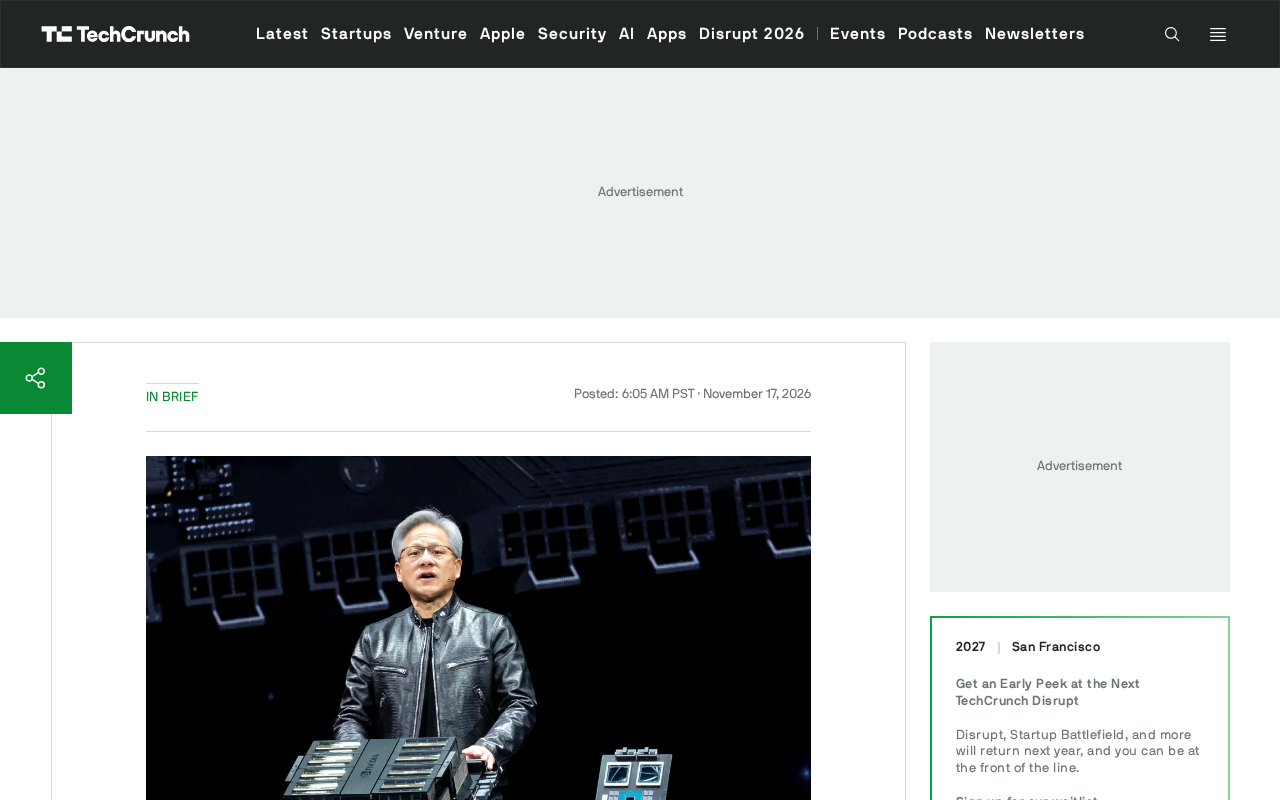
The New Committee Focuses on Three Major Risk Areas
Nvidia stated that the standing committee will incorporate national security policy, export control compliance, and global trade risks into regular board-level oversight. This means these issues will no longer be handled solely by management but elevated to the highest level of the corporate governance structure.
In terms of functional scope, these three areas are interconnected: export controls directly determine whether Nvidia products can enter specific markets, global trade risks affect supply chains and customer structure, and national security policy provides the macro framework for the former two. The existence of the committee is equivalent to establishing a fixed decision-making and oversight channel for these highly uncertain issues.
Export controls carry direct legal force in this round of technological competition. Take the U.S. Export Administration Regulations (EAR) as an example: it implements tiered controls on chips, software, and technology based on technical parameters, end use, and end users of items, and can also extend jurisdiction through the "foreign direct product rule" to products produced outside the U.S. using American technology or equipment. The Entity List restricts specific companies from obtaining controlled items. For Nvidia, every adjustment to control rules may change the specifications and target markets of its saleable products, so establishing a dedicated committee means incorporating rule tracking, license applications, and supply chain adjustments into a decision-making track visible to the board.
Why Strengthen Governance Now
After Jensen Huang's exit, Nvidia's leadership structure has changed, and there is external attention on the company's strategic continuity. Establishing a dedicated committee at this time, on the one hand, sends a signal of compliance governance to investors and regulators; on the other hand, it shows that the company needs to handle a complex policy environment in an institutionalized manner beyond the founder.
According to the source description, this is Nvidia's "first major move" after Jensen Huang's exit, and its symbolic significance cannot be ignored: the company is trying to use adjustments to its governance structure to respond to external expectations for semiconductor companies' compliance.
A board-level standing committee is typically composed of directors and is authorized to continuously exercise oversight functions on specific issues, rather than merely passively receiving reports at routine board meetings. Compared with temporary special committees, standing committees have fixed agendas, regular meetings, and clear reporting lines, enabling earlier intervention in risk identification. Their common powers include reviewing compliance policies, requiring management to report regularly, hiring external advisors when necessary, and making recommendations to the full board. For this reason, the article's mention that "actual effectiveness depends on authority, composition, and operating mechanisms" is not empty rhetoric: whether the committee has the power to access transaction documents and whether it has an independent budget directly determines whether it is a governance tool or a symbolic arrangement.
Impact on the Industry
Nvidia's approach may provide a reference for other tech companies. Against the backdrop of normalized export controls and trade frictions, incorporating national security issues into board oversight can help reduce operational risks brought by sudden policy changes and may also become a new standard for governance at large tech companies.
However, the committee's actual effectiveness still depends on its authority, composition, and operating mechanisms, details of which have not yet been disclosed in the available information.
Global trade risks manifest in the semiconductor industry specifically as geographic concentration of supply chains and policy linkages. Advanced process capacity is highly concentrated in a few regions, and equipment, materials, and packaging and testing segments span multiple jurisdictions. Tariff adjustments, investment reviews, or technology export restrictions in any country can propagate along the supply chain. In addition, changes in customer structure also constitute a risk: procurement decisions by data center customers are affected by the policies of their host countries. Incorporating trade risks into board oversight essentially means centralizing judgments previously scattered across legal, supply chain, and sales departments at the governance level, so that capacity allocation and market restructuring decisions can be made more quickly when policy suddenly changes.
Key Points
- Nvidia has established a standing committee to provide board-level oversight of national security policy, export control compliance, and global trade risks.
- This is the company's first major governance action after Jensen Huang's exit.
- The committee elevates compliance and policy risks to the highest level of corporate governance.
- Specific authorities and operating details have not yet been made public.
One-line Summary
After Jensen Huang's exit, Nvidia established a board standing committee, bringing national security and export control compliance into the highest governance level.
Paragraph Summary
The article reports that Nvidia has taken its first major governance step after Jensen Huang's exit by establishing a new standing committee responsible for board-level oversight of three major areas: national security policy, export control compliance, and global trade risks. The article analyzes that these three areas are interconnected: export controls determine whether products can enter specific markets, trade risks affect supply chains and customer structure, and national security policy provides the macro framework. Against the backdrop of leadership changes, this move both sends a compliance signal to investors and regulators and reflects the company's attempt to respond to a complex policy environment in an institutionalized manner. The article notes that this approach may provide a reference for other tech companies, but the committee's actual effectiveness still depends on its authority, composition, and operating mechanisms, details of which have not yet been disclosed.
Related articles

Complete Grok Bot Refund Guide: Cursor, X, and App Store Rules Explained
Grok Bot has no standalone subscription—refunds depend on your payment channel. Learn Cursor's 14-day window, X's prorated refunds, App Store/Google Play processes, and SuperGrok's xAI form.

Cursor Renamed to GrokBuild? Anonymous Leak and Official Information Fully Analyzed
An anonymous account claims Cursor may be renamed GrokBuild and that GrokBuild CLI 2.0 is in alpha. This article reviews the rumor details, confirmed acquisition and plan integration facts, and notes that no official renaming has been announced, urging caution with unverified news.

When Insect Portraits Turn Out Surprisingly Cute: A Playful Look at Macro Imagery
Starting from a low-traction Hacker News post, this analysis explores why insect macro portraits feel surprisingly cute: anthropomorphic perspective, contrast, spread mechanisms, and the blurred boundary between real photography and AI-generated imagery.