Nvidia Says It Will Not Reappoint Jensen Huang as CEO
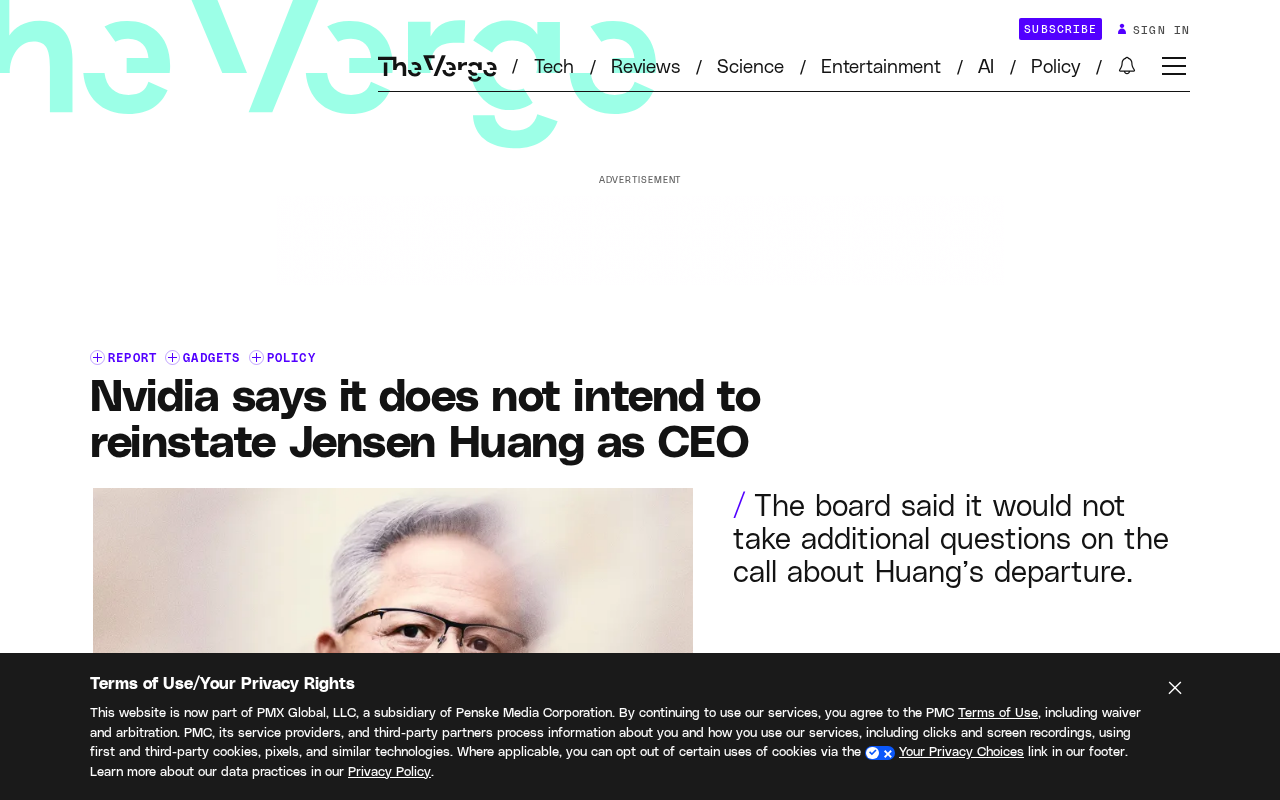
Nvidia's board chair said the board accepted Jensen Huang's resignation and will not reappoint him as CEO.
At Nvidia's latest quarterly earnings call, new board chair Harvey Jones directly addressed speculation about former CEO Jensen Huang's departure. Jones said the board unanimously accepted Huang's resignation and does not intend to reappoint him as CEO. The definitive wording indicates a formal board resolution rather than an ambiguous statement. Jones also set information boundaries, saying the call would not explain the circumstances of the resignation or take questions. The move aims to quell speculation and refocus investors on the business, marking a new governance phase; strategic continuity and the board's role after the transition are worth watching.
At Nvidia's latest quarterly earnings call, newly appointed board chair Harvey Jones opened by directly addressing speculation about the departure of former CEO Jensen Huang. Jones stated that when Huang resigned, "Nvidia's board unanimously accepted his resignation and does not intend to reappoint Jensen as CEO." He added that the call would not provide details about the circumstances of Huang's resignation or take questions on the matter.
Board's Position Is Clear: No Return
This statement is Nvidia's official, direct response to the question of whether Huang might return. Harvey Jones, presiding over his first earnings call since becoming board chair, placed the topic at the very start—a sign the company wants to quickly quell outside speculation and steer investor attention back to the business itself.
What's notable is how definitive Jones's wording was—not "no plans at present," but "does not intend to reappoint." In corporate governance terms, that phrasing means the board has reached a formal resolution rather than leaving the door open with an ambiguous statement.
The Procedure for CEO Resignation and Reappointment in U.S. Corporate Governance
Under the governance framework of U.S. listed companies, the CEO is appointed by and accountable to the board, so a CEO's resignation must be accepted by the board, and whether to reappoint is likewise within the board's statutory authority. The typical process: the CEO formally submits a resignation letter, the board meets to vote on whether to accept it, and the decision is disclosed to the market. Where a major personnel change is involved, the SEC's 8-K reporting rules often require disclosure within four business days to ensure investors have symmetric information. If the board has adopted a formal resolution "not to reappoint," it is generally recorded in the meeting minutes and carries procedural binding force; any later change would require a new vote. This also explains why the article stresses that "does not intend to reappoint" differs from "no plans at present"—the former is a resolution-style statement, the latter a status-style statement.
Details of the Resignation Remain Off-Limits
Jones also set the boundaries of information: the call would not explain the specific circumstances of Huang's resignation, nor accept related questions. That means the various theories about the reasons for the resignation will not be officially confirmed or clarified in the short term.
For investors, this approach both signals that "the personnel matter is settled" and leaves an information vacuum. The company clearly prefers to keep the earnings call focused on results and business outlook, avoiding a personnel issue that overshadows everything else.
The Role of the Earnings Call and Its Information Boundaries
The earnings call is a routine meeting for communication with analysts and investors after a listed company releases quarterly results, typically attended by the CEO, CFO, and head of investor relations, and covering a results review, business outlook, and a Q&A session. It is not a legally mandated disclosure channel—formal disclosure is governed by documents such as earnings reports, 8-Ks, and 10-Qs—so the company has the right to set the agenda and limit the direction of questions. When a major personnel change occurs, companies often choose to make a unified statement at the start of the call and then focus the Q&A on operating data, to avoid new disclosure risks or legal disputes arising from executives' spontaneous answers. This approach is understandable from a compliance standpoint, but it can also intensify market speculation due to insufficient information.
Where Nvidia Goes After the Handover
Jensen Huang has long been seen as the iconic figure of Nvidia, and his departure, together with the board's explicit statement, marks the company's entry into a new phase of governance. The new board chair's setting the tone on the personnel issue at his first earnings call helps reduce the disruption of uncertainty to market sentiment.
What's worth watching going forward is the strategic continuity of Nvidia after the management transition, and what role the board will play in corporate governance. For now, the core message from the official side is just one: the personnel matter has been concluded, and the company does not intend to turn back.
Related articles
US SEC Investigates Nvidia: Possible A…
US SEC Investigates Nvidia: Possible Accounting Issues
The US SEC's investigation into Nvidia focuses on potential accounting issues, not products. The news sparked heated discussion on Hacker News, with the market watching the AI chip giant's financial disclosure quality and regulatory signals.

FBI Crime Database Reportedly Hit by Hackers; Trump Says 'Not Good'
FBI's NCIC reportedly hit by hackers; FBI has launched an investigation and Trump said it's 'not good.' This article covers the incident, NCIC's importance, and law enforcement data security challenges.
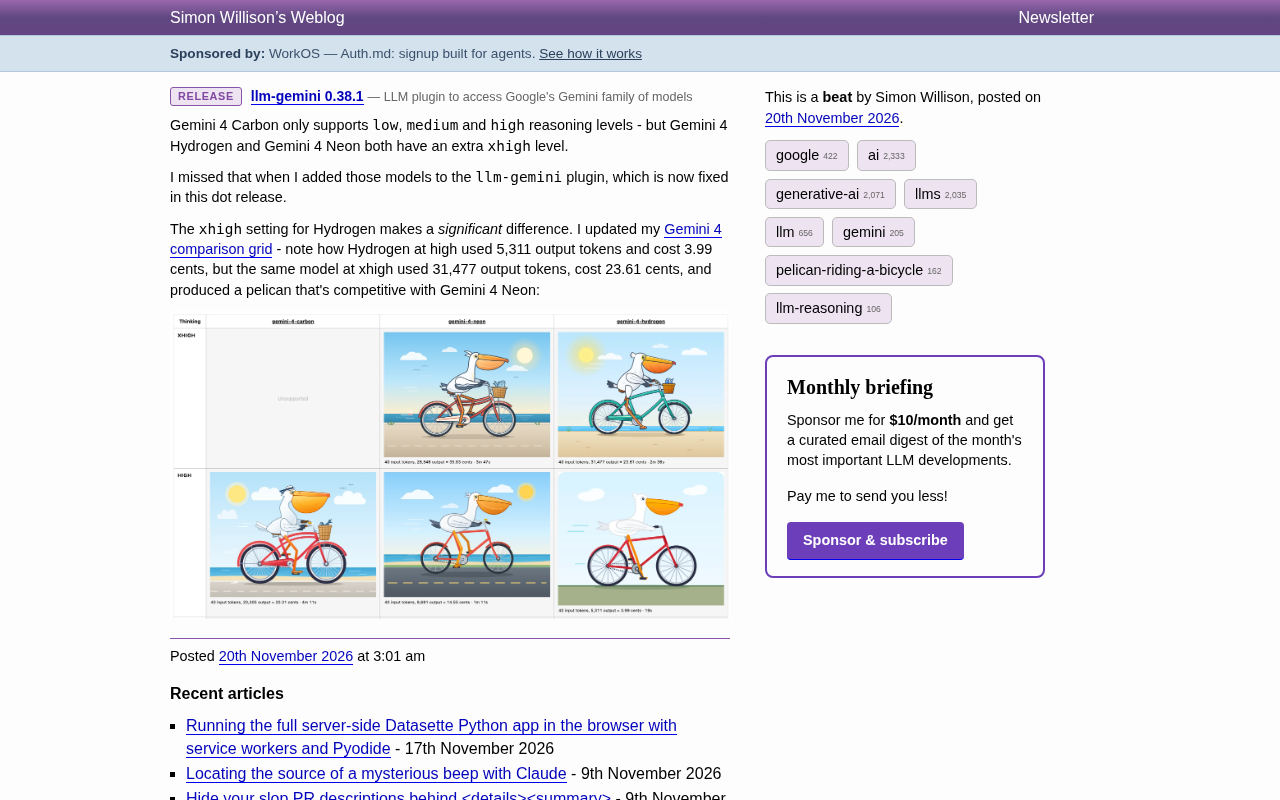
llm-gemini 0.38.1 Fix: Gemini 4 Hydrogen and Neon Gain xhigh Reasoning Level
llm-gemini 0.38.1 fixes the missing xhigh reasoning level for Gemini 4 Hydrogen and Neon. Comparison data shows xhigh sharply raises Hydrogen's output tokens and cost while clearly improving image quality to a level competitive with Neon.