NVIDIA Teams Up with Hugging Face: A Deep Alliance Between the Computing Giant and the Open-Source AI Community

NVIDIA and Hugging Face unite, binding AI computing power with the open-source ecosystem.
NVIDIA and Hugging Face are deepening their partnership, combining NVIDIA's dominant GPU computing infrastructure with Hugging Face's position as the central hub of the open-source AI community. This alliance promises lower barriers for AI developers, accelerated open-source model deployment, and a shift from community-driven to industry-coordinated open-source AI — while raising important questions about vendor neutrality and ecosystem diversity.
A High-Profile Industry Partnership
Recently, a congratulatory message from the tech world sparked widespread attention: "Congrats to Jensen and Clem and team! Looks like an extremely strong match for open source AI."
Behind this brief congratulation are two key figures — NVIDIA CEO Jensen Huang and Hugging Face co-founder and CEO Clément Delangue (Clem) — and the convergence of the two major forces they represent in the open-source AI space. This is more than just a partnership between two companies; the industry sees it as a deep binding between computing infrastructure and the open-source model ecosystem.
Why This Is Called an "Extremely Strong Match"
The Natural Complementarity of Computing Power and Ecosystem
NVIDIA is the undisputed king of computing power in today's AI wave. From the H100 and H200 data center GPUs to the latest Blackwell architecture, NVIDIA GPUs underpin the training and inference of virtually all major large models worldwide. The H100, based on the Hopper architecture, packs 80 billion transistors and is specifically optimized for Transformer models with FP8 precision computing, delivering approximately 4 petaFLOPS of FP8 performance per card. The Blackwell architecture released in 2024 (with flagship products like the B200/GB200) pushes the transistor count to 208 billion, boosting large model training efficiency several times over through its second-generation Transformer Engine and NVLink 5.0 interconnect technology. This continuous hardware iteration has enabled NVIDIA to capture over 80% of the data center GPU market share for AI computing.
Its CUDA software ecosystem has built an even more formidable moat. CUDA (Compute Unified Device Architecture), NVIDIA's parallel computing platform and programming model launched in 2006, has accumulated over 4 million developers and a vast software library ecosystem over nearly two decades — including cuDNN for deep learning, cuBLAS for linear algebra, and TensorRT for inference optimization. Virtually all mainstream deep learning frameworks (PyTorch, TensorFlow, JAX) use CUDA as their default GPU backend. This deep software binding makes it prohibitively costly for developers to migrate to other hardware platforms, serving as one of the key barriers sustaining NVIDIA's market leadership.
Hugging Face, on the other hand, is the central hub of the open-source AI community. As a platform hosting hundreds of thousands of open-source models, datasets, and applications, it has been dubbed the "GitHub of AI." As of 2025, Hugging Face Hub hosts over 1 million models, more than 250,000 datasets, and over 400,000 Spaces (online app demos). Its core open-source library, Transformers, is one of the most popular NLP and multimodal AI frameworks available, supporting over 200 model architectures and providing a unified API that lets developers load and use various pretrained models with just a few lines of code. Additionally, Hugging Face maintains a suite of complementary tools including Datasets (data loading library), Tokenizers, Accelerate (distributed training tool), and PEFT (Parameter-Efficient Fine-Tuning), forming a complete toolchain from data preparation and model training to deployment and inference. Whether it's Meta's Llama series, Mistral's open-source models, or the work of countless researchers and developers, they all converge here.
When a powerful computing provider joins forces with the most active open-source community, the result is a natural complementarity: NVIDIA provides the "engine," while Hugging Face provides the "highway" and the "driver community." This is precisely what "extremely strong match" means in the original comment.
What This Means for AI Developers
For the broader AI developer community, such a partnership typically means lower barriers to entry. In the past, efficiently running open-source models on NVIDIA hardware required developers to deal with complex environment configuration, driver optimization, and inference framework adaptation. The technical bar for this work is far from trivial: for example, to fully leverage GPU performance, developers typically need to use TensorRT for graph optimization and layer fusion, convert floating-point models to INT8 or even INT4 precision through quantization techniques to reduce memory usage and boost inference speed, and navigate compatibility issues between different CUDA versions, driver versions, and framework versions. Quantization itself is a complex technical domain, encompassing post-training quantization (PTQ), quantization-aware training (QAT), and more recent specialized quantization schemes for large language models such as GPTQ, AWQ, and GGUF — each with different precision-performance tradeoffs.
A deep integration between these two platforms promises to make "out-of-the-box" usability the norm:
- Developers can more easily access NVIDIA-optimized models on Hugging Face
- Deploy their own models to NVIDIA inference services with a single click
- Skip tedious low-level adaptation work and focus on application-layer innovation
In practice, this integration could manifest as Hugging Face Hub directly offering TensorRT-LLM optimized model weights, or enabling one-click deployment through NVIDIA's NIM (NVIDIA Inference Microservices) containers. Developers wouldn't need deep knowledge of operator-level optimization, KV Cache management, Continuous Batching, or other inference acceleration techniques to achieve near-optimal inference performance. This is especially valuable for small and medium-sized teams with great application ideas but limited systems engineering capabilities.
The Strategic Value of Open-Source AI: Why Tech Giants Are Getting Involved
NVIDIA's Business Logic for Embracing Open Source
In recent years, the competition between closed-source large models (such as OpenAI's GPT series and Anthropic's Claude) and open-source large models (such as Meta's Llama, Mistral, Alibaba's Qwen, and DeepSeek) has grown increasingly fierce. In terms of technical capability, open-source models are rapidly closing the gap with their closed-source counterparts. In early 2023, open-source models lagged far behind GPT-4 on most benchmarks; by late 2024, models like Llama 3.1 405B and Qwen2.5-72B had approached or even partially surpassed GPT-4 levels on multiple evaluations. The release of DeepSeek-R1 in early 2025 was a landmark event — this open-source model demonstrated capabilities comparable to top closed-source models on tasks like mathematical reasoning, greatly boosting the open-source community's confidence.
For hardware manufacturers like NVIDIA, a thriving open-source ecosystem has a direct business logic: The more open-source models there are — and the more powerful they become — the more enterprises and developers will buy GPUs to train and deploy them. Closed-source models concentrate computing demand among a handful of companies (like OpenAI, Google, and Anthropic), while open-source models distribute computing needs across thousands of enterprises and research institutions. Every organization that chooses to build its own AI capability rather than call an API is a potential hardware customer for NVIDIA.
In other words, NVIDIA doesn't need to "winner-take-all" at the model layer — what it needs is the continued expansion of the entire AI ecosystem. And open source is one of the most effective ways to drive that expansion. Supporting Hugging Face is essentially cultivating more fertile soil for its massive hardware market. This logic is consistent with NVIDIA's past strategy in gaming and graphics — creating more hardware demand by lowering development barriers and growing the developer ecosystem.
Hugging Face's Neutral Platform Advantage
For Hugging Face, partnering with NVIDIA brings tangible resource support — whether in computing power, technical optimization, or market influence. At the same time, as a relatively neutral open-source platform, Hugging Face needs to maintain broad partnerships with major hardware and cloud vendors to preserve its position as a "neutral hub." In fact, Hugging Face has already established deep partnerships with AWS, Google Cloud, Microsoft Azure, and other major cloud platforms, with its Inference Endpoints service supporting one-click deployment across multiple cloud environments. On the hardware front, Hugging Face's Optimum library also provides optimization support for non-NVIDIA hardware such as Intel, AMD, and AWS Inferentia. This powerful alliance with NVIDIA further solidifies Hugging Face's central role in open-source AI infrastructure, but it also requires maintaining a delicate balance between depth of collaboration and platform neutrality.
Potential Impact on the Industry Landscape
This partnership sends a clear signal: Open-source AI is transitioning from "community-driven" to "industry-coordinated." When a computing giant actively injects resources into the open-source ecosystem, the capability gap between open-source and closed-source models is poised to narrow further.
For SMEs and startups, this means they can access near-cutting-edge AI capabilities at lower cost without being entirely dependent on a few closed-source API providers. This decentralization trend is beneficial for the industry's overall innovation vitality in the long run. Under the traditional closed-source API model, enterprises face not only high API call costs but also risks related to data privacy, vendor lock-in, and service disruptions. Private deployment of open-source models gives enterprises full control over their AI infrastructure, while the deep integration of computing power and open-source platforms dramatically lowers the technical threshold for private deployment.
Of course, some observers caution that deep binding between hardware and ecosystem could further reinforce NVIDIA's market dominance. Currently, AMD is mounting a strong challenge in the data center AI market with its MI300X series GPUs, Intel's Gaudi series accelerators are seeking differentiated breakthroughs, and Google's TPUs and Amazon's Trainium/Inferentia custom chips continue to evolve within their respective cloud ecosystems. If the open-source community's toolchains and model optimizations become excessively centered around the CUDA ecosystem, it could further undermine the competitiveness of these alternatives, creating a situation of "open source in name, lock-in in practice." How the open-source community can maintain technology stack diversity and vendor neutrality while benefiting from powerful allies — for example, by supporting alternative computing frameworks like OpenCL, ROCm, and SYCL — remains a topic worth continued attention.
Conclusion
Starting from a brief social media congratulation, we see a clear reflection of the underlying logic of the AI industry: the union of computing power and open-source ecosystems is becoming a vital engine for democratizing technology. The convergence of the two forces represented by Jensen Huang and Clem may well signal the accelerated development of open-source AI's next phase.
For developers, enterprises, and researchers riding this wave, the NVIDIA–Hugging Face partnership means more opportunities and lower barriers. The future of open-source AI is becoming ever more exciting, thanks to powerful alliances like this one.
Related articles
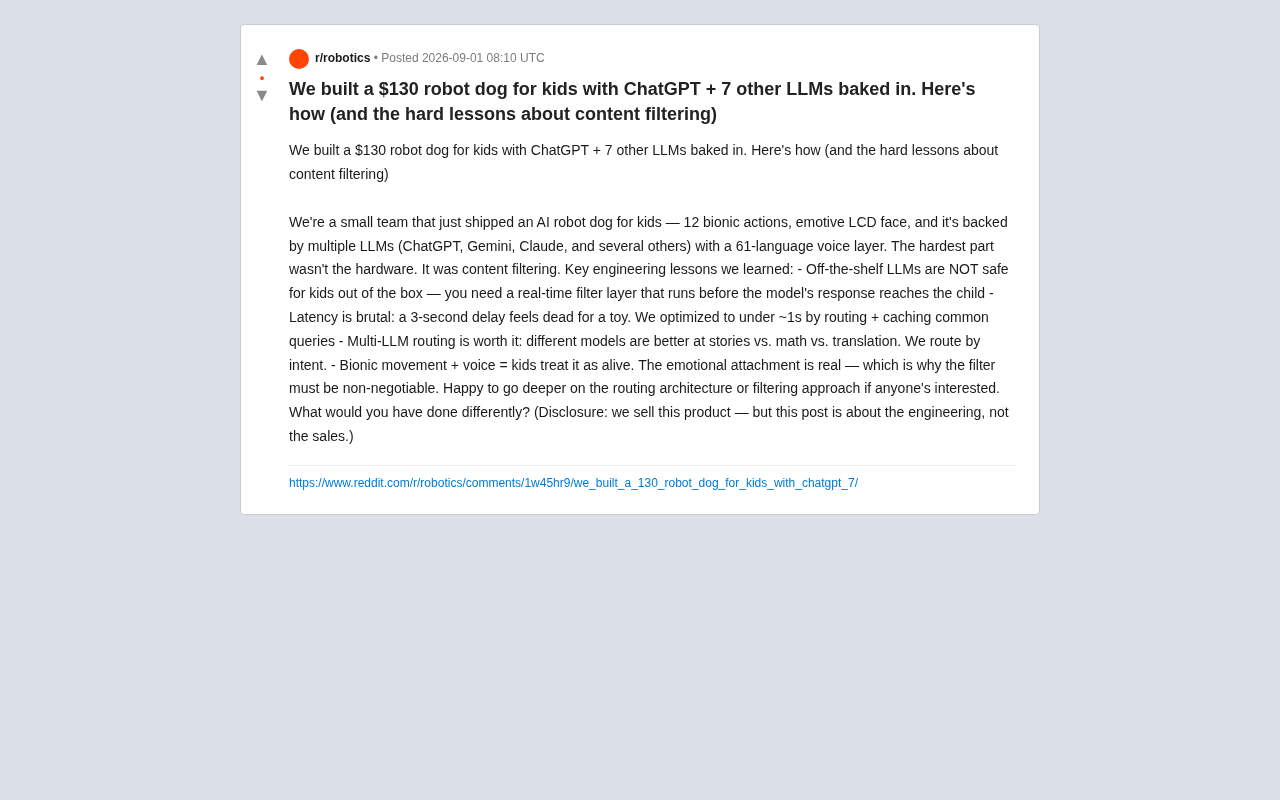
Building an AI Robot Dog for Kids: Multi-Model Routing, Content Filtering, and Latency Optimization
A $130 AI robot dog for kids integrates 8 LLMs with 61-language voice interaction. The team shares key engineering lessons on content safety filtering, multi-LLM intent routing, and sub-1-second latency optimization.
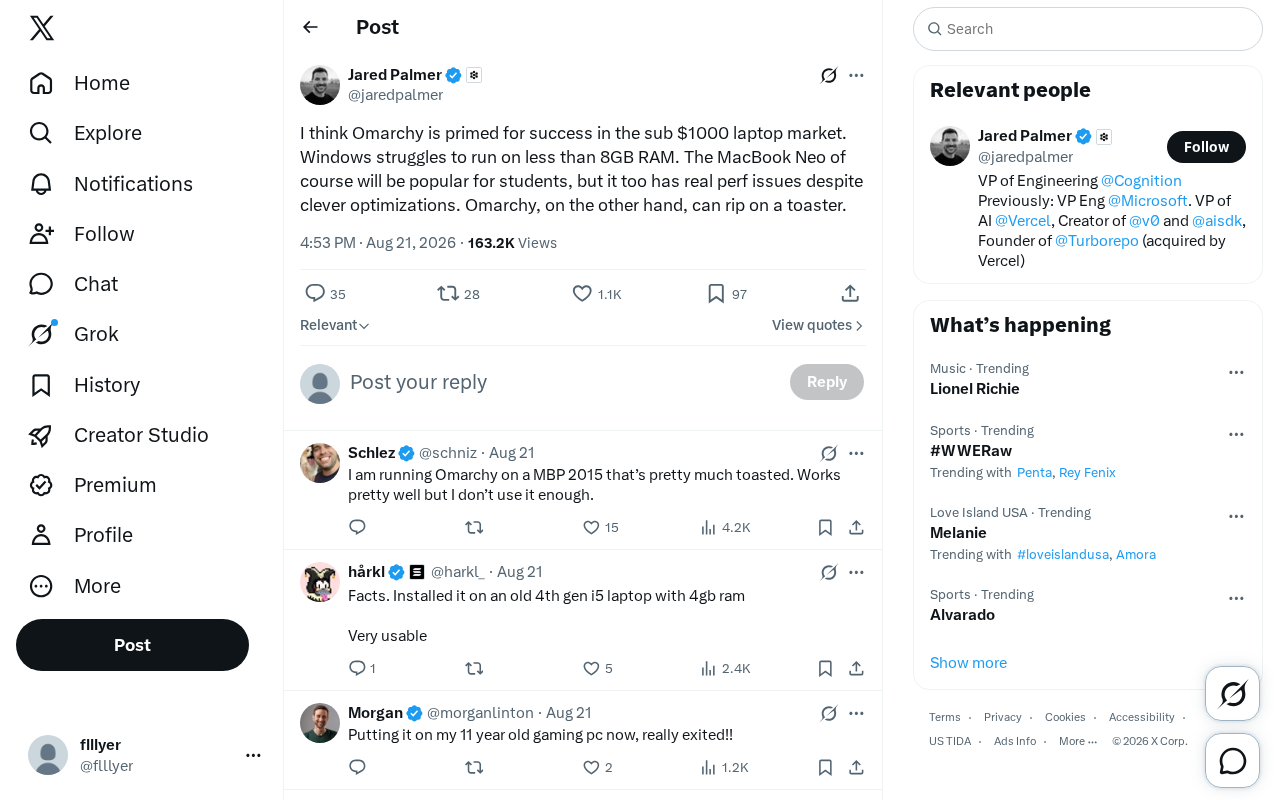
Can Omarchy Dominate the Sub-$1000 Laptop Market? An In-Depth Analysis
Omarchy, based on Arch Linux, shows unique advantages in the sub-$1000 laptop market. This analysis compares Windows and MacBook performance bottlenecks on low-spec hardware and examines why Omarchy enables cheap laptops to run smoothly, plus the ecosystem challenges and market prospects it faces.
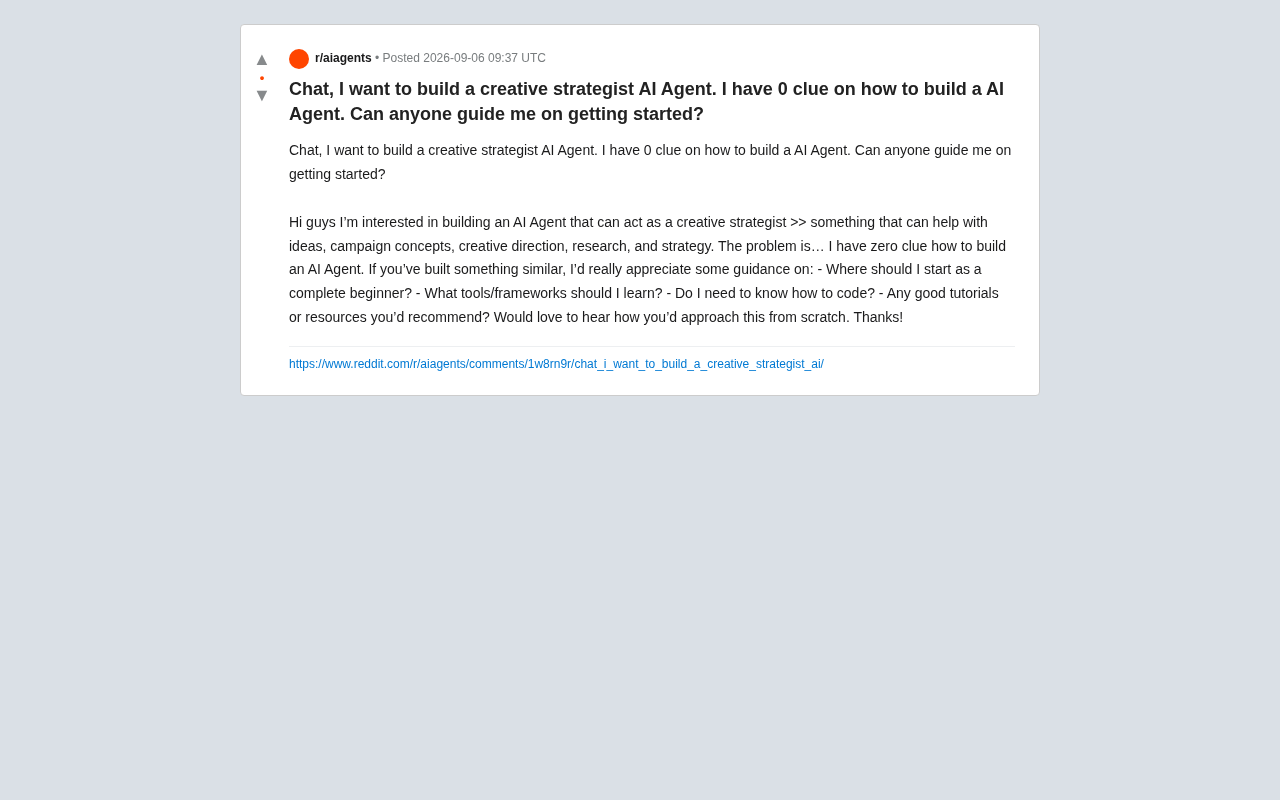
AI Agent Beginner's Guide: Building a Creative Strategy Intelligent Assistant from Scratch
A complete guide to building a creative strategy AI Agent from scratch. No coding required — use tools like Dify and Coze to quickly build an intelligent assistant.