NVIDIA TensorRT Model Connect: Deploy Open-Source Models with Two Commands
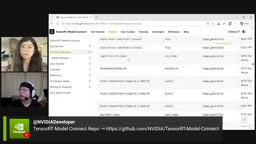
Deploy any open-source PyTorch model to GPU inference with just two TensorRT commands.
NVIDIA TensorRT Model Connect is an open-source deployment tool built on TensorRT that requires just two commands: one to compile a PyTorch checkpoint into an optimized plan bundle, and one to run inference — eliminating ONNX conversion and manual autoregressive loops. It supports a wide range of model types beyond LLMs, including audio/image/video generation, CNN classification, embeddings, object detection, and depth estimation, with compatibility going back to Turing-architecture consumer GPUs. Key highlights include context-parallel multi-device inference on dual DGX Spark for Cosmos 3 video generation, and integration of NVIDIA's Nemotron full-duplex voice model that eliminates the ASR→LLM→TTS pipeline for low-latency, interruptible voice interaction.
From Video to Speech: One Tool for Open-Source Model Deployment
Deploying open-source models locally is rarely a smooth experience — exporting, importing, format conversion, writing autoregressive inference loops — any step along the way can trip developers up. TensorRT Model Connect, demonstrated by the NVIDIA TensorRT team in a recent livestream, is designed to address exactly these pain points.
According to NVIDIA TensorRT product team member Ling Chai and engineers Yifei and Daisy, Model Connect is not an entirely new product but rather a feature built on top of TensorRT, with one core goal: to stand alongside the open-source model community and make it easy to deploy any open-source model into production.
In their words, the entire workflow comes down to just two commands: the first uses Python to package a PyTorch checkpoint into a deployable bundle, and the second runs inference directly via the trt-model-connect run CLI. No intermediate ONNX conversion, no need to write your own autoregressive loop.
A Live Demo of the Two-Command Flow
The most tangible demo in the livestream was an end-to-end inference run using the Qwen3 0.6B model. After executing the Python build command, TensorRT performs a series of optimizations in the background — graph fusion, tactic selection, and more — compiling the model into a highly optimized GPU executable, then packing the engine and weights into a plan file to form the final bundle.
Build time depends on model size: small models finish in a minute or two, while larger ones may take up to 45 minutes. Once built, feeding the prompt "Tell me something about NVIDIA" via the CLI, along with a chat template, returned a complete response in under a second. The presenters repeatedly emphasized the key point: from a model ID to end-to-end inference, all the underlying complexity is abstracted away by the tool.
One noteworthy detail is hardware accessibility. When an audience member asked about support for older consumer GPUs, the team confirmed that Model Connect runs on any GPU where TensorRT is available, going all the way back to the Turing (70-series) architecture. All demos that day ran on an RTX 5090, but GPUs like the 4060 can also run 1B-scale small models.
TensorRT's compilation optimization pipeline involves a few key concepts. Graph fusion refers to merging multiple adjacent operators in a neural network's computation graph into a single fused operator, reducing GPU kernel launch overhead and memory read/write costs — particularly effective for attention and feed-forward layers in Transformers. Tactic selection is TensorRT's auto-tuning mechanism: for a given operator, TensorRT maintains multiple implementation strategies (tactics) internally, benchmarks each one on the target GPU during the build phase, and selects the fastest one, which is then baked into the plan file. This is why build time and runtime are so different — building is a one-time offline cost that ensures every subsequent inference call takes the optimal path. Plan files are inherently tied to a specific GPU architecture binary and are generally not directly portable across different GPU models.
Support Extends Far Beyond LLMs
Model Connect's supported model list is remarkably broad, extending well beyond large language models. The model support page on GitHub features a comprehensive table covering many task types:
- Audio generation: Bark, MacPy, and more
- Traditional CNNs and classification: No more wrestling with ONNX — just provide a model ID
- Embeddings and encoding: BERT-style word embeddings, feature extraction, and Dino V3 as a foundation model
- Image generation: Diffusion models like Flux
- Video generation: Minimax H3, LTX Video (essentially generating a sufficient number of frames in sequence)
- Object detection, reranking, segmentation, and more
Architecturally, Model Connect exposes a task-level API: Qwen, for example, falls under a text generation task, while image-related models fall under a different task type. These APIs call the underlying TensorRT deep learning inference compiler, which converts a model's mathematical definition into high-speed GPU-executable code targeting hardware like x86, ARM, and Jetson AGX. The team also revealed that a large portion of the model implementations in the repository were built by a fleet of AI agents working collaboratively — which is why they describe it as an "AI native project."
Speech, Reasoning, Semantic Search, and Image Understanding
Beyond basic inference, the team showcased a range of ready-to-use application examples spanning diverse AI capabilities.
In a speech transcription scenario, an ASR model first processes audio input to produce a raw transcript, which is then parsed and polished by a small 4B LLM. Notably, the cost of loading model weights into GPU memory is incurred only once.

The most impressive speech demo was a full-duplex voice model (from NVIDIA's Nemotron series). It operates as a single "speech-in, speech-out" model, eliminating the traditional three-stage ASR→LLM→TTS pipeline entirely. The result is extremely fast response times and the ability to be interrupted by the user at any moment. During the demo, the model responded almost instantly to prompts like "Tell me about NVIDIA" and "Tell me about CUDA," and it supported mid-sentence interruptions to switch topics — the low-latency experience is a direct benefit of removing the multi-stage pipeline.
Additional demos included constrained reasoning and solving, embedding-based semantic search (matching query vectors against a help documentation library), image segmentation (click to segment vehicles, mirrors, headlights, etc.), visual question answering, and generating a depth map from a single image using the Moji2 model, then exporting a point cloud. All these examples will be released to GitHub for full reproducibility.
Traditional voice interaction systems typically employ a three-stage ASR (Automatic Speech Recognition) → LLM (Language Model) → TTS (Text-to-Speech) pipeline, where each stage requires independent inference and its output feeds into the next, causing end-to-end latency to accumulate. More critically, this architecture structurally does not support interruption: the system must wait until the LLM finishes generating a complete text and TTS synthesizes a complete audio clip before playback, preventing users from interjecting while the system is speaking. Full-duplex models fuse these three stages into a single end-to-end model that maps directly from audio features to audio output, eliminating text as an intermediate representation. This architecture can continuously monitor an incoming audio stream while simultaneously generating an outgoing audio stream, enabling bidirectional real-time interaction similar to human conversation. Latency is primarily determined by the model's own forward pass time rather than the cumulative wait time of multiple serialized stages.
Multi-Device Scaling: Running Video Generation on Dual DGX Spark
Daisy demonstrated Model Connect's newly integrated multi-device capability, which can scale to 2, 4, or 8 GPUs. The demo scenario involved running the Cosmos 3 video generation model across two DGX Spark units connected via Ethernet, where Ethernet handles low-latency communication and actual data transfer is managed by low-latency NCCL.
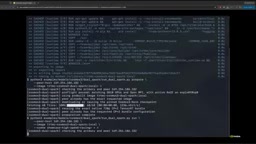
The approach used here is context parallelism, which splits long sequences across multiple devices. Setup involves installing MPI on both Sparks (to launch and supervise worker processes on each node) and configuring passwordless SSH. From there, it's just three steps: build an image using the Dockerfile, run the prepare command to download the Cosmos Nano checkpoint and build the bundle, and finally launch inference with CP=2.
The generated video demonstrated the "physical intelligence" characteristics of Cosmos 3 — a red race car speeding around a winding track, a robotic arm grasping an apple, a humanoid robot sprinting, and a delivery robot in the rain (with visible liquid interaction effects). The team noted that the repository already has nearly 60 models configured for multi-device setups. Multi-device deployment can both accelerate inference and enable running the same model with fewer per-node GPUs, or make it possible to run models that exceed single-GPU VRAM capacity.
Context Parallelism is a parallelism strategy designed specifically for long-sequence inference, distinct from tensor parallelism (which splits model weights across cards) or pipeline parallelism (which splits by layer). Its core idea is to slice the input sequence along the sequence dimension, with each GPU responsible for computing attention over a subsequence. GPUs synchronize KV caches via all-gather communication to ensure global attention consistency. This strategy is particularly well-suited for video generation models — video frames unrolled along the time dimension form extremely long token sequences that a single GPU's VRAM cannot accommodate for a complete KV cache, and context parallelism can linearly scale the processable sequence length without changing how model weights are distributed. NCCL (NVIDIA Collective Communications Library) is the underlying high-performance library responsible for collective communication primitives like all-reduce and all-gather across multiple GPUs, supporting interconnects including NVLink, InfiniBand, and Ethernet.
Positioning and Openness: A Feature, Not a New Product
When asked why the LLM baseline uses PyTorch rather than TensorRT-LLM, the team gave a clear positioning explanation. TensorRT-LLM is an in-framework solution built on PyTorch; AGL LLM is a C++ solution; and Model Connect sits within TensorRT's C++ ecosystem, targeting deployment scenarios that require a C++ runtime, are latency-sensitive, or demand determinism or safety-critical guarantees.
Model Connect's entry point through PyTorch open-source models reflects its primary goal: "get everyone to fast deployment first, then optimize for performance." It's quite flexible in its abstraction level: for LLM-type models, it directly reuses AGL LLM's autoregressive C++ runtime, while for diffusion models and other cases not yet covered by AGL LLM, Model Connect provides its own runtime.
On quantization, the team explained that not all model families currently support NVFP4 — passing related parameters for unsupported models will cause the build to reject them outright. The future vision is: as long as a model is marked as supporting it, adding the --nvfp4 flag will automatically yield lower VRAM usage and computational speedup, with all calibration handled automatically by the tool.
One important boundary to note: Model Connect handles inference deployment only and has nothing to do with training. For training a model (such as an industrial inspection scenario recognizing thousands of PVC strip types), you still need to train on more powerful GPUs, then upload the open-architecture model to Hugging Face or export a local checkpoint, and hand it off to Model Connect for inference.
As an open-source project, the team repeatedly invited community involvement: filing issues, submitting PRs, asking questions directly on Discord — with a particular welcome for community contributions around quantization implementations for various model families. This posture of "co-owning the project with the open-source model community" was the consistent thread running throughout the entire livestream.
Related articles
Prompt → MCP → Agent → Skill: The AI Terminology Evolution Chain Explained in 5 Minutes
A clear guide to five core AI concepts — Prompt, MCP, Agent, Skill, and Cowork — and how they connect in a layered evolution chain from simple instructions to multi-agent teamwork.
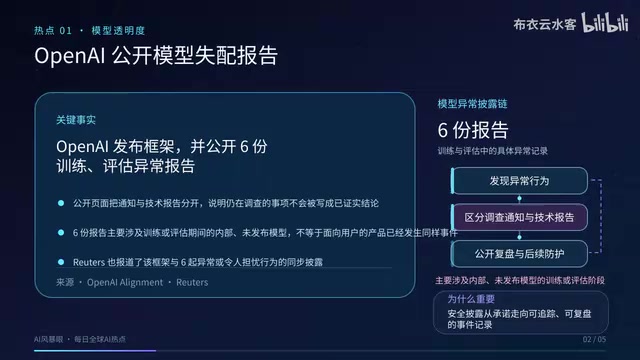
OpenAI Discloses Model Anomalies, DeepMind Launches AGI Forum, NVIDIA Partners on Grid Power Management
Sept 17 AI roundup: OpenAI publishes model anomaly disclosure framework with 6 reports, Google DeepMind launches AGI public forum, NVIDIA leads AI energy management alliance with 18 partners.
Build a Local AI Agent with Python in 10 Minutes: Ollama + PydanticAI in Action
A hands-on guide to building a fully local AI agent with Python, Ollama, and PydanticAI in 10 minutes — covering model selection, tool functions, and conversation loops.