Ojin: Create Real-Time Interruptible AI Avatars from a Single Photo

Create real-time interruptible AI avatars from a single photo with natural conversation flow
Ojin is an AI digital human product that enables real-time, interruptible conversations with AI agents created from a single photo. Unlike traditional turn-based systems, it supports natural interruptions and overlapping speech, offering Portrait and Presence facial models that integrate seamlessly with Pipecat and LiveKit frameworks.
When AI Agents Get Real Faces and Voices
In today's increasingly crowded voice AI and digital human space, a product called Ojin made its debut on Product Hunt, climbing to 16th place with 104 votes.
Product Hunt and Product Discovery Platforms: Product Hunt is one of the world's largest product discovery platforms, founded in 2013. It uses a community voting mechanism to showcase the latest tech products, apps, and services daily. Products are ranked by the number of "upvotes" they receive, with daily rankings resetting at midnight Pacific Time. For startups and indie developers, landing near the top of the Product Hunt daily leaderboard means gaining massive exposure, early user feedback, and potential investor attention. The platform has become a crucial channel for validating product-market fit in the tech community, with notable products like Notion and Figma gaining early traction there.
Ojin's positioning is striking: it lets you have real-time conversations with an AI agent that has a real face and real voice.
Unlike most AI digital human products on the market, Ojin emphasizes not "looking good" but rather "authentic interaction rhythm." Its core selling point is live conversation, not traditional turn-based exchange.
The Essential Difference Between Turn-Based and Real-Time Conversation: Traditional turn-based interaction uses a "request-response" model: after the user finishes speaking, the system performs speech recognition (ASR), understanding (NLU), response generation (NLG), and finally text-to-speech (TTS) output. The entire process typically requires 1-3 seconds of latency. Real-time continuous conversation (live conversation) requires streaming processing: speech is recognized as it's spoken, the LLM generates output as it processes, and TTS synthesizes audio as it generates, compressing total latency to 300-500 milliseconds. More critically, real-time systems need to continuously monitor both parties' speech activity states and support interruption and resumption at any moment, placing extremely high demands on concurrent processing capabilities and state management. This is why OpenAI's Realtime API is considered a technical breakthrough.
This means you can interrupt the AI mid-sentence, stop halfway through your own sentence, or even speak simultaneously with it—and the system's endpointing will still maintain the rhythm without breaking.
Technical Challenges of Voice Activity Detection: Voice activity detection (VAD or Endpointing) is the key technology for determining when a user starts and stops speaking. Traditional VAD uses volume thresholds and silence duration for judgment, but it's prone to errors in noisy environments or with accents and pauses. Modern endpointing uses deep learning models (like RNN, Transformer) combined with acoustic features, language model probabilities, and prosodic information for comprehensive judgment. In real-time conversation scenarios, endpointing needs to make decisions within 50-200 milliseconds, avoiding both "false cutoff" of incomplete user speech and excessive waiting that causes interaction lag. Top-tier endpointing systems also need to handle overlapping speech and interruption signals, which remain current technical challenges.
The official introduction even issues a direct challenge: "Try to interrupt it," openly acknowledging that most similar demos fail when interrupted, and that this is the fastest way to judge a real-time conversation product's quality. This "interruption as litmus test" attitude reflects the team's confidence in their underlying real-time interaction capabilities.
Minimalist Digital Human Creation: One Photo Is All You Need
What attracts developers and content creators most about Ojin is how it reduces the cost of creating digital humans to an absolute minimum.
Traditional digital human production typically requires motion capture equipment, professional filming environments, and pre-written scripts—a cumbersome and expensive process. Ojin's setup requires only three things:
- One still photo
- A persona
- A voice
No rigging, no capture session, and no script. This "photo and go" model dramatically lowers the barrier to creating a conversational digital human, making it accessible to individual developers and small teams.
Generational Leap in Digital Human Technology: Digital human technology has evolved through three main stages: The first generation was 3D modeling-driven, requiring professional art teams to manually model, rig, and animate, with costs reaching hundreds of thousands of dollars, exemplified by Unreal Engine's MetaHuman. The second generation was video-driven, using green screen filming of real people with AI-based keying and motion transfer technology, reducing costs to tens of thousands but still requiring professional filming equipment. The third generation is AI-native generation, where a single photo can generate facial animation through diffusion models or GANs, with driving technologies including audio-to-expression and text-driven approaches. Ojin belongs to the third-generation technical approach, with its core being real-time mapping of speech signals to facial expression parameters (like mouth shape, eyebrows, gaze), requiring synchronization within 20-30 milliseconds to ensure accurate lip-sync.
Two Facial Models, One Unified API
In terms of technical architecture, Ojin offers two facial models sharing the same API interface:
- Portrait: Designed for scale, suitable for scenarios requiring high concurrency and cost sensitivity.
- Presence: Designed for expressiveness, suitable for scenarios demanding higher facial micro-expressions and emotional conveyance.
Developers can freely choose between "cost-effectiveness" and "expressiveness" based on actual business needs without switching integration methods. This tiered design reflects the team's deep understanding of different application scenarios.
Seamless Integration with Mainstream Frameworks Like Pipecat and LiveKit
For developers, whether an AI capability can truly be deployed hinges on integration costs. Ojin is quite pragmatic on this front—both facial models can directly integrate with Pipecat and LiveKit, two mainstream real-time communication and voice AI frameworks.
Pipecat Framework's Technical Positioning: Pipecat is an open-source real-time AI conversation orchestration framework launched by Daily.co, specifically designed for building voice AI agents. It provides a pipeline architecture where developers can combine different modules like building blocks: speech recognition (Deepgram/AssemblyAI), large language models (OpenAI/Anthropic), speech synthesis (ElevenLabs/PlayHT), transport protocols (WebRTC), etc. Pipecat's core value lies in handling the most complex parts of real-time communication: audio stream buffering and synchronization, data flow between modules, interruption handling and state recovery. It supports advanced features like function calling and tool use, allowing developers to focus on business logic rather than underlying audio/video processing. It's currently used by multiple AI companies to build voice customer service, AI companionship, and other products.
LiveKit's Infrastructure Advantages: LiveKit is a next-generation open-source real-time audio/video infrastructure, positioning itself against Twilio Video and Agora. Based on WebRTC protocol, it builds more user-friendly server-side and client-side SDKs supporting multiple programming languages. LiveKit uses an SFU (Selective Forwarding Unit) architecture rather than traditional MCU, where each participant uploads one stream and the server selectively forwards to others, dramatically reducing server computational burden. In AI application scenarios, LiveKit provides an Agents framework allowing AI to join rooms as virtual participants, processing audio/video streams. Its advantages include low latency (typically 200-400ms), high concurrency support, and flexible recording and stream processing capabilities. Many AI companies choose LiveKit because it's open-source and self-deployable, avoiding dependence on third-party services.
By choosing to "drop into" these ecosystems, Ojin means teams already using them to build voice agents can add a "talking face" to their products with minimal migration costs.
This product strategy of "not reinventing the wheel, focusing on completing facial and real-time interaction capabilities" is key to finding differentiated positioning in the competitive AI landscape.
Real-Time Interruption Capability: Why It's Core to AI Conversation Competitiveness
Worth discussing separately is Ojin's repeated emphasis on interruption capability.
In real human conversation, interruptions, talk-overs, and pauses are extremely natural phenomena. Yet most voice AI still operates in a "you finish—I recognize—I respond" turn-based mode, resulting in logical confusion, overlapping speech, or prolonged silence when interrupted. To achieve natural real-time conversation, systems need to simultaneously handle at extremely low latency:
- Continuous voice activity detection and endpoint judgment
- Immediate stopping and state recovery when interrupted
- Real-time synchronization of facial expressions with speech
Multi-Layer Technical Coordination for Interruption Handling: Interruption handling in real-time conversations involves coordination across multiple technology stacks. First, the VAD system needs to issue an interruption signal the instant it detects user speech (typically within 50ms). Second, the TTS playback module needs to immediately stop audio output and clear buffers to avoid audio "tail-off." Third, LLM generation needs to support streaming cancellation, stopping current token generation. Fourth, the conversation state manager needs to save pre-interruption context so the AI can understand "where we left off" upon resuming. Most complex is handling "false interruptions"—when users briefly vocalize then stop, requiring judgment of whether it's a genuine interruption or a cough, filler word, etc. Top-tier systems use predictive models to judge user intent, only interrupting when truly needed, otherwise allowing the AI to complete the current sentence. This subtle judgment determines the naturalness of conversation experience.
By making "can it be smoothly interrupted" a product evaluation standard, Ojin is essentially using the most difficult scenario to prove its real-time pipeline stability. If this capability truly performs as advertised, it will have clear advantages in scenarios requiring natural conversation experiences like customer service, virtual companionship, online education, and live streaming interaction.
Conclusion: The Next Threshold for Digital Human Interaction
Ojin's emergence represents an important direction in the evolution of AI digital human products from "static display" to "real-time interaction." Rather than pursuing dazzling 3D modeling or complex production workflows, it focuses on two dimensions that truly impact user experience: authenticity and interaction naturalness.
Of course, as an early-stage product just debuting on Product Hunt, its actual stability, facial realism, and performance under large-scale concurrency still await broader user validation. But the trend it points toward—low-barrier setup, interruptible real-time conversation, seamless integration with mainstream frameworks—will likely become standard in future AI agent products.
For developers building voice AI agents, Ojin is worth watching—and worth personally "trying to interrupt."
Related articles

Micron's $10 Billion R&D Center in Boise: A Deep Dive into Its Strategic Significance
Micron announces a $10B R&D center in Boise focused on HBM and next-gen memory tech. We analyze the strategy, policy drivers, and impact on AI-era chip competition.

Chrome Updates Every Two Weeks: How AI is Reshaping Browser Security Strategy
Google Chrome shifts to biweekly updates to combat AI-accelerated cyberattacks. Deep dive into how AI is transforming security dynamics and the impact of faster release cycles.
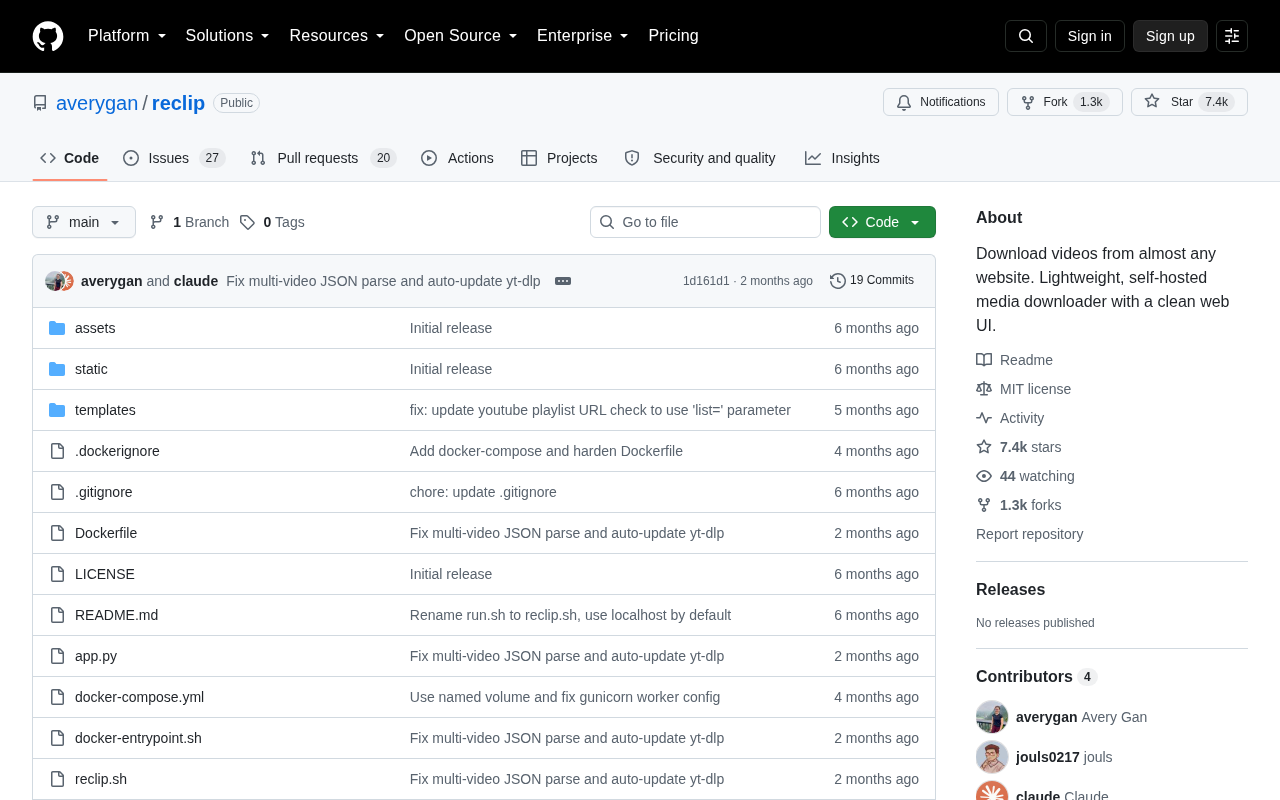
reclip: Self-Hosted Video Downloader with Clean Web UI as Command-Line Alternative
reclip is a lightweight self-hosted video downloader with a clean Web UI, built on yt-dlp to support downloads from almost any website. Easy deployment, privacy control, ad-free, ideal for NAS and VPS users.