Omi: The Open-Source, Local-First AI Memory Assistant That Remembers Everything You See and Hear
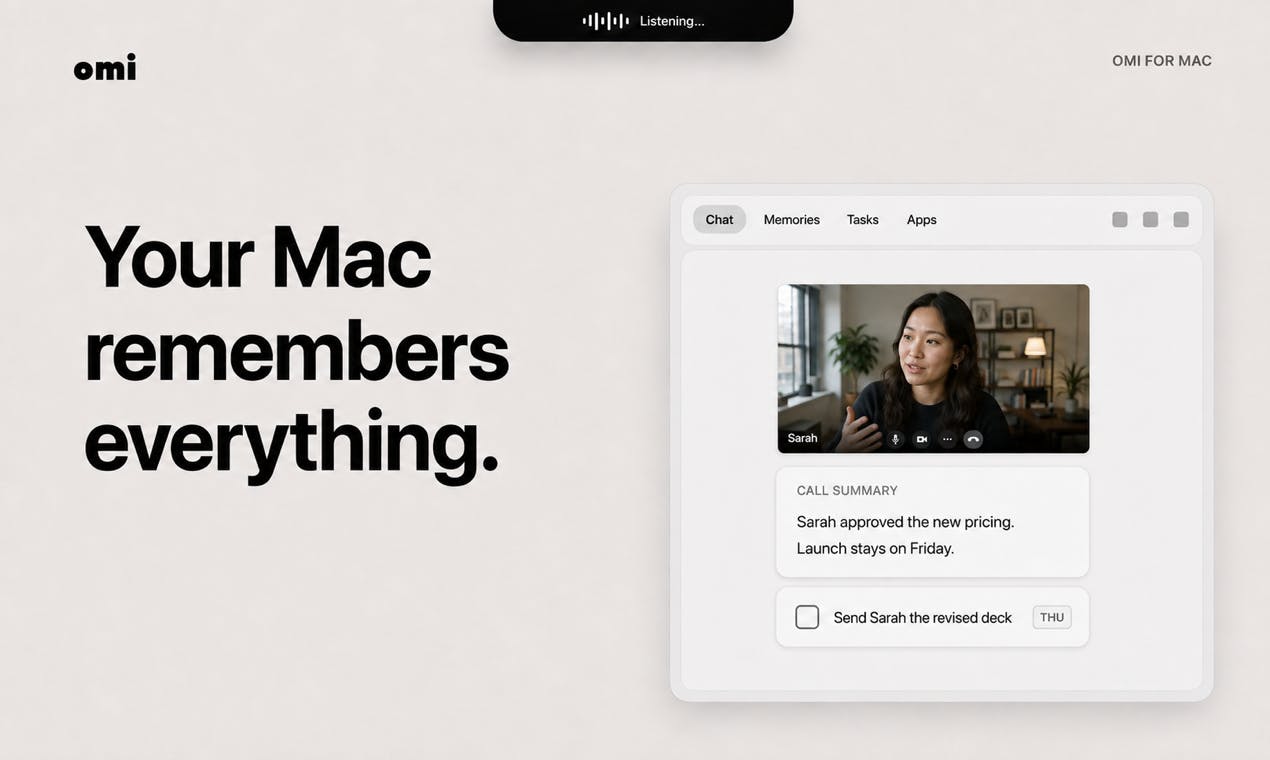
Omi is an open-source local AI assistant that remembers everything you see and hear on your computer.
Omi is an open-source, privacy-first AI memory assistant that continuously captures your screen content and conversations, automatically generating summaries, tasks, and reminders. It supports local execution and Bring Your Own Key (BYOK) for AI APIs, ensuring data never leaves your device. With conversational retrieval powered by RAG architecture, users can ask natural language questions about anything they've previously seen or heard.
An AI Memory Assistant That Remembers Everything You See and Hear
In an age of information overload, we spend our days processing massive amounts of content on screens — meetings, calls, web pages, chat logs — yet remarkably little of it sticks in long-term memory. Cognitive science research shows that human working memory has extremely limited capacity. Psychologist George Miller's classic 1956 theory posited that short-term memory can hold only about 7±2 chunks of information at a time. Meanwhile, modern knowledge workers switch between applications over 1,100 times per day on average, receiving far more information than the brain can naturally process. This sustained cognitive overload causes vast amounts of valuable information to fade from memory within hours of being received.
Omi, a new product that recently ranked third on Product Hunt, was built to solve exactly this pain point. Product Hunt is one of the world's most influential tech product discovery platforms, using a daily voting and ranking system. Landing in the top three typically means receiving hundreds or even thousands of community votes, bringing a product significant early user traction and media attention. Omi's positioning is refreshingly direct: "Ask your computer anything you saw or heard."
By continuously capturing screen content and conversations, Omi automatically generates tasks, reminders, and summaries, helping users retrieve previously viewed or discussed information at any time. As a tool that combines Productivity, Open Source, and Artificial Intelligence attributes, it attracted widespread attention upon launch.
Omi's Core Features: From Passive Recording to Active Assistance
Omi's capabilities go far beyond simple screen or audio recording — it functions more like a "Second Brain" with genuine comprehension abilities. The "Second Brain" concept was systematized by knowledge management expert Tiago Forte, with the core idea of using external tools as extensions of human biological memory. From early note-taking apps (like Evernote), to knowledge graph tools (like Notion and Obsidian), to today's AI-driven automatic recording systems like Omi, Second Brain technology has undergone three paradigm shifts: from "manual input" to "passive capture" to "intelligent understanding." The introduction of AI enables systems not only to store information but also to understand semantics, build connections, and proactively generate insights. Here's a detailed breakdown of Omi's core features.
Full-Scenario Content Capture and Retrieval
Omi continuously captures your screen visuals and conversation content. Whether it's a video meeting, a phone call, or key data you spotted while browsing a document, everything gets recorded and added to a searchable knowledge base. This full-scenario capture relies on OCR (Optical Character Recognition) technology to parse on-screen text and ASR (Automatic Speech Recognition) technology to transcribe spoken conversations. Working in tandem, they definitively solve the classic frustration of "I know I saw it somewhere, but I can't remember where."
Automatic Generation of Structured Summaries and Action Lists
Raw recording alone has limited value. Omi's real power lies in transforming raw information into actionable outputs. It can automatically convert call content into summaries and action items, helping you quickly distill "what needs to happen next" from lengthy meetings. It also proactively creates tasks and reminders, dramatically reducing the burden of manual organization. This automatic transformation from unstructured information to structured output is one of the most practically valuable applications of large language models in productivity scenarios.
Conversational Retrieval and Personalized Intelligent Responses
When you need to recall certain information, you can simply ask Omi a question, and it will provide personalized answers based on what you've previously seen and heard. This "Q&A-style memory retrieval" interaction is essentially an application of Retrieval-Augmented Generation (RAG) architecture — the system first retrieves content fragments relevant to the question from the local knowledge base, then feeds them as context to a large language model to generate answers. This approach is far closer to natural human thinking patterns than traditional keyword search, and significantly more efficient.
Omi's Key Differentiators: Open Source, Local Execution, and Data Sovereignty
In a market crowded with AI assistants, Omi's most noteworthy differentiator is its strong emphasis on privacy and data sovereignty.
Fully Open Source and Locally Run
Omi is a fully open-source AI tool that supports local execution. For a product that continuously captures screens and conversations, this is critically important. In the AI security domain, open source and local execution are two complementary but distinct privacy protection mechanisms. Open source ensures code transparency and auditability — community security researchers can inspect the codebase at any time for data exfiltration backdoors or covert telemetry behavior. Local execution eliminates data transmission risks at the architectural level — all screen capture, voice transcription, and AI inference processes are completed on the user's own device, with data never leaving the machine. The combination of these two approaches is considered a practical implementation of "Zero Trust" principles in security models, and is particularly well-suited for handling commercially sensitive information and compliance-bound scenarios (such as GDPR and HIPAA).
Bring Your Own Key (BYOK)
Omi supports connecting users' own AI API keys. This "BYOK" (Bring Your Own Key) model is a service architecture that has emerged in the AI application layer in recent years. Traditional SaaS products typically have the service provider manage API calls centrally, with user data passing through the provider's middleware. Under the BYOK model, users directly use API keys they've obtained from AI service providers like OpenAI, Anthropic, or Google, with data requests going directly from the user's device to the AI service provider, bypassing the product vendor's servers. This architecture delivers three key benefits: first, data doesn't pass through third-party intermediaries, significantly reducing privacy risks; second, users can flexibly choose different model providers, avoiding vendor lock-in; third, costs are billed directly to the user's own API account, making expenses transparent and controllable.
Fine-Grained Privacy Controls
The team specifically emphasizes that users have full control over "what to record, what to pause, and what to delete." In a product framework built around "AI records everything," giving users the ability to pause at any time and permanently delete data is the foundation of trust. This is especially critical for use cases involving trade secrets or personal privacy.
AI Memory Market Analysis: Omi's Positioning and Outlook
"AI personal memory" is rapidly emerging as a fast-growing new category. The pioneer in this space was Rewind AI (now rebranded as Limitless), founded by Dan Siroker in 2022, which first introduced the continuous screen recording + AI retrieval product paradigm and secured investment from top-tier VCs like a16z. Since then, Microsoft Recall (a built-in AI recall feature for Windows), Granola (AI meeting notes), Fireflies.ai (meeting transcription), and other products have entered this space from different angles. These products can be broadly divided into two categories: full-scenario capture tools (like Rewind/Limitless, Microsoft Recall, and Omi), which attempt to record everything a user does on their computer; and vertical-scenario tools (like Otter.ai and Fireflies), which focus specifically on meetings and conversations.
Omi's strategy deeply integrates full-scenario content capture with privacy-first design. Continuous screen and audio recording inherently carries privacy concerns — when Microsoft launched its Recall feature in 2024, it faced fierce backlash from the community and security researchers over privacy issues, ultimately forcing major adjustments to the product strategy. Omi's combination of "open source + local execution + bring your own key" directly addresses these concerns. This technical approach demonstrates genuine commitment and is more likely to earn the trust of developers and professionals who are highly sensitive about data security.
That said, the actual user experience of such products still requires ongoing validation. The core challenge of running AI models locally is computational resource consumption: continuous screen capture requires OCR processing, audio recording requires ASR transcription, and semantic retrieval and Q&A require running vector embedding models and large language models. On an Apple Silicon Mac, for example, running a local 7B-parameter language model typically requires 4-8GB of memory. How to run continuously in the background without significantly impacting the user's day-to-day work experience is a key engineering challenge that products in this category must continuously optimize. Recent advances in techniques like model quantization and speculative decoding are gradually lowering the resource threshold for local AI inference. Beyond system resources, content capture accuracy, retrieval result relevance, and knowledge base maintainability over long-term use are all critical factors that determine a product's success or failure. The product is still in its early stages, and future iterations are worth keeping an eye on.
Conclusion: Who Should Use Omi
Omi represents an ideal form of AI assistant: unobtrusive, quietly recording in the background, delivering precise answers when you need them, while firmly placing data sovereignty back in the user's hands. For knowledge workers drowning in daily information floods, a "locally deployed, fully open-source, privacy-controlled" AI memory vault holds undeniable appeal.
If you're particularly sensitive about data privacy and eager to leverage AI to remember everything important from your work, Omi deserves a spot on your tool watchlist. Whether it can stand out in the increasingly crowded AI memory space will depend on continued product refinement and open-source community ecosystem development.
Related articles
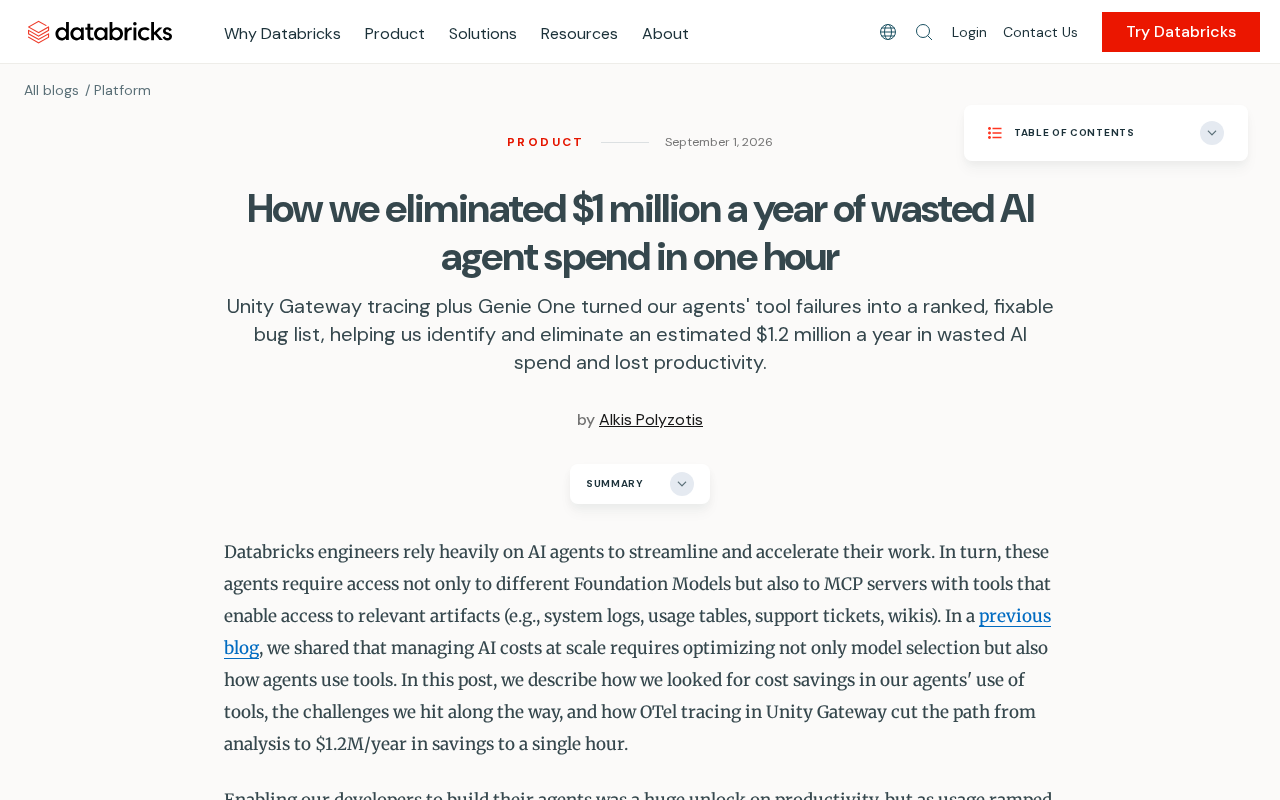
AI Agent Cost Optimization in Practice: Engineering Wisdom That Saved $1 Million in One Hour
Databricks eliminated $1M/year in wasted AI Agent spend in just one hour. Learn the root causes of Agent cost overruns and key strategies like model tiering, context pruning, and caching.
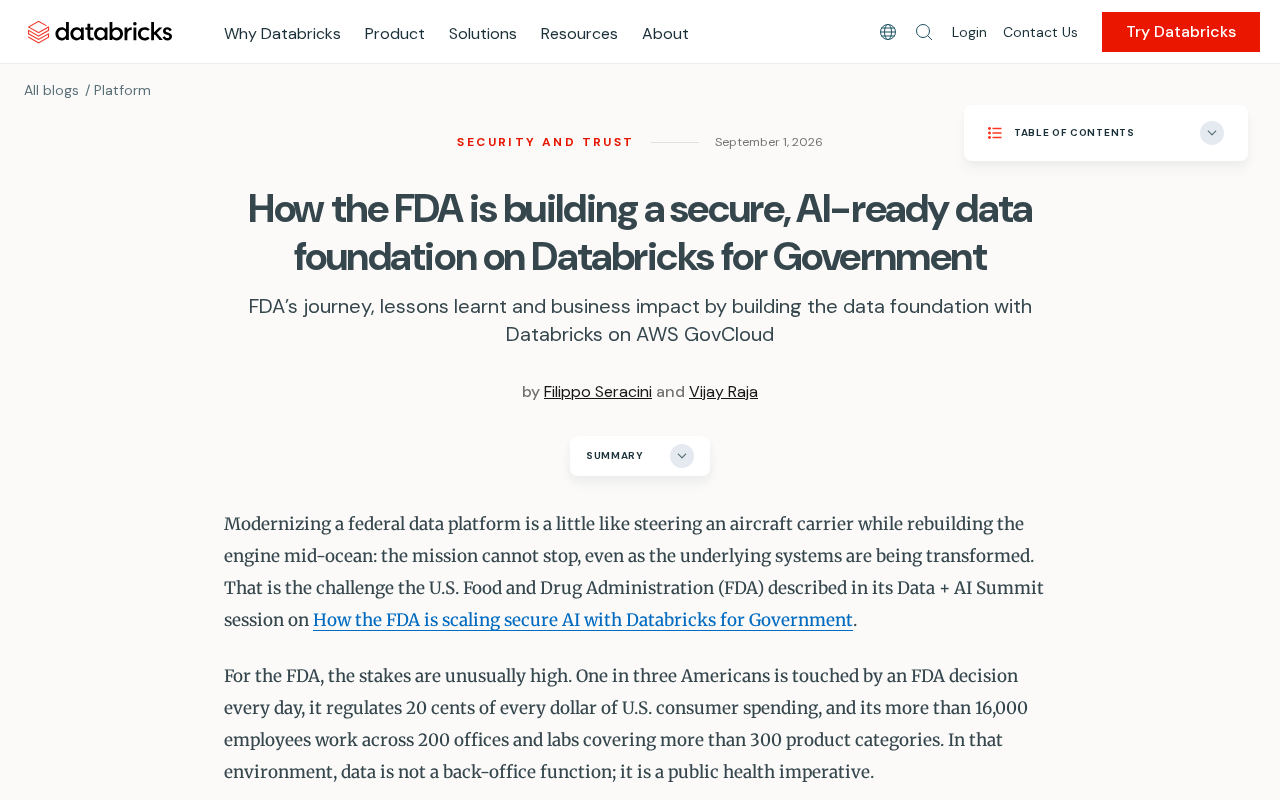
How the FDA Is Building an AI-Ready Data Foundation on Databricks
Explore how the FDA leverages Databricks for Government to build a unified Lakehouse architecture and AI-ready data foundation while meeting federal security and compliance standards.
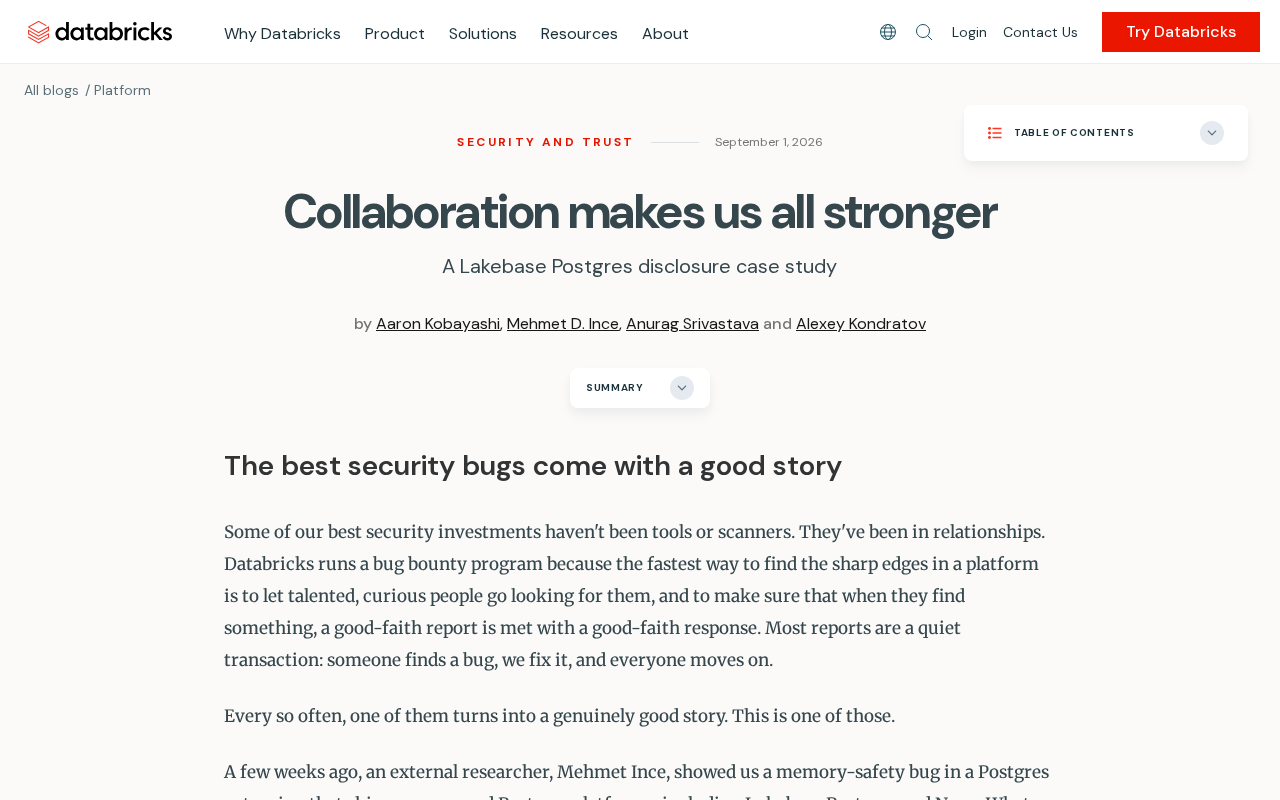
The Power of Security Collaboration: Why Vulnerability Discovery Cannot Do Without Human Intelligence
Explore how security collaboration outperforms tool dependency, the value of vulnerability stories, cross-team knowledge sharing practices, and building stronger defenses by investing in people and collaboration.