One Person Built a $7M Recording App with AI: A Complete Breakdown of Wave

How a solo non-technical founder used AI to build a $7M recording app in three years.
Jason, a non-technical founder in his 40s, single-handedly built the recording app Wave to $7M in revenue and 30K+ paying users using AI. This article breaks down his four-step workflow: rapidly prototyping with AI and letting users pick winners, choosing mobile as the right product container, using AI Agents to replace entire teams across support, ops, and analytics, and running AI-driven A/B marketing while avoiding the SEO traffic trap.
One Person, Three Years, $7 Million
Amid the noise of AI entrepreneurship, Wave stands out as a remarkably counterintuitive case study: Jason, a 40-something entrepreneur who can't write code, used AI to build a recording app that generated $7 million in revenue over three years, accumulating more than 30,000 paying users. Even more astonishing, during the core growth phase of the project, the team consisted of just him alone.
On the surface, this is just another ordinary recording tool — open your phone, tap record, capture meetings, interviews, lectures, or in-person conversations, and when you're done, AI automatically organizes everything into structured transcripts, summaries, and key highlights. Even Apple's built-in recording app can do this kind of thing, so how did Jason manage to reach $7 million?
The answer isn't about how many fancy AI tools he used — it's about how he embedded AI into a complete money-making workflow. This article breaks that workflow down into four key actions, and the last one is what truly separates ordinary people from those who know how to build a profitable business.
Step 1: Don't Ask AI What to Build — Let Users Tell You
The most unconventional thing about Jason is that he never asked AI, "What project should I build to make money?"
When ChatGPT first appeared in 2022, its most prominent capability was text summarization. Here it's important to understand a key piece of technical context: in November 2022, OpenAI released ChatGPT, based on the GPT-3.5 large language model, giving ordinary users their first experience of a large model's astonishing abilities in text comprehension, summary generation, and conversational interaction. Before this, speech-to-text (ASR, or Automatic Speech Recognition) technology was already relatively mature — OpenAI's Whisper model, released the same year, pushed open-source speech recognition accuracy to new heights. But ASR could only convert audio into raw text. The real pain point was "what to do after the transcription": long, unedited verbatim transcripts had almost no reading value. Large language models filled exactly this gap — they could produce structured summaries of long texts, extract key action items, and even categorize content by topic.
Jason astutely connected the two capabilities — voice could already be converted to text, and large models could now summarize text, so "record audio, convert to text, then have AI generate a summary" became a natural combination. Wave's earliest demo was cobbled together exactly this way.

But he didn't go all-in immediately. At the time, his head was buzzing with other ideas: an AI summarizer for New York State legislation, an AI customer service tool for Shopify sellers, group search… With so many demos, which one should he keep?
The key is that he didn't keep asking AI "which one will succeed." Instead, he put these demos directly in front of real people — his earliest users were friends and family. The strongest feedback, as it turned out, was for the simplest one: the AI recording tool.
The truly valuable takeaway from Step 1: AI is responsible for rapidly building ideas into prototypes; users are responsible for telling you which one is worth pursuing.
This represents a fundamental shift in how products are validated in the AI era. In the past, building a usable demo took weeks or even months. Now AI can produce multiple prototypes in a matter of hours. The entrepreneur's core job has shifted from "guessing which idea is right" to "building quickly and letting the market decide." Jason's approach is highly aligned with the MVP (Minimum Viable Product) philosophy Eric Ries proposed in The Lean Startup, but the AI era has accelerated this cycle by an order of magnitude. A traditional MVP might require weeks of development, but with AI coding tools like GPT-4, Cursor, and Replit, a functional prototype can be assembled in hours. This means entrepreneurs can simultaneously run multiple low-cost experiments, using real user feedback rather than personal intuition to filter directions — essentially transferring product decision-making power from the founder to the market, dramatically reducing the risk of directional misjudgment.
Step 2: Package the AI Capability in the Right Container
With a solid demo in hand, the next decisive question was: what container should this AI capability be packaged in? This directly determines whether it remains a toy or becomes a real business.
At the time, the vast majority of AI products were trapped on desktop — web pages, command lines, various technical demos, some even requiring users to spin up their own servers and clients. The technology looked impressive, but ordinary users would never use it on a daily basis.
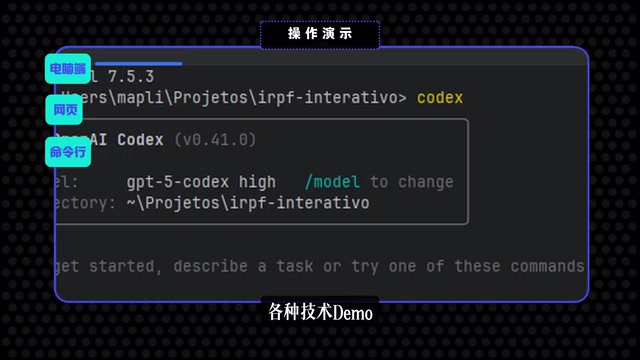
Jason's reasoning was straightforward: the real users of a recording tool don't necessarily carry a laptop everywhere, but their phone is almost always with them. So he chose mobile as his container.
Behind this choice lies a crucial product design concept — "scene-native design." Recording naturally happens in mobile contexts: meeting rooms, classrooms, coffee shops. Nobody is going to crack open a laptop just to record a conversation. Mobile also brought two hidden advantages: first, push notifications — the app could proactively alert users when a transcription was ready, creating a closed usage loop; second, the ease of subscription payments — the in-app purchase (IAP) systems on iOS and Android make payment conversion nearly frictionless. By contrast, from 2022 to 2023, a huge number of AI products existed as web-based chat interfaces, requiring users to actively open a browser, type in a URL, and log into an account — every additional step hemorrhaged potential users.
Later data validated this choice: roughly 90% of Wave's processing volume comes from standard recordings on mobile, totaling nearly 9,000 hours per day.
What's even more thought-provoking is that this logic is entirely transferable — the same AI summarization capability, if freed from a chat box and embedded into headphones, glasses, voice recorders, watches, or cameras, could easily become an entirely new product category. Choosing the right container is fundamentally about finding the real-world scene where user demand actually occurs.
Step 3: Let AI Take Over the Entire Workflow, Not Just Code
After the product launched, users started reporting bugs, filing complaints, and raising all kinds of unexpected issues.
The normal company process goes: user contacts support → support compiles the issue → product manager makes a judgment → engineer implements the fix. Jason's approach was to be the support team himself — user issues were immediately converted into product tasks and bug fixes, then iterated into the next version. He even gave people around him permanent free access. These people would message him directly even in the middle of the night when they hit a problem — essentially serving as high-frequency real-world beta testers.
When the user base grew beyond what one person could handle, Jason didn't hire — he continued handing work off to AI. And not just coding — he outsourced operations too:
- Connected user data analytics APIs, letting AI serve as a data analyst
- Had AI directly write and maintain the customer support knowledge base
- When servers went down, he'd give AI a direct task: "Go to the terminal, check recent logs, search for fatal errors, identify the time and cause of the anomaly, and give me a report" — the report would come back in minutes
Jason says that similar log analysis used to take a dedicated analyst an entire week.
What Jason was practicing here is essentially the concept of "AI Agents." AI Agents differ from simple chat conversations in that they can invoke external tools — API endpoints, terminal commands, database queries — to complete complex, multi-step tasks. In the log analysis scenario, for example, the Agent needs to sequentially: SSH into the server → execute grep commands to search error logs → parse timestamps and error stack traces → generate a structured report. This type of workflow became feasible in 2023 with the rise of frameworks like LangChain and AutoGPT, and by 2024, Claude and GPT-4 had developed quite reliable tool-calling capabilities. In traditional companies, data analysts, customer support staff, and SRE operations engineers each handle their own domain — the information transfer and context-switching between roles is itself a massive hidden cost.
What's truly being eliminated here isn't the fifteen minutes it takes to write an article — it's the repeated cycles of understanding, communicating, confirming, and handing off between multiple roles.
His real AI workflow isn't about asking a few more questions each day — it's about letting AI directly connect to the code, customer support, logs, and product data where actual work gets generated. A one-person company uses AI Agents to eliminate the intermediate steps between roles, achieving an end-to-end closed loop from problem discovery to resolution. This is the true technical foundation that makes a "one-person company" viable.
Step 4: AI Marketing and the Demand-Matching Problem Behind Traffic
At this point, you only have a highly efficient company — not necessarily a highly profitable one. Wave's leap from $1 million to $7 million was primarily driven by this final step: AI-powered precision marketing.
Jason's paywall page almost never has a "final version." He continuously runs two versions simultaneously in A/B tests, randomly assigning different users to each group. Whichever version achieves a higher conversion rate gets kept, and the winner is then tested against the next iteration — a continuous cycle of optimization.
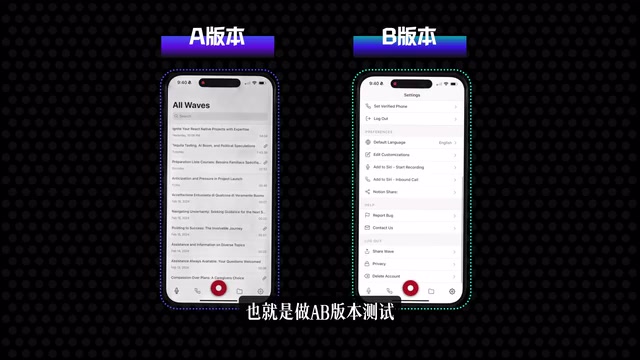
A/B testing is one of the most classic growth methodologies in internet products. The core idea is to randomly split users into two groups, show each group a different version of a page or feature, and use statistical methods to compare which version performs better on key metrics. Jason uses a continuous iterative approach to A/B testing: the winning version isn't the endpoint but rather the baseline for the next round. This "champion-challenger" model enables continuous conversion rate improvement. In the AI era, this process can be accelerated even further — AI can batch-generate different copy variations, page layouts, and even pricing strategies, and paired with automated traffic allocation and data analytics tools, one person can complete an optimization loop that previously required the collaboration of a growth team, designers, and data analysts.
However, he also stumbled on the traffic acquisition side. He built a project called VivaPod: it automatically converted well-known overseas podcasts into text, generated summaries, extracted key points, and auto-generated web pages to capture free traffic from Google search. This did bring in thousands of daily visits, but almost none of those visitors downloaded the main app.
The reason was simple: these people wanted to "quickly consume podcast content," not "buy an AI recording app."
VivaPod's failure reveals a highly universal problem in the AI era: the traffic illusion of SEO content farms. With the proliferation of large models, batch-generating high-quality articles and publishing them to websites for Google search traffic has become easier than ever, leading many entrepreneurs into the trap of equating "traffic" with "revenue." But the value of search traffic depends on the alignment between "search intent" and the product. Users searching for "podcast episode summary" have a core intent of accessing free content, not purchasing a recording tool — this is what marketers call "informational intent" versus "transactional intent." Google itself is also providing summaries directly on search result pages through features like AI Overviews, further squeezing the traffic space for this type of content site.
This final insight is crucial: AI can help you mass-produce content and generate traffic, but it cannot solve the demand-matching problem behind that traffic for you.
Traffic and demand must be precisely aligned — otherwise, no amount of page views will convert into paying users. This is also the fundamental reason why many AI content farms appear to have exploding traffic yet struggle to monetize. A truly effective customer acquisition strategy requires ensuring that the user profile at the traffic entry point closely matches the target user of the paid product.
What Ordinary People Can Learn from Wave
Looking back at the entire case, Jason didn't guess the right direction every time. His method is actually very straightforward: build it first, show it to real people, look at the data and feedback, pivot if it's wrong, and double down if it's right.
Strung together, these four actions form a complete AI startup monetization workflow:
- Use AI to rapidly produce demos, and let users filter the direction
- Package AI capabilities into a container users actually use in real life
- Let AI take over the entire workflow — code, customer support, operations, data analysis
- Use AI for marketing, but always align traffic with the real demand behind it
With AI's support, technology is no longer the biggest barrier to entrepreneurship. What truly separates people is clear product thinking and efficient execution. As long as the direction is right, even one person can build a hit product.
For entrepreneurs stuck in the cold-start phase, Wave's significance isn't about "which AI tool was used" — it's about demonstrating an entirely new organizational form: AI is no longer just an efficiency plugin, but a core collaborator capable of fulfilling multiple job functions. This "one-person company + multiple AI Agents" model is very likely to become the dominant paradigm for small-scale entrepreneurship in the coming years. When AI can competently serve as data analyst, customer support agent, operations engineer, content producer, and marketing optimizer, the core competitive advantage in entrepreneurship will definitively return to insight into user needs and judgment of business logic.
Related articles

WorkBuddy Step-by-Step Tutorial: Get an Automated Workflow Running in Half an Hour
A step-by-step breakdown of the WorkBuddy automated workflow: why most people only use it as a chat app, how the 27-anchor course and 12 templates help beginners get up and running in half an hour, plus notes on usage boundaries.

The Truth About Free Claude Code: Three Legitimate Paths and One Scam
Is free Claude Code possible? We break down the real cost of Pro and Max (with exchange rates and taxes), how community free methods work and their privacy trade-offs, plus fake installers and phishing traps—and three legitimate free paths.
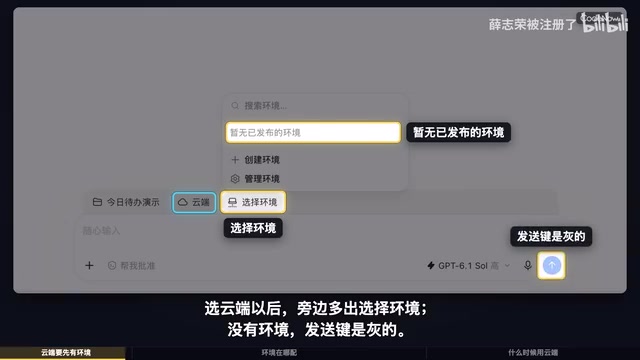
Codex Cloud Mode Explained: Environment Setup and Use Cases
This article explains how Codex cloud mode works, environment setup steps, and use cases, including how to create environments, connect GitHub repositories, set scheduled tasks, and compare cloud vs. local mode.