One Prompt, 12 Games: A Hands-On Test of an AI Game Development Tool

A hands-on test of Aura, an Unreal Engine plugin that generated 12 playable games overnight from a single prompt.
Bilibili creator Aidan Stanik ran an experiment with the Unreal Engine plugin Aura: he sent one prompt and let the AI run overnight, waking up to 12 complete playable games spanning Fortnite, Fall Guys, City Skylines, Subway Surfers, and Angry Birds styles. Aura's advantage is being built directly as an engine plugin that can drive the editor, create Blueprints, generate 3D assets, and run tests, starting at $10/month and skipping the tedious MCP pipeline setup. In testing, Tumble Party and the city sim were the most polished, while Stormfall and others had stiff feel and rough models. The author argues AI handles the 0-to-60 skeleton work, while 60-to-90 still needs human polish — but prototype validation cost is approaching zero.
When AI Works the Night Shift for You: How 12 Complete Games Were Made
Bilibili creator Aidan Stanik ran a rather hardcore experiment: he let an AI model run all night with just a single prompt, and the next morning woke up to 12 fully playable games sitting in Unreal Engine — each with sub-levels, story, audio, and art assets.
This isn't a concept demo. He actually playtested every single one: from the Fortnite-style Stormfall, to the open-world Street Kings, from the Rocket League-like Turbo Go, to the Fall Guys-style obstacle course Tumble Party, and on to a city-building sim, kart racing, zombie survival, and even an Angry Birds clone.
More importantly, here's what he did: "I literally sent one prompt and went to sleep." The prompt was roughly — "I'm leaving my computer on overnight tonight, you build a bunch of playable games, something like Fortnite, Roblox, Minecraft, CS2, or whatever else you can think of, and keep running the slash goal until it's done."
What this experiment reveals is a shift that's already happening: the barrier to game development may be far lower than most people think.
What Is Aura: An AI Agent That Lives Inside Unreal Engine
In the past, the classic approach to AI-assisted game development was to hook Claude or GPT into agent platforms like Claude Code or Codex, then connect them to Unreal Engine's MCP interface, with Blender handling the 3D parts in between. Setting up that whole chain was tedious and extremely unfriendly to beginners.
Aura took a different approach: it's built directly as an Unreal Engine plugin.
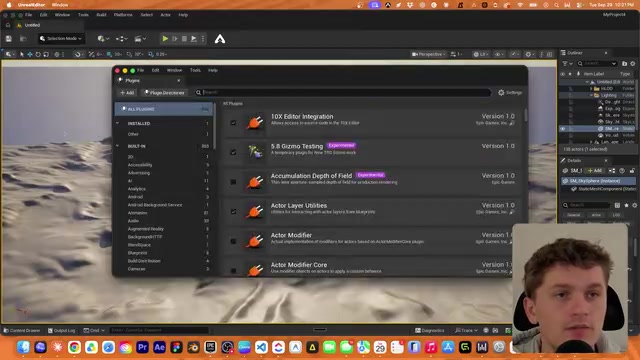
Installation is so simple it's almost just "next, next": find the plugin list in Unreal Engine's Edit menu, search for Aura, and once enabled, a chat window pops up. It has a built-in agent specialized for Unreal Engine development that can drive the editor, create and edit Blueprints, generate 3D assets, and run tests to verify results.
On the model side, Aura offers a choice of several frontier models, including GPT-6 Astra, Fable 5.1, and Opus 5.5, plus a completely unrestricted auto mode. If you're already using Claude Code, you can connect it to Aura with one click.
In the video, the creator demoed a scene generated on the spot: having the model generate a two-kilometer-wide open terrain with shadows to the north and south, hills on both sides, and flat ground in the middle for building. The result appeared immediately after sending the command — basic, sure, but "that's roughly how it works."
Pricing comes in three tiers: $10, $40, and $200 per month, and every plan includes automatic generation. The entry barrier isn't high.
Unreal Engine (UE) is a mainstream game engine developed by Epic Games — Fortnite itself is built with it. It provides a complete underlying foundation for rendering, physics, animation, and audio, and ships with a visual scripting system called "Blueprints." Developers don't need to write C++ — they can implement game logic by dragging nodes and connecting them. That's precisely why an AI agent only needs to learn to drive the editor and Blueprint nodes to build a playable game without understanding the underlying code.
MCP (Model Context Protocol) is an open protocol introduced by Anthropic to let AI models call external tools and data sources in a unified way. The phrase "hooking Claude or GPT into Claude Code or Codex, then connecting to Unreal Engine's MCP interface" refers to having the model control the engine through this layer of protocol. Hand-writing that chain requires handling authorization, context, tool definitions, and other details, which is a very high barrier for non-technical users; Aura packages the whole thing into a plugin, essentially skipping the "build the pipeline" step entirely.
Hands-On With 12 Games: Delight and Rough Edges Side by Side
The Most Polished Few
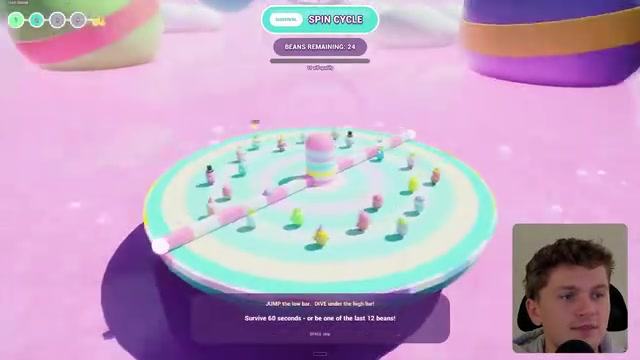
Tumble Party was the creator's favorite. The gameplay is similar to Fall Guys and Stumble Guys: racing through doors, spinning tracks, hurdling over obstacles while dodging wind, with multiple sub-levels chained into a complete elimination-style flow. The creator said it's "very much like those two, and clearly inspired by them."
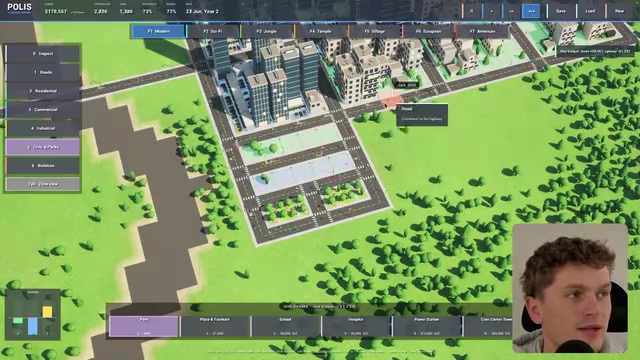
The City Skylines-style sim showed off the AI's ability at system design. The city's style can switch between modern, sci-fi, and jungle, and even the vegetation changes with the style. On the UI level there's a happiness index, power zoning view, entertainment facilities, and even an economic system — click on an individual building and you can see details like "42 out of 65 workers showed up." The creator could build roads himself, zone residential and commercial districts, build parks, and watch the population grow accordingly.
Metro Dash (a Subway Surfers-like) has power-ups like jetpacks and magnets, and the death animation was described by the creator as "pretty polished."
The Parts That Need Iteration
Stormfall (the Fortnite-like) has more obvious problems. The creator admitted "the feel isn't very realistic" — understandable, given it was a one-shot generation with no iterative refinement. But the core mechanics are all there: the storm circle, potion shields, weapon switching. When he picked up a sniper rifle and found that "you can actually zoom in," that little detail got him quite excited.
The GTA-style Street Kings used assets made in Blender, and when the creator zoomed in on the character and weapon models, he said they "still need more work."
The Easter Egg Tier
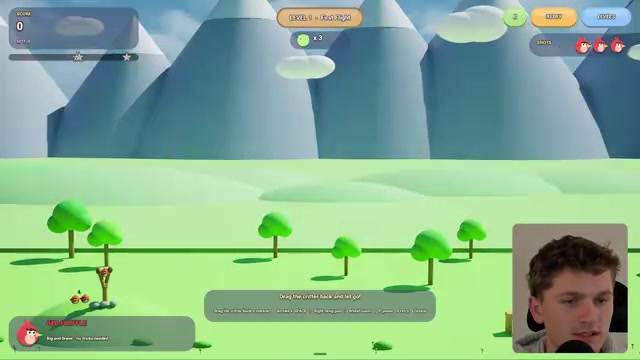
The Dead Zone (a Call of Duty zombies-style mode) lets you buy new weapons, and the creator said "it really has that Call of Duty flavor." King of the Cannibals recreated Angry Birds' slingshot mechanic — the red bird smashes straight through, the yellow bird speeds up mid-air when tapped, and the blue bird splits into three.
The recurring term "feel" in the article is a professional concept in game development (Game Feel), referring to the immediacy and consistency between player input and visual feedback — when the character jumps after you press the jump key, how fast the acceleration is, whether there's a buffer on landing, how the camera follows. For shooter games, feel also includes recoil, reticle recentering, and hit feedback. It's hard to generate with a single prompt because it depends on extensive fine-tuning and playtest iteration — it's the most time-consuming part of going "from 60 to 90." Stormfall being described as having a feel that "isn't very realistic" is essentially the absence of this tuning step.
UGC (User-Generated Content) refers to content created by players rather than officially. Roblox, Minecraft, and Fall Guys-style level editors are all typical platforms. Whether such platforms thrive depends heavily on the speed and volume of content output. Low-barrier AI generation tools can drastically reduce creation costs, which is why the article says it "could be a direct boon" to Roblox developers.
What This Means: Three Signals Worth Watching
First, the cost of prototype validation is approaching zero. The creator specifically noted — "these are just initial versions, he completed these 12 independently, and they can be repeatedly iterated and updated." The time from idea to playable prototype has been compressed to a single night. For indie developers, validating a gameplay concept no longer requires weeks of building art and system frameworks.
Second, the way the AI agent works is worth noting. The process the creator described is: the agent first analyzes "what does the map structure of Counter-Strike look like" and "what do Mario's environments look like," then creates scenes, implements game features, generates paths, and handles audio. This "analyze first, then execute" chain goes far deeper than simple code completion.
Third, it could be a direct boon for developers on platforms like Roblox. After trying Block Hop, the creator mentioned: "If you're a Roblox developer, it's absolutely worth trying." A low-barrier game generation tool fits exactly what UGC game platforms crave: content volume.
A Calm View: One-Shot Generation Is Not a Finished Game
The creator himself was very candid. He repeatedly stressed that these games had "no iterative refinement," and that Stormfall's feel problems and Street Kings' rough models are objective shortcomings. When generating surface terrain, he also called it "very basic."
In other words, what AI accomplishes is going from 0 to 60 — building the skeleton and filling in the flesh. But from 60 to 90 — the polishing, tuning, and balance adjustments — still requires human judgment.
But from another angle, that "from 0 to 1" stage is exactly where most indie developers get stuck. Now that bottleneck is being rapidly filled in by agent tools.
Related articles

Against Algorithms and Consumerism: How to Build a "Good Enough" Life
Vox editor Rachel Wilkerson Miller's four elements of a nice life—curiosity, beauty, joy, and meaning—and how to resist algorithms and consumerism.

Altman Declares: The Cybersecurity Crisis Is Unsolvable and There Are Too Many Vulnerabilities to Patch
OpenAI CEO Sam Altman publicly admits he can't fix all security vulnerabilities and that the cybersecurity crisis will keep worsening. This article analyzes the industry reality behind this statement: exploding software complexity, the double-edged sword of AI, and the need to shift security paradigms from "zero vulnerabilities" to resilient defense.

Product Hunt Launches Visual Launch Editor, Saying Goodbye to Tedious Form Filling
Product Hunt launches a Visual Launch Editor with in-place editing for name, tagline, gallery, and maker info, auto-saved drafts, and a checklist to guide creators.