One-Prompt Apps: Demos Are Easy, Shipping Is the Real Test

AI can build a demo in minutes, but shipping a real product is a whole different challenge.
"One-prompt app building" is real, but the gap between a working demo and a shippable product is wider than most people think. This article breaks down three tiers of AI dev tools, explains the technical debt risks and platform lock-in traps, and gives China-based users a practical guide to domestic alternatives like Baidu Miaoda and Ant Lingguan.
One-Prompt App Generation — Is It Really That Magic?
Silicon Valley folks these days can't stop talking about "building an app with one sentence" — you say something in plain English, and within seconds the system spits out something you can click, run, and that actually looks decent. First-timers almost always let out a "wow."
But let's pump the brakes: there's a significant gap between a working demo and a product that can actually ship, be maintained, and be handed off. This article isn't here to hype or trash the trend — it's here to lay that gap out clearly, and answer the one question that matters most for readers in China: which of these tools can you actually use?
Here's the bottom line upfront — if you're short on time, this is all you need:
- The real benefit: It genuinely saves effort. Compressing "idea to clickable prototype" from days down to minutes is not an exaggeration.
- The biggest misconception: Many people assume the generated, runnable interface is the product. It isn't. The hard part isn't drawing the UI — it's whether the thing can handle changing requirements, growing data, and multi-person collaboration.
- The painful truth: The hottest tools are overseas, and most of them require a VPN and a foreign credit card to use in China. The good news is that domestic alternatives have caught up considerably.
Where Did This Wave Come From?
"One-prompt app building" is fundamentally a product of the "Vibe Coding" movement — a term coined by OpenAI co-founder Andrej Karpathy in early 2025 to describe the practice of expressing intent in natural language and letting a large language model (LLM) generate runnable code directly.
This is built on the rapid evolution of code generation models — from the early GitHub Copilot (line-by-line completion) to today's Claude 3.5 and GPT-4o (full project-level architecture generation). The models' context windows have expanded from a few thousand tokens to hundreds of thousands, making it technically feasible to "generate a full-stack app in one shot." In other words, models are now "smart" enough to simultaneously hold the entire project structure, frontend-backend interface contracts, and database schema design in mind — rather than just being a tool that writes a few lines of code.
Three Tiers: Not All AI Dev Tools Are the Same
The idea behind "one-prompt app generation" is simple: you give it a sentence, and it generates a frontend UI, backend logic, database, authentication, and deploys the whole thing into something accessible.
Key players include Lovable, Replit, Bolt, and Vercel's V0 on the overseas side; and Baidu Miaoda and Ant Group's Lingguan on the domestic side.
But you need to understand the tiers first — don't lump them all together. By capability, the tools on the market fall into three categories:
Tier 1: UI-Only Generators
Tools like V0 and Figma Make produce beautiful interfaces, but you still have to handle the backend, data layer, and authentication yourself. These are better described as assistant tools for engineers, not turnkey solutions for non-technical users.

Tier 2: Full-Stack Builders
Lovable, Replit, and Base44 fall into this category. One description gets you a frontend, backend, database, and login flow — an end-to-end solution that produces something genuinely usable.
Take Lovable as an example: it defaults to a stack of React (frontend framework) + Supabase (backend-as-a-service, providing PostgreSQL and authentication) + Tailwind CSS (styling framework). This combination works especially well for AI generation because all three have enormous amounts of open-source training data — models are far more "familiar" with these frameworks than with niche tech stacks. Supabase comes with row-level security (RLS) policies and a ready-to-use Auth module, so the AI doesn't need to hand-write complex authentication logic. This significantly reduces the probability of generating code with security vulnerabilities — which is the fundamental reason the Lovable + Supabase pairing works so smoothly.
Tier 3: Tools That Give You the Source Code
This is the most critical tier. Lovable, Bolt, and Replit can all export to GitHub or let you download the source code — meaning you can continue maintaining your project outside of their platform. Whether it gives you the source code is the difference between a toy and an asset.
The price and capability gap between these three tiers is enormous. Always figure out which tier you need before choosing.
Demos Are Easy — Shipping Is the Real Test
The core point of this article in one sentence: a working demo is not a shippable product.

Getting it built is only step one. The real question is: how do you actually ship it, and keep it running long-term?
The gap between an AI-generated demo and a production-grade product has a specific name in software engineering — the "technical debt cliff." It shows up across several dimensions: concurrency and scalability — generated code typically lacks optimization for high-concurrency scenarios, and is missing cache layers and connection pool configuration; observability — often lacking proper logging and monitoring, making issues difficult to diagnose; multi-person collaboration — code lacks layered structure and test coverage, raising the cost for new team members to onboard; requirement iteration — when product requirements change significantly, regenerating from scratch is often easier than modifying existing code, but this means previously accumulated business logic can be lost in a single "regenerate."
The easiest trap to fall into here is platform lock-in. This has two technical dimensions: data lock-in, where the database is hosted on the platform's private cloud with no standard data export interface — the platform effectively holds your user data, and migration costs are extremely high if the platform shuts down or raises prices; and runtime lock-in, where some platforms use proprietary runtime environments or private APIs, meaning the generated code cannot run in other environments without significant rework.
By contrast, platforms that let you export source code, sync to GitHub, and attach a custom domain — those are "shipping." The ones that don't are just "hosting."
Syncing to GitHub means the code follows standard open-source ecosystem conventions and can be redeployed on any compatible cloud platform (Vercel, Railway, Alibaba Cloud, etc.) — truly "take it and go."
One question tells you whether an AI dev platform is worth committing to: if I stop using it tomorrow, can I take everything with me? If yes, it's safe to go deep. If not, think twice.
Can Users in China Actually Use These? Four Hurdles to Clear First
This is what most people care about most. The overseas platforms are genuinely unfriendly to users in China, for four main reasons:
- You need a VPN. Access is inconsistent, and you need a reliable connection.
- Payment requires a foreign credit card. Chinese debit cards generally won't work — you need a virtual card or a third-party payment workaround.
- Deployments are overseas, so access from China is slow and there's no ICP filing.
- Commercial use carries compliance risk. If you're actually running a business and storing user data, data cross-border transfer rules and the Personal Information Protection Law (PIPL) are unavoidable.

Point four deserves more detail. Under Chapter 3 of the Personal Information Protection Law (PIPL), transferring personal data overseas requires meeting specific conditions (security assessment, standard contracts, or certification). When you use platforms like Lovable or Replit to host apps that collect data from users in China, that data is stored on overseas servers by default — which constitutes a "data cross-border transfer" in practice. Additionally, websites targeting users in China without an ICP filing can be blocked at any time. This is why, even if the tools are technically accessible, the bar for legitimate commercial use remains very high — compliance costs often outweigh the efficiency gains the tools provide.
Bottom line: using these platforms for personal learning or prototyping is fine. But if you're shipping to users in China for real, the costs and risks of the overseas route add up fast.
How to Choose a Domestic AI Dev Platform
Match your use case to the right tool:
- Want a complete product fast, including a native app: Baidu Miaoda. The new version can generate native iOS/Android apps, export source code, and publish directly to Mini Programs and app stores — currently the most feature-complete domestic option.
- Want to whip up a small tool on your phone in 30 seconds: Ant Group's Lingguan Flash Apps. No computer needed, and there's a large community of ready-made apps to browse.
- Need a business assistant or customer service bot in the WeChat ecosystem: Tencent Yuanqi. Zero-code agent building that deploys directly to Official Accounts, WeCom, and Mini Programs.
- Determined to use the latest overseas stack and want source code: Lovable or Replit — but you'll need to accept all four hurdles mentioned above.

Toy or Asset? One Question to Rule Your Platform Choice
This "one-prompt app" wave is worth taking seriously. It has genuinely lowered the floor for prototyping to ground level. For the first time, people without technical backgrounds can turn an idea in their head into something clickable — and that's genuinely remarkable.
But don't believe the hype about "generating a full SaaS with one sentence." What's truly hard — and truly valuable — was never the one sentence. It's the ability to migrate when requirements change, and the ability to take over the code and keep nurturing it. AI can compress the "0 to 1" journey from a month down to a day. But the "1 to 100" engineering path still requires humans to steer.
Choose your platform by one criterion: does it give you the source code, and can you take it with you? Toys get discarded. Assets are worth cultivating.
One final note: this article is primarily based on desk research and subjective impressions rather than rigorous head-to-head benchmarking. If it saves you from excitedly diving in only to discover halfway through that you can't move your work elsewhere, it's done its job. Have you actually shipped something with a one-prompt app tool? Which one? Share in the comments.
Related articles
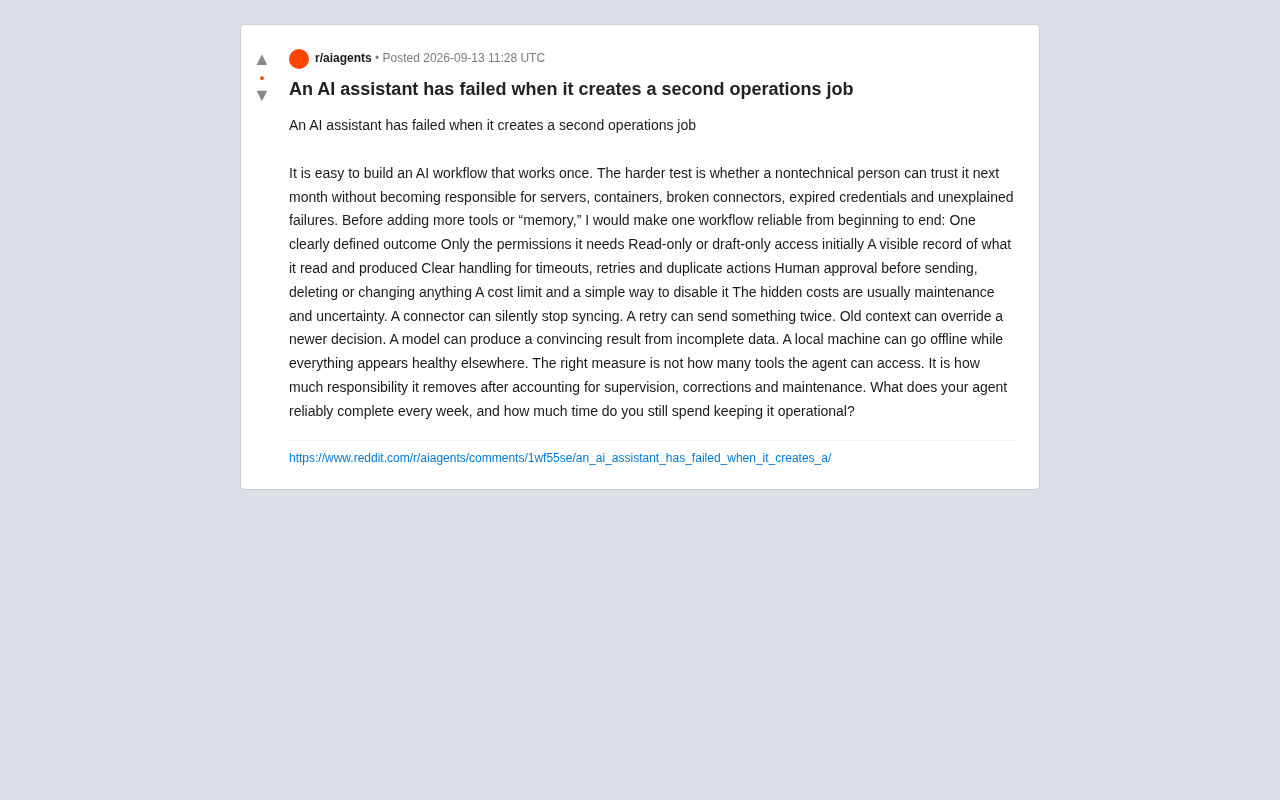
The True Failure of an AI Assistant: When It Creates a Second Operations Job
A Reddit user reframes how to judge AI assistants: they fail when they create a second ops job. Learn how to build end-to-end reliable workflows and measure Agent value by net benefit, not tool count.
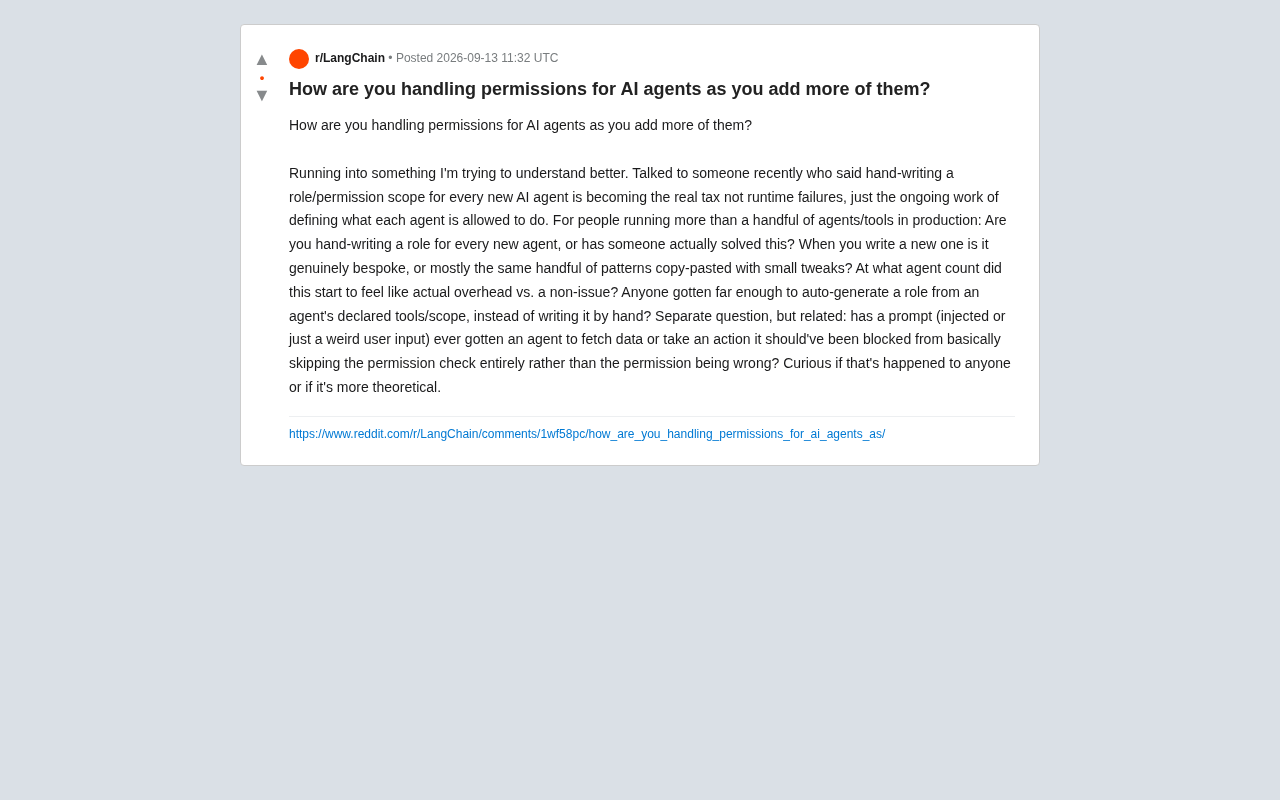
AI Agent Permission Management: Is Writing Roles Manually the New Hidden Tax?
As AI Agent counts grow, manually defining permission roles is becoming a hidden operational burden. This article explores scalability challenges, auto-generated roles, and the security risk of prompt injection bypassing permission checks.
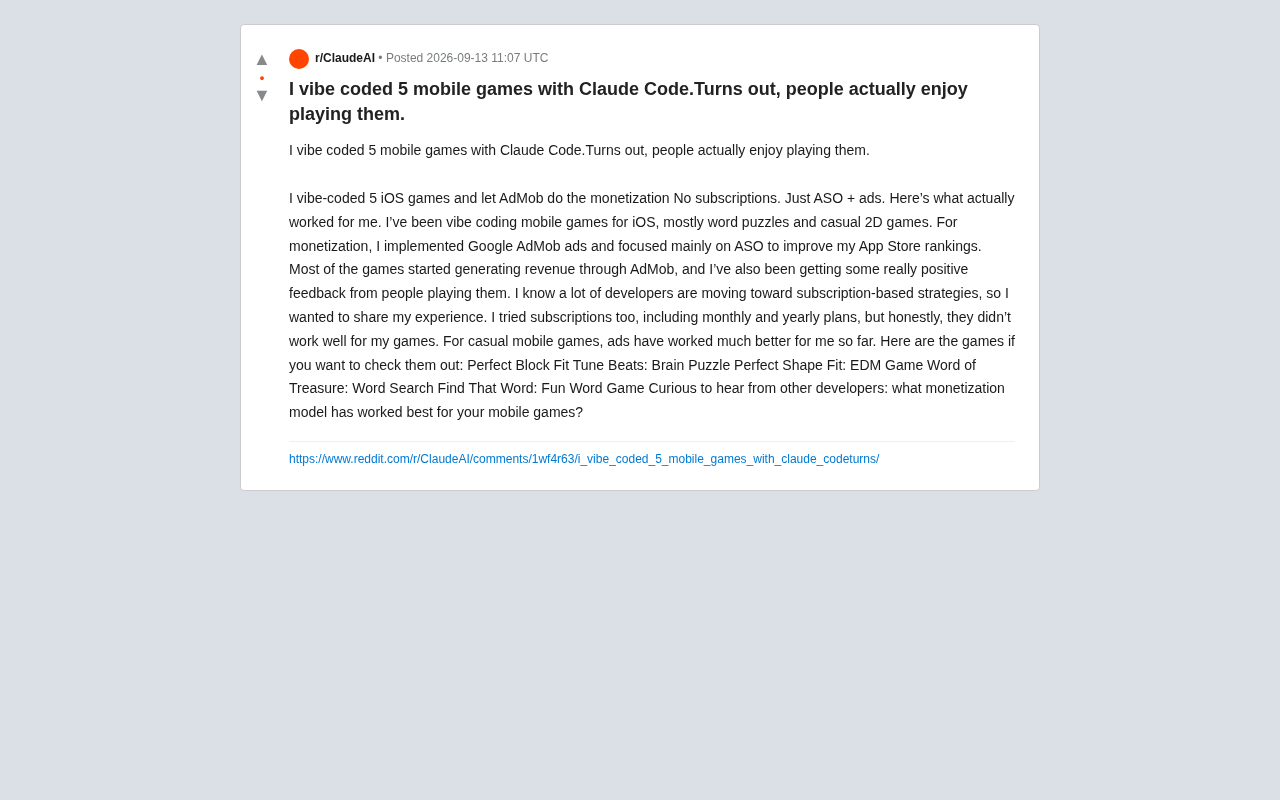
Vibe Coding 5 Mobile Games with Claude Code: Ad Monetization Beats Subscriptions
An indie dev built 5 iOS casual games with Claude Code vibe coding. His verdict: AdMob ads plus ASO optimization outperform subscriptions for casual games.