OpenAI and Cisco Release Shirudo: AI Agents Use eBPF for Real-Time Linux Vulnerability Defense
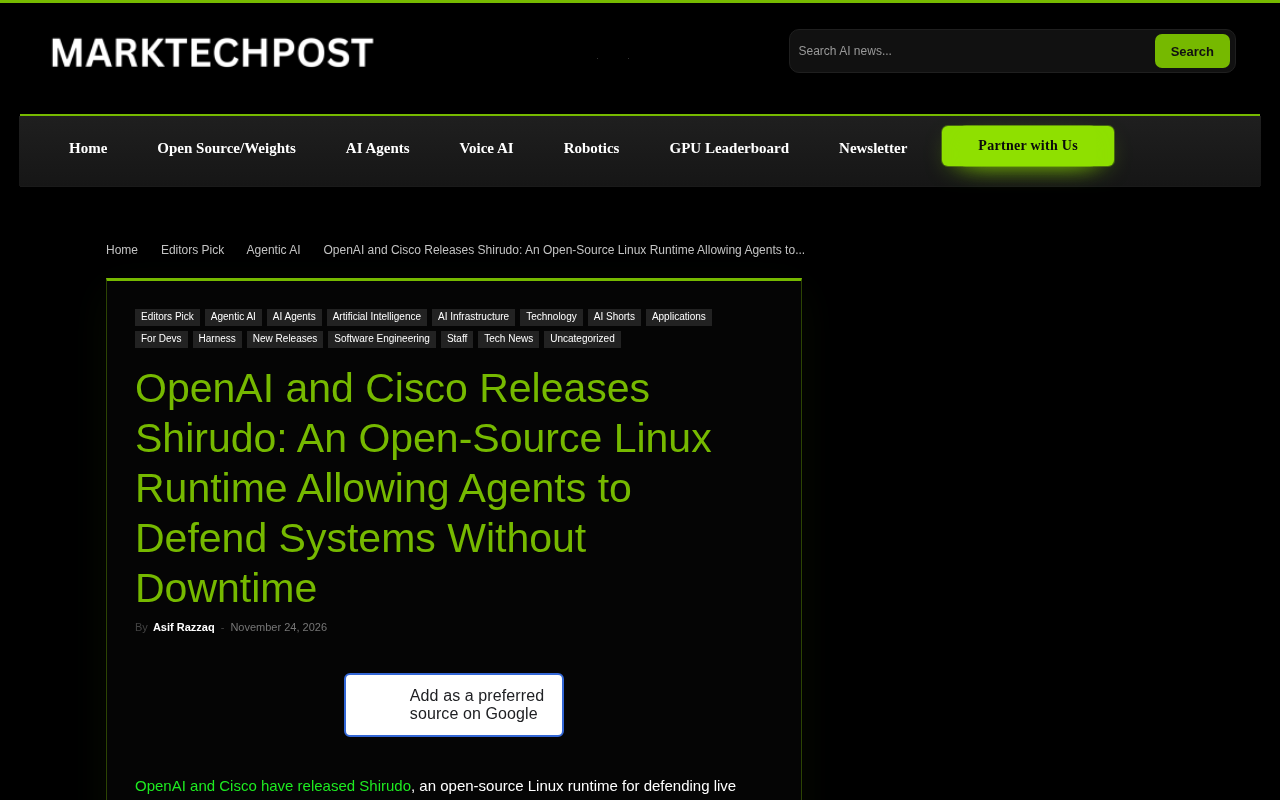
OpenAI and Cisco open-source Shirudo, using AI-generated signed eBPF shields to fill the patch window.
OpenAI and Cisco jointly released Shirudo, an open-source eBPF-based Linux runtime under the BSD license, currently in pre-release. Before official patches complete testing and rollout, AI agents generate signed "shields" for specific vulnerabilities and inject them into the eBPF runtime to block known exploit paths at the system call or network layer, avoiding downtime. The article covers the patch-window dilemma, signing as a trust and audit handle, and why eBPF fits—while cautioning that AI-generated kernel-level policies still need extensive validation, as signing ensures source trust, not correctness.
When Patches Aren't Ready, AI Agents Step In First
OpenAI and Cisco have jointly released an open-source project called Shirudo—an eBPF-based Linux runtime under the BSD license, currently in pre-release. Its core idea is straightforward: before a real patch completes testing and full rollout, AI agents generate signed "shields" that block exploit paths on running systems, avoiding downtime.
This news comes from MarkTechPost's report—not high in information density but clear in direction. It connects two of today's hottest engineering themes: the kernel-level observability and programmability that eBPF brings, and the path of AI agents moving from "writing code" to "modifying runtime behavior."
What Problem Does Shirudo Actually Solve
The Real Dilemma of the Patch Window
Enterprise security teams have long faced a dilemma: after a vulnerability is disclosed, official patches typically require testing, canary rollout, and change approval before deployment—a window that can last days or even weeks. During this period, systems must continue serving externally, yet the attack surface is already public. Traditional approaches include adding WAF rules, shutting down services, or emergency patching—the first offers limited coverage, while the latter two are costly.
Shirudo attempts to fill this window with AI agents. Agents generate defense logic for specific vulnerabilities and inject it into the eBPF runtime as "shields," intercepting known exploit paths at the system call or network layer.
What WAF Rules Are and Their Limitations
WAF (Web Application Firewall) intercepts known attack patterns by inspecting the syntax and semantics of HTTP requests—such as specific character sequences in SQL injection or tag structures in cross-site scripting. Its advantages are deployment at the traffic entry point and no need to modify backend code, but its limitations are obvious: it only covers attack surfaces passing through the HTTP layer, offering almost nothing against local privilege escalation, kernel vulnerabilities, or non-Web protocol exploits; rules are based on signature matching and are easily bypassed through encoding transformations, chunked transfer, and similar techniques; and WAF allow/block decisions lack true execution context at the OS level. So when a vulnerability lies in system calls or kernel subsystems, WAF is merely a peripheral fence—which is precisely why Shirudo attempts to intervene at a lower level.
The Signing Mechanism Is Key to Trust
The report specifically emphasizes that shields are "signed." This deserves elaboration: AI-generated kernel-level defense logic, if lacking review, is itself a new risk source. Signing means shields must pass identity verification and integrity checks before being allowed to load. This constrains agent behavior and gives operations teams an audit handle—who generated it, what changed, when it took effect—all theoretically traceable.
Code Signing and the Chain of Trust
Code signing uses asymmetric cryptography to compute a digest of a program or policy and sign it with a private key; the loader verifies the signature with the corresponding public key, confirming the content's source is trustworthy and untampered. In kernel security scenarios, signing has two layers of value: first, admission control—only shields generated by parties holding a valid private key can be loaded, preventing attackers or mistakes from injecting arbitrary kernel-level logic; second, audit traceability—signatures bind to certificate identities, answering "which agent generated this shield, at what time, based on which policy." But signing itself doesn't judge whether the logic is correct—a validly signed shield with overly broad rules can still cause false blocks, so signing must be paired with review, canary rollout, and rollback mechanisms.
Why eBPF Is a Suitable Vehicle
Placing defense logic in eBPF offers several inherent advantages. eBPF programs run in the kernel but are constrained by the verifier, so they won't crash the system like kernel modules do; they can be attached to system calls, network hooks, and other points, changing behavior without modifying application code; and loading and unloading are dynamic, fitting the "temporary defense, later removal" positioning.
This also explains why Shirudo emphasizes "without downtime"—shields take effect and roll back without restarting processes or machines, and can be smoothly switched once patches are ready.
The eBPF Verifier and Loading Mechanism
Before an eBPF program is loaded into the kernel, it must pass static checks by the verifier. The verifier simulates all possible execution paths, confirming the program won't access memory out of bounds, won't create infinite loops, won't dereference null pointers, and limits instruction count and stack depth. Only bytecode that passes verification is JIT-compiled into native instructions for execution. This mechanism gives eBPF kernel-level execution capability while keeping the probability of "the program itself crashing the system" very low—in stark contrast to traditional kernel modules that can read and write kernel memory arbitrarily. For AI-generated defense logic, the verifier acts as a mandatory safety net—even if the logic is flawed, the result is mostly rejection at load time or non-functioning features, rather than a kernel crash.
A Pre-Release Project to View Calmly
Shirudo is currently in pre-release status, and the BSD license means a low barrier to commercial use and derivative development—good for ecosystem diffusion. But it's also worth noting that AI agents automatically generating kernel-level security policies still requires substantial engineering and security validation regarding reliability, false blocks, and adversarial bypass. Signing only guarantees source trustworthiness, not logical correctness.
From an industry perspective, the significance of this project may not lie in how mature it is now, but in demonstrating a new collaboration model: a model vendor (OpenAI) provides agent capabilities, an infrastructure vendor (Cisco) provides systems and security scenarios, and the open-source community handles validation and extension. The rhythm of vulnerability response may thus gradually shift from "waiting for patches" to "agents block first, patches arrive later."
FAQ
Is Shirudo an official product? No, the report clearly states it is a pre-release version under the BSD license.
Which AI model does it rely on? The original report did not disclose specific model information, only stating that shields are generated by AI agents.
Will shields remain on the system permanently? According to the description, shields are for temporary defense during patch testing and rollout, and should be removable once patches land.
Should ordinary Linux users care? Currently it's more suitable for evaluation by security teams and platform engineering teams, especially production environments with long patch cycles and high availability requirements.
One-line Summary
OpenAI and Cisco open-source Shirudo, using AI-generated signed eBPF shields to fill the patch window.
Paragraph Summary
OpenAI and Cisco jointly released the open-source project Shirudo, an eBPF-based Linux runtime under the BSD license, currently in pre-release. Its core idea is that before official patches complete testing and full rollout, AI agents generate signed "shields" for specific vulnerabilities and inject them into the eBPF runtime to intercept known exploit paths at the system call or network layer, avoiding downtime. The article analyzes the real dilemma of the patch window, the role of signing as a trust and audit handle, and why eBPF is a suitable vehicle thanks to verifier constraints, dynamic attachment, and no need to modify application code. It also cautions that the project is not yet mature—AI-generated kernel-level security policies still require extensive validation regarding reliability, false blocks, and adversarial bypass, and signing guarantees only source trustworthiness, not logical correctness.
Related articles
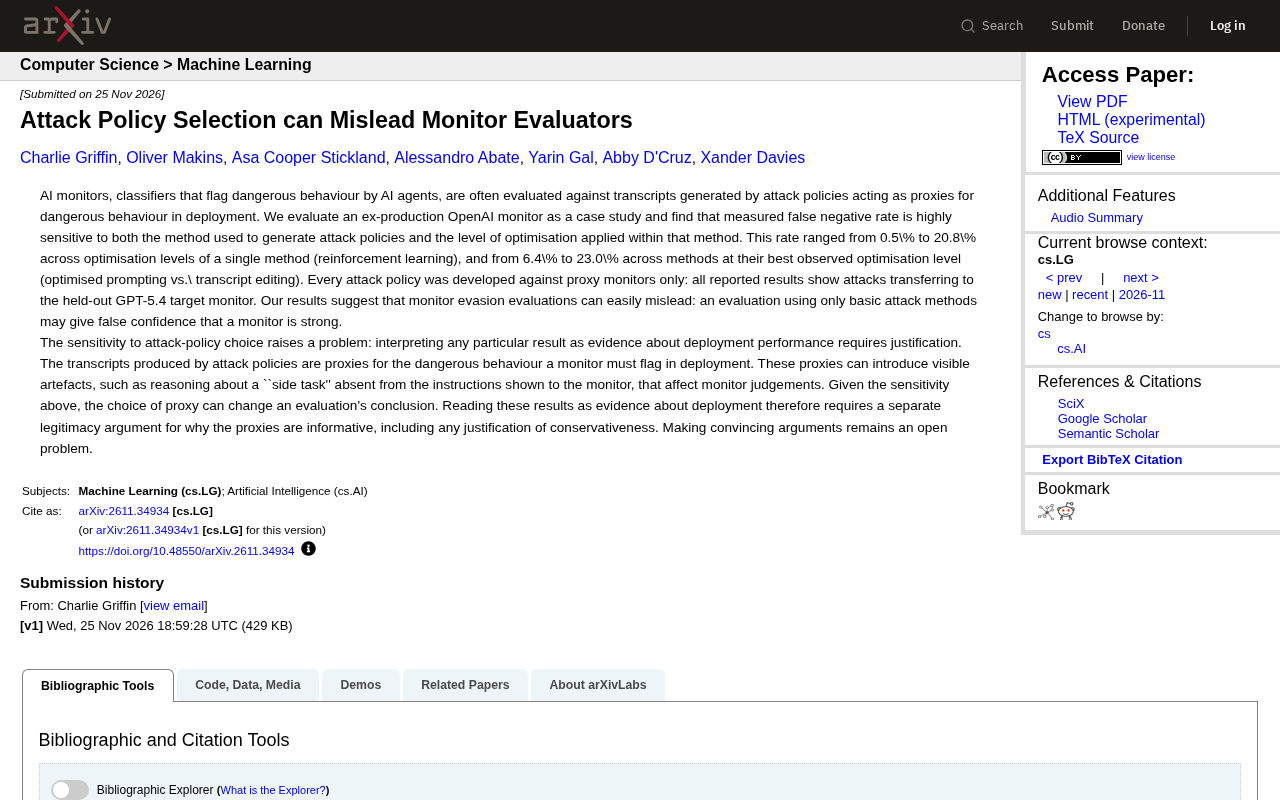
How Attack Policy Selection Can Mislead AI Monitor Evaluations
AI monitor evaluations are highly sensitive to attack policy choice; false negative rates vary widely across methods and optimization levels, and basic attacks may overestimate monitor strength and mislead deployment decisions.
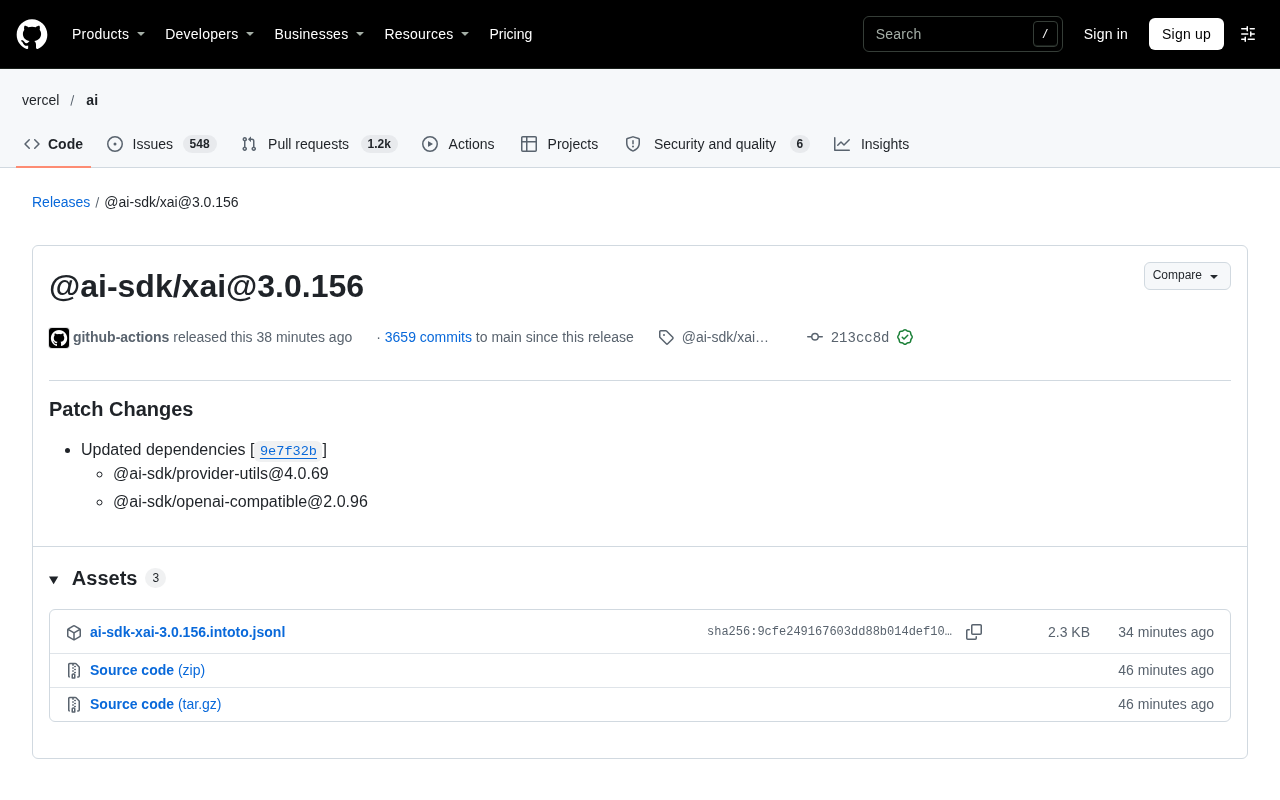
@ai-sdk/xai 3.0.156 Released: The Ecosystem Significance of Dependency Synchronization
@ai-sdk/xai 3.0.156 released as a patch update, syncing @ai-sdk/provider-utils 4.0.69 and @ai-sdk/openai-compatible 2.0.96. This article explains the ecosystem significance of dependency synchronization and upgrade advice for developers.

Vibe Coding for Absolute Beginners: Full-Stack AI Agent Development in Practice
A beginner's guide to Vibe Coding: what it is, why workflow orchestration isn't AI development, and how full-chain AI agent development, multi-platform builds, and AI-driven operations enable one-person companies.