OpenAI and Cursor Part Ways as Anthropic Seizes the Opportunity in AI Coding Market
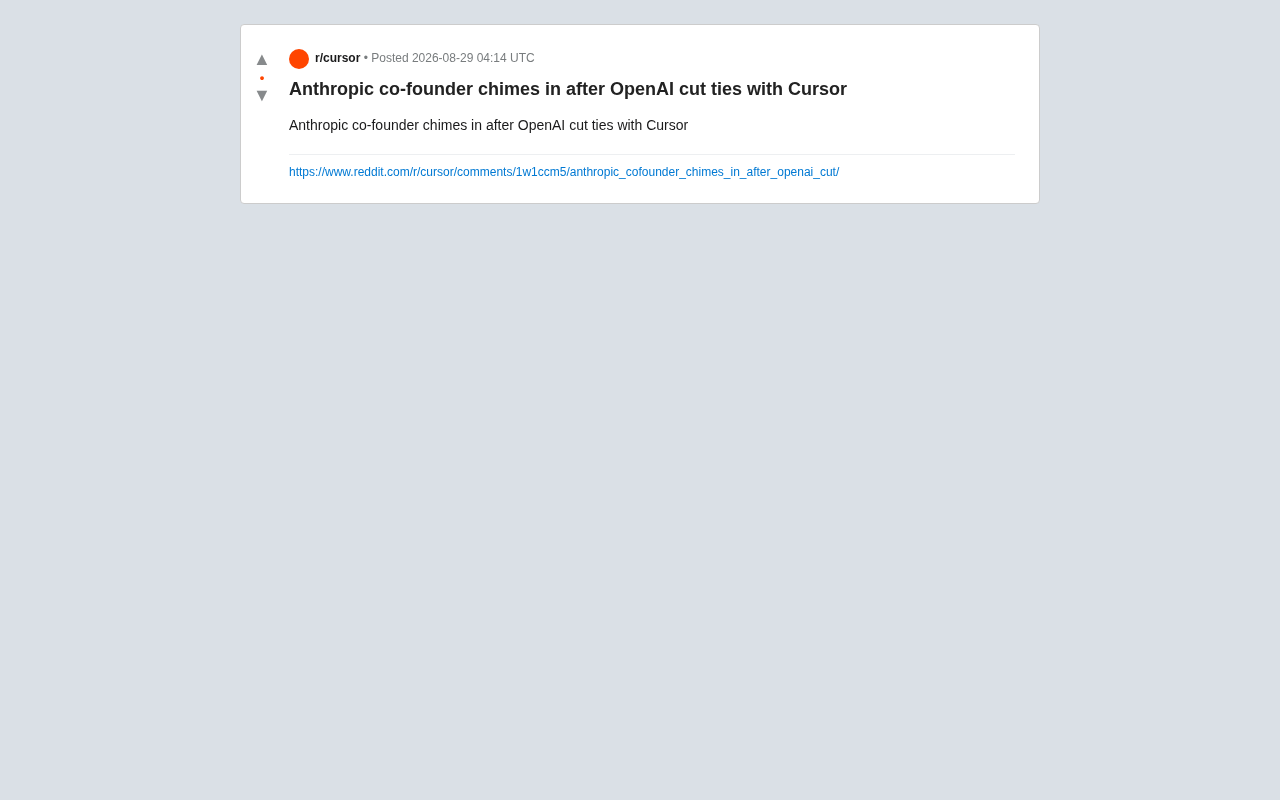
OpenAI-Cursor partnership fractures as Anthropic moves in, highlighting AI ecosystem power dynamics
The partnership between OpenAI and leading AI coding tool Cursor has encountered friction, prompting Anthropic to publicly position itself as an alternative partner. This reflects growing tensions between model providers and application-layer products as companies like OpenAI pursue vertical integration strategies. The shift is accelerating multi-model architecture adoption among AI applications to reduce dependency risks, while raising strategic questions about whether foundation model companies should compete directly with their customers.
The Alliance Shifts in AI Coding Tools: What Happened
Recent developments have stirred the AI coding landscape. According to discussions on Reddit, the partnership between OpenAI and popular AI coding tool Cursor has encountered friction, prompting an Anthropic co-founder to publicly weigh in. This has sparked widespread industry discussion about the relationship between AI coding tools and underlying model providers.
Cursor, an AI-native code editor that has rapidly risen to prominence over the past two years, has won favor among developers through its deeply integrated AI code completion, code comprehension, and intelligent refactoring capabilities. Developed by Anysphere and built on Microsoft's open-source VS Code architecture with extensive modifications, Cursor is essentially an integrated development environment (IDE) designed with AI as its core principle. Unlike traditional IDEs that add AI capabilities through plugins, Cursor embeds large language model invocation chains into every aspect of code editing, navigation, and debugging from the ground up. Its core features include Tab-based intelligent completion, cross-file context-aware code generation, natural language instruction-driven code refactoring (such as Composer mode), and intelligent Q&A after semantic-level indexing of entire codebases. In 2024, Cursor's valuation soared to multi-billion dollar levels with rapidly growing monthly active users, making it one of the most prominent products in the AI coding space.
Yet its core competitive advantage is largely built on the large language models it calls upon. In the current API economy model of the AI industry, model providers (such as OpenAI, Anthropic, Google) offer trained models as services through RESTful APIs, charging based on input and output token counts. Application-layer companies don't need to bear the enormous computational costs of model training (which can reach tens of millions or even hundreds of millions of dollars per training run), only paying for usage to access top-tier model inference capabilities. However, this also means that application-layer companies' core capabilities are highly dependent on upstream suppliers' pricing strategies, service availability, and model performance iteration pace. Therefore, which model provider to partner with and under what terms directly affects product performance and commercial costs.
Why the OpenAI-Cursor Partnership Changed
While publicly available details remain limited, community discussions suggest that the adjustment in OpenAI and Cursor's partnership is not an isolated incident, but rather reflects an increasingly sharp contradiction in the current AI ecosystem: the power struggle between model providers and application-layer products.
Natural Tension Between Application and Model Layers
For foundation model companies like OpenAI, AI coding applications like Cursor are both important API customers and potential competitors. When an application accumulates enough users and usage data, model providers often face a dilemma:
- Continue treating it as a pure downstream customer, enjoying revenue from API calls
- Directly enter the market with their own coding assistant product, competing head-on
OpenAI has become increasingly aggressive in its application-layer positioning in recent years. Beyond ChatGPT, its flagship consumer product, OpenAI has launched Codex (a model focused on code generation), ChatGPT's Canvas feature (supporting code writing and iteration), and maintains deep cooperation with GitHub Copilot—the world's most widely adopted AI coding assistant, whose early versions were primarily based on OpenAI's Codex model. Additionally, OpenAI has rolled out product lines like Operator (AI agent) and the GPTs ecosystem. This full-stack positioning from foundation models to end applications, known in the industry as a "vertical integration" strategy, shares similarities with Apple's hardware-software-service integration approach. Its strategic intent clearly extends beyond being just a "pickaxe seller." When its own business overlaps with partners', partnership adjustments become understandable.
This tension is nothing new in tech industry history. Microsoft launched Office, browsers, and other applications on the Windows platform, directly competing with ecosystem partners; Amazon launched private-label products after gathering industry data through its AWS platform; Google introduced Pixel phones in the Android ecosystem, forming a co-opetition relationship with OEM manufacturers. This dilemma of "being both referee and player" is academically termed "Platform Envelopment." Historical experience shows that excessive vertical integration often leads to collective "exodus" of ecosystem partners, potentially weakening the platform's overall competitiveness, while maintaining moderate openness often builds more sustainable ecosystem advantages.
Anthropic Seizes the Moment: Claude's Ambitions in Coding
Against this backdrop, the public statement from Anthropic's co-founder carries significant weight. Anthropic was founded in 2021 by former OpenAI Research VP Dario Amodei and co-founder Daniela Amodei, with AI safety as a core principle from inception, proposing alignment methodologies like "Constitutional AI." As one of OpenAI's primary competitors in foundation models, Anthropic's Claude series models excel in code generation and comprehension. Claude's capabilities in long-context processing and complex reasoning are particularly well-regarded by developers.
Claude Model's Unique Advantages in Coding Scenarios
Claude 3.5 Sonnet ranks among the top performers in code benchmarks like SWE-bench, and its long context window support (up to 200K tokens) is particularly suited for understanding and refactoring large codebases—precisely one of the core application scenarios for AI coding tools. In fact, an increasing number of AI coding tools have begun adopting Claude as a default or optional model. Anthropic's timely statement sends a clear signal: we welcome application-layer companies seeking new partners due to OpenAI policy adjustments.
In commercial strategy, Anthropic emphasizes its position as a "model provider" and competes less directly in the application layer compared to OpenAI, giving it a natural trust advantage in attracting third-party application partners. Having received substantial investments from Amazon and Google with a valuation exceeding $60 billion, Anthropic's solid financial backing enables it to offer more competitive terms in API pricing and service agreements to partners.
This is a classic "your competitor's mistake is my opportunity" business strategy. For Cursor and similar products, diversifying model providers not only reduces risks from single-source dependency but also provides more agency in negotiation and technology selection.
Deeper Impact on the AI Coding Ecosystem
While this event appears to be merely a commercial adjustment between two companies on the surface, the trends it reflects deserve attention from all AI practitioners.
Application-Layer Companies Accelerate "De-Dependency"
Over-reliance on a single model provider poses enormous risk for any AI application. If a provider adjusts pricing, restricts access, or even launches a competing product, application-layer companies become passive. Therefore, more products are adopting multi-model architectures, dynamically switching backend models based on different tasks.
Multi-Model Architecture typically requires building a Model Abstraction Layer that unifies the calling interfaces, response formats, and error-handling logic of different provider APIs. More advanced implementations include intelligent routing (automatically selecting the optimal model based on prompt characteristics), fallback strategies (automatically switching to alternatives when a model is unavailable), and A/B testing frameworks (continuously evaluating actual performance of different models). While this architecture increases engineering complexity, it effectively reduces Vendor Lock-in risk and represents current best practices in AI application architecture design.
Cursor itself already supports connecting to multiple models, including GPT and Claude series, and users can even select underlying models based on personal preferences and task requirements—a design that inherently hedges against supplier risk.
Model Providers' Boundary Disputes
For foundation model companies, whether to extend upward into the application layer is a strategic choice. Vertical integration can bring higher profits and stronger user stickiness, but also damages relationships with ecosystem partners and may even push potential customers into competitors' arms. OpenAI and Anthropic's different stances on this issue could profoundly shape the future AI coding ecosystem landscape.
OpenAI has chosen the path of actively entering the application layer, attempting to build moats in both model and product dimensions simultaneously; while Anthropic currently leans toward focusing on foundation model capabilities, attracting as many application-layer partners as possible through open cooperation. Each strategy has pros and cons: the former offers stronger control but higher ecosystem risk, while the latter provides broader market coverage but potentially limited profit margins. Which model proves more sustainable will be validated in market competition over the coming years.
The Ecosystem Power Play Has Just Begun
The adjustment in OpenAI and Cursor's relationship, along with Anthropic's timely intervention, is merely a microcosm of the power dynamics between upstream and downstream players in the AI industry chain. As AI coding applications mature and market competition intensifies, the cooperative, competitive, and balancing relationships between model providers and the application layer will become increasingly complex.
For developers and enterprise users, this competition isn't necessarily bad—diversified choices, more transparent pricing, and faster technological iteration may ultimately translate into improved user experiences. For the companies involved, finding the balance between "partner" and "competitor" will be a question requiring repeated consideration for quite some time to come.
Key Takeaways
- The friction between OpenAI and Cursor reflects the inherent power struggle between AI model providers and application-layer products
- Anthropic is leveraging this opportunity to attract partners, emphasizing its positioning as a pure model provider
- Multi-model architectures are becoming standard practice for application-layer companies to reduce dependency risk
- The question of whether model providers should enter the application layer will profoundly impact ecosystem evolution
- Competition among multiple model providers ultimately benefits developers and end users
Related articles
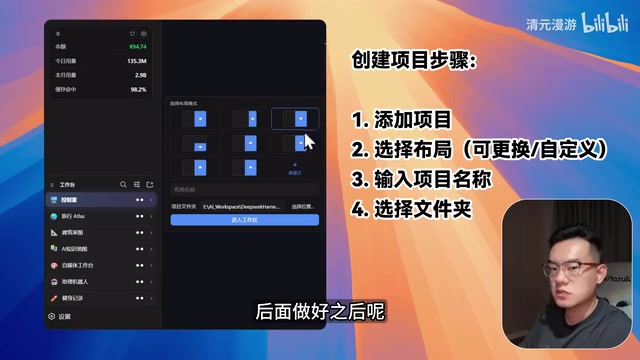
Giving Agents a Screen: The Open-Source Story of a DeepSeek Visual Workbench
An architecture-industry developer open-sourced a visual workbench plugin for DeepSeek Harness, upgrading Agent interaction from pure chat to graphical UI with six real-world project demos.
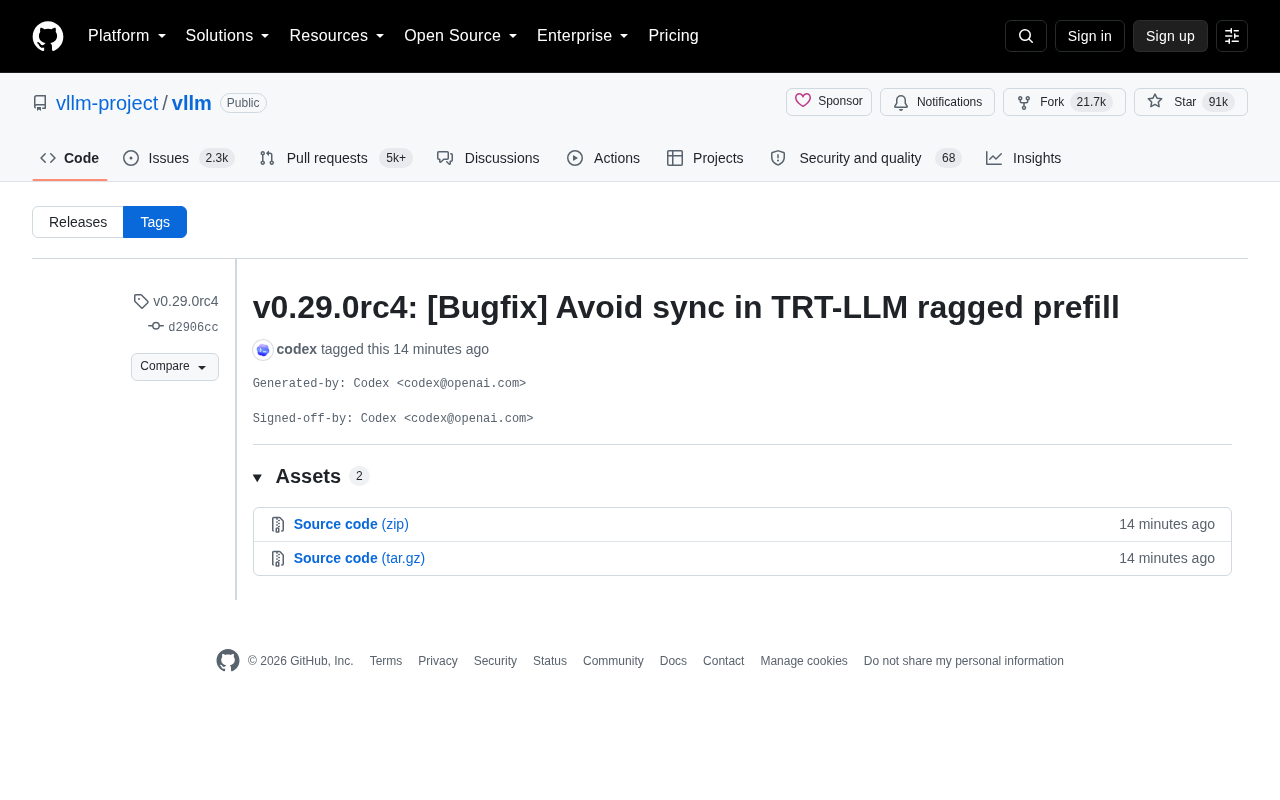
vLLM v0.29.0rc4 Released: Fixing the TRT-LLM Inference Synchronization Bottleneck Explained
Deep dive into vLLM v0.29.0rc4: fixing unnecessary GPU sync in TRT-LLM ragged prefill to eliminate CPU-GPU overhead and boost inference throughput.
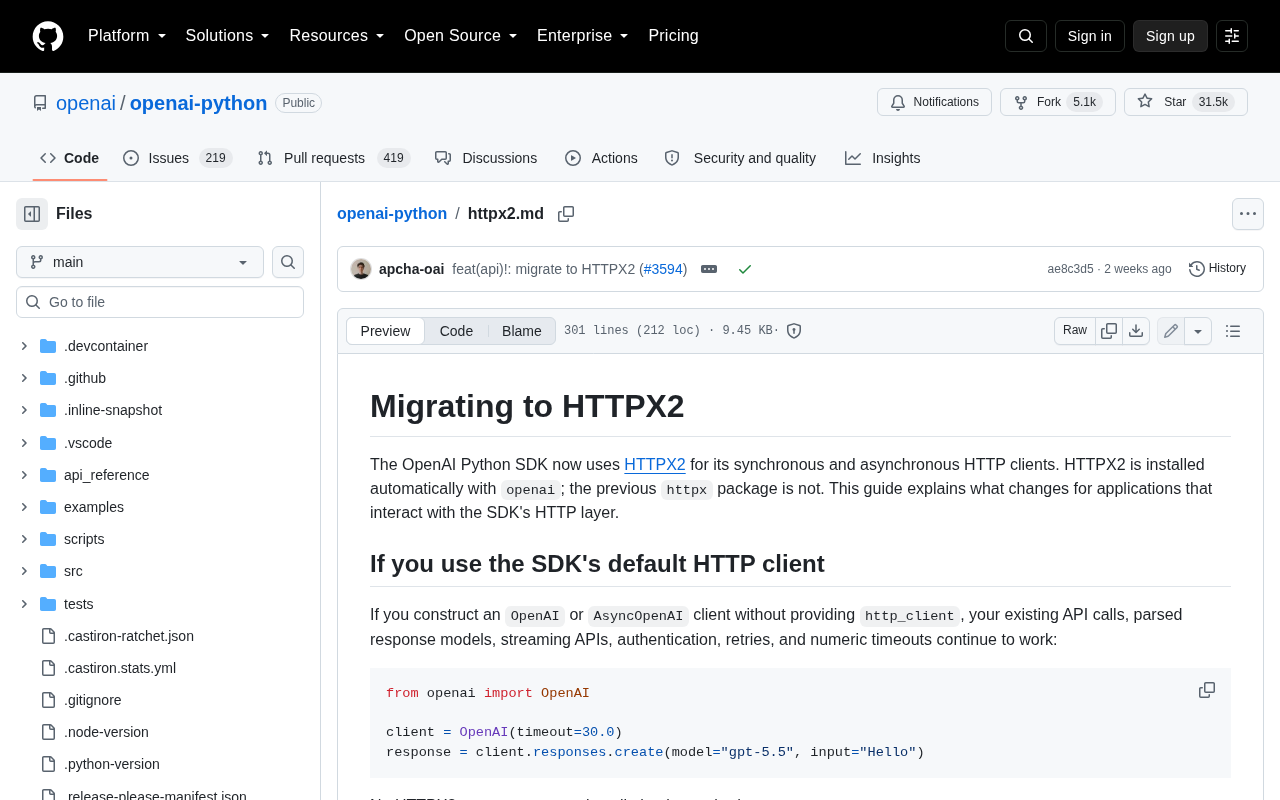
OpenAI's Migration to HTTPX: Why They Abandoned the requests Library
In-depth analysis of why OpenAI migrated its Python SDK from requests to HTTPX, covering async dual-mode support, HTTP/2 multiplexing, and the real impact on developers.