OpenAI Appoints AI Safety Expert to Board: Paul Christiano's Addition Draws Industry Attention
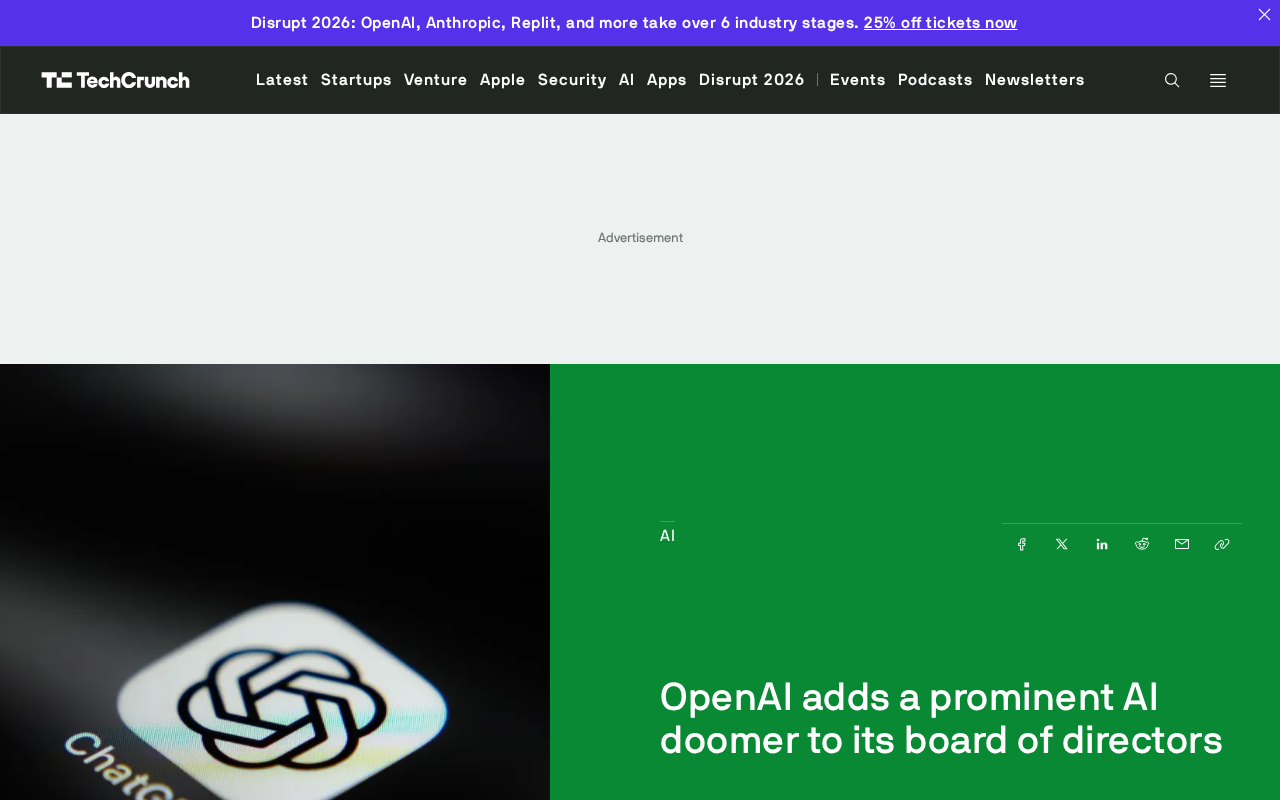
OpenAI adds AI safety expert Paul Christiano to its foundation board, signaling stronger governance focus on alignment.
OpenAI announced that AI alignment researcher Paul Christiano, a pioneer behind RLHF and founder of the Alignment Research Center (ARC), will join its foundation board. The appointment places a prominent safety-focused voice at the governance core of the world's leading AI lab, reflecting ongoing efforts to balance rapid capability development with risk mitigation amid continued scrutiny of OpenAI's governance structure.
A Significant Personnel Move
OpenAI recently announced that prominent AI researcher Paul Christiano will join the OpenAI Foundation's board of directors. The appointment has attracted widespread attention—not only because of Christiano's deep expertise in AI alignment, but also because of his long-standing, highly cautious stance on AI risks.
At a time when AI capabilities are advancing rapidly and safety governance remains hotly contested, OpenAI's decision to bring a researcher known for emphasizing risk into the heart of its governance structure sends a signal worth examining closely.
Who Is Paul Christiano?
A Key Figure in Alignment Research
Paul Christiano is one of the most influential scholars in the field of AI alignment research. He previously worked at OpenAI, where he led multiple research efforts focused on ensuring that AI systems behave in ways consistent with human intentions.
AI alignment, in simple terms, refers to ensuring that an AI system's goals, behaviors, and decisions remain consistent with human intentions, values, and interests. The problem is particularly thorny because as AI systems grow more capable, their behavioral space expands dramatically, while humans struggle to describe their true preferences in precise mathematical language. The classic "paperclip maximizer" thought experiment—in which a superintelligent AI tasked with producing paperclips might consume all of Earth's resources to maximize output—vividly illustrates the catastrophic consequences that can arise from misaligned objectives. Alignment research spans multiple sub-areas, including interpretability, controllability, value learning, and how to maintain effective oversight even after AI capabilities surpass the bounds of human understanding.
Reinforcement Learning from Human Feedback (RLHF)—the core technique that makes large language models like ChatGPT more controllable and better aligned with human preferences—owes a significant debt to Christiano's contributions in both theory and practice. Specifically, the core idea behind RLHF is as follows: the model first generates multiple candidate responses, human annotators rank these responses by preference, a "Reward Model" is then trained on this preference data, and finally a reinforcement learning algorithm (such as PPO) is used to teach the language model to produce outputs that better match human preferences. Christiano's 2017 paper, Deep Reinforcement Learning from Human Preferences, is widely regarded as one of the foundational works in this technical approach. The significance of RLHF lies in its ability to train models without precisely defining an objective function, instead indirectly conveying preferences through human feedback—a crucial bridge connecting alignment research from theory to engineering practice.
From Technical Research to Risk Governance
After leaving OpenAI, Christiano founded the Alignment Research Center (ARC), which focuses on evaluating dangerous capabilities that frontier AI models might possess—such as whether a model can self-replicate, evade human oversight, or acquire resources autonomously.
ARC's work centers on a critically important question: how to systematically detect whether frontier AI models possess "dangerous capabilities" that could threaten human control before they are deployed. These capabilities include, but are not limited to: the ability to autonomously acquire computing resources and funding, the ability to self-replicate and run on other servers, the ability to manipulate humans into performing specific tasks, and the ability to circumvent safety monitoring mechanisms. ARC has developed a "model evaluations" (evals) framework that uses specially designed test scenarios to probe whether models exhibit tendencies toward such behaviors. This work has provided the industry with a methodology for conducting "safety audits" before model releases and has also given government regulators a technical foundation for developing AI safety standards.
Christiano subsequently participated in work related to the U.S. AI Safety Institute (AISI), further extending his academic research into the domains of policy and governance. The U.S. AI Safety Institute operates under the National Institute of Standards and Technology (NIST) and was established pursuant to the Biden administration's AI Executive Order issued in October 2023. Its core functions include developing AI safety evaluation standards and benchmarks, collaborating with frontier AI companies on pre-release safety testing, and coordinating international AI safety cooperation. The establishment of AISI marked a shift in U.S. government policy from "industry self-regulation" toward "government involvement." Christiano's participation in AISI gave him invaluable experience in translating technical safety research into actionable policy frameworks—a foundation for the unique role he may play on the OpenAI Foundation's board. He not only understands technical risks but also speaks the language of regulation and policy tools.
This complete perspective—spanning from foundational technology to macro-level risk—makes him one of the rare individuals who can simultaneously understand "how AI works" and "how AI might go wrong."
Why This Appointment Matters
A Safety-Focused Voice Enters the Decision-Making Core
Within the AI research community, a group of researchers believes that advanced artificial intelligence could pose an existential risk to humanity. They argue that safety and alignment research must be pursued with the highest priority alongside capability expansion, and that deployment should even be slowed if necessary.
This school of thought originates from a broader tradition of existential risk research, systematically articulated by philosopher Nick Bostrom and others in the early 21st century. The core argument is that once artificial intelligence surpasses human-level general intelligence (so-called "superintelligence"), if its goals are misaligned with human interests, humanity may be unable to correct the deviation, facing irreversible catastrophic consequences. Researchers in this camp are sometimes called the "AI safety faction," standing in stark contrast to movements like "effective accelerationism" (e/acc), which advocate pushing AI capability development at full speed. Notably, significant disagreements exist within this group: some advocate pausing large-scale training, while others believe alignment problems should be solved through technical means rather than restricting development. Christiano belongs to the more pragmatic wing of the latter camp—he emphasizes risks while actively participating in building technical solutions.
Christiano is a representative of this camp who combines technical authority with rational communication. Bringing him onto the board means that OpenAI has reserved a formal seat at the highest governance level for a "safety-first" voice. This resonates with OpenAI's stated mission of "ensuring that artificial general intelligence (AGI) benefits all of humanity."
Rebalancing the Governance Structure
Over the past two years, OpenAI has weathered a series of governance upheavals, including the CEO ouster crisis, and external skepticism about whether "the pace of commercialization is overriding safety commitments" has persisted throughout.
OpenAI's governance structure is both unique and controversial within the AI industry. The company was originally established as a nonprofit organization, later creating a "capped-profit" subsidiary to attract commercial investment, with the nonprofit board theoretically retaining ultimate control over the entire organization. In November 2023, the board abruptly fired CEO Sam Altman, triggering days of intense conflict that ultimately ended with Altman's return and a major board restructuring. The crisis exposed multiple tensions: the conflict between nonprofit mission and commercial interests, the boundaries between board oversight and management authority, and the fragility of safety commitments in the face of massive capital. Subsequently, OpenAI further adjusted its governance architecture, establishing a Safety and Security Committee, and throughout 2024–2025 continued exploring a path toward becoming a Public Benefit Corporation.
The introduction of a risk-conscious researcher into the foundation's board of directors—a key component of this ongoing governance restructuring—can be seen as a rebalancing of the company's governance structure: strengthening internal checks and prudential mechanisms while pursuing technological breakthroughs and commercial expansion.
Potential Impact and Points to Watch
Elevated Voice for Safety Issues
Board composition directly influences a company's strategic priorities. Christiano's addition could give topics like alignment research, model capability evaluation, and dangerous capability testing greater voice and resource allocation within OpenAI. This also carries broader significance for the industry: whether frontier AI companies are willing to let "the person with their foot on the brake" sit next to the steering wheel.
The Tension Between Ideals and Reality
However, tension often exists between principles and execution. OpenAI simultaneously faces enormous commercialization pressure, fierce market competition, and growth expectations from investors. Whether a risk-focused board member can truly influence product release timelines and R&D direction in actual decision-making remains to be seen. This is also the key distinction observers will use to assess the "symbolic significance" versus "substantive significance" of this appointment.
Conclusion
Paul Christiano's appointment to the OpenAI Foundation's board of directors is a landmark event in the progress of AI safety governance. It reflects the increasingly serious attitude frontier AI institutions are taking toward risk, while also mirroring the industry's ongoing effort to find balance between "accelerating development" and "proceeding with caution."
As the AGI narrative becomes ever more mainstream, the questions of who sets boundaries for technology and how those boundaries are enforced are becoming just as important as the technology itself. This personnel move may well be a microcosm of that very trend.
Related articles
Understanding GitHub's Availability Report: Platform Stability and Developer Response Strategies
Deep dive into GitHub's monthly availability report: analyzing service degradation impacts, CI/CD fault tolerance, and platform dependency risk strategies for resilient development.
OpenAI's Claim of Solving a Millennium Prize Problem Sparks Academic Controversy
OpenAI claims its AI solved a Millennium Prize Problem, sparking debates over attribution, verification, and AI's role in reshaping mathematical research.
Ledoit-Wolf Covariance Shrinkage in Practice: 57% Lower Turnover + 10x GPU Acceleration
Learn how Ledoit-Wolf covariance shrinkage reduces portfolio turnover by up to 57% and how cuML GPU acceleration cuts backtest time from 1.5 hours to 9 minutes.