OpenAI Enters Chile: A New Model for AI Adoption and Government Collaboration

OpenAI and Chile partner on responsible AI, public-sector skills, and local startup ecosystem; outcomes remain to be seen.
OpenAI and the Chilean government announced a partnership focused on responsible AI adoption, public-sector skill-building, and support for local startups. The structure maps to governance, capability, and ecosystem, forming a relatively complete framework for AI adoption. Public-sector skill-building is prioritized due to procurement and compliance hurdles, with training and pilots as key instruments; startup support may shorten the path from model capabilities to productization. Since funding, timelines, and technical details were not disclosed, actual impact depends on training coverage, startup support, and whether pilots scale. The article also draws lessons for AI applications going global, noting that model capability is only the starting point—deployment happens at the intersection of organizational capability, process transformation, and talent development.
OpenAI and the Chilean government recently announced a partnership aimed at promoting responsible AI adoption, enhancing public-sector skills, and helping local startups develop AI applications. This move brings collaboration between large-model vendors and national governments to the forefront, and offers an observable sample of how AI applications can land in the Latin American market.
Collaboration Framework: Three Clear Anchor Points
According to public information, the collaboration centers on three directions: supporting responsible AI adoption, building public-sector skills, and helping local startups develop AI applications. These three directions correspond to governance, capability, and ecosystem respectively, forming a relatively complete structure for advancing AI adoption.
Interestingly, the partnership did not disclose specific funding amounts, timelines, or technical details, so outsiders can currently only infer its intent from directional statements. From the perspective of AI application promotion, government endorsement can lower the psychological barrier for public-sector adoption of new technologies, while startups may gain more direct access to model capabilities and tooling support.
Why Public-Sector Skills
In the process of landing AI applications, the public sector is often one of the hardest scenarios to penetrate: lengthy procurement processes, high compliance requirements, and limited understanding of new technologies among staff. OpenAI listing "building public-sector skills" as a separate collaboration priority indicates its awareness that simply providing an API cannot solve adoption barriers within organizations.
Such skill-building typically includes training, workshops, and pilot projects aimed at specific business processes. If executed well, the public sector can become a high-value scenario for AI applications—government document processing, public service Q&A, and data analysis all have a high degree of standardization and are suitable as entry points for early deployment.
Public-sector skill-building is often linked in practice to "AI literacy" frameworks, whose scope goes beyond tool operation to include a basic understanding of model capability boundaries, data privacy, bias, and explainability. Many countries and international organizations have introduced tiered AI competency models for civil servants, distinguishing the training needs of users, managers, and decision-makers. The value of such frameworks lies in elevating skill-building from fragmented training courses to an assessable competency system, creating linkages among procurement, compliance, and business innovation. For governments seeking to promote AI adoption, the lack of such competency frameworks often leads to two extremes: stagnation due to risk concerns, or hasty pilot launches without evaluation standards.
Startup Ecosystem: Localization Opportunities for AI Applications
The collaboration's mention of "helping local startups develop AI applications" points to ecosystem-level positioning. AI application development in the Latin American market has long been constrained by the cost of accessing model capabilities and the reserve of engineering talent, and direct connections between large-model vendors and local entrepreneurs could shorten the path from model capabilities to productization.
For local startups, the value of such collaboration lies not only in tools but also in the technical community and best practices formed around AI application development. OpenAI has previously adopted similar ecosystem strategies in other markets, expanding its developer base through partnerships with local institutions.
"Ecosystem strategy" in the internationalization of large-model vendors typically refers to expanding model usage through developer relations, accelerators, cloud resource credits, and joint case studies. Compared with direct API sales, ecosystem strategy relies more on local partners to undertake education, support, and scenario discovery. Developer communities in Latin America are relatively fragmented, and model performance in local languages (Spanish, Portuguese) and compliance requirements constitute additional barriers, so vendors often need to build credibility endorsements jointly with governments or industry associations. This model can lower the trial cost for entrepreneurs, but may also create dependence on a single model provider; ecosystem diversity is a variable to watch.
Significance and Limitations from Multiple Perspectives
Based on currently available public information, descriptions of the collaboration from various parties are basically consistent: it is a government collaboration aimed at AI application promotion and ecosystem building, rather than an exclusive technology export agreement. Due to the lack of disclosure of specific terms, there remain information gaps in discussions about the depth of collaboration, resource investment, and expected outcomes.
A reasonable judgment is that the actual effect of such collaboration depends on execution details: how many people the training covers, what kind of support startups can receive, and whether public-sector pilot projects can translate into scaled deployment. The answers to these questions will determine whether this collaboration remains at the press-release level or truly advances AI adoption in Chile.
Government-AI vendor collaboration agreements are typically divided into two categories in terms of information disclosure: framework memoranda of understanding and specific implementation contracts. The former only determines the direction of collaboration and carries no binding funding commitments; the latter includes budgets, timelines, and deliverables. Public reports do not specify which category this collaboration belongs to, which is a key information gap for judging its actual weight. In addition, national-level AI collaboration often involves data governance and public procurement rules; without transparency mechanisms, it can easily trigger discussions about technological sovereignty and vendor lock-in. Therefore, when evaluating such collaboration, beyond directional statements, attention should also be paid to whether implementation roadmaps, third-party evaluation mechanisms, and exit clauses are subsequently published.
Implications for AI Applications Going Global
The collaboration between OpenAI and the Chilean government provides a reference for observing how large-model vendors enter emerging markets. Unlike pure product going global, the government collaboration model bundles governance compliance, capability building, and ecosystem cultivation together, making it easier to gain policy-level support, but also imposing higher requirements on localized operations.
For practitioners focused on AI applications, this case reminds us that model capability is only the starting point; real deployment happens at the intersection of organizational capability, process transformation, and talent development. Whether the Chile collaboration can make this logic work is worth continued attention.
One-line Summary
OpenAI's collaboration with the Chilean government focuses on responsible AI, public-sector skills, and the local startup ecosystem, with outcomes yet to be observed.
Paragraph Summary
OpenAI and the Chilean government announced a partnership centered on three directions: responsible AI adoption, public-sector skill-building, and support for local startups. The article argues that this structure corresponds to governance, capability, and ecosystem, forming a relatively complete framework for advancing AI adoption. The public sector is singled out for skill-building due to lengthy procurement processes and high compliance requirements, with training and pilots as the main instruments; startup ecosystem support may shorten the path from model capabilities to productization for local developers. Since the collaboration did not disclose funding amounts, timelines, or technical details, actual results depend on training coverage, the strength of startup support, and whether pilots can scale. The article also discusses the implications of the government collaboration model for AI applications going global, emphasizing that model capability is only the starting point and that deployment happens at the intersection of organizational capability, process transformation, and talent development.
Related articles
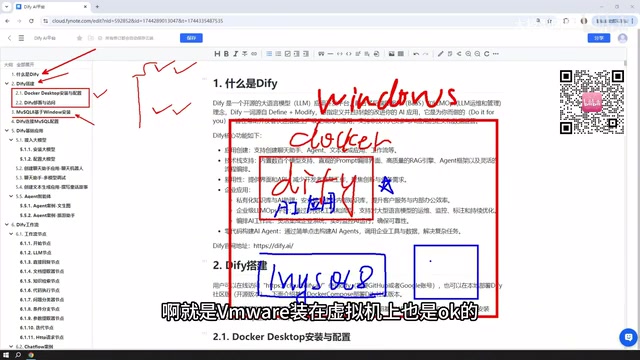
Dify Workflow in Practice: A Guide to Local Deployment and Private Knowledge Base Agents
Based on a Bilibili Dify course: Windows Docker local deployment, MySQL connection setup, five app types and workflow node cases, external LLM integration choices, and the complete path to publishing apps as sites or APIs.
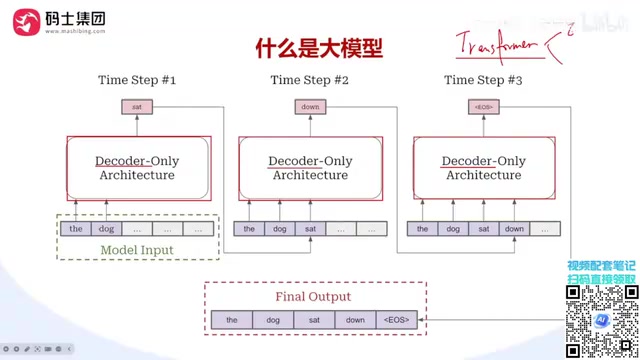
A Complete Guide to Distributed LLM Training: DP/TP/PP/SP Explained
Starting from the single-GPU memory bottleneck, this guide systematically explains DP data parallelism, TP tensor parallelism, PP pipeline parallelism, and SP sequence parallelism in distributed LLM training, covering their splitting dimensions, communication costs, and hybrid parallelism selection logic.

DeepSeek Harness Step-by-Step Guide: From Installation and Setup to Plugin Practice
DeepSeek Harness step-by-step guide: Node.js setup, client installation, and three plugin installation methods to get you started fast with this open-source AI Agent framework.