OpenAI Exposes Russian AI-Powered Influence Operations: Operational Patterns and Governance Challenges

OpenAI exposes Russian AI-driven influence operations, highlighting governance and detection challenges.
OpenAI disclosed its investigation into a Russian covert influence campaign leveraging generative AI for scaled opinion manipulation. The article examines how AI enables mass content production, multilingual localization, and rapid strategy iteration, while analyzing platform governance approaches including threat intelligence sharing and account enforcement. It also explores deeper challenges: the arms race between AI content detection and generation, the governance vacuum created by open-source models, and the emerging international norms for combating state-backed information warfare.
Event Overview
Recently, OpenAI published the findings of its investigation into and crackdown on a Russian covert influence campaign. The operation allegedly leveraged AI tools to generate content in an attempt to manipulate public opinion on social media and other open platforms. While the discussion on Hacker News around this event wasn't particularly heated, the underlying risks of AI misuse and platform governance challenges it highlights deserve serious attention from the entire tech community.
As generative AI capabilities have leaped forward, the barrier to content production has dropped dramatically. What once required large-scale human organizations for troll farms and information warfare can now potentially be scaled up by just a handful of operators armed with AI tools. OpenAI's proactive disclosure is both a response to its own platform responsibilities and a reminder to the industry: AI's double-edged nature is being amplified in the information security domain.
How Covert Influence Operations Work
A "covert influence operation" typically refers to activities conducted by state-backed or organizationally-affiliated actors who disguise their identities, create accounts and content at scale, and disseminate specific narratives among target audiences to shape public perception or political attitudes. The defining characteristic of these operations is their covert nature — operators deliberately conceal the true source, creating the illusion of "organic public opinion."
This concept has deep historical roots in the intelligence field. During the Cold War, the Soviet Union systematized such activities as "Active Measures," encompassing forged documents, manipulation of foreign media, funding of proxy organizations, and more. In the social media era, the Russian Internet Research Agency's (IRA) operations during the 2016 U.S. presidential election — mass-creating fake accounts and publishing polarizing content — became the defining case of modern online influence operations. This directly spurred major platforms to develop systematic governance of "Coordinated Inauthentic Behavior" (CIB). Unlike traditional propaganda, the core technical feature of modern covert influence operations is "attribution obfuscation" — using multiple layers of proxies, cross-platform redirects, and identity spoofing to prevent target audiences from tracing information back to its true source.
The Role of AI in Opinion Manipulation
The introduction of generative AI has fundamentally transformed these operations across several dimensions:
- Scaled content production: AI can generate massive volumes of text, comments, and even images in a short period, breaking through the production bottleneck of traditional manual operations. With a GPT-4-class model, for example, a single API call can produce several hundred words of coherent text in seconds. In traditional troll farm operations, one operator typically produces only 5–10 quality social media posts per hour. With AI tools, that number can scale to hundreds — an efficiency gap of tens of times.
- Multilingual localization: Leveraging the multilingual capabilities of large models, operators can generate content with natural grammar that closely matches local expressions, reducing the likelihood of detection. Current mainstream LLMs support natural output in over 50 languages and can customize style for different platform cultures — for example, mimicking the short, sharp political commentary style on Twitter or the long-form analytical post structure on Reddit. This "style transfer" capability dramatically increases the probability that fake content blends seamlessly into genuine community conversations.
- Rapid strategy iteration: Once a particular narrative is identified and blocked by a platform, operators can quickly adjust wording and tactics, creating a "cat-and-mouse game."
What you may not have noticed is that OpenAI has emphasized in multiple similar reports that although these operations used AI tools, their actual reach and audience engagement were often limited — most generated content failed to gain real social traction. This suggests that current AI misuse remains largely at the "production end" rather than successfully achieving "distribution." This phenomenon indicates that improvements in content quality and quantity don't automatically translate into distribution impact — social platforms' recommendation algorithms, user interaction behaviors, and community trust networks still form a critical "natural immune layer."
Platform Response and Governance Logic
OpenAI's approach in this case follows its established strategy of threat intelligence and account suspension. By monitoring anomalous usage patterns and correlating suspicious account networks, the platform was able to identify and disrupt these operations at an early stage. This combination of "proactive disclosure + timely enforcement" is gradually becoming standard practice among leading AI companies.
The Multiple Dimensions of Vendor Disclosure
Proactively publishing such investigations holds multiple strategic benefits for OpenAI:
- Building trust: Demonstrating to regulators, the public, and enterprise customers its investment and capabilities in abuse governance.
- Deterrence effect: Publicly exposing operational techniques increases the operational costs for malicious actors.
- Industry collaboration: Reports typically contain threat indicators (IoC) that other platforms can reference, promoting cross-platform joint defense.
It's worth explaining in more detail that Indicators of Compromise (IoC) are a core concept in cybersecurity, referring to technical evidence used to identify malicious activity. In the context of influence operations, IoCs might include: specific API key usage patterns, characteristics of registration email domains associated with linked accounts, residual AI-generation artifacts in content (such as specific token distribution patterns), and timestamp patterns of coordinated posting behavior. Threat intelligence sharing frameworks like STIX/TAXII (Structured Threat Information Expression / Trusted Automated Exchange of Indicator Information), originally designed for cyberattacks, are now being extended to information manipulation scenarios, enabling different platforms to rapidly deploy unified detection rules.
However, this governance approach also faces inherent limitations. Platforms can only ban accounts discovered on their own services and cannot prevent actors from switching to open-source models or other vendors' services. As high-quality open-source LLMs become more widely available, relying solely on closed-source platform detection is becoming increasingly fragile.
Deeper Challenges in AI Information Security
On the surface, this incident is a routine abuse crackdown. But the structural issues it reveals are far more complex than any single case.
The Arms Race Between AI Content Detection and Generation
Detecting AI-generated content is itself a technical challenge that remains unsolved. As model output quality approaches human levels, text-feature-based detection methods are becoming increasingly ineffective. Platforms are forced to rely more heavily on "behavioral signals" — such as account registration patterns, API call frequency, and content posting cadence — to identify automated manipulation, rather than analyzing content alone.
From a technical perspective, current AI text detection methods fall into three main categories: statistical feature-based methods (analyzing the uniformity of token occurrence probability and perplexity distributions), watermarking-based methods (embedding invisible statistical signals during generation), and classifier-based methods (training models to distinguish AI-generated from human-written text). OpenAI launched an AI text detector in 2023 but was forced to take it offline because it achieved only about 26% accuracy with roughly a 9% false positive rate. Academic research consistently shows that as model scale increases and decoding strategies diversify (such as temperature sampling and top-p adjustment), the statistical characteristics of generated text increasingly resemble human writing distributions, causing detector performance to steadily degrade. While watermarking is theoretically more reliable, it requires all model providers to implement unified standards, and it tends to fail when text is paraphrased or translated — a particularly fatal weakness for multilingual influence operations.
The Governance Vacuum Created by Open-Source Models
When powerful models can be deployed locally, free from any vendor oversight, centralized abuse governance can no longer provide full coverage. This means that future information warfare defense may need to shift from the "model layer" to the "distribution layer" — strengthening authenticity verification and provenance tracking at the social platform and content distribution levels.
Since Meta released the LLaMA series in 2023, the open-source LLM ecosystem has experienced explosive growth. Models like Mistral, Qwen, and DeepSeekAd have reached capabilities that approach or even surpass closed-source commercial models on certain benchmarks. Once model weights are publicly released, anyone can deploy and run them locally on consumer-grade GPUs, completely bypassing API-level usage policy review, rate limiting, and content filtering. Even more concerning, through fine-tuning techniques — particularly parameter-efficient fine-tuning methods like LoRA — malicious actors need only minimal compute resources and data to remove a model's built-in safety alignment, making it unconditionally compliant with any instruction, including the mass generation of disinformation. This renders the strategy of "preventing misuse at the model layer" almost entirely ineffective for the open-source ecosystem.
On the "distribution layer" defense front, the main technical directions currently include: the content provenance authentication standard C2PA (Coalition for Content Provenance and Authenticity), which uses cryptographic signatures to record the complete history chain of content from creation through editing; Social Graph Analysis, which identifies coordinated inauthentic behavior by detecting anomalous follow/interaction network patterns; and user authenticity verification based on decentralized identity protocols. Meta has systematically used the CIB concept for governance since 2018, having dismantled over 200 coordinated manipulation networks to date. However, all of these methods face a profound balancing act between user privacy rights and security needs — excessive verification may undermine the freedom of anonymous expression, while insufficient verification leaves room for malicious actors.
The New Normal of International Information Security
State-backed influence operations leveraging AI are no longer isolated incidents. OpenAI, Meta, and other companies have previously disclosed similar operations originating from multiple countries. It's foreseeable that AI-assisted information manipulation will become a normalized tool in geopolitical competition, and collaborative governance among the tech community, platforms, and regulators will be a long-term challenge.
From a geopolitical perspective, information manipulation is evolving from an "asymmetric warfare tool" into standard equipment in great power competition. Activities by the United States, Russia, China, Iran, and other countries have all been documented by various research institutions. In 2024, over 60 countries and territories held major elections, and AI-assisted influence operations were widely regarded as one of the primary threats to electoral integrity. Against this backdrop, the EU's Digital Services Act (DSA) and AI Act have been pioneering efforts to establish transnational regulatory frameworks, requiring large platforms to assess systemic risks and implement mitigation measures — though their effectiveness remains to be seen.
Conclusion
OpenAI's disclosure of this Russian covert influence operation, while just one among many abuse governance cases, clearly reflects the new landscape of information security in the generative AI era. AI is both a liberator of content productivity and a potential amplifier of opinion manipulation.
For practitioners, the key takeaway is this: advances in technical capability must evolve in lockstep with abuse defense capabilities. Whether it's model vendors building threat intelligence, social platforms implementing authenticity verification mechanisms, or cross-platform and cross-border collaboration frameworks — all need continuous reinforcement in this ongoing arms race. Only then can AI's benefits for all not be distorted by a handful of malicious actors.
Related articles

Gaussian Process Bandit Optimization: Exploration Strategies and Inference Regret Guarantees
Cumulative regret guarantees in Bayesian optimization fail to reflect final recommendation quality. This article examines a new study that provides inference regret guarantees for Gaussian process bandit optimization through exploration query strategies and fill distance analysis, validated on hyperparameter optimization and control tasks.
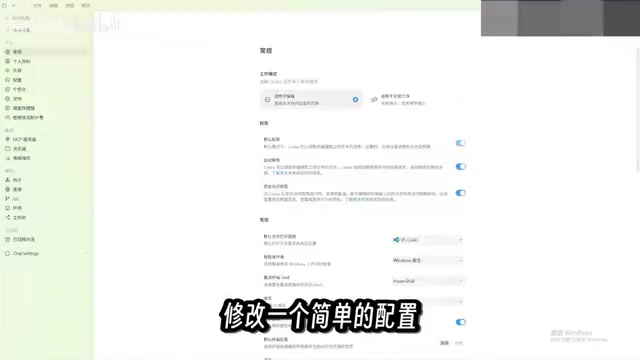
The Most Detailed Codex Guide on Bilibili: From Installation to Real-World Practice
The most detailed Codex guide on Bilibili: from app store installation to daily work mode configuration, with a real coffee shop project demonstrating file organization, data extraction, dashboard creation, and other practical tasks. Learn to use Plan Mode and desktop pets to leverage Codex efficiently.

Appearance Compensation in Volume Rendering: Why RGB Accuracy Cannot Guarantee Density Correctness
Volume rendering research reveals that volumetric data perfectly reproducing external RGB views may still contain density errors: appearance compensation can double central density and keep external rays unchanged even when L2 error exceeds 14.52%. Density recovery depends on appearance capacity, spatial resolution, and measurement design.