OpenAI Launches ChatGPT for Financial Services: Built-in Financial Data + GPT-6 Reasoning

OpenAI launches a finance-specific ChatGPT powered by GPT-6 Astra reasoning and built-in financial data.
OpenAI has officially released ChatGPT for Financial Services, an industry-specific extension of its enterprise product ChatGPT Work. The core value proposition is integrating GPT-6 Astra's deep reasoning capabilities with built-in financial data, targeting three high-frequency professional use cases: research and analysis, financial modeling, and client materials customization. Strategically, this marks OpenAI's shift from general enterprise assistant to deep vertical customization, with financial services serving as one of the first high-priority sectors given its strong willingness to pay and high barriers to entry. Details on data sourcing authority, pricing, compliance, and data security have yet to be fully disclosed — factors that financial institutions will scrutinize closely before making procurement decisions.
ChatGPT for Financial Services Is Now Live
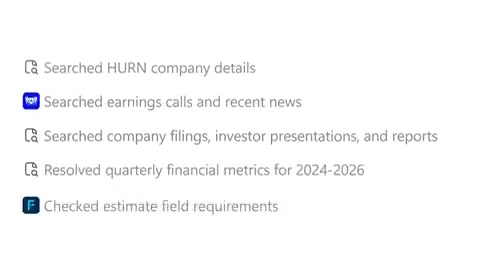
OpenAI has announced the launch of a customized product for the financial industry — ChatGPT for Financial Services. Built on top of ChatGPT Work (the enterprise office edition), this offering centers on combining built-in financial data with the reasoning capabilities of the next-generation GPT-6 Astra model, designed to serve the day-to-day workflows of financial institutions directly.
For an industry that has long depended on data-intensive analysis, the product's positioning is clear: bridge the reasoning power of a general-purpose large language model with specialized financial data, reducing the repetitive work analysts spend on data retrieval, model building, and materials preparation.
Three Core Use Cases
According to the official announcement, ChatGPT for Financial Services primarily covers three types of work:
Research & Analysis
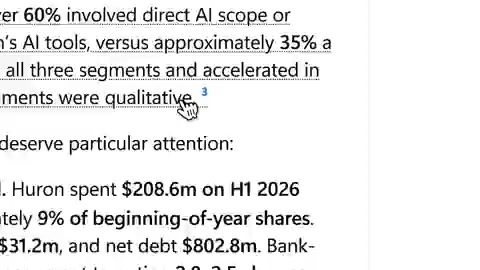
Financial teams can leverage the model to conduct industry research, market studies, and investment analysis. Built-in financial data means users no longer need to switch between multiple data terminals — the model can directly access relevant data and deliver structured analytical conclusions.
Financial Modeling
Building financial models is a high-frequency need for investment banks, private equity firms, and corporate finance teams. The product supports teams in constructing various financial models, applying GPT-6 Astra's reasoning capabilities to complex tasks such as valuation, forecasting, and scenario analysis.
Client Materials Customization
Client-facing pitch decks, investment proposals, and reports typically require substantial manual effort to compile. ChatGPT for Financial Services can help teams rapidly generate customized client materials, freeing up more time for genuine judgment and decision-making.
The Combination of GPT-6 Astra and Financial Data
A noteworthy signal in this product launch is the explicit mention of GPT-6 Astra as the underlying model. OpenAI's emphasis is not on conversational ability alone, but squarely on "reasoning" — financial workflows demand extremely high standards of data accuracy and logical rigor, and a general-purpose model without reliable data sources and sufficient reasoning depth simply cannot integrate into professional workflows.
Through the combination of "built-in financial data + a strong reasoning model," OpenAI is attempting to address two critical pain points for LLM adoption in finance: the timeliness and authority of data, and the interpretability and accuracy of the analytical process. This also aligns with the broader trend in enterprise AI — moving from general-purpose assistants toward deep vertical customization.
Industry Implications and Observations
The launch of ChatGPT for Financial Services represents OpenAI's further segmentation of the enterprise market. Previously, ChatGPT Work was aimed primarily at general office productivity needs; this dedicated version for the financial industry signals that OpenAI is now going deep into high-value markets on a sector-by-sector basis.
Financial services is one of the industries with the strongest willingness to pay for AI and the highest data barriers. Whoever can deliver AI tools that are both compliant and highly effective stands a strong chance of gaining an early foothold in this market. However, since official disclosures remain limited at this stage, details around specific data sources, coverage scope, pricing strategy, and compliance and data security considerations are still pending. For financial institutions, these are precisely the areas that need to be thoroughly evaluated before adoption.
Overall, this marks another step in the evolution of large models from "able to chat" to "able to do professional work" — and suggests that more industry-specific versions may well be on the way.
Related articles

Session-Based Home Server: Running a Low-Power Homelab on an Old Laptop
A Reddit user runs Plex, qBittorrent, and Watcharr on a 10-year-old laptop for just 10–12 hrs/day, using only 305MB RAM idle. Exploring session-based vs. 24/7 Homelab trade-offs.

When AI Controls Your Credit Card: The Hidden Risks of Autonomous Payments
When AI agents gain credit card access, hidden dangers emerge: vague authorization, prompt injection attacks, and unclear liability. Learn the real risks and how to stay protected.

Security Benchmarks Reveal: The AI 'Harness' Matters More Than the Model Itself
Security benchmarks are exposing a critical overlooked variable: the harness. Learn why the execution framework around an AI model can matter more than the model itself.