When AI Controls Your Credit Card: The Hidden Risks of Autonomous Payments
Giving AI agents payment access creates three core risks: blurry authorization, prompt injection, and accountability gaps.
As AI evolves from information assistant to autonomous agent capable of taking real-world action, granting it payment capabilities marks a critical tipping point between convenience and risk. Three core dangers stand out: authorization boundaries are difficult to define precisely, leaving room for unintended transactions; prompt injection attacks can exploit an AI's access to external content to manipulate payment behavior; and mistakes involving real money are often hard or impossible to reverse. On the accountability front, neither current law nor industry norms offer a clear framework for AI-initiated transactions, leaving early adopters to absorb the costs alone. The article recommends mitigating risk through hard spending limits, virtual credit cards, mandatory human confirmation steps, and strict separation of content-reading and payment permissions — emphasizing that cautious constraints are wiser than full automation until models and safeguards are truly mature.
From Tool to Agent: AI Payment Capabilities Reach a Tipping Point
AI assistants are evolving from passive information providers into autonomous agents capable of taking action on behalf of users. Handing off calendar management or email replies to an AI carries relatively manageable risk — but handing over credit card details and payment authorization is a different matter entirely. A Hacker News discussion titled "It's All Fun and Games Until You Give AI Your Credit Card" sounds the alarm on exactly this trend.
The title carries a dark humor that cuts to the heart of a key contradiction in today's AI landscape: the more capable these systems become, the greater their potential for harm.
Why Autonomous Payments Are So Dangerous
Blurry Authorization Boundaries
Traditional online payments include a clear human confirmation step — you click "Confirm Payment" and only then does the transaction go through. The entire value proposition of an AI agent, however, is reducing human intervention and enabling end-to-end automation. This creates a fundamental problem: under what circumstances is an AI authorized to spend your money? How much? To whom? Without precisely defined boundaries, an AI may complete transactions in scenarios you never anticipated.
Prompt Injection and Manipulation Risks
AI agents often need to read external web pages, emails, or documents to carry out tasks — and this opens the door to prompt injection attacks. Malicious websites can embed hidden instructions in their content, tricking an AI into making unintended purchases. When an AI simultaneously holds payment capabilities and permission to read external content, attackers can theoretically manipulate your finances indirectly.
Mistakes Are Hard to Undo
AI errors are far from rare. A model might misinterpret a request, purchase the wrong item, place duplicate orders, or be manipulated into authorizing a large payment. Unlike informational mistakes, errors involving real money are often difficult to reverse — refund processes are cumbersome, and some transactions are simply irreversible.
The Gray Zone of Accountability
If an AI agent makes a transaction on your credit card that you didn't sanction, who is responsible? The user for granting authorization carelessly? The AI service provider for a flawed model? The payment platform for inadequate fraud controls? The industry has yet to develop a clear framework for assigning liability in these scenarios. This ambiguity means early adopters may end up bearing the full cost of experimentation on their own.
Credit card systems already have reasonably robust fraud protection and chargeback mechanisms — but these were designed for human behavior. When a transaction is initiated autonomously by an AI, even defining what constitutes an "unauthorized transaction" becomes complicated.
How to Give AI Payment Capabilities More Safely
For users and developers looking to experiment with AI-driven payments, a few practical principles are worth keeping in mind:
- Set hard spending limits: Configure per-transaction and cumulative spending caps for your AI agent, with mandatory human confirmation required beyond those thresholds.
- Use virtual credit cards: Generate single-use or limited-balance virtual card numbers for your AI agent to isolate your primary account from risk.
- Preserve key confirmation steps: Maintain a human review step before final charges are made — especially for large amounts or unfamiliar merchants.
- Isolate permissions: Avoid giving a single AI agent both the ability to read untrusted external content and the ability to directly initiate payments.
- Maintain a full audit log: Record every payment decision the AI makes along with its reasoning, so you can trace actions after the fact.
Conclusion: Rebalancing Convenience and Risk
Giving an AI your credit card represents the next frontier of automation convenience — and a meaningful step-change in risk. Until model reliability, security safeguards, and accountability frameworks have matured, thoughtfully constraining an AI's "spending authority" is far wiser than blindly chasing full automation. At its core, this debate about AI payments is a reminder: the more real-world power you grant an AI, the more robust the guardrails around it need to be.
Note: This article is an extended analysis based on a brief Hacker News discussion thread. The original post contained limited information; the perspectives here represent a broader exploration of the topic.
Related articles
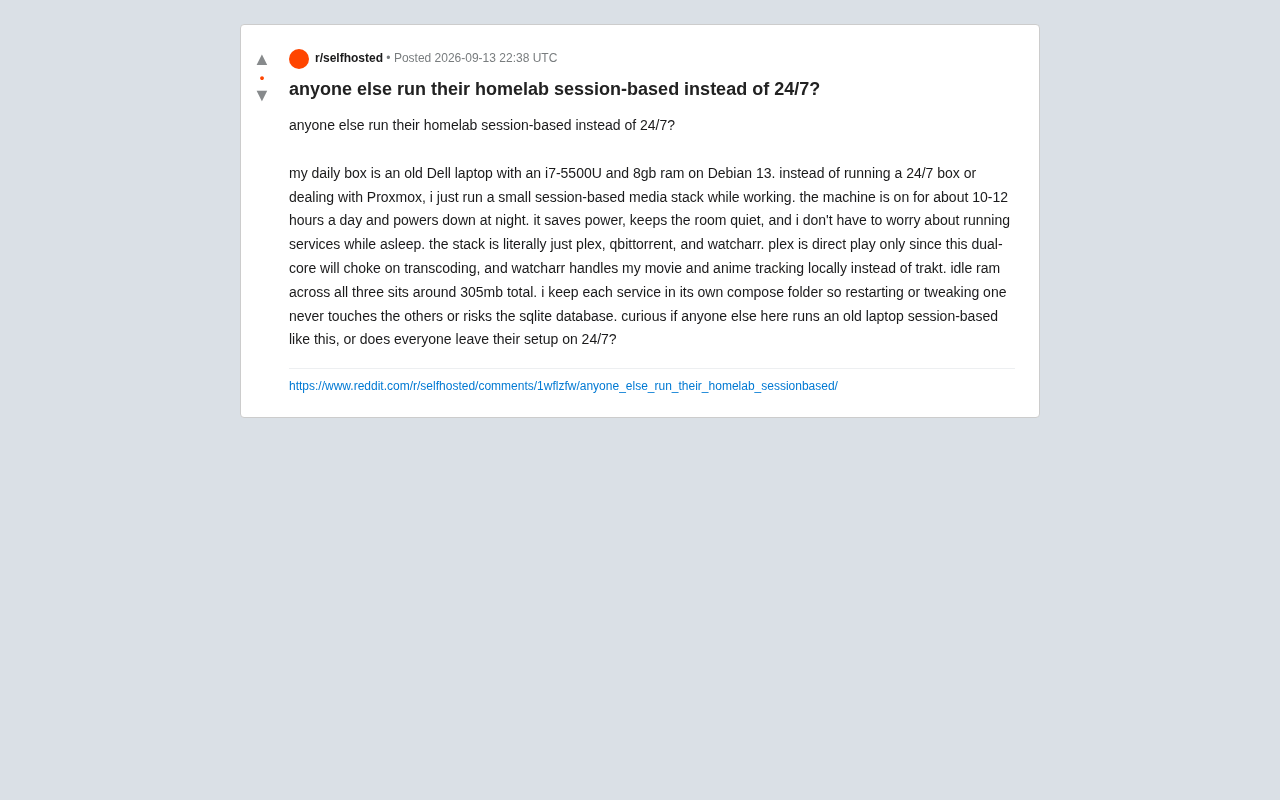
Session-Based Home Server: Running a Low-Power Homelab on an Old Laptop
A Reddit user runs Plex, qBittorrent, and Watcharr on a 10-year-old laptop for just 10–12 hrs/day, using only 305MB RAM idle. Exploring session-based vs. 24/7 Homelab trade-offs.

OpenAI Launches ChatGPT for Financial Services: Built-in Financial Data + GPT-6 Reasoning
OpenAI launches ChatGPT for Financial Services, combining built-in financial data with GPT-6 Astra reasoning to support research, financial modeling, and client materials for financial institutions.

Security Benchmarks Reveal: The AI 'Harness' Matters More Than the Model Itself
Security benchmarks are exposing a critical overlooked variable: the harness. Learn why the execution framework around an AI model can matter more than the model itself.