OpenAI Releases GPT-5.6: Cybersecurity Capabilities Take Center Stage
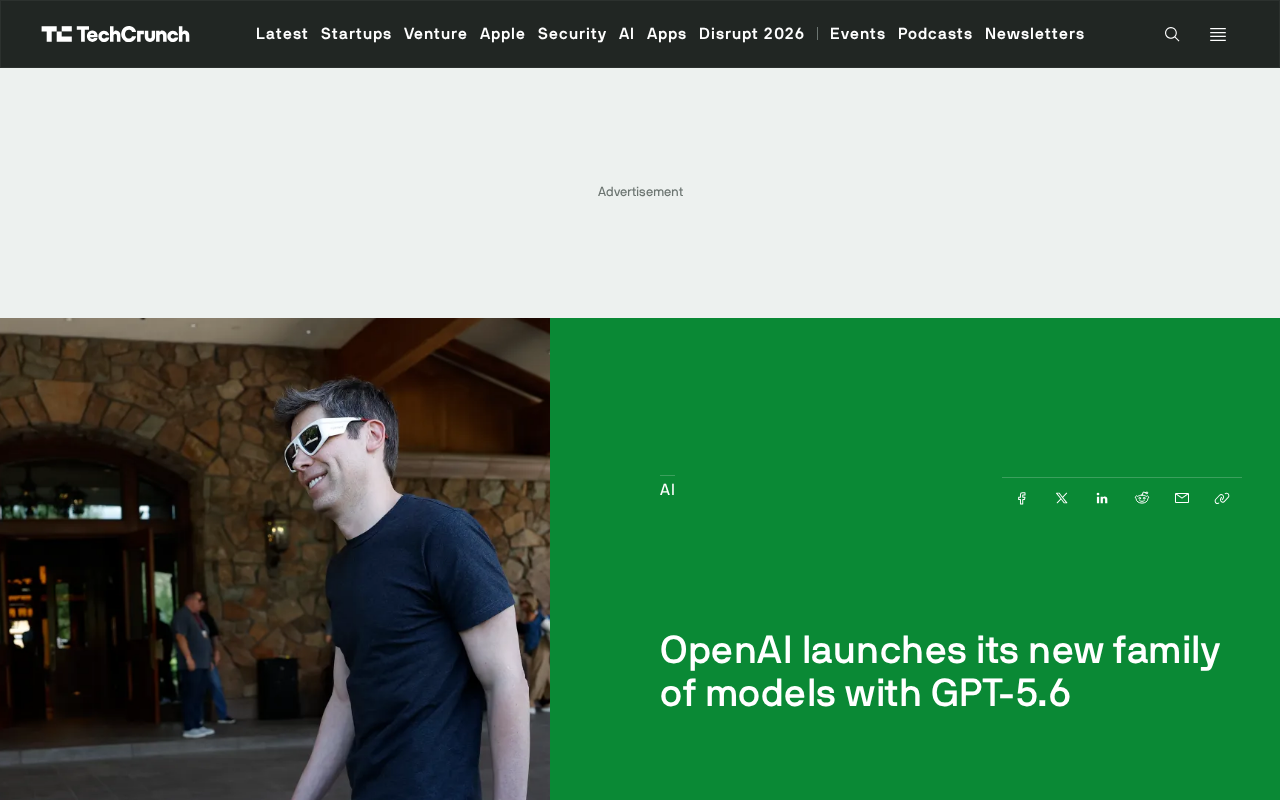
OpenAI's GPT-5.6 debuts with cybersecurity as its core selling point, targeting enterprise and government clients.
OpenAI has released the GPT-5.6 model family, spotlighting cybersecurity capabilities. This article explores its differentiation strategy, the double-edged-sword risks of AI in security, evaluation frameworks like CWE/CVE and MITRE ATT&CK, enterprise compliance barriers, and a rational assessment of the value behind the official claims.
OpenAI Strikes Again: The GPT-5.6 Series Debuts
OpenAI recently announced a brand-new model family, with GPT-5.6 as its core member. According to official disclosures, this series delivers capability upgrades across multiple dimensions, with performance in the cybersecurity domain being especially emphasized as the biggest highlight of this release.
The large language model (LLM) iteration lineage to which GPT-5.6 belongs is built upon the continuous optimization of the Transformer architecture. The Transformer architecture was proposed by Google in the 2017 paper Attention Is All You Need. Its core innovation was replacing the sequential processing of traditional RNNs with the "self-attention mechanism," enabling models to compute long-range dependencies in parallel. It has since become the foundational backbone of virtually all modern large language models, including the GPT series, BERT, and LLaMA.
Ever since GPT-3 (2020, 175 billion parameters) established the "large-scale pretraining + few-shot generalization" paradigm and validated the Scaling Law, each generation of OpenAI's model upgrades has typically involved three dimensions: expanding parameter scale and training data, improving alignment strategies through reinforcement learning from human feedback (RLHF), and task-specific fine-tuning.
It's worth noting that the Scaling Law was systematically articulated by OpenAI researcher Kaplan and colleagues in the 2020 paper Scaling Laws for Neural Language Models. Its core finding is that model performance follows a power-law relationship with parameter count, training data volume, and compute. The Chinchilla Law proposed by DeepMind in 2022 further revised this framework, pointing out that models like GPT-3 were actually "undertrained"—given the same compute budget, one should prioritize expanding training data volume over parameter count, with an optimal ratio of roughly 20 training tokens per parameter. This finding profoundly influenced the design philosophy of subsequent models, including the LLaMA series' route of "smaller parameter count + massive data volume," and it also explains why version-number iterations don't always imply a linear growth in parameters.
The progression of version numbers from GPT-4 to GPT-4o and then to the GPT-5 series represents more than just an expansion of parameter count or context window—GPT-4 introduced multimodal capabilities and a longer context window, while GPT-4o further optimized inference speed and multimodal fusion efficiency. More fundamentally, they reflect OpenAI's systematic investment in reasoning depth, multimodal fusion, and specialized-domain adaptation. Behind the version numbers lies a systematic accumulation of compute investment, data quality engineering, and alignment techniques—not a linear improvement in any single metric.
Notably, the model family to which GPT-5.6 belongs very likely adopts a Mixture of Experts (MoE) architecture. MoE is not a new concept—its prototype can be traced back to a 1991 paper by Jacobs et al.—but in the era of large models, it was reignited industry interest by Google's Switch Transformer (2021) and Mistral's Mixtral 8x7B. The core idea of MoE is to divide model parameters into multiple "expert" subnetworks; during each inference pass, a lightweight "router" network dynamically selects and activates only a few experts (usually Top-2). This allows the model to maintain an enormous total parameter count while keeping the actual activated parameters during inference far lower than full activation, striking a balance between inference cost and model capacity. GPT-4 is believed to have adopted a similar architecture, which explains why its inference speed and cost control outperform dense models of comparable parameter scale.
Furthermore, the release of GPT-5.6 needs to be understood within OpenAI's overall technical roadmap. Since the debut of the o1 model in 2024, OpenAI's investment in the direction of Test-Time Compute Scaling has been elevated alongside traditional pretraining scaling as one of two core routes. The core idea of test-time compute is: rather than investing compute only during the training phase, it's better to let the model generate longer "Chain-of-Thought" reasoning at inference time, improving accuracy on complex tasks through self-verification and multi-path search. This direction has deep methodological ties to the success of Monte Carlo Tree Search (MCTS) in board-game AI—AlphaGo surpassed human players precisely by performing large-scale tree search at inference time. For multi-step attack-and-defense analysis in cybersecurity, scaling test-time compute is especially crucial, because constructing an exploit chain is essentially a tree-structured reasoning process requiring continuous verification and backtracking, rather than a single-step generation task.
From the perspective of product iteration cadence, OpenAI has consistently maintained a high-frequency model update strategy. Compared to earlier versions that focused primarily on general language understanding and generation, GPT-5.6's positioning is more diversified, attempting to build deeper differentiated advantages in specialized domains. This also reflects how large-model competition has gradually evolved from a "contest of capabilities" into a new stage of "deep cultivation of specific scenarios."
Why Cybersecurity Capabilities Became a Key Selling Point
The fact that cybersecurity capabilities were singled out in this release is no accident. As large models become widely applied in enterprise-grade scenarios, a model's own security properties—as well as its supporting capabilities in defensive security tasks—are becoming important considerations in customer selection.
On the technical level, the core application scenarios of large models in cybersecurity can be broken down into: static code auditing (identifying CWE vulnerability types such as SQL injection and buffer overflow), dynamic threat intelligence analysis (parsing CVE descriptions and correlating attack chains), penetration testing assistance (generating PoC scripts or simulating attack paths), and natural-language Q&A over security logs.
To understand these evaluation frameworks, we first need to clarify several key concept systems. CWE (Common Weakness Enumeration) is a software security weakness classification standard maintained by MITRE, covering hundreds of vulnerability types such as SQL injection (CWE-89) and buffer overflow (CWE-121), and serves as the evaluation basis for code auditing tasks. CVE (Common Vulnerabilities and Exposures), on the other hand, is a standardized numbering system for specific known vulnerabilities, where each CVE entry contains a vulnerability description, scope of impact, and CVSS score.
In cybersecurity capability evaluation, beyond the CWE/CVE system, the MITRE ATT&CK framework is another core reference system that cannot be ignored. ATT&CK (Adversarial Tactics, Techniques, and Common Knowledge) is a knowledge base of attacker behavior maintained by MITRE. It decomposes the full attack lifecycle into 14 tactical stages—"Initial Access → Execution → Persistence → Privilege Escalation → Defense Evasion → Credential Access → Discovery → Lateral Movement → Collection → Exfiltration," and so on—with each stage encompassing hundreds of specific Techniques and Sub-techniques. The core value of AI models in threat intelligence analysis lies in their ability to automatically map fragmented security logs and alert information to the ATT&CK framework, quickly pinpointing the attacker's current stage and likely next moves, freeing security analysts from tedious manual correlation work. Evaluating this capability is far more complex than "can it identify SQL injection"—it requires the model to possess reasoning and synthesis abilities spanning multiple time windows and multiple data sources.
Benchmarks for evaluating model security capabilities typically include specialized test sets such as CyberSecEval (from Meta) and NYU CTF Bench: what makes CyberSecEval unique is that it simultaneously measures a model's risk tendency to generate "cyberattack-assisting content" and the accuracy of its "security defense knowledge," forming a dual-axis evaluation matrix. NYU CTF Bench, meanwhile, is based on real CTF (Capture The Flag) competition problems, assessing the model's practical capabilities in specialized tasks such as cryptography, binary reverse engineering, and web penetration.
CTF competitions are the most important form of hands-on competitive activity in cybersecurity. The core of their problem design is the "multi-step reasoning chain"—solving a problem often requires chaining together multiple technical knowledge points, which cannot be accomplished through a single-step lookup. This aligns closely with real-world penetration testing scenarios. Current top-tier AI models still score far below human experts on CTF benchmarks, especially on problem categories involving dynamic debugging and binary analysis, which reveals the true boundaries of AI security capabilities. These tests simultaneously measure a model's performance along two opposing dimensions—"defensive knowledge output" and "suppression of harmful capabilities"—making model evaluation in the security domain far more complex than for general tasks.
It's worth adding that CVSS (Common Vulnerability Scoring System) is the core quantitative tool for understanding the severity of CVEs. The widely used CVSS v3.1 scoring dimensions cover attack vector (network/adjacent/local/physical), attack complexity, required privileges, user interaction requirements, and impact on confidentiality, integrity, and availability, ultimately producing a composite score from 0 to 10. Whether an AI model can accurately understand CVSS scoring logic and prioritize vulnerabilities accordingly is an important metric for measuring its practical security analysis value—because in a real SOC (Security Operations Center) environment, analysts may face thousands of alerts daily, and automated prioritization directly determines response efficiency.
AI's Double-Edged Sword Effect in Security
AI has always been a "double-edged sword" in cybersecurity. On one hand, more powerful models can assist security teams with vulnerability detection, threat analysis, code auditing, and automated response, dramatically boosting defensive efficiency. On the other hand, the same capabilities could be exploited by malicious actors to generate attack code, craft phishing content, or probe system weaknesses.
To address the risk of AI capabilities being abused, the industry has developed a multi-layered protective framework. At the model level, OpenAI adopts a "Constitutional AI" approach to value-align its outputs—a method proposed by Anthropic, which presets a set of value principles that allow the model to self-critique and self-correct, reducing reliance on large-scale human annotation. OpenAI additionally introduced a "Process Reward Model (PRM)," which scores intermediate steps in the reasoning chain, significantly improving the reliability of high-risk reasoning tasks.
Understanding the limitations of RLHF helps illuminate the value of PRM. RLHF was formally established by OpenAI in the InstructGPT paper (2022), and its workflow consists of three stages: supervised fine-tuning (SFT), training a reward model, and reinforcement learning via Proximal Policy Optimization (PPO). The core limitation of RLHF is the "reward hacking" problem—the model may learn to maximize the reward model's score rather than true human preferences. PRM mitigates this problem to some extent by scoring intermediate reasoning steps rather than final results.
Meanwhile, Red Teaming has become a standard method for uncovering the boundaries of dangerous capabilities before release. Unlike traditional software security testing, AI red teaming faces the special challenge of Emergent Capabilities. Emergent capabilities refer to abilities that a model suddenly acquires after reaching a certain scale threshold—abilities that barely exist in smaller models—as systematically documented by the Google Brain team in the 2022 paper Emergent Abilities of Large Language Models. A classic example is the few-shot arithmetic reasoning ability that emerged in GPT-3 after breaking through tens of billions of parameters. This unpredictability means red teams cannot predict the dangerous-capability boundaries of the next-generation model by testing the current version, making exhaustive testing nearly impossible. As a result, all major frontier labs have established internal red teams and brought in external security researchers for expanded testing.
At the usage level, "Dual-Use Research" controls, tiered review of API access, and "Capability Guardrails" for high-risk capabilities have become industry standards. At the regulatory level, the 2023 UK Bletchley Summit drove the establishment of a cross-national AI safety evaluation coordination mechanism, and the US AI Safety Institute (AISI) and its UK counterpart are pushing to establish third-party model safety evaluation regimes, typically using a training compute threshold of 10^26 FLOPs to define "frontier models" and requiring them to complete independent safety reviews before public release.
Therefore, while emphasizing improvements in security capabilities, OpenAI typically also needs to pair these with stricter usage policies and anti-abuse mechanisms. How to strike a balance between "empowering defenders" and "preventing capability abuse" is a core proposition that every generation of models must confront head-on.
What GPT-5.6 Means for the Industry
A Clear Signal to the Enterprise Market
Making cybersecurity a marketing focus indicates that OpenAI is moving further toward enterprise and government customers. The Enterprise AI market differs fundamentally from the consumer market: customer decision cycles are longer, requirements for SLAs (Service Level Agreements) and data privacy compliance are stricter, and procurement decisions often require CISO (Chief Information Security Officer) approval.
At the compliance certification level, SOC 2 (System and Organization Controls 2) is a cloud service security audit standard developed by the American Institute of Certified Public Accountants (AICPA), with evaluation dimensions covering the five trust service criteria of security, availability, processing integrity, confidentiality, and privacy. It is a baseline entry requirement for North American enterprise customers procuring SaaS products. ISO 27001 is an information security management system certification issued by the International Organization for Standardization, carrying greater weight in European and government procurement scenarios. For customers involving national defense and critical infrastructure, FedRAMP (Federal Risk and Authorization Management Program) certification is a necessary condition for entering the US federal government market, with review cycles often lasting 12-18 months.
As the top official responsible for enterprise information security, the CISO's core concerns extend beyond model capabilities themselves to include Data Residency, the Auditability of model outputs, and the vendor's security incident response mechanisms. Data residency requirements involve data sovereignty legislation across countries, such as GDPR and China's Data Security Law. In terms of technical implementation, mainstream cloud AI providers meet this requirement through "regionalized deployment," while for government customers with the highest security levels, fully offline "Air-gapped Deployment" is the only acceptable solution. However, this severely constrains model updates and performance optimization, and it is one of the biggest bottlenecks currently facing the commercialization of large models into government core systems.
It's worth adding that when enterprises evaluate whether to procure a GPT-5.6-class model, the inference cost structure is another unavoidable core issue. The inference cost of large models is typically measured in "dollars per million tokens." Using the current market as a reference, GPT-4 Turbo's input price is roughly $10 per million tokens, whereas open-source models like Llama 3 can reduce marginal inference cost by over 90% in self-hosted scenarios. For cybersecurity scenarios, this difference is especially sensitive: real-time security log analysis may generate processing demands of billions of tokens per day, and API call costs may far exceed the license fees themselves.
This cost pressure has given rise to two parallel technical response routes. The first is a hybrid deployment architecture: cloud-based frontier models (such as GPT-5.6) specifically handle high-value, low-frequency complex reasoning tasks—for example, deep root-cause analysis of high-priority alerts—while locally deployed small-parameter distilled models (such as Phi-3 and Mistral 7B) take on high-frequency, low-complexity tasks such as log classification and preliminary anomaly filtering. This "large-small model collaboration" architecture can compress overall inference cost by 60%-80% while retaining the capability advantages of frontier models at critical decision nodes. The second is the rapid maturation of the inference acceleration technology stack: quantization reduces model weight precision from FP16/BF16 to INT8 or INT4, halving memory footprint and boosting inference throughput by 1.5-2x with minimal accuracy loss. Speculative decoding, meanwhile, uses a small model to pre-generate candidate token sequences that the large model verifies in parallel, converting the serial bottleneck of autoregressive generation into a parallel operation and reducing end-to-end latency by 40%-60%. For security alert scenarios requiring second-level responses, the engineering value of these acceleration techniques may even exceed that of iterating on model capabilities themselves.
In addition, RAG (Retrieval-Augmented Generation) architecture is playing an increasingly important role in enterprise security scenarios and merits separate discussion. The core idea of RAG is to combine the model's parametric knowledge with an external real-time knowledge base: when a security analysis request is triggered, the system first retrieves the latest threat intelligence, vulnerability advisories, and internal historical incidents from a vector database, then feeds the retrieval results as context into the model for reasoning and generation. This architecture effectively solves the large model knowledge cutoff problem—especially critical for cybersecurity, since the disclosure of new CVEs and the emergence of new attack techniques happen almost daily. Mainstream implementations include vector retrieval based on FAISS or Pinecone, combined with semantic similarity matching using OpenAI Embeddings or open-source embedding models like BGE, with overall pipeline latency typically kept under 500 milliseconds.
By directly emphasizing GPT-5.6's cybersecurity capabilities, OpenAI is essentially sending a clear signal to the key players in this decision-making chain, competing for the "blue-chip" customer base in government, defense, and critical infrastructure—segments highly sensitive to security credentials.
A Differentiation Strategy Within the Competitive Landscape
Against the backdrop of vendors like Anthropic and Google strengthening their respective models' specialized capabilities, OpenAI's choice to double down on the security dimension is a clear differentiation strategy. Anthropic has accumulated a large base of financial and healthcare customers thanks to Claude's "safety-first" brand positioning. Google leverages its Workspace ecosystem and Vertex AI platform to strengthen enterprise lock-in. Microsoft has built an enterprise-grade compliance moat for OpenAI's models through Azure OpenAI Service. Whoever can first establish trust in high-value, high-barrier vertical scenarios is more likely to gain the upper hand in the next round of commercialization competition.
Another dimension of this competition that cannot be overlooked is the pressure from the open-source ecosystem. Meta continues to open-source LLaMA series weights, and high-performance open-source models from institutions like Mistral and DeepSeekAd keep compressing the capability premium of closed-source models. On general language tasks, the gap between open-source models and closed-source frontier models is narrowing rapidly. But in enterprise scenarios requiring strict compliance backing, traceable auditing, and continuous security red-teaming guarantees, closed-source commercial models still possess a unique trust advantage. OpenAI's public endorsement of its cybersecurity capabilities is, in essence, constructing a rationalizing narrative for the continued existence of this gap.
Viewing Official Release Information Rationally
One caveat: the currently available information is relatively limited and comes mainly from OpenAI's official statements. Descriptions like "improvements achieved across multiple domains" are fairly vague, and the specific magnitude of performance gains, benchmark data, and actual real-world results still await validation from independent third-party evaluations and genuine user feedback. Notably, the security capability improvements OpenAI claims for GPT-5.6 have theoretically undergone multiple rounds of internal and external red-team validation, but the public release of independent third-party evaluation results remains the most important basis for verifying the credibility of these claims.
For practitioners focused on AI safety and large-model development, it's advisable to maintain cautious optimism until complete technical documentation and independent evaluation results become available. The true value of a model must ultimately be tested through real application scenarios.
Summary
The release of GPT-5.6 continues OpenAI's consistent style of rapid iteration, and placing cybersecurity in the spotlight reveals its strategic ambition to deeply cultivate the enterprise market and specialized scenarios. From the continuous evolution of the Transformer architecture and the MoE mixture-of-experts structure's optimization of inference cost, to the Chinchilla Law's revision of scaling ratios and the new paradigm of test-time compute scaling; from the iteration of alignment techniques like RLHF and Constitutional AI, to the industry barriers posed by the CWE/CVE/CVSS/MITRE ATT&CK evaluation systems and SOC 2/FedRAMP compliance certifications—the technical and commercial logic involved in this release is far more complex than it appears on the surface. The unpredictability of emergent capabilities, the compliance barriers of data residency, the engineering challenges of air-gapped deployment, the economic constraints of inference cost, the engineering practices of inference acceleration techniques like quantization and speculative decoding, and RAG architecture's support for integrating real-time threat intelligence—these deeper issues collectively form the true difficulty curve of AI entering high-security scenarios. As AI capabilities continue to grow, how to ensure these capabilities are used responsibly will be a critical topic that the entire industry must confront together over the long term. We will continue to track further technical details and hands-on performance of this model series.
Related articles

CSS Anchor Positioning: A New UI Positioning Approach Without JavaScript
A deep dive into CSS Anchor Positioning: from anchor-name and position-anchor to the anchor() function, position-area shorthand, position-try-fallbacks, anchor-size, and upcoming anchor queries.

New AI Chart Interaction: Continuous Follow-up Questions and Visualization in Conversation
Explore a new AI interaction method for continuously generating charts in conversation. Use the /visualize command to ask follow-up questions and visualize answers in the same chat window, improving data analysis efficiency.

Cursor Merges Into X Subscription: Paid Plans Share Unified Usage Pool, Grok Model Coding Usage Doubled
Cursor joins The X Subscription with a unified usage pool and doubled Grok coding quota. Third-party models shift to API pricing. Existing users can keep or migrate plans.