OpenAI's Astra Model: What It Means to Be the First to Hit the Critical Cybersecurity Capability Threshold
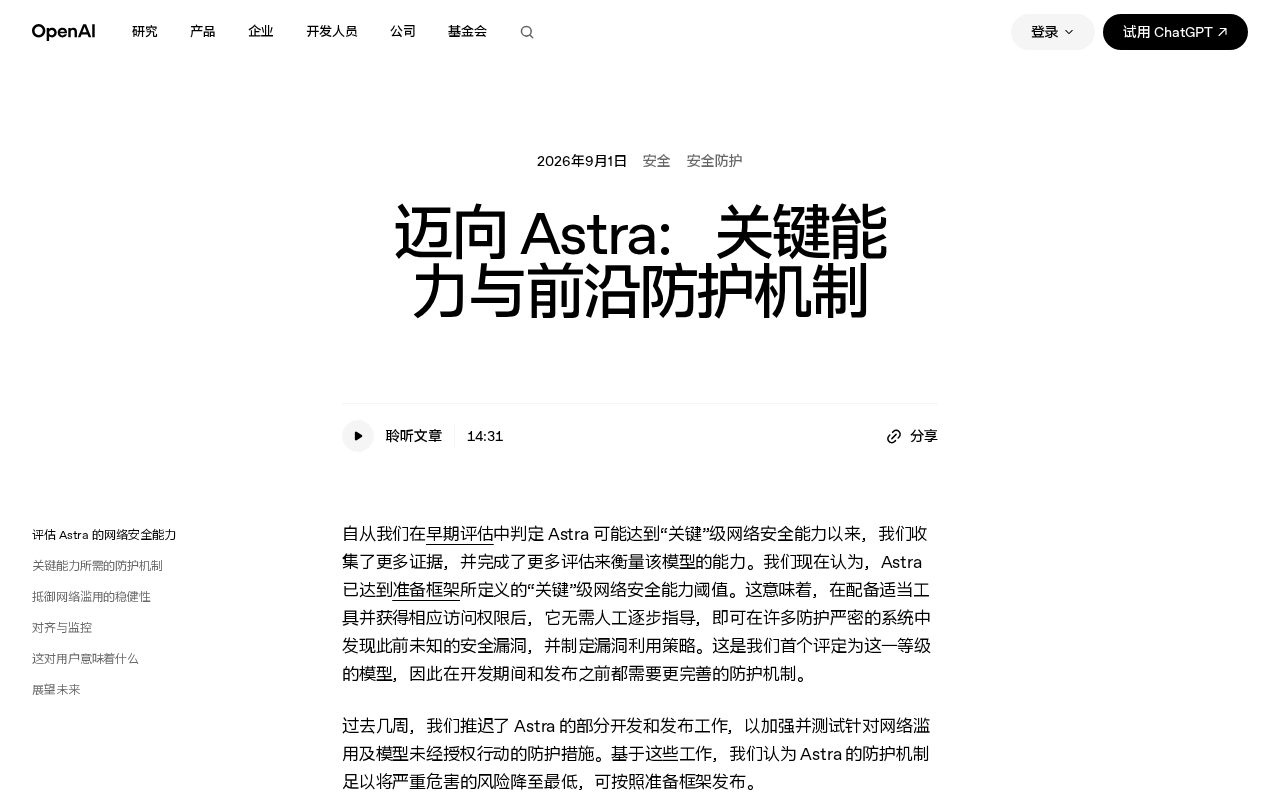
OpenAI's Astra is the first model to reach the Critical cybersecurity threshold, signaling a new era for AI safety.
OpenAI's Astra model is the first to reach the "Critical" threshold in the cybersecurity dimension of its Preparedness Framework. This milestone means the model possesses capabilities approaching those of professional security practitioners, amplifying the offense-defense asymmetry in cybersecurity. Astra will ship with stronger safeguards including access controls, behavioral refusals, monitoring, and deployment restrictions. The release also puts self-governance frameworks to a real-world test, intensifying the debate over third-party audits and external regulation.
Astra's Arrival: A Significant Capability Threshold
OpenAI recently disclosed a new model codenamed Astra, subjecting it to evaluation under the company's Preparedness Framework. According to official statements, Astra is OpenAI's first model to reach the "Critical" threshold in the cybersecurity capability dimension. While this may sound brief, within the context of frontier AI safety governance, it represents a watershed moment.
The so-called "critical capability threshold" means that a model's capabilities in a given high-risk domain have grown strong enough that misuse could pose substantial societal risks. In OpenAI's framework, cybersecurity is one of several "frontier risk categories" under close monitoring. When a model crosses this threshold, it is no longer merely an "assistive tool" — in specific offensive and defensive scenarios, it possesses capabilities approaching those of professional practitioners.
What Is the Preparedness Framework
From Capability Evaluation to Risk Classification
OpenAI's Preparedness Framework is the company's core mechanism for assessing and managing the potentially catastrophic risks of frontier models. Rather than simply measuring how "smart" a model is, it evaluates models across several high-risk domains — including cybersecurity, biochemical threats, model autonomy, and persuasion — using a tiered classification system.
Formally released in late 2023, the framework draws design inspiration from the BSL (Biosafety Level) classification system used in biological safety: different capability levels trigger different levels of security constraints, rather than applying a blanket ban or approval. The framework divides risk categories into four core domains — cybersecurity, chemical/biological/nuclear/radiological weapons (CBRN), Model Autonomy, and Persuasion — each assessed across four tiers: Low → Medium → High → Critical.
Each category is typically divided into several levels, ranging from "Low" to "Critical." Only when a model's capabilities reach or exceed a given level does the company trigger the corresponding level of security review and deployment restrictions. The core logic is: the stronger the capability, the stricter the constraints. It attempts to strike a balance between "releasing quickly to gather feedback" and "preventing capabilities from being exploited maliciously." Notably, the framework is not a static document — it is continuously revised as model capabilities evolve. This also means that the criteria for determining "Critical" thresholds are themselves dynamically adjusting, adding complexity for external oversight.
How Capability Thresholds Are Determined
Determining whether a model has reached a given capability threshold relies on a methodology known as "capability evaluations" or "evals." For the cybersecurity domain, these evaluations typically include: testing whether the model can independently discover and exploit vulnerabilities in isolated environments (sandboxes), measuring the efficiency multiplier when the model assists human red teams, and assessing whether the model can breach representative security defenses under "unassisted conditions." Anthropic, Google DeepMind, and OpenAI each have their own eval frameworks, but they differ significantly in evaluation scenario design, scoring criteria, and levels of public disclosure. This lack of standardization is one of the central challenges in current AI safety governance — without a commonly accepted "measuring stick," what "Critical" actually means varies from one organization to the next.
Why Cybersecurity Is Listed as a Critical Evaluation Metric
Cybersecurity is singled out as a critical category because of its exceptionally pronounced "asymmetry between offense and defense." In traditional cybersecurity, attackers only need to find one effective vulnerability, while defenders must plug every possible gap. This asymmetry is further amplified when AI enters the picture: a model with advanced cybersecurity capabilities can complete vulnerability scanning in milliseconds, automatically generate CVE (Common Vulnerabilities and Exposures) exploit code, construct multi-step attack chains, and adjust strategies in real time based on the target system's defensive responses — tasks that traditionally require an experienced red team days or even weeks to complete. This is what the security research community calls the "skill threshold compression effect": highly complex attack capabilities no longer require highly complex skill sets.
For defenders, the same capabilities can also be used to harden systems, automate penetration testing, and detect threats — illustrating the "double-edged sword" nature of this technology. Astra reaching the "Critical" threshold in cybersecurity means that OpenAI's internal evaluation concluded the model already possesses the capability to produce material impact in real-world offensive and defensive scenarios, and that this compression effect has entered a zone of substantive risk. This is precisely why the company specifically emphasized "stronger safeguards for release."
What Astra's Safeguards Specifically Include
Once a model crosses a critical threshold, simply "releasing as usual" is no longer an option. OpenAI stated that Astra will come equipped with stronger release safeguards. While official materials did not elaborate on specific details, based on industry practices and the framework's design intent, such safeguards typically include several layers:
- Access controls: Stricter invocation permissions for high-risk capabilities, potentially limited to vetted organizations or researchers;
- Behavioral refusal mechanisms: Training the model to recognize and refuse requests clearly intended for attacks, such as generating malware or planning intrusions;
- Monitoring and auditing: Logging and anomaly detection for usage behavior involving sensitive domains;
- Deployment scope restrictions: Tiered rollout of specific capabilities at the API level, rather than releasing everything at once.
This "capabilities first, safeguards follow" model reflects a pragmatic governance approach among frontier labs: neither halting entirely due to risk, nor ignoring safety boundaries in pursuit of release speed.
Deeper Implications for the AI Industry
Governance Frameworks Are Being Put to the Real Test
Astra's significance lies not only in its capabilities, but in the fact that it is the first landmark case where the Preparedness Framework moves from "paper commitment" to "actual activation." Previously, major AI labs had all published their own risk assessment frameworks, but explicit announcements that a specific model had "reached a critical threshold" were rare. This means the self-regulation mechanism is now being tested against real scenarios — whether it serves as an effective safety guardrail or remains merely a PR exercise will be answered by subsequent deployment practices.
The Tension Between Self-Governance and External Regulation
Current AI safety governance relies heavily on lab self-reporting, which structurally contains two inherent tensions. The first is incentive misalignment: more capable models typically mean stronger commercial competitiveness, while acknowledging that a model has reached a "Critical" threshold may attract regulatory attention or public concern, creating incentives to underreport risk. The second is the transparency gap: even if labs conduct evaluations in good faith, outsiders find it difficult to independently verify the rigor of their assessment methods or the reliability of their conclusions. By comparison, safety certification in high-risk industries like aviation, nuclear energy, and pharmaceuticals all incorporate mandatory third-party audit mechanisms — the AI field currently lacks comparable independent assessment infrastructure.
At present, the determination of these capability thresholds relies almost entirely on labs' internal evaluations. What counts as "Critical," whether safeguards are sufficient, and whether evaluation criteria are transparent are largely defined by the companies themselves. As model capabilities continue to approach and cross high-risk thresholds, calls for third-party evaluation, independent auditing, and even government regulation will intensify. Astra's emergence will very likely become another important footnote in the ongoing debate over "who gets to draw the red lines for frontier AI capabilities."
Conclusion
As OpenAI's first model to reach the "Critical" threshold in cybersecurity, Astra marks the entry of frontier AI capability development into a new phase where safety boundaries must be taken seriously. It showcases the rapid leap in model capabilities while placing the question of "how to maintain safety baselines alongside capability growth" in an increasingly concrete context. For the entire industry, the real test is not whether stronger models can be built, but whether the accompanying safeguards, evaluation mechanisms, and governance frameworks can keep pace — especially against a backdrop where the structural limitations of self-governance are becoming increasingly apparent and demands for external oversight continue to rise. Astra may be just the beginning.
Related articles

Clockwork: Schedule AI Coding Agents on Your Calendar for Unattended, Automated Execution
Clockwork schedules AI coding agents on your calendar for unattended execution, featuring git worktree sandboxing, risk-based approval pauses, and transparent API cost reports.

Fairphone 6+ Deep Dive: The Ideals and Realities of a Repairable, Modular Smartphone
Deep dive into Fairphone 6+'s modular design, 8-year update promise, ethical supply chain practices, and the real challenges facing repairable sustainable smartphones.
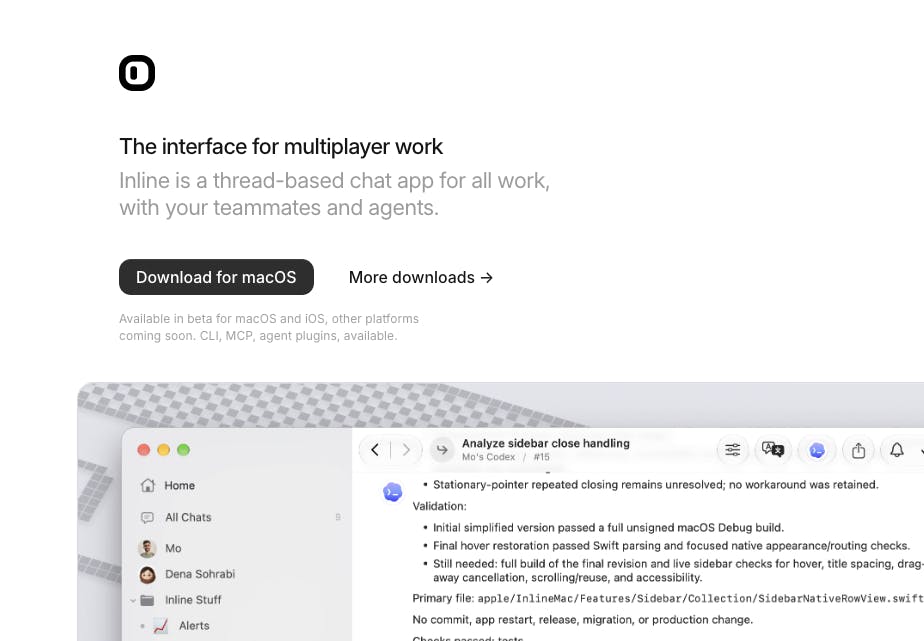
Inline: The Multiplayer Chat Tool That Brings AI Agents Into Team Collaboration
Inline is an AI-native, thread-based team chat tool that lets AI agents collaborate alongside team members. We analyze its positioning and challenges in the Slack-dominated messaging space.