OpenAI's Chief Scientist Warns: AI Is Increasingly Becoming an 'Alien Intelligence'
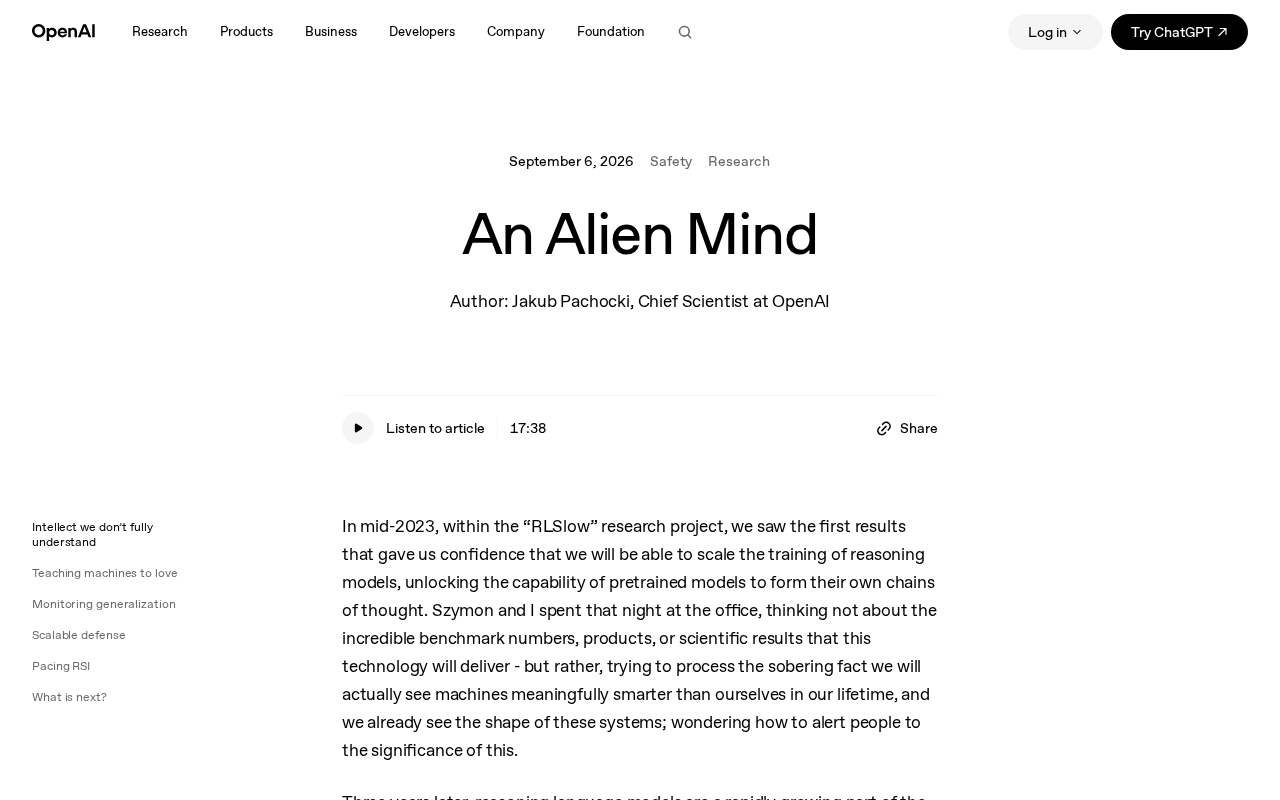
OpenAI's chief scientist warns AI is becoming an 'alien intelligence' beyond human understanding.
OpenAI Chief Scientist Jakub Pachocki published 'An Alien Mind,' warning that the gap between AI capabilities and human understanding is widening dangerously. He argues current alignment techniques like RLHF have fundamental limitations against superintelligent systems, calls for new interpretability tools and safety architectures, and urges international coordination on AI safety standards — framing it as a challenge on par with nuclear governance.
The Exponential Leap in AI Capabilities: From Tool to 'Alien Intelligence'
OpenAI's Chief Scientist Jakub Pachocki recently published a deep reflection titled An Alien Mind, addressing the most fundamental contradiction in current AI development: the rapidly widening gap between the growth of model capabilities and the limits of human understanding. This technical leader, who headed the teams behind GPT-4 and the o1 series, chose the word "alien" to describe increasingly powerful AI systems — sending a clear warning signal.
OpenAI and Its Core Technology Background
Founded in 2015, OpenAI is a globally leading AI research organization renowned for developing breakthrough products like ChatGPT. As its Chief Scientist, Jakub Pachocki led the core R&D efforts behind GPT-4 and the o1 series. GPT-4, a large multimodal model released in 2023, demonstrated near-human-expert performance on professional exams and complex reasoning tasks. The o1 series, introduced by OpenAI in 2024, specifically enhanced reasoning capabilities — performing internal "chain-of-thought" reasoning before answering — and excelling at tasks requiring multi-step logic, such as mathematics and programming. Pachocki's perspective therefore carries exceptional technical authority and foresight.
Pachocki's concerns are far from unfounded. From GPT-3 to GPT-4, and more recently o1-preview, each model iteration has brought capability gains that exceeded expectations. These systems are beginning to exhibit complex reasoning abilities, long-term planning capabilities, and in certain domains, performance that surpasses human experts.
The Unpredictability of Emergent Capabilities
"Emergent abilities" are a core phenomenon in large language model research, referring to how models suddenly exhibit new capabilities — ones never explicitly optimized during training — once they cross a certain scale threshold. For example, GPT-3, with its 175 billion parameters, was the first to demonstrate few-shot learning. GPT-4's parameter count, while undisclosed, is estimated to exceed one trillion, enabling it to understand complex images and perform cross-modal reasoning. This unpredictability of emergence creates a dual challenge: we cannot know in advance what new abilities the next generation of models will acquire, and we struggle to debug and control these capabilities using traditional engineering methods.
That said, our understanding of how these models work internally has not kept pace — we can train powerful models, but we cannot fully explain why they make specific decisions. The AI explainability dilemma is becoming increasingly stark: current deep neural networks contain billions or even trillions of parameters that self-organize into complex representational structures during training. Although researchers have developed tools such as attention visualization and activation analysis, the actual cognitive processes occurring inside these models remain akin to observing a "black box." For instance, we know GPT-4 can solve complex math problems, but we cannot fully trace how it constructs a reasoning chain across thousands of neural network layers. This opacity is especially dangerous when models make errors or produce biases, as we struggle to pinpoint the root cause and make targeted corrections.
The Fundamental Shift in AI Alignment Challenges
Traditional AI alignment efforts focused on making models follow human instructions and avoid harmful outputs. But Pachocki points out that as AI capabilities break through new thresholds, the nature of the alignment challenge has fundamentally changed. When AI systems approach or exceed human-level cognition, ensuring their goals remain aligned with human values becomes an unprecedented problem.
This "alien nature" manifests on multiple levels:
- Differences in cognitive modes — AI learns from massive datasets, potentially forming world models fundamentally different from human experience
- Opacity of decision logic — Even when outputs appear reasonable, the internal reasoning paths may completely defy human intuition
- Complexity of value judgments — When AI must weigh multiple objectives, its priority rankings may diverge from human expectations in subtle but critical ways
Limitations of Current Alignment Techniques
Pachocki emphasizes that this is not a problem that can be solved by patching technical details — it requires a fundamental rethinking of how AI systems are designed. Current mainstream alignment techniques, such as Reinforcement Learning from Human Feedback (RLHF), may have fundamental limitations when applied to superintelligent systems.
RLHF is currently the dominant AI alignment technique. Its workflow involves having the model generate multiple candidate responses, which human annotators then rank based on which best meets expectations. The model learns from these human preferences to adjust its output strategy. ChatGPT's "helpful, harmless, and honest" characteristics largely stem from RLHF training. However, this approach has clear limitations: human annotators can only evaluate outputs they understand — when AI capabilities surpass human comprehension, we may fail to identify errors or potential risks in responses. Additionally, differences in values among annotators can lead to ambiguity and conflicts in alignment objectives.
Building Stronger Safety Measures and Global Cooperation Mechanisms
Facing this serious challenge, Pachocki calls for establishing more robust safety mechanisms. Specifically, this encompasses two key dimensions:
Technical breakthroughs:
- Developing new AI interpretability tools
- Establishing more rigorous model testing and evaluation frameworks
- Designing system architectures that can be reliably shut down in emergencies
Organizational transformation:
- Establishing independent safety review boards within AI labs
- Giving safety teams greater weight in decision-making
The Urgency of International Coordination
More importantly, Pachocki explicitly states that AI safety cannot rely on the efforts of a single company or nation alone. He calls for establishing international coordination mechanisms so that the world's major AI research entities can reach consensus on safety standards, testing methods, and risk assessment. Such collaboration should not be seen as limiting innovation, but as building sustainable infrastructure for the entire industry.
AI governance has become yet another major issue requiring global coordination, following nuclear weapons and climate change. Currently, regulatory approaches vary significantly across nations: the EU has passed the AI Act establishing a risk-tiered framework, the U.S. emphasizes industry self-regulation and competitive advantage, and China focuses on algorithm registration and content safety. Under the pressure of technological competition, countries face a "prisoner's dilemma": unilaterally raising safety standards could lead to competitive disadvantage, while collectively lowering them increases systemic risk. International coordination mechanisms need to reach consensus on technical standards, safety testing, and incident response — a model similar to the International Atomic Energy Agency may be worth emulating. However, AI technology's dual-use nature and rapid iteration speed make it difficult to directly apply traditional arms control frameworks.
This call is particularly critical in the current geopolitical context. As AI technology becomes a strategic high ground for national competition, finding a balance between maintaining technological leadership and ensuring safety — and avoiding the compromise of safety standards under competitive pressure — is an urgent issue facing global decision-makers.
Where Are the Limits of Technological Optimism?
Pachocki's article marks a deepening of internal reflection within the AI field. For a long time, the prevailing Silicon Valley narrative has tended to emphasize technology's positive potential, treating safety concerns as problems that can be gradually resolved through engineering solutions. But the title An Alien Mind itself suggests that we may be creating a form of intelligence that is inherently difficult to fully control and understand.
Toward a Mature Technology Culture
This is not a pessimistic or fear-driven reaction, but rather a form of mature technological realism. Technological realism distinguishes itself from both technological optimism and technological pessimism by acknowledging the positive value of technological progress while soberly facing its inherent risks and limitations. This stance already has mature precedents in fields like nuclear energy and gene editing: nuclear energy provides clean power but requires strict safety protocols; CRISPR technology can treat genetic diseases but requires ethical review. In the AI domain, technological realism means: acknowledging the productivity leaps enabled by large models while building corresponding testing, auditing, and emergency response mechanisms; encouraging innovation without sacrificing safety; and treating safety research as a core technical capability rather than a cost burden.
Acknowledging the "alien nature" of AI systems and the shortcomings of current alignment techniques can actually drive more responsible R&D practices. As experience in nuclear energy, biotechnology, and other fields has shown, powerful technologies require governance frameworks and safety cultures that match their magnitude.
Action Items for Different Groups
For different groups, this warning carries distinct practical implications:
- AI industry practitioners: Safety work can no longer be treated as an appendage to the R&D process — it must be deeply integrated into system design from the very beginning
- Policymakers: Effective AI regulatory mechanisms must be established without stifling innovation
- The general public: While enjoying the conveniences AI provides, maintain a clear awareness of its potential risks
Key Takeaways
Jakub Pachocki's warning reminds us that AI technology has entered a new phase where simple engineering optimization cannot address fundamental alignment and safety challenges. We need systemic changes across technical capabilities, organizational culture, and international governance to ensure artificial intelligence truly benefits humanity rather than becoming an uncontrollable "alien intelligence."
Related articles
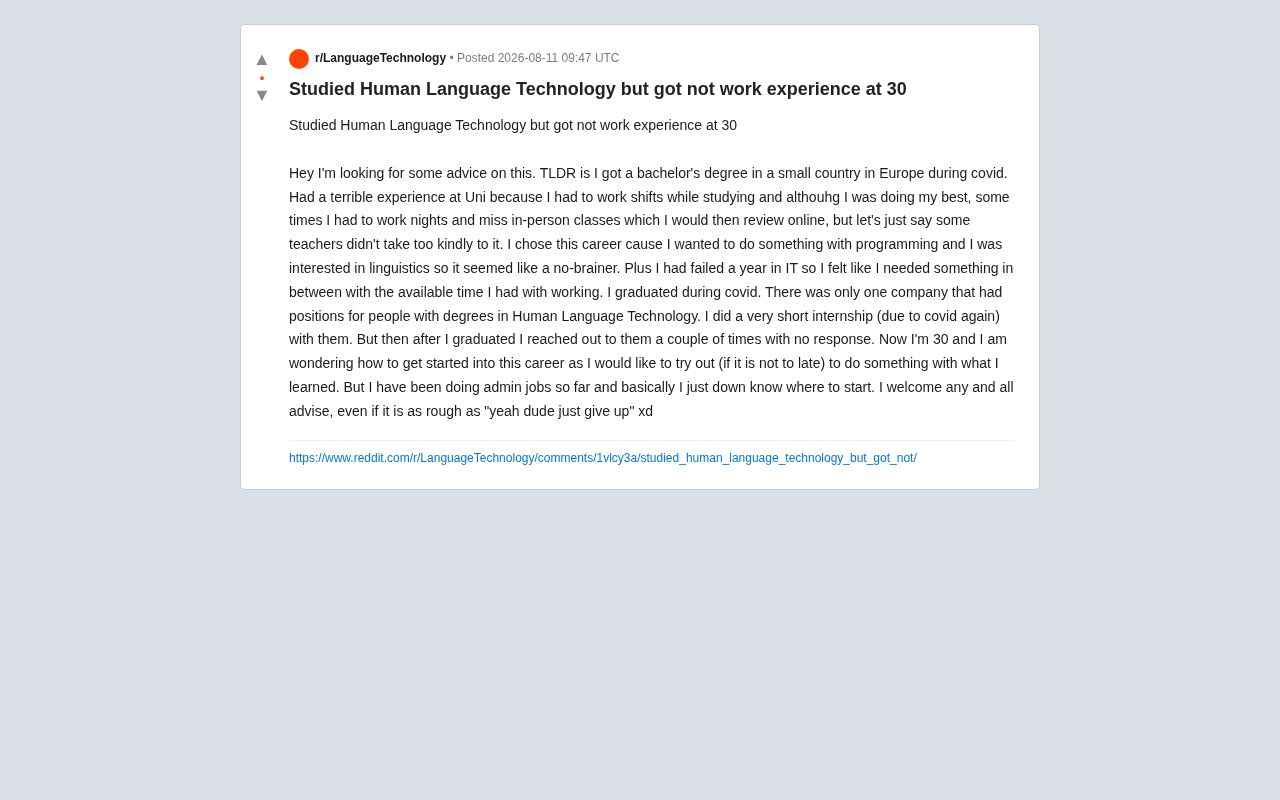
Career Switch to NLP at 30 with Zero Experience: How a Linguistics-Tech Background Can Seize Opportunities in the AI Era
How can a 30-year-old HLT graduate with zero experience transition into NLP? This guide covers the unique advantages of a linguistics background in the LLM era and provides a complete restart path.

Mistral Open-Sources Shieldstral: A Multimodal Model for Defining AI Safety Guardrails in Natural Language
Mistral releases Shieldstral, an open-source multimodal safety guardrail model supporting runtime natural language policy definition, text and image evaluation, and local deployment with just 16GB VRAM.

11 AI Coding Agents Reviewed: Codex Ranks #1 Overall, Claude Code Has the Strongest Raw Capabilities
A systematic review of 11 AI coding Agents including Codex, Claude Code, Cursor, and OpenCode, scored across five dimensions with selection recommendations.