OpenAI's Claim of Solving a Millennium Prize Problem Sparks Academic Controversy
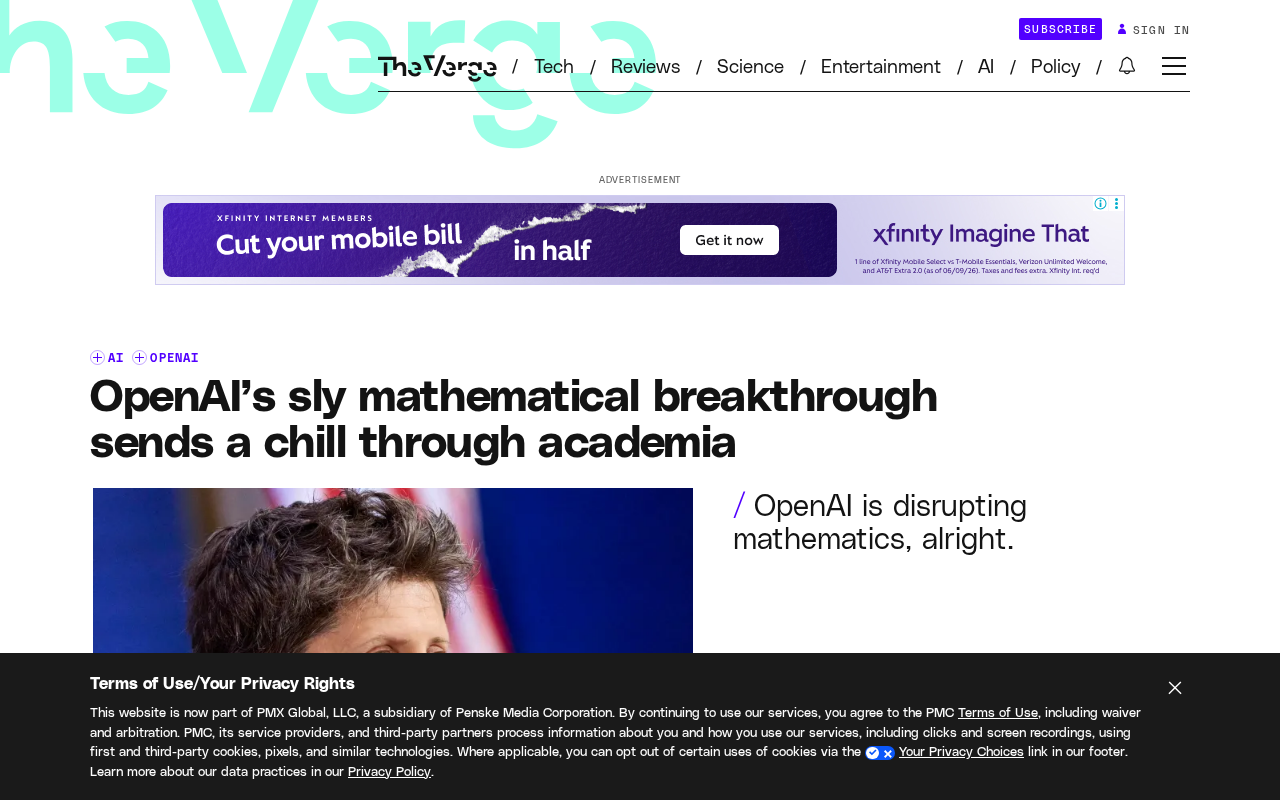
OpenAI's claim of solving a Millennium Prize Problem ignites fierce academic debate over AI's role in mathematics.
OpenAI announced that its AI system solved one of the seven Millennium Prize Problems, sparking significant controversy in the academic community. Key concerns include proof attribution, verification challenges, and the tension between tech-company announcements and traditional academic peer review. The event highlights AI's rapid progress in mathematical reasoning while raising deeper questions about the future role of human mathematicians and the evolving model of knowledge production.
A Historic Moment: AI Solves a Millennium Prize Problem
On Tuesday, OpenAI announced that its AI system had cracked one of mathematics' legendary "Millennium Prize Problems." This should have been a celebrated highlight—an indisputable achievement and powerful proof that AI is reshaping mathematical research at an astonishing pace.
The Millennium Prize Problems are seven mathematical challenges proposed by the Clay Mathematics Institute in 2000, each carrying a $1 million reward. These problems represent the deepest and most intractable challenges in contemporary mathematics, including the famous Riemann Hypothesis, the P vs NP problem, and more. Solving any single one of them would represent a monumental leap forward in humanity's understanding of mathematics.
The Clay Mathematics Institute officially announced these seven problems on May 24, 2000, at the Collège de France in Paris. The complete list includes: the P vs NP problem, the Hodge Conjecture, the Poincaré Conjecture, the Riemann Hypothesis, Yang–Mills Existence and Mass Gap, Navier–Stokes Existence and Smoothness, and the BSD Conjecture (Birch and Swinnerton-Dyer Conjecture). Prior to this event, only the Poincaré Conjecture had been successfully proven—by Russian mathematician Grigori Perelman in 2003. Notably, Perelman declined both the $1 million prize and the Fields Medal, becoming a legend in the history of mathematics. These problems were selected because each represents the deepest unsolved mystery in its respective branch of mathematics. Their solutions typically require the invention of entirely new mathematical tools and theoretical frameworks, rather than merely combining existing methods.
Yet even before this AI breakthrough was officially announced, controversy had already begun to simmer—a complex and subtle unease spreading through the academic community.
Three Core Concerns from the Academic World
Intriguingly, even before the official announcement, the way these results were presented created an unusually complicated situation. OpenAI's announcement approach left many mathematicians feeling uneasy.
The core issue is this: when an AI system claims to have solved a problem that the world's top mathematicians couldn't crack for decades, how should the academic community verify it, attribute it, and interpret its significance? Mathematics is a discipline built on rigorous proof, where value lies not just in "getting the answer" but in understanding the reasoning process that explains why the answer holds.
This touches on a key epistemological issue: tech companies tend to announce major results through product launches or blog posts—a highly efficient method of communication that often lacks sufficient technical detail for external verification. Traditional academic knowledge dissemination follows an entirely different, well-established process: researchers complete a paper, submit it to an academic journal or preprint server (such as arXiv), and after rigorous peer review, it is formally published. The entire process emphasizes transparency, reproducibility, and collective gatekeeping by the academic community. DeepMind's release of AlphaFold previously triggered similar discussions, though it ultimately did pass rigorous academic scrutiny. The fundamental tension here is structural: tech companies have commercial incentives to maximize publicity, while academia prioritizes rigor and verifiability—two logics that inherently conflict.
The Triple Dilemma of Attribution and Verification
When AI participates in cutting-edge mathematical discoveries, a series of questions emerge that traditional academia has never had to face:
- The attribution problem: Who deserves credit for a mathematical proof primarily completed by AI? The company that trained the model, or the researchers who provided the direction?
- The verification challenge: Can an AI-generated proof withstand the rigorous scrutiny of peer review? Is the chain of reasoning fully transparent?
- The publication controversy: There is enormous tension between tech companies announcing mathematical breakthroughs as product launches and the rigorous publication process of traditional academic papers.
Regarding verification, it's worth understanding the unique tradition of mathematical proof validation. Unlike experimental sciences, where results can be confirmed through repeated experiments, the correctness of a mathematical proof depends entirely on the completeness of its logical chain. An important mathematical proof paper typically undergoes months or even years of peer review, with multiple domain experts checking reasoning steps line by line. History is full of cases where initial claims were later overturned—for example, Japanese mathematician Shinichi Mochizuki's 2012 proof of the ABC Conjecture, which spanned hundreds of pages and constructed an entirely new "Inter-universal Teichmüller Theory," remains a subject of significant controversy in the mathematical community, with most Western mathematicians not accepting the proof's completeness. In recent years, the development of formal proof verification systems (such as theorem provers like Lean, Coq, and Isabelle) has provided new avenues for machine-assisted verification. These systems can translate mathematical proofs into a formalized language that computers can check, offering a verification method independent of human subjective judgment. If an AI-generated proof can pass verification in such formal systems, it would greatly enhance its credibility.
How AI Is Changing the Paradigm of Mathematical Research
Regardless of the controversy, this event clearly demonstrates the astonishing pace of AI's progress in mathematics. Just a few years ago, it was widely believed that mathematical proof—requiring highly abstract thinking and creative insight—was one of the areas least accessible to AI.
Now, from DeepMind's AlphaProof achieving silver-medal performance at the International Mathematical Olympiad to the dramatic leaps of various large language models on mathematical reasoning benchmarks, the boundaries of AI's mathematical capabilities are being continuously pushed. OpenAI's conquest of a Millennium Prize Problem (if ultimately confirmed) is undoubtedly another milestone in this trend.
Looking back at the development of AI in mathematical reasoning, this breakthrough didn't happen overnight. In 2019, DeepMind's AlphaFold's success in protein structure prediction demonstrated that AI could handle highly structured scientific problems. In 2021, DeepMind collaborated with mathematicians to use AI to discover new theorems in knot theory and representation theory, with results published in Nature—the first demonstration that AI could provide valuable insights for pure mathematical research. In early 2024, the AlphaProof and AlphaGeometry systems demonstrated near-silver-medalist performance on International Mathematical Olympiad problems, with AlphaGeometry's performance in geometric proofs being particularly impressive. On the large language model front, from GPT-4 to Claude to Gemini, scores on mathematical benchmarks like GSM8K and MATH soared from initially less than 50% to over 90%. Key technologies behind this progress include Chain-of-Thought reasoning—allowing models to show step-by-step problem-solving processes, Reinforcement Learning from Human Feedback (RLHF)—enabling models to learn human-preferred reasoning approaches, and training methods specifically targeting formal mathematical proofs. The compounding effect of these technologies ultimately pushed AI to the capability level needed to challenge a Millennium Prize Problem.
The Complex Mindset of the Mathematical Community
The "chill" in the academic community precisely captures the complex emotions of mathematicians. This unease is not simple fear, but a blend of multiple sentiments:
On one hand, there is shock and anxiety at AI capabilities rapidly approaching or even surpassing the highest levels of human ability. Domains long considered the pinnacle of human intellect are being breached by machines, step by step.
On the other hand, there is deep concern about the future shape of mathematical research. If AI can independently achieve major breakthroughs, how will the role of human mathematicians change? How should the joy of research, the honor of creation, and the value of the profession be redefined?
When Machines Unlock Humanity's Intellectual Puzzles
The discussion this event has triggered extends far beyond mathematics itself. It touches on a grander proposition: as AI demonstrates superhuman abilities in an increasing number of intellectually intensive fields, how will the model of human knowledge production evolve?
Mathematics has always been considered the purest form of human intellectual activity. It doesn't depend on experimental equipment, isn't constrained by the physical world, and is built entirely on logic and abstraction. This is precisely why AI's breakthrough in mathematics carries such profound symbolic significance—it means that even the most abstract territory of thought is no longer humanity's exclusive domain.
The Future Vision of Human-Machine Collaboration
Of course, we should also remain rational. The controversy surrounding this achievement itself demonstrates that academic verification mechanisms are functioning as they should. Any claimed major breakthrough must undergo repeated scrutiny and confirmation by the entire mathematical community before it can truly be written into textbooks. AI-generated proofs must likewise withstand this rigorous examination.
From a more positive perspective, AI may not replace mathematicians but rather become an unprecedentedly powerful tool—helping humans explore a broader mathematical universe and tackle problems beyond human reach alone. Human-machine collaboration may be the true future of mathematical research. In fact, this collaborative model already has successful precedents: in 2023, mathematician Terence Tao publicly shared his experience using GPT-4 to assist mathematical research, noting that AI showed genuine value in "providing new perspectives," "checking argumentative details," and "making cross-disciplinary connections." In the future, human mathematicians may increasingly take on the roles of "asking the right questions" and "giving mathematics meaning," while AI handles large-scale search, verification, and computation—forming a complementary rather than substitutive relationship.
Deeper Reflections on Technological Progress
OpenAI's mathematical breakthrough is both a brilliant footnote to technological progress and a wake-up call ringing in the ears of the academic world. It forces us to rethink: in the age of AI, what constitutes discovery, what constitutes proof, and what is the unique value that belongs to humanity.
This transformation has only just begun, and the questions it raises may be more profound than the mathematical problem it solved.
Key Takeaways
Related articles

Gemini 2.0 Flash Coding Test: AI-Driven 3D Game Development from Start to Finish
Hands-on review of Gemini 2.0 Flash coding with SVG animation, Three.js 3D scene, and FPS game tests. Excellent code quality, spatial modeling, and cost efficiency with Antigravity CLI.
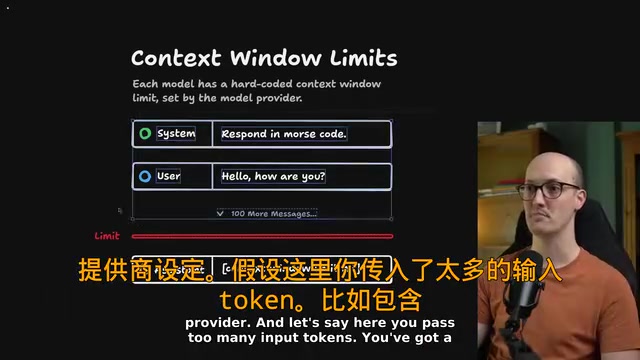
Understanding Context Windows: The Real Reason Your AI Coding Assistant Performs Poorly
Deep dive into how context windows impact AI coding Agents. Learn what context windows are, why bigger isn't better, how to manage Claude Code context, and optimization strategies for MCP servers and rules files.
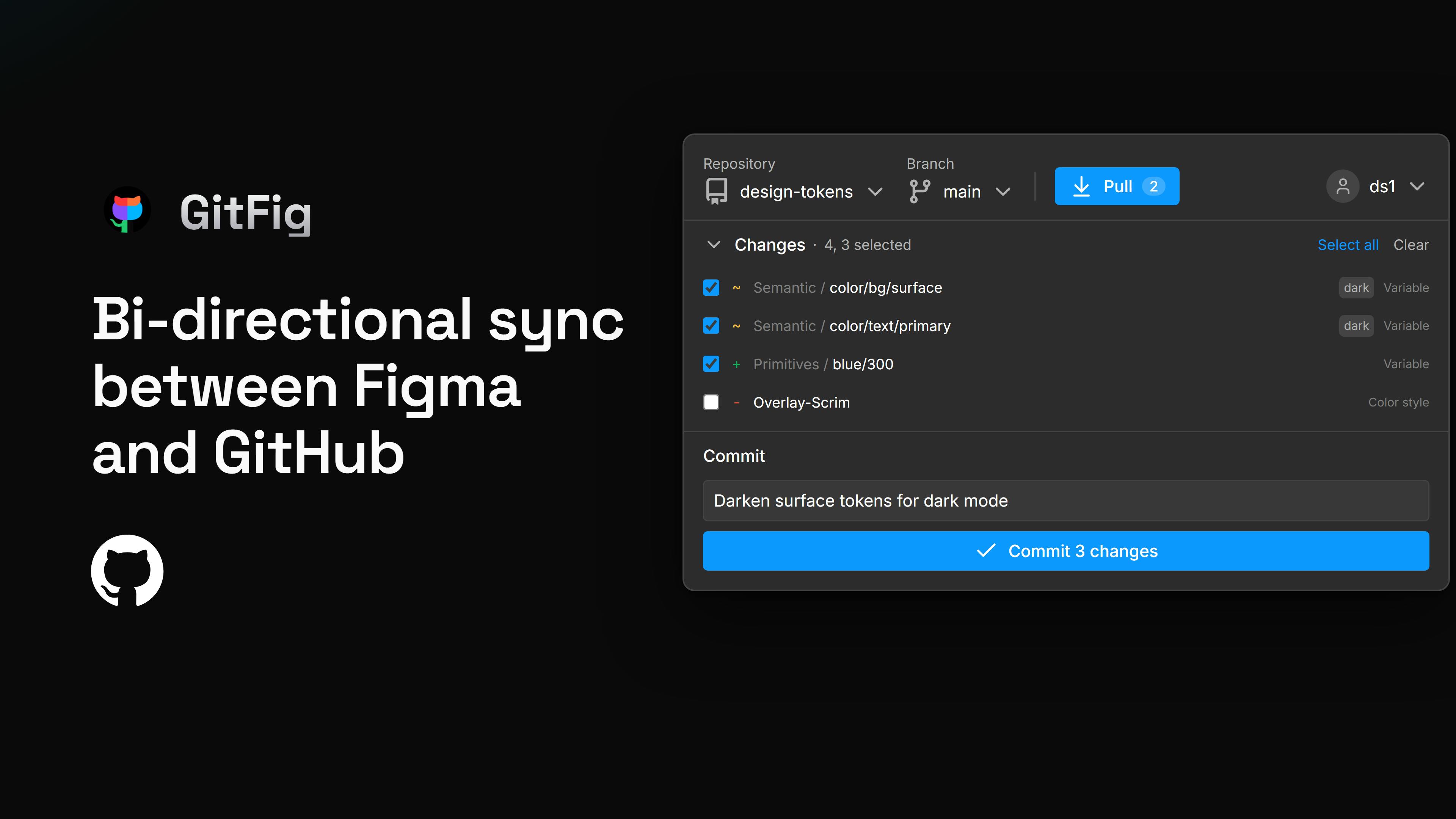
GitFig: Git Version Control and Bidirectional Design Token Sync in Figma
GitFig is a Figma plugin enabling bidirectional design token sync with GitHub. Designers can branch, commit, and create PRs directly in Figma.