OpenAI's Staggering $38.5 Billion Loss: The Financial Truth and Capital Game Before Its IPO
OpenAI's reported $38.5B loss exposes the harsh economics of AI commercialization ahead of its IPO.
OpenAI reportedly faces $38.5 billion in cumulative losses as it pushes toward an IPO. Driven by massive compute costs, an R&D arms race, and AI's uniquely high marginal costs, the losses highlight fundamental challenges in AI commercialization. While declining inference costs and rapid revenue growth offer hope, the situation mirrors the broader generative AI industry's struggle to convert technological breakthroughs into sustainable business models.
OpenAI's Financial Reality Comes to Light
According to a discussion circulating on Hacker News about OpenAI's financial situation, the world's most closely watched AI company is facing a staggering $38.5 billion in cumulative losses as it races toward an IPO. If accurate, this figure would make it one of the most remarkable "cash burn" cases in tech history, once again thrusting the core question of "can AI commercialization sustain itself" into the spotlight.
While the information is still at the community discussion stage (the post received 19 upvotes and 2 comments) and details await official confirmation, the topic itself reflects deep market concern about the profitability outlook for OpenAI — and the generative AI industry as a whole.
Where Did the $38.5 Billion in Losses Come From?
Compute Costs: The Bottomless Pit of the AI Era
OpenAI's loss structure isn't hard to understand. Training and running large-scale language models (such as the GPT series) requires astronomical levels of compute investment. From procuring and leasing NVIDIA's high-end GPUs to powering and maintaining data centers, every link in the chain continuously drains cash flow.
The computational costs of large language models can be broken into two critical phases. The training phase requires thousands — even tens of thousands — of high-end GPUs (such as NVIDIA A100 or the latest H100) running continuously for weeks to months, with a single training run costing millions or even tens of millions of dollars. GPT-4's training alone is estimated to have cost over $100 million. The inference phase — the real-time computation generated every time a user calls ChatGPT — has a lower per-request cost, but given the massive volume of user requests (ChatGPT has over 100 million daily active users), the cumulative cost is equally staggering. Industry estimates put the compute cost of each ChatGPT conversation at roughly $0.01–$0.05, far exceeding the near-zero marginal cost of traditional internet services.
Unlike the traditional software model of "build once, replicate infinitely" with zero marginal cost, every single AI interaction consumes real computational resources. This fundamental difference in economic models makes it difficult for OpenAI to naturally achieve profitability through scale the way traditional SaaS companies do, even with a massive user base.
Aggressive Expansion and the R&D Arms Race
Beyond compute, OpenAI is also investing aggressively in talent acquisition, multimodal model development, enterprise product lines, and global infrastructure. To maintain its lead in the race against Google, Anthropic, Meta, and other competitors, the company must continuously funnel revenue — and even fundraising capital — into next-generation model development.
This "trade losses for growth" strategy is a familiar playbook from the internet era, but AI's capital intensity far exceeds any previous technology cycle. Top AI researchers now command annual salaries exceeding $1 million, and a single model training cycle can consume what a traditional software company would spend on R&D over several years.
The Delicate Game of IPO Timing
Choosing to push forward with an IPO against the backdrop of losses at this scale is itself a carefully calculated capital game.
The case for going public is clear:
- A public listing would provide OpenAI with a massive, ongoing source of funding
- It would reduce over-reliance on a single strategic investor (i.e., Microsoft)
- It would offer an exit path for early investors and employees
The risks are equally significant:
Disclosing financials to the public market means subjecting them to far more rigorous scrutiny — a $38.5 billion loss figure in a prospectus would directly test investors' faith in the "AI future" narrative.
However, massive losses don't necessarily preclude an IPO. Historically, Amazon went public in 1997 and didn't achieve its first annual profit until 2003, accumulating nearly $3 billion in losses along the way. Tesla went public in 2010 and posted losses for eight consecutive years before turning a full-year profit in 2020. Uber was losing over $8 billion a year when it went public in 2019, yet its market cap reached $80 billion. These cases demonstrate that for disruptive tech companies in market expansion phases, investors focus more on growth potential, market share, and discounted future cash flows than on current profits.
What OpenAI needs to prove to investors is that its rapidly climbing ARR (Annual Recurring Revenue) can foreseeably cover costs, and that the technological moat it has built in AI can translate into a sustained competitive advantage.
The Strategic Logic Behind the Losses
User Growth and the Revenue Flywheel
Despite the eye-popping losses, OpenAI's revenue growth is equally impressive. Paid ChatGPT subscriptions ($20/month for Plus), enterprise API usage, and deep collaborations with partners like Microsoft form the basis of its rapidly expanding revenue. Reports indicate OpenAI's annualized revenue has surpassed $2 billion, maintaining a triple-digit growth rate. For a tech company in a hyper-growth phase, short-term losses are often viewed as the "strategic cost" of capturing market share.
The Declining Trend of AI Inference Costs
Over a longer time horizon, AI inference costs are dropping rapidly. Several technological directions are continuously driving down per-unit compute costs:
Model distillation and quantization are changing the game. Distillation is a technique that transfers knowledge from a large model to a smaller one — by having the smaller model learn the output distribution of the larger model, it can retain 80–90% of performance while shrinking to 1/10 the size. Quantization compresses model parameters from 32-bit floating point to 8-bit or even 4-bit integers, reducing memory usage and computation by 75–90% with almost no loss in accuracy. OpenAI has already deployed these techniques in ChatGPT — industry rumors suggest GPT-3.5 Turbo is a distilled version of GPT-4, at just 1/10 the cost.
Competition in dedicated inference chips is intensifying. The current AI market is dominated by NVIDIA, whose H100/A100 GPUs hold roughly 80% market share, but the landscape is shifting. Google has developed TPUs (Tensor Processing Units), Amazon has launched Trainium and Inferentia, and Microsoft is collaborating with AMD on custom chips. More importantly, chips specifically optimized for inference are emerging — Groq's LPU (Language Processing Unit) claims inference speeds 10x faster than GPUs at lower cost. These technological advances could reduce inference costs by 50–80% over the next 2–3 years.
Algorithmic efficiency improvements: More efficient attention mechanisms (such as FlashAttention and Multi-Query Attention) and inference optimization strategies (such as speculative decoding and KV cache optimization) continue to evolve, dramatically reducing computational requirements while preserving model capabilities.
In theory, as technology matures and economies of scale materialize, OpenAI's gross margins should gradually improve. This is one of the core arguments supporting its high valuation and IPO narrative. If inference costs decline as expected, OpenAI's current losses could potentially turn into profits within 3–5 years.
Implications for the Generative AI Industry
OpenAI's financial predicament is actually a mirror reflecting the entire generative AI industry. It reveals a harsh reality: the current AI boom is built on massive capital subsidies.
Generative AI faces three major commercialization challenges. First, the high cost of compute erodes profit margins, resulting in gross margins far below the 70–90% typical of traditional software — most AI services currently operate at gross margins of only 30–50%. Second, users' willingness to pay is limited, as the abundance of free open-source models (such as Meta's Llama series) undermines the value proposition of paid services. Third, the essential nature of AI use cases has not been fully validated — while enterprise customers are enthusiastic about experimentation, the proportion that has deeply integrated AI into core business processes remains limited.
Whether model providers or application-layer startups, all face the shared challenge of converting technological advantage into a sustainable business model. According to Gartner's Hype Cycle predictions, generative AI may need 5–10 years to pass through the "Trough of Disillusionment" and enter the Plateau of Productivity.
For readers interested in AI investment, the $38.5 billion loss is both a warning signal and a valuable observation window — it reminds us that while celebrating technological breakthroughs, the pace of commercialization and cost control capabilities are the true dividing lines that determine whether these companies can survive the cycle. As the industry leader, whether OpenAI can successfully achieve profitability will directly impact investment confidence and development tempo across the entire ecosystem.
Conclusion: A Rational View of Unverified Financial Data
It's important to emphasize that the $38.5 billion loss figure discussed in this article originates from community discussions and has not been officially confirmed by OpenAI. In the absence of authoritative financial disclosures, readers should exercise rational judgment.
But regardless of the exact numbers, the profitability pressure OpenAI faces ahead of its IPO is very real, and the debate over "when AI can make money" is destined to persist for a considerable time to come. As more AI companies enter the public market, we'll have the opportunity to see this industry's true economic picture more clearly — and at that point, the technology narrative will ultimately give way to financial reality.
Related articles

Uncle Bob on AI Programming: Taming Agents with Deterministic Tools
Uncle Bob shares his AI programming methodology: using deterministic tools like CRAP scoring and mutation testing to constrain agents, building multi-agent pipelines for 4-5x productivity gains, while emphasizing software architecture fundamentals remain timeless.

EcoFlow River Gen4 Review: Are the 256Wh/512Wh Portable Power Stations Worth It?
In-depth analysis of EcoFlow's River Gen4 portable power stations — covering the River 260 Gen4 (256Wh) and River 520 Gen4 (512Wh) in capacity, energy density, portability, and use cases.
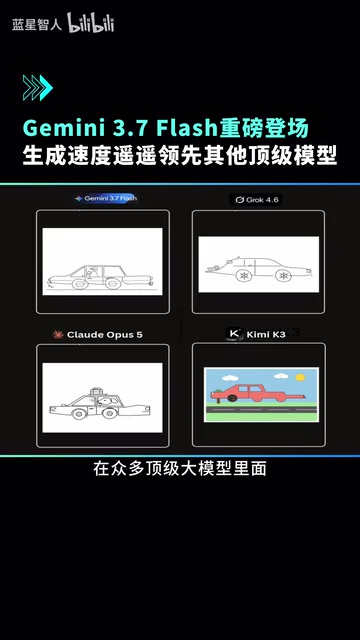
Gemini 3.7 Flash In-Depth Review: Speed, Quality, and Multi-Model Collaboration
In-depth analysis of Google Gemini 3.7 Flash model's core advantages: extreme generation speed, high-quality code and game generation, multi-model collaboration mechanisms, and multimodal understanding potential, with real-world test cases.