OpenAI's Talent Exodus: A Red Flag Before the IPO?
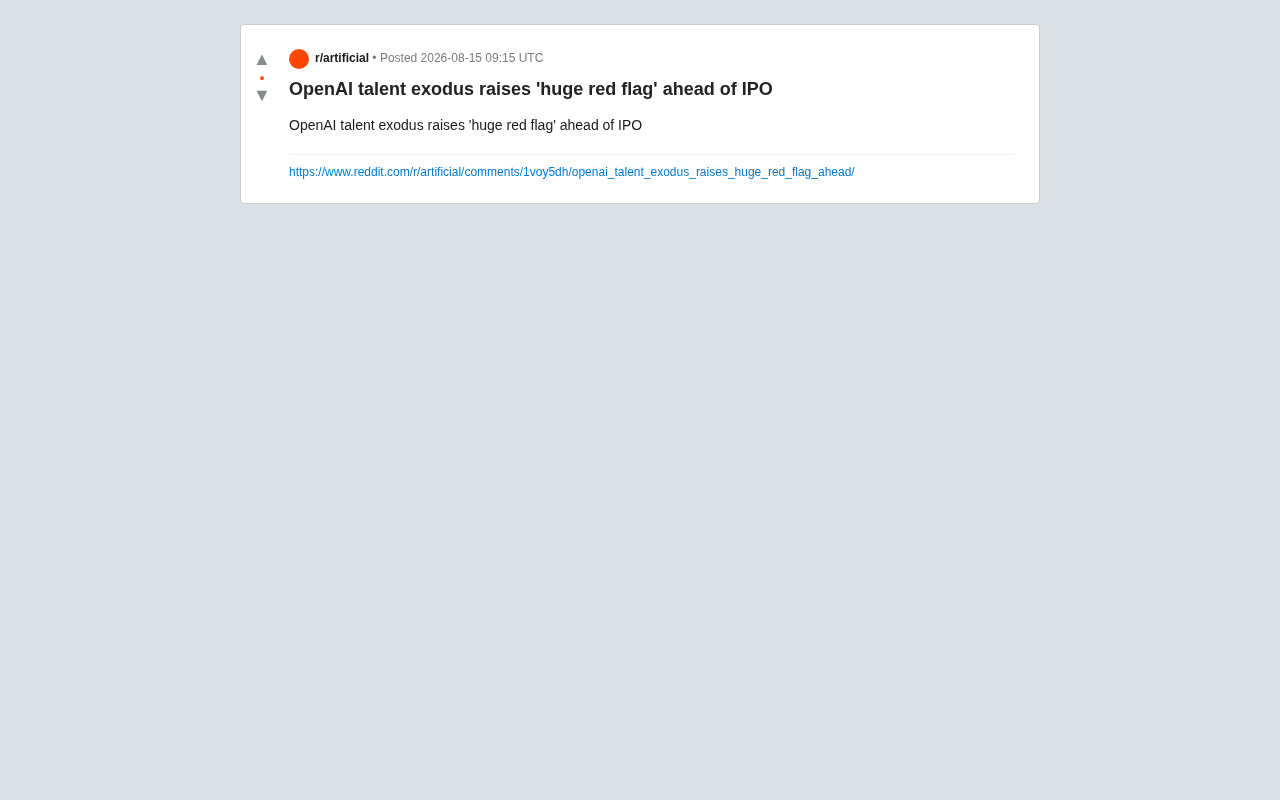
OpenAI's accelerating talent drain raises critical questions about its stability ahead of a potential IPO.
As OpenAI approaches a potential IPO, a sustained exodus of core researchers and executives is raising serious investor concerns. Driven by clashes between AI safety ideals and commercial pressures, plus the gravitational pull of a booming AI startup ecosystem, the departures challenge the company's valuation thesis and organizational resilience.
Introduction: A Talent Exodus Under the Spotlight
As the torchbearer of the generative AI wave, OpenAI has been at the center of global tech industry attention in recent years. Yet, at a critical juncture when the market widely expects the company to move toward an IPO (Initial Public Offering), a sustained exodus of core talent has begun to raise serious concerns. Some analysts have even called this phenomenon a "huge red flag" ahead of the IPO.
An IPO is the process by which a private company offers its shares to public investors for the first time, generally regarded as a major milestone in a company's development. In the run-up to an IPO, a company must undergo rigorous financial audits, information disclosures, and roadshows to demonstrate the sustainability of its business model and its growth potential to prospective investors. For AI companies, the valuation logic differs significantly from traditional enterprises — investors place far greater weight on technological moats, talent reserves, and future market potential than on current profitability. OpenAI's valuation already exceeds tens of billions of dollars, and if it moves toward an IPO, its pricing will be highly dependent on market confidence in the durability of its technological leadership.
For an AI company whose core asset is its elite research talent, the stability of its talent structure directly determines its technological moat and long-term competitiveness. This article examines the topic from three dimensions: the phenomenon of talent attrition, its deeper underlying causes, and its implications for a potential IPO.
The Phenomenon and Signals of OpenAI's Talent Drain
A Wave of Core Researcher Departures
In recent years, OpenAI has experienced multiple rounds of high-profile departures among executives and core researchers. From early disagreements at the co-founder level to key technical leaders successively leaving to start their own companies or join competitors, this movement is no longer a series of isolated personal choices — it has taken on the characteristics of a systemic trend.
For knowledge-intensive enterprises, especially cutting-edge AI research institutions, the most valuable assets are not servers or compute power, but the top minds who can define the direction of technology. In frontier AI research, the irreplaceability of talent far exceeds that of traditional industries. A top-tier machine learning researcher may possess a unique understanding of model architecture, deep insights into training strategies, and experimental intuition built over years — this tacit knowledge is extremely difficult to transfer through documentation or code. The Transformer architecture offers an instructive parallel: nearly all of the core researchers from the Google Brain team who developed it later left Google to found their own AI companies (such as Character.AI, Cohere, Adept, etc.). This "Transformer Eight" phenomenon closely mirrors OpenAI's current talent outflow. It demonstrates that when an institution becomes the birthplace of technological innovation, talent attrition is an almost inevitable structural challenge.
When such talent departs en masse, the market naturally begins to question the company's internal governance, cultural environment, and strategic stability.
Why It's Called a "Red Flag" Before the IPO
The reason this talent drain is characterized as a "red flag" ahead of the IPO comes down to a core logic: a company preparing to go public should be demonstrating organizational maturity and stability at this stage, sending a signal to potential investors that "this is a place worth a long-term bet." Sustained leadership turmoil sends exactly the opposite message — it may hint at deep internal disagreements over the company's direction, path to commercialization, or safety philosophy.
The Deeper Causes Behind the Talent Exodus
A Clash of Ideals: AI Safety vs. Commercialization
What makes OpenAI unique is its "mission-driven" origin. The company was initially founded with the goal of advancing safe Artificial General Intelligence (AGI) for the benefit of all humanity. AGI refers to an artificial intelligence system possessing general cognitive abilities equal to or exceeding human levels, capable of demonstrating flexible understanding, learning, and reasoning across virtually all intellectual tasks. This stands in stark contrast to current "Narrow AI," which excels only at specific tasks (such as image recognition or language translation). AGI is widely considered one of the ultimate goals of AI research, but also one of the most controversial directions, since its realization would have transformative societal implications.
However, as massive capital has poured in and commercial pressures have intensified, tensions between the idealistic research culture and the business logic of growth and profitability have become unavoidable.
Many departing researchers have expressed — publicly or privately — concerns about insufficient investment in AI safety. AI safety research encompasses multiple dimensions: the alignment problem — ensuring that AI systems' goals and behaviors are consistent with human intent; interpretability — understanding the internal decision-making logic of AI models; and robustness — ensuring models don't exhibit dangerous behavior when faced with adversarial inputs or out-of-distribution data. OpenAI once had a dedicated "Superalignment" team, co-led by co-founder Ilya Sutskever, aimed at solving the control problem for superintelligence. However, the team's lead, Jan Leike, publicly resigned in 2024 and stated on social media that safety culture and processes had been "pushed aside" in favor of "shiny products." This incident became one of the most symbolic cases of the AI safety vs. commercialization tug-of-war, and further fueled external doubts about whether OpenAI remains faithful to its original mission.
When a portion of core members believe the company has strayed from its founding principles, "voting with their feet" becomes an inevitable outcome. Departures driven by ideological disagreement are far harder to repair than those driven by compensation alone.
The Gravitational Pull of the AI Startup Ecosystem
Another factor that cannot be overlooked is that the AI field is experiencing an unprecedented startup boom. Capital's fervent pursuit of AI startups has given OpenAI's top talent extremely attractive external options. They can not only secure substantial valuations and autonomy, but also directly convert the experience and expertise accumulated at OpenAI into new commercial opportunities.
Between 2023 and 2025, venture capital investment in AI reached historic highs. According to data from firms like PitchBook, the generative AI sector alone attracted over tens of billions of dollars in venture capital in 2024. Among companies founded by former OpenAI employees, Anthropic (founded by former OpenAI VP Dario Amodei) has reached a valuation exceeding $60 billion; Safe Superintelligence Inc. (SSI), founded by Ilya Sutskever after his departure, also quickly secured major funding. This external incentive structure makes the opportunity cost for top AI talent extremely high — the equity returns they receive by staying at OpenAI may pale in comparison to the founder-level financial rewards and technical autonomy they can achieve by striking out on their own.
In other words, OpenAI has in some sense become the "Whampoa Military Academy" of the entire AI startup ecosystem. This is both a testament to its technical prowess and a source of sustained talent outflow pressure.
Impact Analysis: What the Talent Drain Means for OpenAI's IPO
Core Concerns for Investors
For any institution or individual considering investing in OpenAI, talent stability is a critical component of due diligence. In due diligence for an IPO or major financing round, talent stability assessment typically involves several key dimensions: Key Person Risk evaluates the company's dependence on specific individuals — some investment agreements even include "key person clauses" that trigger investor protection mechanisms if certain executives depart; Retention Rate analysis examines turnover data across different levels and functions; the robustness of non-compete and intellectual property protection mechanisms; and whether the vesting schedule design of equity incentive plans is sufficient to retain the core team. For OpenAI specifically, its governance structure transition from non-profit to capped-profit to potentially fully for-profit adds an additional layer of complexity to talent stability assessment.
If a company's core competitive advantage is highly dependent on a small number of key individuals, and those individuals are steadily departing, then its valuation thesis comes under challenge.
Questions investors need to evaluate include:
- Does the company have a sustainable talent pipeline?
- Will technical leadership suffer a gap due to the departure of key figures?
- Can the internal governance structure ensure strategic continuity?
The answers to these questions will directly influence IPO pricing and market acceptance.
A Test of Organizational Resilience
Of course, this phenomenon should also be viewed dialectically. Talent turnover is normal for large tech companies during periods of rapid expansion; the key question is whether the company has built sufficient organizational resilience and talent depth. If OpenAI can demonstrate that its technological progress is not entirely dependent on individual star researchers, but rather built on systematized R&D capabilities and advantages in data and compute, then the impact of some talent attrition can perhaps be absorbed.
It is worth noting that OpenAI's investment in compute infrastructure has reached the scale of tens of billions of dollars, and its deep strategic partnership with Microsoft provides unique cloud computing resource advantages. If the company can shift its competitive moat from "dependence on a few geniuses" to "systematized data flywheels, compute scale, and engineering capabilities," the impact of talent turnover will be significantly cushioned. Historically, Google maintained its technological leadership even after multiple core AI researchers departed, precisely because it had built an organizational R&D system that far transcended individual capabilities.
Conclusion: Stability Is the Foundation of Long-Term Value
OpenAI's talent exodus fundamentally reflects the deep tensions within a fast-growing frontier tech company between idealism and pragmatism, between research and commerce. At this critical juncture on the road to a potential IPO, stabilizing its core team, clarifying strategic direction, and balancing safety with growth are challenges the company must confront head-on.
For those watching the AI industry, OpenAI's talent turmoil is not merely an internal company matter — it is a microcosm of the common challenges the entire industry faces during a period of explosive growth. The free flow of talent drives the diffusion of innovation, but for any single company, the true determinant of long-term value is the ability to transform elite talent into stable, sustainable organizational capability.
Related articles
Qwen3 27B Local Testing: How Does It Actually Perform with 16GB VRAM?
Hands-on testing of Qwen3 27B on an RTX 5060 Ti with 16GB VRAM, covering web generation, 3D games, video understanding, inference speed, and benchmarks.
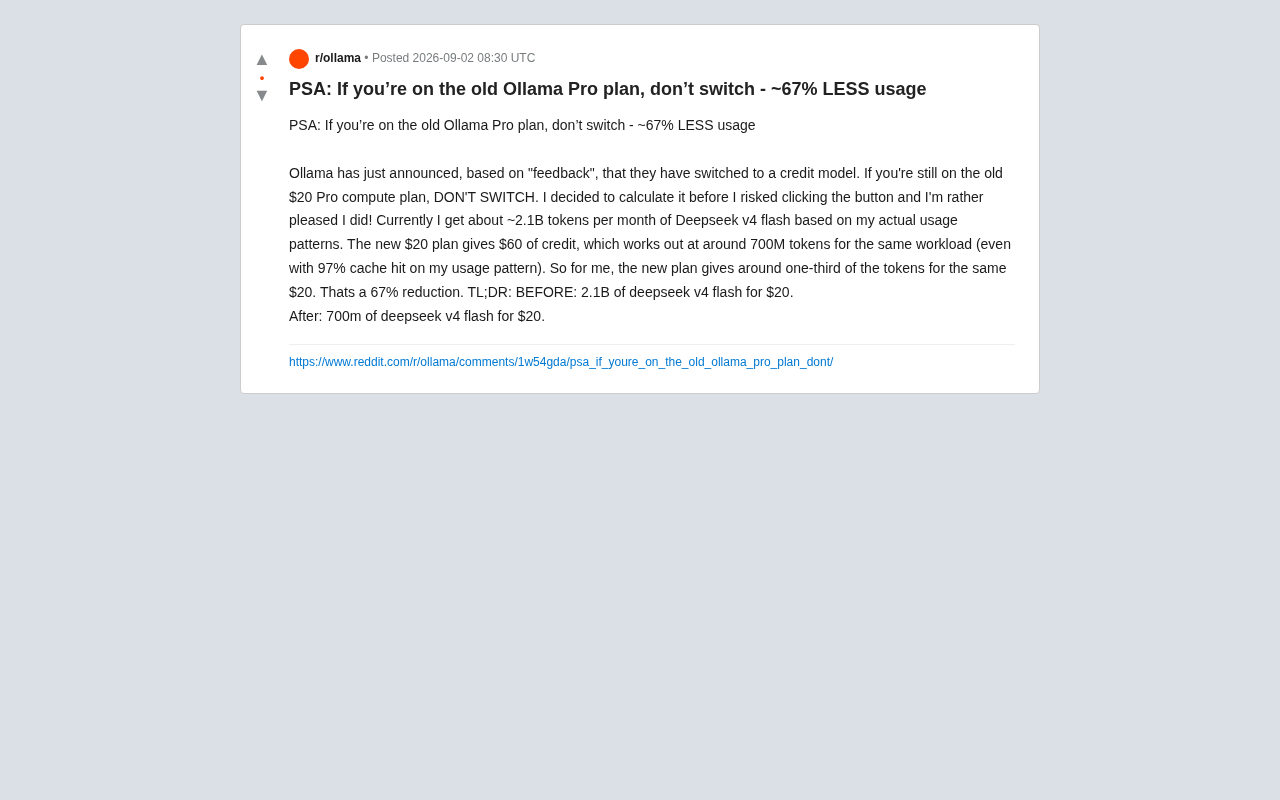
Ollama Switches to Credit-Based Pricing: Legacy Pro Users Could Lose 67% of Their Token Allowance
Ollama shifts from flat-rate plans to credit-based pricing. A Reddit user's analysis reveals the same $20/month now buys 67% fewer tokens — from 2.1B down to 700M.
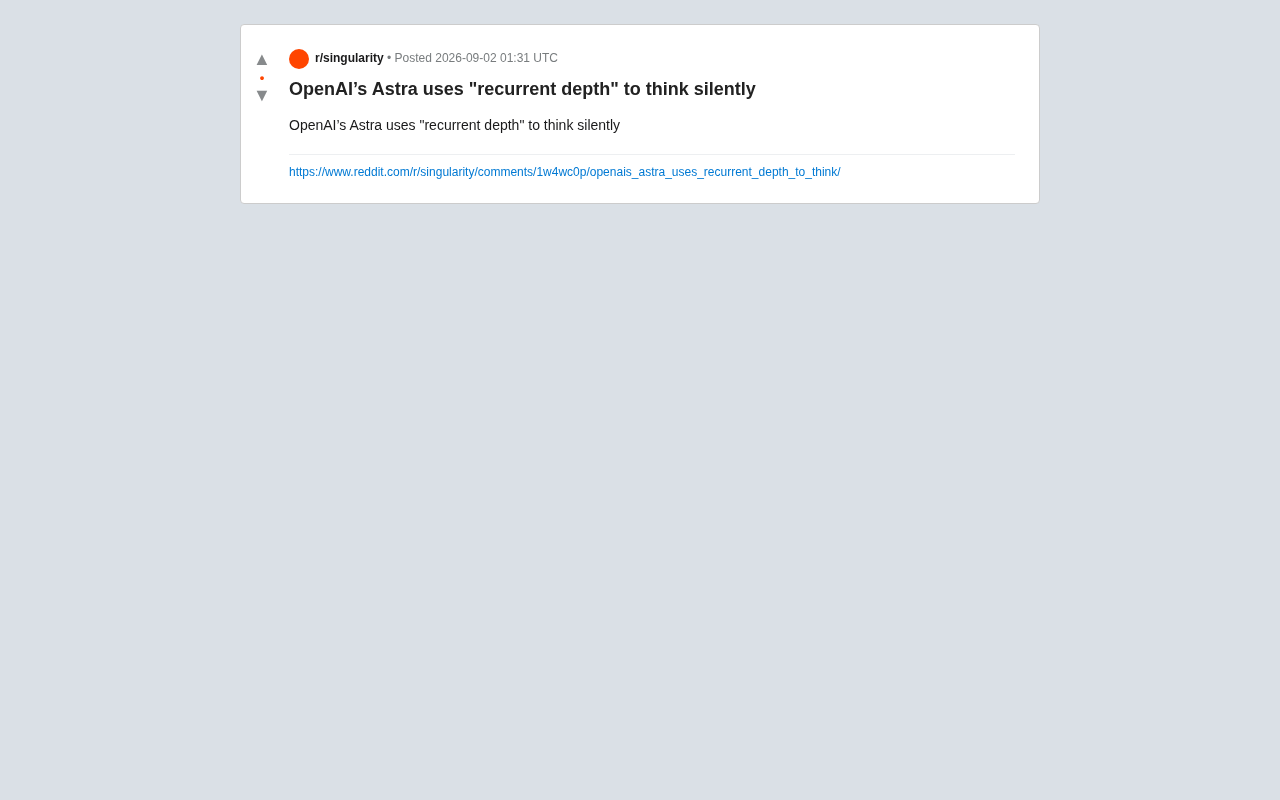
OpenAI Astra and Recurrent Depth: How Silent Thinking Is Reshaping AI Reasoning
Deep dive into OpenAI Astra's recurrent depth architecture—how silent thinking in latent space reshapes AI reasoning efficiency, costs, and explainability.