Optimizely Hacked: Malware Injected into Major Sites Including CNN and BBC

Optimizely breach injected malware into major sites, highlighting third-party script supply chain risks.
A/B testing and personalization platform Optimizely was hacked, with attackers using its distributed scripts to inject malicious code into high-traffic sites including CNN, Fox News, BBC, and Salesforce. The incident reveals third-party script supply chain risks: these scripts run in the same browser context as the main site with nearly equal privileges, so once a vendor is breached, all integrated sites are exposed. Major media and SaaS platforms have structural dependencies on third-party scripts, and brand size cannot automatically eliminate risk. The article recommends that website operators establish third-party script inventories, rapid disable capabilities, and anomalous behavior monitoring, and manage third-party scripts as an attack surface equally important as proprietary code.
According to discussions in the Hacker News community, A/B testing and personalization platform Optimizely has been hacked, resulting in malware being injected into multiple high-traffic websites including CNN, Fox News, BBC, and Salesforce. This incident once again puts the security risks of third-party script supply chains in the spotlight.
Incident Recap: One Breach, Multiple Major Sites Affected
According to information disclosed on Hacker News, attackers compromised a part of Optimizely's infrastructure and used the scripts the platform distributes to customer websites to inject malicious code. Because Optimizely's scripts are widely embedded across numerous media and commercial websites, the malicious code was able to execute on multiple well-known sites, with CNN, Fox News, BBC, and Salesforce among those affected.
The Hacker News discussion thread received 36 points with 5 comments, and community attention is still developing. Although publicly available details are currently limited, the pattern of "one third-party service breached, multiple top-tier websites compromised simultaneously" is itself sufficient to illustrate the problem.
Why Third-Party Scripts Become an Attack Springboard
Modern website pages are often assembled from a large number of third-party scripts—analytics, advertising, A/B testing, customer service widgets, social sharing buttons—almost every function corresponds to an externally loaded piece of JavaScript. These scripts run in the same browser context as the main site and have nearly the same privileges as the site's own code.
Optimizely is a typical representative of this type of script. After website administrators embed its script into their pages, Optimizely can execute experimentation and personalization logic when the page loads. Once Optimizely's script distribution pipeline is tampered with, attackers essentially obtain a "pass" to all integrated sites without needing to breach target websites one by one.
The core problem with this attack path lies in trust transitivity: sites trust Optimizely, browsers trust the scripts loaded by sites, and end users have no way to determine where the code on the page actually comes from.
Supply Chain Attack refers to attackers not directly attacking the ultimate target, but instead indirectly achieving intrusion by compromising third-party vendors, software, or services that the target trusts. In the web context, websites often depend on a large number of externally provided scripts, libraries, and components, and these dependencies constitute the software "supply chain." Once any link in the chain is compromised (such as a CDN being hijacked, an open-source library being backdoored, or a SaaS platform being breached), attackers can leverage the trust transitivity mechanism to spread malicious code to all sites using that dependency. The Optimizely incident is a typical supply chain attack: attackers did not need to breach CNN, BBC, and other sites one by one—they only needed to breach the script distribution platform they all trust, achieving a "one compromise, all affected" amplification effect.
Subresource Integrity (SRI) is a browser security mechanism that allows websites to attach a cryptographic hash value to <script> or <link> tags. After loading external resources, the browser verifies whether their content matches the hash and refuses to execute if it does not match. SRI can effectively defend against the risk of third-party CDNs or script hosting platforms being tampered with, because it ensures the browser only runs code that exactly matches expectations. However, SRI has limited support for dynamically generated or frequently updated scripts (such as A/B testing and advertising scripts), because each content change requires updating the hash value, which to some extent limits its applicability in highly dynamic third-party script scenarios.
Why Major Sites Are Not Immune
Media sites like CNN, BBC, and Fox News, and enterprise SaaS platforms like Salesforce, typically have mature security teams and strict release processes, yet they still cannot completely avoid the risks posed by third-party scripts. The reason is that these sites' dependence on third-party scripts is structural: without integrating tools like Optimizely, it would be difficult to conduct large-scale content experimentation and personalization operations.
The boundary of security protection therefore extends from "our own code" to "all externally introduced code." As long as any one vendor's security practices have shortcomings, the risk will propagate along the supply chain to the end-user page. From this incident, the list of affected sites itself demonstrates that brand size and security investment cannot automatically eliminate such risks.
Implications for Website Operators
This incident raises several practical questions for teams that depend on third-party scripts. The first is visibility: many teams do not have a complete inventory of which third-party scripts are loaded on a page, which domains each comes from, and who maintains them. The second is control: whether they have the ability to quickly disable or replace a script when a vendor is breached. The third is monitoring: whether they can promptly detect unexpected script behavior on their pages.
From a supply chain security perspective, third-party scripts should be managed as an attack surface equally important as proprietary code, including regularly auditing script inventories, limiting unnecessary third-party dependencies, and setting integrity verification or loading whitelists for critical scripts.
Content Security Policy (CSP) is a browser security policy declared through HTTP response headers, used to restrict which sources of scripts, styles, images, and other resources a page can load and execute. By configuring the script-src directive, websites can establish a script loading whitelist that only allows JavaScript from trusted domains to run, thereby forming an additional line of defense when third-party scripts are tampered with or injected. CSP also supports report-uri or report-to directives, allowing browsers to send reports to a specified endpoint when violations are detected, helping operators promptly identify anomalies. Combined with script inventory auditing and SRI, CSP constitutes an important component of defense-in-depth for third-party scripts.
Conclusion
The incident in which Optimizely was breached, causing malware to be injected into multiple major sites, is another real-world demonstration of third-party script supply chain risks. For content sites and SaaS platforms, the security perimeter has long extended beyond their own servers—any trusted external script can become an entry point for attackers. Before more details are disclosed, this incident is worth all teams that heavily rely on third-party scripts re-examining their dependency inventories and incident response capabilities.
Related articles
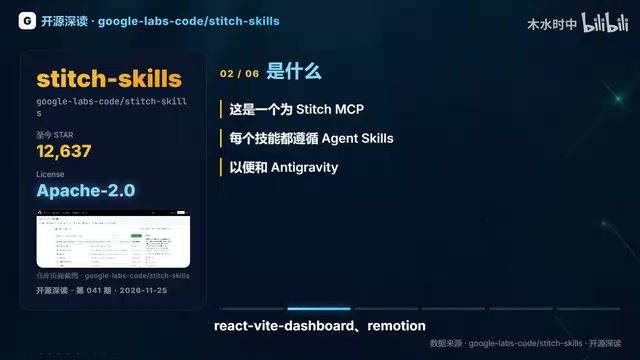
Google Stitch Skills: Connecting Coding Agents to the Design Workflow
Google Stitch Skills is an Agent Skills library following the open standard, adding a design-to-code workflow to the Stitch MCP Server. This article breaks down its three skill groups, SKILL.md directory structure, installation paths, and dependency pitfalls.

40.5-Inch Color E-Paper Art Frame: An Art Display You Charge Once a Year
The Ink Poster Tella 40.5-inch color e-paper art frame uses the E Ink Spectra 6 full-color solution: A1 format, no backlight, no noise, about one charge a year, 2,000+ licensed artworks built in, and automatic adaptation of phone photos.

Jingle Jam Memories: RT's Awkward First Encounter with Lewis
RT shares his awkward first Jingle Jam experience: unexpectedly pushed into the studio, meeting Lewis and Yogg's cast, and Toddy appearing in armor.