Opus 5.5 Deep Dive: The Turning Point That Brings Anthropic Back to the Top of Coding

Opus 5.5 brings Anthropic back to coding dominance with 40% lower cost, sharper communication, and remarkable 3D generation.
Anthropic skipped 5.1 and released Opus 5.5 with meaningful gains in cost, speed, and output clarity: input tokens drop to $4/million, cache reads fall 60%, and speed improves ~30%. Communication is noticeably crisper — the author removed anti-filler system prompts entirely. Token efficiency is the tradeoff, with max-setting consumption nearly double Opus 5's; the sweet spot sits between medium and x-high. 3D generation is the standout surprise, while frontend design still trails Fable 5.1. ZDR compliance support gives Opus 5.5 a structural edge in regulated enterprise markets, and subscription-tier value is outstanding.
Ten months ago, the release of Opus 4.5 fundamentally changed AI-assisted programming — from that moment on, developers no longer just told models what to fix; they watched their computers write code on their own. But after that, Anthropic's Opus 5 and Sonnet 5 series delivered one disappointment after another, and the once-glorious Opus product line seemed all but dead.
Against that backdrop, Anthropic didn't release Opus 5.1 — it jumped straight to Opus 5.5. This was a high-stakes bet that set expectations sky-high, and after a full day of intensive testing, I think they may have won it.
Cheaper, Faster, and Smarter
Anthropic's official positioning is refreshingly direct: Opus 5.5 matches Fable 5.1's performance on most tasks while costing 40% less to run than Opus 5. A few key changes drive that price reduction:
- Input token pricing drops to $4 per million, output tokens at $20 per million — roughly 20% cheaper than before
- Cache read costs fall 60% to just $0.20 per million — a genuinely attractive price point
- Overall speed improves by about 30%, which real-world testing confirms
Anthropic also highlighted a remarkable use case: one tester completed a 680,000-line code migration in under a day. I threw it at some fairly gnarly performance optimization tasks myself, and the results were equally impressive.
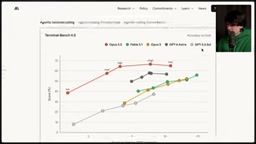
On Terminal Bench 4, Opus 5.5 at the medium setting even outscored Fable at the max setting — at less than half the price. Fable max costs $20; Opus 5.5 medium costs just $2.94. That value-to-performance leap is substantial.
A Major Leap in Communication
If coding ability is the hard metric, then improved communication is my personal favorite change. One of Opus 5's biggest pain points was output cluttered with filler text, dashes everywhere, and critical information buried or missing entirely.
Anthropic used a side-by-side example to illustrate this. Given the same billing bug, Opus 5's response was muddled and riddled with meaningless phrasing; Opus 5.5 clearly identified that only $1.50 of the overcharge came from a free-tier change, while the remaining $9.92 traced back to a commit labeled "no behavior change" that had silently stopped counting usage on the last day of the month. The difference is stark.
In my own testing, I actually removed the "cut the fluff" instructions I'd written into my agent configs and CLAUDE.md files to see the model's native communication style — and found I had absolutely no reason to add them back. It just speaks clearly on its own. Anthropic also noted that more readable output is a safety benefit, not just a practical one.
Avoid the Max Setting: Token Efficiency Concerns
The price drop is real — but not because the model is more efficient. Quite the opposite: Opus 5.5 is noticeably less token-efficient than Opus 5. The data tells the story: Opus 5 max uses about 73k tokens per task, Fable uses 78k, but Opus 5.5 max approaches 120k tokens. For comparison, GPT-6 Astra uses just 27k — a nearly 4x efficiency gap.
This also explains why in Skatebench testing, moving just one step from the x-high to max setting causes reasoning tokens per question to explode from roughly 330 to nearly 5,000 — more than a 10x jump — for a score improvement of just 1%. My conclusion is clear: avoid the low and max settings on this model. Medium, high, and x-high are the sweet spots.
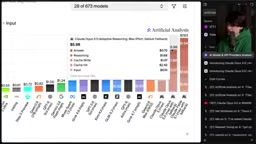
One developer (Edwin) even argued that Opus 5.5 at medium already reaches Fable 5.1-level intelligence, at just $1.34 per task — far below Fable's $6+. On Artificial Analysis's Pareto frontier, Opus 5.5 dominates every optimal price point above the 50-point threshold.
The "reasoning budget" settings mentioned here refer to a mechanism Anthropic introduced across the Claude family, allowing users to specify via API parameters how many "thinking tokens" the model invests before generating a final answer. Settings range from low to max; more thinking tokens theoretically enable the model to handle more complex reasoning chains, but token consumption grows exponentially. The benchmarks comparing different settings across Terminal Bench, Skatebench, and similar evaluations are essentially measuring whether additional reasoning investment delivers proportional quality gains. Opus 5.5's data shows that x-high is near the peak of returns, while max offers minimal marginal improvement at sharply higher cost — which is precisely why the sweet spot sits between medium and x-high. For production environments that need precise reasoning cost control, understanding this mechanism is essential for sensible budget allocation.
Why It Will Immediately Become the Enterprise Default
One easily overlooked but critically important detail is the Zero Data Retention (ZDR) policy. A unique problem with the Fable product line is that it doesn't offer full zero data retention — meaning enterprises that require vendors to retain absolutely no data simply cannot use Fable.
Opus supports ZDR. This is precisely why Opus has consistently been the top-ranked coding model in enterprise environments — not just for value, but for compliance. For companies spending heavily on AI yet unable to deploy Fable due to policy restrictions, Opus 5.5 will almost immediately become the most popular choice.
The model also fixes a longstanding annoyance: previously, reasoning settings written at the top of the system prompt meant that switching reasoning levels would invalidate the cache. Now you can freely switch reasoning levels mid-session without breaking cache.
Zero Data Retention (ZDR) is a data-handling commitment in cloud AI services designed specifically for enterprises with high compliance requirements: vendors guarantee that they will not write user prompts, conversation content, or any intermediate artifacts to persistent storage, clearing them from memory once processing is complete. For industries subject to strict data protection regulations — finance, healthcare, law, government — this is a baseline requirement, not an optional feature. Compliance frameworks like GDPR, HIPAA, and SOC 2 Type II often require enterprises to demonstrate to regulators that third-party vendors don't retain their data. The Fable line's inability to fully support ZDR effectively closes the door to this entire high-compliance customer segment, while the Opus series has maintained this capability throughout — a structural reason why enterprise procurement lists have consistently prioritized Opus over Fable, entirely apart from raw model intelligence.
Frontend Design: Fable Is Still the GOAT
It's not all good news. On frontend design, my experience is that Opus 5.5 shows decent design instincts but doesn't excel. Fable 5.1 remains clearly superior on animation detail, layout, and aesthetic sensibility. Demos generated using the official Cloud Code design skill felt somewhat templated — either Tailwind-template-ish, or locked into that soft-pastel-with-heavy-shadows aesthetic.

Other testers had different views. Developer Mia, after 100 page generation attempts, maintained this was the best model she'd tested — including some impressively tactile paper-skeuomorphic layouts. So for marketing pages or major design overhauls, Fable remains worth trying, but for everyday use cases Opus 5.5 is probably the more sensible default.
3D Capabilities: This Is Where It Gets Truly Impressive
What genuinely shocked me was the model's 3D performance. Multiple developers showcased jaw-dropping demos: Alex built a Dark Souls clone and a flight simulator; John Bowen (with early access) wrote a game resembling Skate from scratch in pure C++, complete with the detail of the skateboard flying off when the character falls.

My own "Fish Slop 3D" demo started on just the medium setting and ran stably at 120fps. When I asked it to further optimize the visuals at x-high, the result was a well-modeled, smoothly animated manta ray — and anyone who's done rigging and animation for that many polygons in Blender knows how hard that is. This was the first version that made me remind myself "it's just a demo" before I could tear myself away to keep recording. You may notice the model's performance in the three.js browser environment is clearly stronger than in native C++ stacks.
The three.js mentioned here is a WebGL-based JavaScript 3D graphics library that runs in the browser without requiring any native application. Compared to native C++ stacks, three.js's advantage is that the browser sandbox provides a highly standardized runtime environment: rendering pipeline, event system, and memory model all have well-defined specifications, and the language itself has abundant training data. By contrast, C++ game development involves compilation toolchains, manual memory management, platform differences, and a host of unstructured variables — making it much harder for models to guarantee runnable code in a single generation. This explains why the author specifically noted that "the model's performance in the three.js environment is clearly stronger than in native C++ stacks" — it reflects not just differences in technical ecosystems, but also the uneven distribution of training data density and verifiability across different coding domains in current large language models.
The "Small Model Smell" That Lingers
Opus 5.5 isn't perfect. Its most frustrating quirk for me is an obsession with context window management. I've seen it repeatedly mutter things like "10% left before auto-compression" and "if it crashes the work will be lost" — completely unnecessary anxiety, even when it clearly knows it's running on a real Mac with a reliable compression mechanism.
This tends to happen most in complex debugging scenarios where I'm tracing back the source of an error, and the model's judgment noticeably degrades in these moments. OpenAI has trained this "context fear" out of their models; Anthropic retains it, partly because they lean more heavily on the million-token context window.
Additionally, for deep code review tasks, Grok 4.7 and Sol perform better, while both Opus and Fable are comparatively weaker. That said, Opus 5.5 nearly doubled its score on this benchmark compared to Opus 5 — significant progress. This type of exhaustive, line-by-line code audit isn't a high-frequency daily need, so it's not worth over-indexing on.
Conclusion: The King of Subscription Value
Setting aside pure per-token API pricing, Opus 5.5 is simply dominant when it comes to subscription value. I have five Claude subscriptions, and after a full day of intensive use, my primary account had burned through only about 20% of its weekly quota. The same workload would exhaust a Codex subscription far faster.
Anthropic is the king of pre-training; OpenAI is the king of post-training — but this time, Anthropic has clearly closed a meaningful gap on the post-training side. Sonnet 5.5 and Haiku 5.5 are coming in the next few weeks — this will be the first Haiku release in over a year.
For developers whose companies restrict them to specific compliant models, Opus 5.5 will be a genuinely experience-changing upgrade. It hasn't killed Fable, but it's close enough that it makes your Claude subscription meaningful again — and this time, it's code I'm no longer afraid to read, let alone merge.
Related articles

5 Practical Ways Real Estate Agents Can Use AI to Boost Efficiency (2026 Edition)
How can real estate agents use AI to boost efficiency? Based on a YouTube walkthrough, this breaks down five methods — ChatGPT for listing descriptions, Canva for marketing materials, forms for open house leads, Zapier for automated follow-up, and seller meeting prep — and flags risk boundaries like fair housing laws, photo authenticity, and price verification.

Grok Bot vs ChatGPT Agent: Which AI Agent Is More Powerful?
How does Grok Bot differ from ChatGPT Agent? This comparison examines how they work: Grok Bot has a cloud computer and runs persistently inside tools to execute multi-step tasks automatically; ChatGPT Agent operates web pages in a browser and is more mature at general tasks. Includes selection advice.

Walmart Agent Gateway: AI Shops for You Automatically—Why Is Amazon Going the Opposite Way?
Walmart's Agent Gateway lets ChatGPT, Gemini and other AI assistants access its product catalog to search, compare and add to cart, with spending limits and per-purchase approval. Amazon blocks external AI agents—two retail giants, opposite paths. Currently US-only, India may follow.