Opus 5.5 vs Sonnet 5.5: Same Price, Different Fate — A Clear Gap in Real-World Testing

Real-world testing shows Sonnet 5.5's actual cost nearly matches Opus 5.5, yet its quality clearly lags behind.
Anthropic released Opus 5.5 and Sonnet 5.5 with close benchmark scores, and Sonnet 5.5 priced at half of Opus 5.5. A YouTube reviewer tasked Fable 5.1, Opus 5.5, and Sonnet 5.5 with the same prompt to build a 3D mini-golf game at extra high reasoning effort. Sonnet 5.5 took 1h20m and cost ~$26; Opus 5.5 took 1h26m and cost ~$27 — nearly identical. But Sonnet 5.5 had stiff animations, clipping, and map-boundary bugs, while Opus 5.5 neared Fable 5.1's quality. Benchmark scores and nominal prices don't reflect true value.
Prices Converge — Does Performance Follow?
After Anthropic released Opus 5.5 and Sonnet 5.5 simultaneously, official benchmarks showed the two scored very close on agentic coding tasks. Sonnet 5.5 is priced at roughly half of Opus 5.5 and one-fifth of Fable. On paper, Sonnet 5.5 looks like the value king.
But benchmarks are just reference points. A YouTube tech reviewer ran a head-to-head comparison of Fable 5.1, Opus 5.5, and Sonnet 5.5 using the exact same prompt, all running at extra high reasoning effort. The results revealed a reality worth paying attention to: Sonnet 5.5's actual cost was nearly identical to Opus 5.5, but its output quality had a clear gap.
Test Method: One Prompt Decides It All
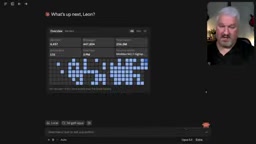
The test task was a single open-ended prompt: build a complete, polished browser-based 3D adventure mini-golf game. Requirements included nine holes, with at least two featuring an animated windmill and a dinosaur obstacle respectively, and the remaining seven designed by the model itself. Additional requirements included power-ups, environmental animations (waterfalls, swaying plants, small animals, flickering torches, spinning gears, etc.), a cel-shaded visual style, and sound effects.
The reviewer specifically noted that Anthropic does not recommend using max mode with Sonnet 5.5, because the model tends to run too long, do more work than required, and even contradict itself. So all three models used extra high reasoning effort.
Extended note: What is extra high reasoning effort?
On reasoning-capable models like Claude, Anthropic typically offers multiple reasoning effort settings, such as low, medium, high, extra high, and max. The reasoning level determines how much "internal thinking" token budget the model can spend before giving its final answer: higher levels mean the model is more inclined to break down problems, verify solutions, and repeatedly refine code structure; but it also means longer response times, higher token consumption, and higher actual costs.
It's worth noting that "extra high" is not the highest tier — there's still max above it. The article mentions that Anthropic does not recommend using max with Sonnet 5.5 because the model at the highest reasoning tier tends to over-plan, repeatedly self-correct, and even make design decisions that contradict the overall goal just to satisfy a vague requirement. That's why the reviewer uniformly used extra high — retaining sufficient reasoning depth while avoiding runaway runtime and costs from the model "overthinking." This also explains why all the cost comparisons in the article were conducted at the same reasoning level — only by controlling this variable does the nominal advantage of "Sonnet is cheaper" become comparable.
Speed and Cost Comparison
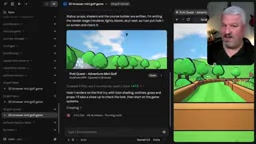
All three started at nearly the same time, with Sonnet 5.5 being the first to display its running screen in the browser. But the final completion times were very close:
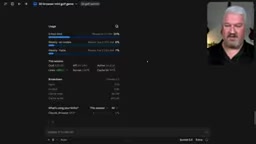
- Fable 5.1: about 1 hour 40 minutes, cost about $51
- Opus 5.5: about 1 hour 26 minutes, cost about $27
- Sonnet 5.5: about 1 hour 20 minutes, cost about $26
Sonnet 5.5 was only 6 minutes faster and $1 cheaper than Opus 5.5. The reviewer had expected Sonnet to be much cheaper and much faster — the actual results were surprising.
Game Quality Testing
Fable 5.1: Highest Level of Polish
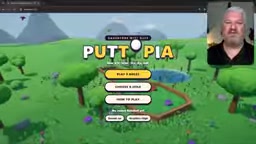
Fable's game had a refined menu, well-executed cel-shaded style, and rich sound effects. Ball physics were excellent, the windmill had collision detection, and the dinosaur actively knocked balls into the water. Scene details were solid — grass swayed in the wind, butterflies and rabbits darted about. The visual diversity across the nine holes was impressive.
Opus 5.5: Close to Fable's Standard
Opus 5.5 delivered nearly equivalent quality at less than half of Fable's cost. The menu, sound effects, and cel-shaded style were all in place, and ball physics were accurate. The windmill and dinosaur obstacles both worked properly, and the dinosaur's tail had physical collision. The only minor flaw was that the putter followed the ball when it moved — the reviewer believed a single follow-up prompt could fix it.
Sonnet 5.5: Stiff Animations, More Bugs
Sonnet 5.5 was the only model to add background music (not just sound effects), but the game quality lagged noticeably. Animations looked stiff ("wonky"), and the putter-follows-ball bug was also present. The windmill had clipping issues, and the ball required excessive force to move. The reviewer described the dinosaur model as "the derpiest dinosaur I've ever seen," the hole entrance was even blocked, and the ball could be hit out of the map boundary.
Extended note: What are "cel shading" and "physics collision detection"?
Cel shading (also called toon shading) is a non-photorealistic rendering style that limits color bands, emphasizes outlines, and flattens lighting to give 3D graphics a hand-drawn animation quality. It's common in works like The Legend of Zelda: The Wind Waker and Genshin Impact. In browser-based 3D games, cel shading tests not only the model's understanding of material and lighting parameters but also its ability to maintain stylistic consistency — if some objects use realistic lighting while others use cartoon outlines, the visuals fall apart. When the article says Fable 5.1 and Opus 5.5 achieved a proper "cel-shaded style," it means this kind of overall visual coherence.
Physics collision detection is the foundation of game playability: the ball, windmill blades, dinosaur, and hole boundaries must have accurate intersection detection so the ball can be pushed by the windmill, knocked into the water by the dinosaur, or bounce off boundaries instead of passing through them. The "windmill clipping," "blocked hole entrance," and "ball can be hit out of the map boundary" issues in Sonnet 5.5 are all essentially caused by incorrect collision body setup or missing boundary detection. For agentic coding, these kinds of bugs often don't crash the program but severely damage the experience — and they're also an important signal for distinguishing a model's engineering completeness.
Key Finding: Same Price, Different Fate
This real-world test revealed a critical issue: when Sonnet 5.5 and Opus 5.5 cost nearly the same in practice, choosing Sonnet loses its value advantage. And Opus 5.5 clearly led in game quality, especially in animation smoothness, collision detection accuracy, and overall polish.
The reviewer's final conclusion: "For the same price and the same time, I'd rather just use Opus. Sonnet requires a lot of extra work to reach Opus's level, while Opus only needs one or two follow-up prompts to reach Fable's level."
However, the reviewer also noted that Sonnet 5.5 performs excellently in scenarios with very precise instructions, and open-ended prompts are indeed more challenging for it. This means Sonnet 5.5 isn't without its uses — if your workflow involves clearly specified coding tasks, it remains a reliable choice. But if you expect to get a near-Opus experience for half the price, reality may not cooperate.
Conclusion takeaway: Model selection shouldn't rely solely on benchmark scores and nominal prices. Actual token consumption, runtime, and output quality are the key factors determining value. In agentic coding scenarios, if a "cheaper" model consumes more tokens or requires more correction rounds, its final cost may be nearly indistinguishable from a flagship model.
Extended note: Why do nominal prices diverge from actual costs?
An API's "price per million tokens" is just a unit price — it doesn't equal the total cost of a task. Total cost = input tokens × input unit price + output tokens × output unit price. In agentic coding tasks, the model repeatedly reads code files, runs tests, checks errors, and revises code, generating new input and output each round. A model nominally half the price, if it has lower reasoning efficiency, requires more code rework, and needs more rounds to converge, may consume several times the tokens of a flagship model — ultimately matching or even exceeding it on the final bill.
The article's Sonnet 5.5 costing $26 and Opus 5.5 costing $27 is a typical manifestation of this mechanism: Sonnet's unit price advantage was eaten up by higher token consumption and more correction rounds. At the same time, runtime is also a hidden cost — if Sonnet requires many extra prompts to reach usable quality, the time and effort of human intervention must also be factored in. Therefore, when evaluating a model's value, the more reliable approach is to run your own real tasks through it and look at end-to-end total cost, total time, and final quality — not just the official price list and benchmark scores.
One-line Summary
Real-world testing shows Sonnet 5.5's actual cost nearly matches Opus 5.5, yet its quality clearly lags behind.
Paragraph Summary
After Anthropic released Opus 5.5 and Sonnet 5.5, official benchmarks showed the two scored close on agentic coding tasks, with Sonnet 5.5 nominally priced at half of Opus 5.5. A YouTube reviewer used the same prompt to have Fable 5.1, Opus 5.5, and Sonnet 5.5 build a 3D mini-golf game at extra high reasoning effort. Results showed Sonnet 5.5 took 1 hour 20 minutes and cost about $26, while Opus 5.5 took 1 hour 26 minutes and cost about $27 — essentially tied. But in quality, Sonnet 5.5 had stiff animations, windmill clipping, blocked holes, and balls flying off the map, while Opus 5.5 approached Fable 5.1's standard. The conclusion: benchmark scores and nominal prices don't represent real value — actual token consumption, runtime, and output quality are what matter.
Related articles

Gaussian Process Bandit Optimization: Exploration Strategies and Inference Regret Guarantees
Cumulative regret guarantees in Bayesian optimization fail to reflect final recommendation quality. This article examines a new study that provides inference regret guarantees for Gaussian process bandit optimization through exploration query strategies and fill distance analysis, validated on hyperparameter optimization and control tasks.

The Most Detailed Codex Guide on Bilibili: From Installation to Real-World Practice
The most detailed Codex guide on Bilibili: from app store installation to daily work mode configuration, with a real coffee shop project demonstrating file organization, data extraction, dashboard creation, and other practical tasks. Learn to use Plan Mode and desktop pets to leverage Codex efficiently.

Appearance Compensation in Volume Rendering: Why RGB Accuracy Cannot Guarantee Density Correctness
Volume rendering research reveals that volumetric data perfectly reproducing external RGB views may still contain density errors: appearance compensation can double central density and keep external rays unchanged even when L2 error exceeds 14.52%. Density recovery depends on appearance capacity, spatial resolution, and measurement design.