Oracle Bans AI-Generated Code from OpenJDK: A Deep Dive into the Reasons and Impact

Oracle bans AI-generated code from OpenJDK over copyright, legal, and contributor agreement concerns.
Oracle has explicitly prohibited AI-generated code contributions to OpenJDK, citing intellectual property risks, contributor agreement applicability issues, and code quality concerns. The policy reflects growing tension between AI coding tools and traditional open-source collaboration frameworks. Developer reactions are split between support for caution and skepticism about enforceability. The decision may set a precedent for other major open-source projects grappling with similar challenges.
Oracle Bans AI Code from OpenJDK: The Full Story
Oracle recently introduced a notable policy for the OpenJDK project: an explicit ban on submitting AI-generated code. The decision quickly sparked heated discussions across tech communities like Hacker News, becoming a focal point of developer debate.
As the open-source reference implementation of the Java platform, OpenJDK serves as foundational infrastructure for millions of Java developers and enterprise applications worldwide. Specifically, OpenJDK is the official reference implementation of the Java SE (Standard Edition) specification. Since Sun Microsystems open-sourced it in 2007, it has become the technical cornerstone of the Java ecosystem. The vast majority of Java distributions on the market today — including Amazon Corretto, Eclipse Temurin (formerly AdoptOpenJDK), Azul Zulu, and Red Hat's build of OpenJDK — are built directly from the OpenJDK source code. These distributions must pass Oracle's TCK (Technology Compatibility Kit) test suite to claim compatibility with the Java SE specification, meaning that OpenJDK's code quality and legal compliance directly affect the stability of the entire Java distribution ecosystem. By some estimates, more than two-thirds of enterprise backend systems worldwide run on the JVM, and any issue in the OpenJDK codebase could trigger a chain reaction.
As its primary maintainer, Oracle's conservative stance on AI-generated code for this critical project sends a thought-provoking signal: in an era of widespread AI programming tools, the contribution rules for open-source projects face unprecedented challenges.
Why Oracle Banned AI-Generated Code
Legal and Copyright Risks Are the Core Concern
One of Oracle's primary considerations is clear intellectual property ownership. Today's mainstream AI coding assistants (such as GitHub Copilot and various large language models) are trained on massive volumes of open-source code. Take GitHub Copilot as an example: its underlying model was originally trained on OpenAI Codex, with training data encompassing billions of lines of public code on GitHub. This code spans hundreds of different open-source licenses, from permissive licenses like MIT and Apache 2.0 to strong copyleft licenses like the GPL family. During training, large language models capture code patterns through statistical learning, but this learning mechanism doesn't differentiate between license types — the model essentially "smelts" all training data into probability distributions within neural network weights, and during code generation, it may produce output that is highly similar to or even character-for-character identical to specific snippets from the training data.
These training datasets carry varying license terms, and AI-generated code may inadvertently "reproduce" original code fragments protected by specific licenses. This is not a theoretical concern — in 2022, a group of developers filed a class-action lawsuit against GitHub, Microsoft, and OpenAI, alleging that Copilot failed to comply with the license requirements of original code when generating output (e.g., GPL requires derivative works to also be open-sourced), and sometimes reproduced code snippets with specific copyright notices verbatim without preserving attribution. The lawsuit is still ongoing, but it highlights a fundamental problem: under the "substantial similarity" standard in current U.S. copyright law, whether AI-generated code constitutes a "derivative work" of the training data remains without clear legal precedent.
For a project like OpenJDK, which demands extremely high legal compliance, introducing code of unclear provenance or potential infringement would create incalculable legal risks for the entire Java ecosystem. Oracle needs to ensure that the copyright ownership of every contributed line of code is clear and traceable — and AI-generated code has a fundamental zone of ambiguity on precisely this point. It's worth noting that Oracle is a company well-known for its aggressive intellectual property stance — its decade-long lawsuit against Google over Java API copyrights (Oracle v. Google, ultimately decided by the U.S. Supreme Court in 2021 ruling that Google's use constituted fair use) profoundly shaped the entire industry's understanding of API copyright. This corporate DNA ensures that Oracle would inevitably adopt the most conservative strategy when faced with the copyright ambiguity of AI code.
The OCA Contributor Agreement Faces an Applicability Crisis
OpenJDK requires all contributors to sign the OCA (Oracle Contributor Agreement), in which they attest that the code they submit is their own original work and that they have the legal right to contribute it. The core terms of the OCA require contributors to declare that their contributions are either the contributor's original work or that the contributor has the legal right to license them to Oracle. By signing the OCA, contributors effectively grant Oracle a perpetual, worldwide, non-exclusive license to their contributed code, allowing Oracle to use, modify, and distribute it in any way.
This CLA (Contributor License Agreement) mechanism has a long history in the open-source world. In contrast, the Linux kernel community uses the DCO (Developer Certificate of Origin) mechanism — a more lightweight approach where developers simply declare the legality of their contributions through a "Signed-off-by" tag with each commit, without needing to sign a formal legal agreement. CLAs typically give project maintainers stronger legal protection and greater flexibility (for example, allowing Oracle to distribute OpenJDK code under both GPL and commercial licenses), but they also impose stricter requirements on contributor declarations.
AI-generated code fundamentally struggles to meet the "originality" requirement — contributors themselves may not be able to fully explain the code's origin and derivation logic. When a developer uses an AI tool to generate code, they genuinely cannot confirm whether that code "plagiarized" a copyrighted implementation from the training data. In this scenario, signing the OCA declaration of "I have the legal right" could constitute a false representation, which not only renders the agreement legally void but could also expose the contributor to personal legal risk.
This creates an applicability crisis for the traditional contributor agreement framework when confronted with AI-generated content. Oracle's ban is essentially preserving the seriousness of the existing legal framework and preventing the agreement from becoming toothless due to the introduction of AI code.
Diverse Reactions from the Developer Community
In the Hacker News discussions, developers displayed sharply divergent attitudes.
Supporters argued that for a foundational project like OpenJDK, taking a cautious stance is entirely reasonable. Code quality, security, and legal clarity are far more important than development efficiency. For a platform like Java that underpins countless production systems, any potential risk could be amplified to unacceptable levels.
Skeptics raised practical challenges around enforcement: How do you define and detect "AI-generated code"? As AI-assisted programming becomes increasingly integrated into daily development workflows, much code is the product of human-AI collaboration. If a developer uses AI to generate a first draft and then manually modifies and refines it, does that count as "AI-generated"?
From a technical standpoint, detecting AI-generated code remains an unsolved problem. Current detection methods fall into several categories: statistical feature analysis (checking whether the perplexity distribution in code matches model output characteristics), heuristic identification based on code style (AI-generated code tends to exhibit specific statistical patterns in variable naming, comment patterns, and code structure), and proactive marking through watermarking techniques (some AI tool vendors are exploring embedding invisible statistical watermarks in their output). However, the accuracy of all these methods falls far short of practical utility — AI code that has been manually modified is nearly impossible to reliably detect, and as model capabilities improve, the statistical differences between AI-generated and human-written code continue to shrink. Moreover, code is inherently highly structured, and the number of reasonable implementations for a given function is often limited, making AI detection in the code domain even harder than in natural language text.
In the absence of reliable detection methods, this ban will likely depend in practice on contributors' self-declarations — essentially an honor system built on trust.
Others pointed out that such policies may be stopgap measures. As laws around AI copyright gradually take shape and AI tools improve their training data compliance, future policies will inevitably need readjustment. Indeed, the U.S. Copyright Office has already begun soliciting public comments on copyright issues related to AI-generated content, and the EU's AI Act introduces new transparency requirements for AI training data. The implementation of these regulations could fundamentally change the current discussion framework.
Far-Reaching Impact on the Open-Source Ecosystem
Setting an Important Precedent: More Projects May Follow
Oracle's move is not an isolated case. Previously, open-source projects like Gentoo Linux and NetBSD had also introduced policies restricting or prohibiting AI-generated code. The Gentoo Linux community passed a formal policy in 2023 requiring contributors to disclose when they use AI tools to generate or modify code, and requiring contributors to take full responsibility for the correctness of AI output — the policy specifically emphasized that directly copy-pasting AI-generated code into the project without human review and verification is unacceptable. The NetBSD project went further, explicitly banning the use of LLM-generated code in its codebase, citing copyright compliance and code quality assurance.
At a broader open-source governance level, major foundations are also actively addressing this challenge. The Apache Software Foundation has updated its contribution guidelines to require contributors to take responsibility for AI-assisted content and ensure it complies with Apache License 2.0 requirements. The Linux Foundation has taken a relatively neutral wait-and-see approach but has launched dedicated research into the intersection of AI and open source. The Python Software Foundation has also initiated community-level discussions about whether the CPython project should restrict AI-generated code.
This reflects a trend: the more a legacy open-source project prioritizes code quality and legal rigor, the more likely it is to be cautious about AI code. As a project with enormous influence, OpenJDK's decision could very well prompt more heavyweight open-source projects to adopt similar policies, creating a wave of cautious approaches to AI code across the open-source world.
Rewriting the Rules for the AI Programming Era
The deeper significance of this event is that it exposes the structural contradiction between AI programming tools and traditional open-source collaboration mechanisms. Open-source communities are built on clear copyright ownership, traceable contribution chains, and trust mechanisms — and generative AI blurs all of these boundaries.
The traditional open-source collaboration model is based on a core assumption: every line of code has a clearly identifiable human author who can take responsibility for the code's originality, forming a complete contribution traceability chain through version control systems (like Git). In this model, code review is not just a quality control measure but a social process for building community trust — reviewers can ask authors questions, understand the rationale behind design decisions, and authors can explain every line of code they wrote. The introduction of AI-generated code fundamentally breaks this assumption: when contributors cannot fully understand or explain the inner logic of their submitted code, the effectiveness of the code review process is significantly diminished, and the trust-based collaboration mechanism is eroded.
In the future, open-source projects may need to explore new governance models: perhaps more robust AI code labeling mechanisms (similar to academic paper disclosure requirements for AI-assisted writing), perhaps dedicated review processes for AI-generated content (incorporating automated license compliance scanning tools), or perhaps waiting for clear legal answers on AI copyright issues before establishing long-term policies. Some cutting-edge discussions even involve entirely new licensing models — such as "machine-readable licenses" specifically designed for AI training data, enabling AI models to automatically comply with source code licensing terms during generation.
Conclusion: Industry Reflections Behind the AI Code Ban
Oracle's ban on AI-generated code in OpenJDK may appear to be a technical management decision, but it actually reflects the deeper dilemma facing the entire software industry amid the AI wave. As AI becomes deeply embedded in developers' daily workflows, how to embrace efficiency gains while maintaining the bottom lines of copyright compliance and code quality is a question every open-source project must answer.
This debate around AI code is just beginning. Oracle's choice may not be the final answer, but it undeniably sounds an alarm for the entire industry: in an era when AI can write code, we need to think more seriously about what kind of code deserves to enter the core projects that underpin the digital world.
Related articles

Techietribe AI Review: An All-in-One Online Presence Management Platform for Small Businesses
In-depth review of Techietribe AI, an all-in-one online presence platform for small businesses, covering AI website building, business profiles, and integrated directories.
Ressearch AI: A Deep Dive into the AI-Powered Reproducible Research Workbench
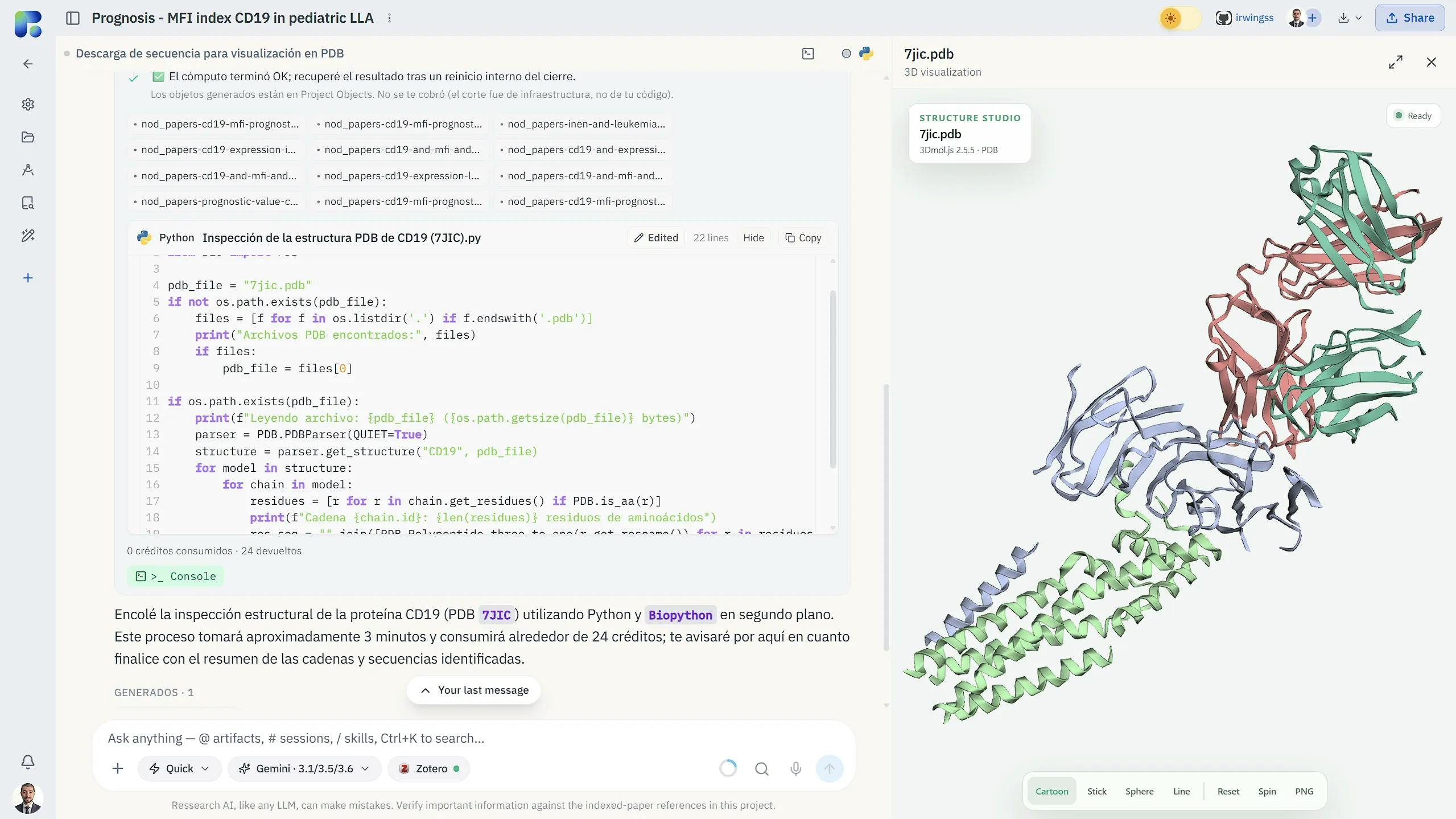
Ressearch AI is an AI workbench for reproducible research, integrating literature search, data analysis, Python/R coding, visualization, and scientific writing. A deep dive into its cloud sandbox, traceable workflows, and more.

A Startup's Field Guide to AWS Cognito: Hidden Costs and Alternatives You Should Know
A deep dive into the real pain points of AWS Cognito for startups — hidden costs, vendor lock-in, and developer friction — plus a comparison of Auth0, Clerk, and other alternatives.