A Startup's Field Guide to AWS Cognito: Hidden Costs and Alternatives You Should Know

Why startups should think twice before defaulting to AWS Cognito for authentication.
This article examines the hidden costs of using AWS Cognito at startups, drawing from a Hacker News case study. It covers fragmented documentation, limited UI customization, and severe vendor lock-in due to non-exportable password hashes. It compares alternatives like Auth0, Clerk, and Supabase Auth, and offers a practical framework for evaluating total cost of ownership and choosing the right auth service for your growth stage.
Introduction: A Founder's Real-World Reflection
When building an early-stage product, authentication is a piece of foundational infrastructure that virtually every team has to deal with. Authentication is the process of verifying a user's identity, which is related to but distinct from authorization — the latter determines what resources an already-verified user can access. Building an auth system from scratch means handling password hashing (e.g., bcrypt, Argon2), session management, token issuance (JWT), as well as defending against brute-force attacks, CSRF/XSS vulnerabilities, credential leaks, and more. What appears to be a simple login feature actually spans cryptography, network security, compliance (such as GDPR requirements for user data), and several other specialized domains — and it's precisely this complexity that drives many founders to reach for a managed cloud solution. AWS Cognito, Amazon's user identity management service, becomes the default choice for many AWS users thanks to its promise of being "ready out of the box."
However, one founder's experience shared on Hacker News threw cold water on that promise — "I used AWS Cognito at my startup, and I wouldn't do it again." The post sparked widespread discussion in the community and revealed many hidden costs of managed auth services in real-world deployments. This article draws on that case study and the ensuing community discussion to dissect the real pain points of Cognito in a startup context.
The Core Appeal of AWS Cognito
For teams already embedded in the AWS ecosystem, Cognito's initial appeal is obvious. It integrates deeply with AWS services like IAM, API Gateway, and Lambda, theoretically enabling seamless connectivity with your existing cloud architecture. It also supports standard protocols such as OAuth 2.0, OpenID Connect, and SAML, along with enterprise-grade features like social login, multi-factor authentication (MFA), and User Pools.
It's worth clarifying the differences between these protocols here: OAuth 2.0 is an authorization framework that allows third-party applications to access a user's resources on another service with the user's consent, without exposing the user's password. It defines multiple authorization flows, among which Authorization Code + PKCE is currently the recommended and most secure pattern. OpenID Connect (OIDC) is built on top of OAuth 2.0 and adds the concept of an ID Token, enabling applications to verify user identity and retrieve basic user information. SAML is an older enterprise single sign-on standard, primarily used for identity federation in large organizations. Cognito supports all three, but the implementation complexity and documentation clarity vary significantly — which foreshadows the pain points we'll discuss later.
Moreover, Cognito actually consists of two relatively independent sub-services: User Pools and Identity Pools (also known as Federated Identities). User Pools handle traditional authentication functions like user registration, login, and password management — essentially serving as a user directory. Identity Pools map authenticated users to temporary AWS IAM credentials, enabling frontend applications to securely call AWS services like S3 and DynamoDB directly. While this dual-layer architecture is powerful, it's also the root cause of much of the confusion that follows.
From a pricing perspective, Cognito's free tier is quite generous — the first 50,000 monthly active users are free, which is extremely tempting for early-stage startups whose user base hasn't yet taken off. On the surface, choosing Cognito seems like a "zero-cost, low-risk" rational decision.
Hidden Costs and Pitfalls of Cognito in Practice
However, as the original poster reflected, Cognito's problems tend to surface only after deep usage. These pain points don't show up on your bill — they hide within the developer experience and product flexibility.
Fragmented Documentation and Poor Developer Experience
A recurring theme in community discussions is the quality of Cognito's documentation and the complexity of its API design. Given AWS's enormous product portfolio, Cognito's documentation often feels fragmented, forcing developers to jump between multiple pages to piece together a complete implementation path. The dual-layer architecture of User Pools and Identity Pools mentioned earlier is particularly confusing for newcomers, and the documentation frequently interweaves descriptions of both, further increasing the learning curve. Compared to modern auth-focused services like Auth0, Clerk, and Supabase Auth, Cognito's developer experience clearly lags behind.
For startup teams where time and headcount are extremely precious, this "documentation tax" translates into real development efficiency losses. An integration expected to take a few days can drag on for weeks due to unexpected pitfalls.
Limited Customization That Struggles to Match Brand Requirements
Another core pain point is the difficulty of customization. Cognito's Hosted UI can get you up and running quickly, but its visual design and interaction customization options are limited, making it hard to match your brand identity. Once you opt for a custom frontend, developers must wrestle directly with Cognito's relatively cumbersome APIs, handling token refresh, session management, and other details themselves.
Difficult User Data Migration Leading to Vendor Lock-in
Even more problematic is user data migration. Once user passwords are stored in a Cognito User Pool, migrating to another auth service in the future is nearly impossible without major friction — you essentially can't export plaintext or hashed passwords. This creates severe vendor lock-in.
From a technical standpoint, the root of this lock-in is that Cognito uses the SRP (Secure Remote Password) protocol for password storage and provides no mechanism to export password hashes. This means that when migrating to another platform, teams face two equally undesirable options: either force all users to reset their passwords (a terrible user experience that can lead to significant user churn), or implement a "gradual migration" — set up a middleware layer in the new system that, when a user logs in for the first time, sends their credentials to Cognito for verification in the background, and upon success, re-creates the password hash in the new system. The latter approach is feasible but complex to implement, with a migration period that can stretch over several months during which you must maintain two auth systems simultaneously.
For startups that need to maintain technical flexibility, this is a strategic risk that cannot be ignored.
Diverse Community Perspectives: Is Cognito Worth Using?
Interestingly, not everyone agrees with the "abandon Cognito" conclusion. In the Hacker News comments, opinions are clearly divided.
Some developers argue that for teams heavily invested in AWS, Cognito's native integration with IAM remains an irreplaceable advantage, especially in B2B scenarios requiring fine-grained access control. Their position is that the issue isn't the tool itself, but whether you've picked the right tool for your business.
Another camp takes a more pragmatic stance: authentication is foundational but not a core competitive advantage, and startups should choose services that let the team "not have to think about it." The alternatives they recommend each have different strengths: Auth0 (now part of Okta) is a pioneer in auth-as-a-service, offering the most comprehensive feature set with support for complex enterprise scenarios (such as multi-tenancy and custom login flows), but it's also the most expensive, and costs can become a bottleneck at scale. Clerk is a rising star that focuses on deep integration with modern web frameworks (like Next.js and React), providing beautiful, ready-to-use UI components — making it ideal for startup teams that prioritize speed to market. Supabase Auth is part of the open-source Firebase alternative Supabase, built on PostgreSQL and GoTrue, with fully self-controlled data — perfect for technical teams that want maximum flexibility. Additionally, there are options like Keycloak (open-source, self-hosted) and Firebase Auth (Google ecosystem), each suited to different tech stacks and business scenarios.
A Startup's Guide to Choosing an Auth Service
The value of this discussion isn't about labeling Cognito as "good" or "bad" — it's about reminding founders to make more deliberate technology choices.
Evaluate the True Total Cost of Ownership (TCO)
Free tiers are just the tip of the cost iceberg. Total Cost of Ownership (TCO) is a core concept in enterprise IT decision-making, originally introduced by Gartner in the 1980s. In the context of auth services, TCO should include: direct costs (subscription fees, usage-based billing), integration development costs (engineer hours × hourly rate), ongoing maintenance costs (security patches, protocol upgrades, SDK version compatibility), failure costs (business interruption losses from auth service outages), and potential migration costs.
Consider a typical 3-person startup team: if one engineer spends an extra 2 weeks wrestling with Cognito's documentation issues (roughly $10,000 in labor costs at Silicon Valley rates), that already far exceeds a full year's subscription to Clerk or Auth0. A seemingly free solution can end up costing far more in labor than a paid professional service.
Guard Against Vendor Lock-in and Prioritize Open Standards
Maintaining tech stack portability is especially important in the early stages. When selecting an auth service, prioritize solutions that offer clear data export mechanisms and adhere to open standards, leaving room for future architectural evolution. Specifically, look at the following indicators: Does the service allow exporting user data (including password hashes)? Is it built on standard protocols (OAuth 2.0/OIDC) rather than proprietary APIs? Does it offer open-source core components that can be self-hosted?
Match Your Tools to Your Stage of Growth
In the early days of a startup, the priority is speed and validation, not perfect architecture. Choosing tools that let your team ship fast and stay focused on the core business often delivers more value than chasing "technical correctness." When the business scales and requirements become clearer, targeted migration and optimization is the more sensible path.
Conclusion
AWS Cognito is not without merit — it remains a solid choice in specific scenarios, particularly for enterprise B2B applications deeply tied to the AWS ecosystem that require IAM-level access control. But as this founder's reflection reveals, the "peace of mind" promised by managed services often conceals hidden costs in developer experience, customization flexibility, and vendor lock-in.
For startup teams, choosing an auth system shouldn't be driven by the inertia of "it's already in my cloud ecosystem." Instead, it should come back to the most fundamental question: What solution will help my team move faster and go further? The answer varies from team to team, but it's a question every technical decision-maker should take seriously.
Related articles

How Short-Form Video Creators Are Using AI Video Generation Tools
Exploring the real-world application of AI video generation tools in short-form video creation. From Seedance to Runway, how do creators integrate AI assets? Revealing the gap between demos and production use.

Home Data Center Setup Guide: A Complete Self-Hosted Private Cloud Implementation
Deep dive into building a home data center: hardware selection, software architecture, cost analysis, and operational challenges. From data sovereignty to technical implementation, build your private cloud infrastructure and control your digital assets.
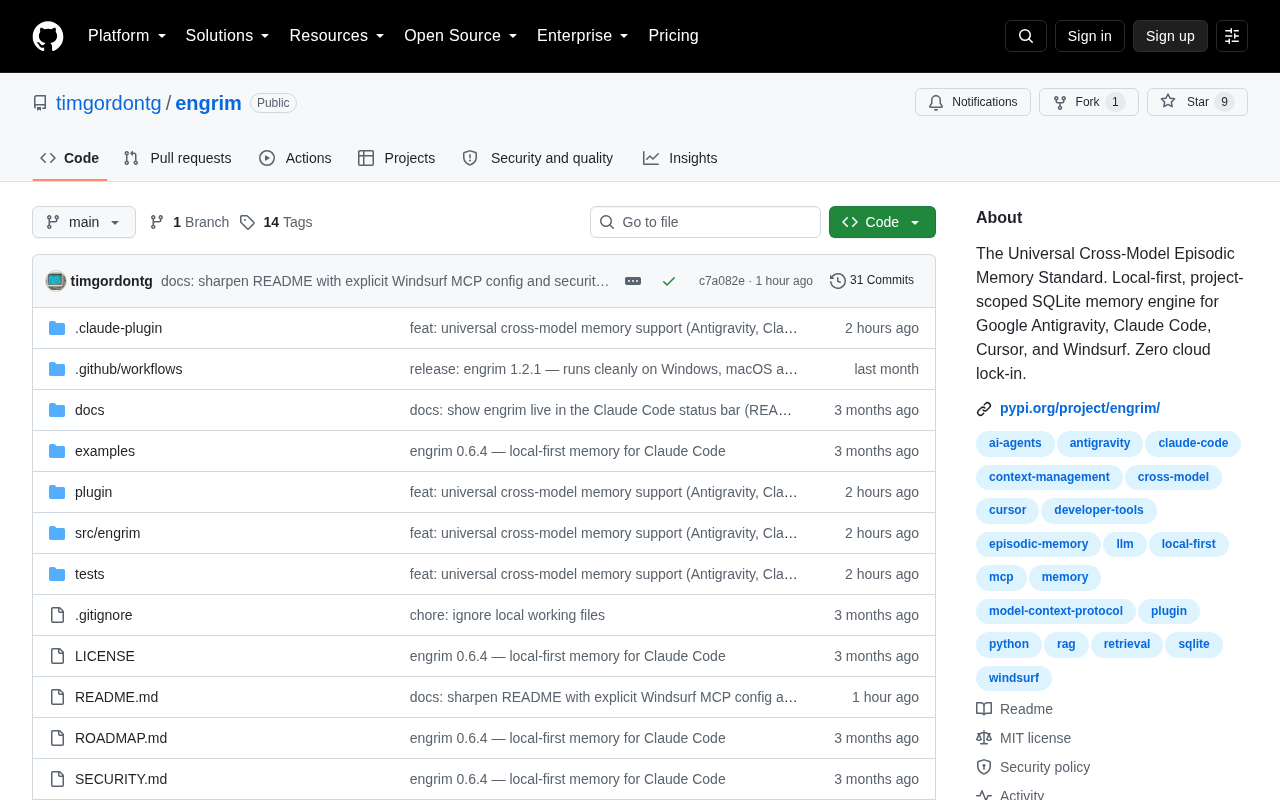
Engrim: A Local Memory Engine Solution for AI CLI Tools
Engrim is an open-source, local-first SQLite memory engine built for AI CLI tools like Claude Code and Aider, solving context loss while keeping data private.