Ressearch AI: A Deep Dive into the AI-Powered Reproducible Research Workbench
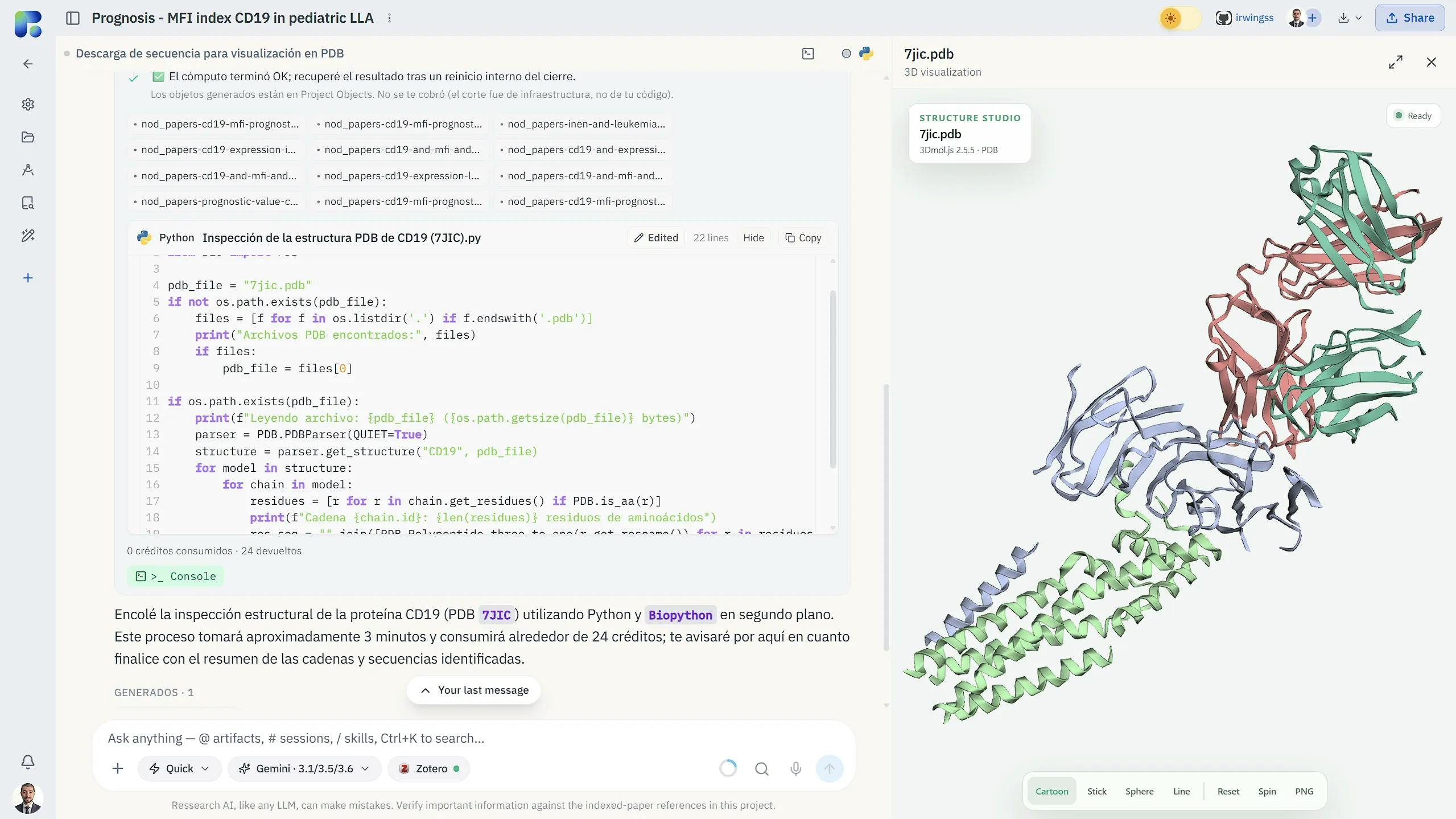
Ressearch AI integrates the full research pipeline into one AI-powered, reproducible workbench.
Ressearch AI is an AI-powered workbench designed to tackle the reproducibility crisis in scientific research. By unifying literature search, data analysis, Python/R coding, visualization, and scientific writing into a single conversational workspace, it eliminates tool fragmentation. Its core features — traceable AI agent workflows, isolated cloud sandboxes, and zero-configuration setup — address key reproducibility challenges around environmental consistency and process transparency.
The Fragmentation Problem in Research Workflows
For anyone engaged in scientific research, a complete research cycle is often fragmented across multiple tools: searching databases for literature, downloading raw data, writing analysis scripts in Python or R, generating visualizations, iterating on paper drafts… Each step requires its own environment setup and tool-switching. This isn't just inefficient — more critically, many analytical results become nearly impossible for others to reproduce.
Reproducibility has long been a core challenge in modern scientific research. Reproducibility refers to the ability of other researchers to obtain the same results using the same data and methods. It differs from replicability, which emphasizes validating the same scientific conclusions under new data and conditions. A 2016 survey by Nature revealed that over 70% of researchers were unable to reproduce others' experiments, and 52% couldn't even reproduce their own work. This 'reproducibility crisis' stems from multiple factors: environment dependencies (differences in operating systems and software versions), missing data processing steps, unfixed random seeds, and unpublished analysis code.
When a paper's data processing pipeline is scattered across local scripts, temporary notebooks, and verbal agreements, other researchers — and even the authors themselves — often struggle to reconstruct the complete analytical chain. Ressearch AI, which recently debuted on Product Hunt, is designed to tackle exactly this pain point.
Product Hunt is the world's largest platform for discovering new products, founded by Ryan Hoover in 2013. It uses a community voting mechanism to showcase the latest tech products. Products are ranked by the number of 'upvotes' they receive, and landing at the top of the daily leaderboard can bring significant exposure and early users. For startups, a successful Product Hunt launch typically translates into substantial traffic, media attention, and interest from potential investors, making it a key channel for tech product marketing.
What Is Ressearch AI: An AI Workbench for Reproducible Research
Ressearch AI positions itself as an "AI workbench for reproducible scientific research." Its core philosophy is to integrate the entire research workflow into a single conversational workspace. According to its product description, it covers the full pipeline — from literature search, data acquisition, Python/R analysis, and visualization to editing and scientific writing.
Researchers no longer need to jump between browsers, code editors, statistical software, and word processors. Instead, they advance their research tasks through conversations with AI agents. The product earned 77 upvotes on Product Hunt and is categorized under Artificial Intelligence, Science, and Data Science.
Three Core Features of Ressearch AI
From the official description, three noteworthy design highlights emerge:
- AI Agents Execute Traceable Workflows: Every operation is logged, forming a complete execution trail (traceable workflows) that ensures the research process is transparent and auditable.
- Isolated Cloud Sandbox Environments: Analysis tasks run in independent cloud sandboxes, guaranteeing environmental consistency and security — fundamentally solving the reproducibility problem.
- Zero-Configuration Startup: The team emphasizes "No setup required" — researchers don't need to spend time setting up Python/R environments or resolving dependency conflicts. It works out of the box.
Why Traceability and Cloud Sandboxes Are Key to Research Reproducibility
In research contexts, the combination of these two technical choices carries profound practical significance.
Traceability solves the "where did this result come from" problem. When every step of an AI agent — from which dataset was loaded, to which function was called, to which chart was generated — is fully logged, other researchers can audit the entire reasoning and computation process rather than only seeing the final conclusions. This is the foundation of scientific peer review and a necessary condition for breaking open the "black box" of analysis.
An AI Agent is an artificial intelligence system capable of perceiving its environment, making autonomous decisions, and executing actions to achieve goals. Unlike traditional single-turn Q&A AI, agents possess planning capabilities, tool-use abilities, and multi-step reasoning skills. In research scenarios, an AI agent can understand the user's research intent, autonomously decompose it into subtasks (e.g., data cleaning → statistical analysis → visualization), invoke the appropriate Python libraries or APIs for execution, and adjust subsequent steps based on intermediate results. This 'plan-execute-reflect' loop enables it to handle complex, open-ended tasks.
Isolated cloud sandboxes solve the classic reproducibility challenge of "inconsistent environments." A Cloud Sandbox is an isolated, virtualized execution environment where each user or task runs in an independent container or virtual machine, completely isolated from other environments. In research settings, the core value of sandboxes lies in environment standardization: all dependency libraries and system configurations are pre-defined and version-locked, ensuring that code produces consistent results regardless of when or where it's executed. Docker container technology is a common implementation approach, packaging the complete runtime environment into images.
Anyone with research experience knows that the same code can produce vastly different results on different machines with different library versions. Running analyses in standardized, isolated environments means anyone can re-execute the workflow under identical conditions, truly achieving reproducible results. Combined with the "access anywhere" nature of the cloud, cross-team collaboration also becomes much smoother.
The Potential and Practical Considerations of Conversational Research
Turning the research process into a "conversation" is a notable trend in current AI applications. It dramatically lowers the barrier to tool usage — especially for researchers who aren't proficient in programming, driving data analysis through natural language is genuinely appealing.
However, products like this also face several practical considerations in real-world use:
Verifying Result Trustworthiness
While AI agents executing analysis automatically is efficient, researchers are still responsible for the scientific validity of every step. Traceable logs become especially important here — they give users the opportunity to verify step by step whether the AI has "cut corners" or introduced incorrect assumptions.
Data Security and Compliance
Uploading research data to cloud sandboxes raises important concerns about privacy protection and regulatory compliance, particularly for teams handling sensitive data such as medical or bioinformatics data. Cloud-based processing of research data faces strict regulatory constraints. The EU's GDPR (General Data Protection Regulation) requires strict controls on cross-border transfers of personal data, with fines for violations reaching up to 4% of global revenue. The U.S. HIPAA (Health Insurance Portability and Accountability Act) establishes detailed standards for the storage, transmission, and access of healthcare data. China's Data Security Law and Personal Information Protection Law require domestic storage of important data and personal information.
For biomedical research, compliance with institutional review board (IRB) requirements is also necessary. This means cloud-based research platforms must offer features such as data encryption, access auditing, geographic location selection, and compliance certifications (e.g., SOC2, ISO27001) to gain adoption by academic institutions.
The Limits of Deep Customization
Conversational interfaces excel at standardized analytical tasks, but truly cutting-edge research often demands highly customized methodologies. Whether an AI workbench can flexibly adapt to such non-standard requirements remains to be validated through real-world usage.
Conclusion: What Ressearch AI Means for the Research Toolchain
Ressearch AI represents an important direction in AI's reshaping of the research toolchain: rather than replacing researchers' thinking and judgment, it consolidates fragmented workflows into a unified platform, eliminates tedious environment configuration, and reinforces the rigor of scientific research through traceable and reproducible design.
For the research community long plagued by tool fragmentation and reproducibility challenges, this type of "all-in-one conversational research workbench" is worth close attention. Whether it can withstand the test of rigor in real research environments still requires more user feedback to validate. As a newly launched product, the problem Ressearch AI addresses — research reproducibility and tool integration — is already valuable enough in its own right.
Related articles

M&M's Spent Millions Replacing Artificial Blue Dye — Why Is It So Hard?
Mars spent millions trying to replace artificial blue dye in M&M's with spirulina, but thick material clogs pipes and residue risks mold, forcing a full production-line rebuild. Here's the engineering behind the reformulation.
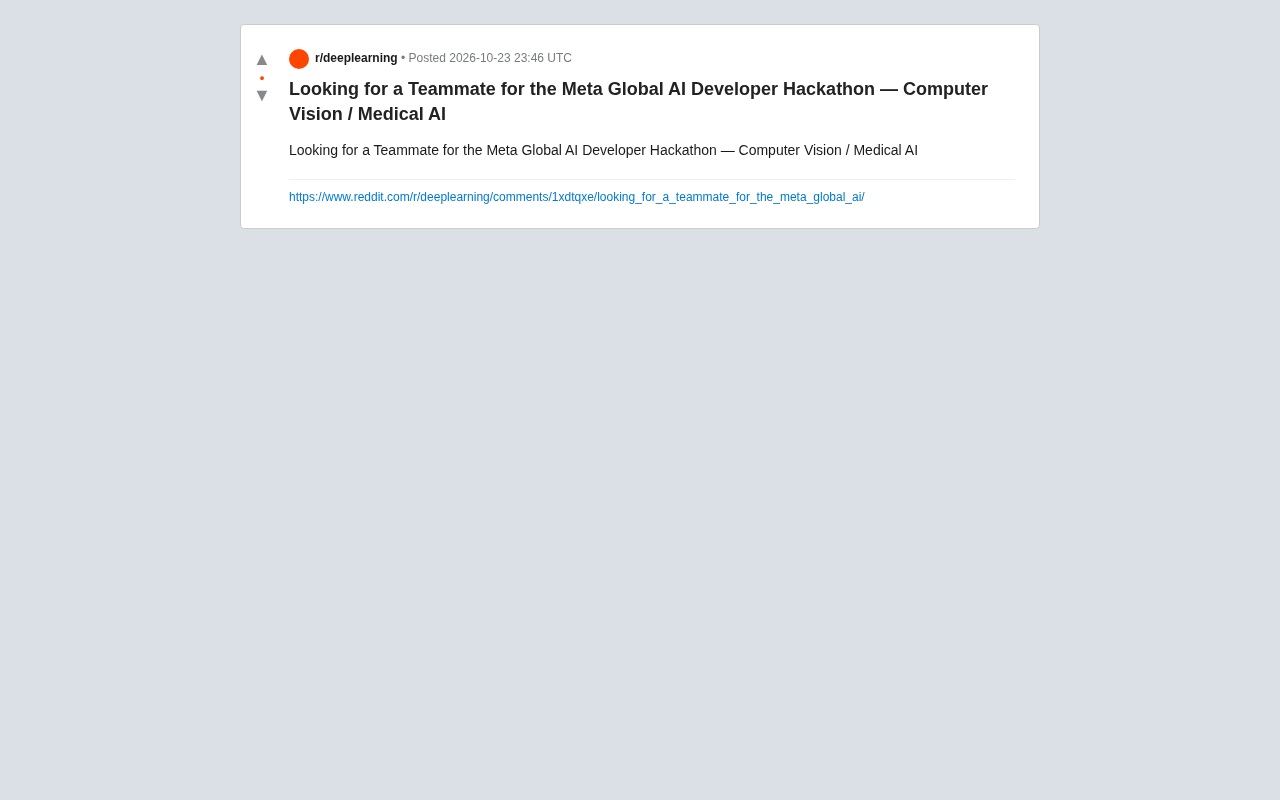
Teammate Wanted for Meta Global AI Developer Hackathon: Computer Vision & Medical AI
A Reddit developer seeks teammates for the Meta Global AI Developer Hackathon, focusing on computer vision and medical AI. This article analyzes the track logic, skills-complementarity needs, and topic selection strategy behind this teaming signal.
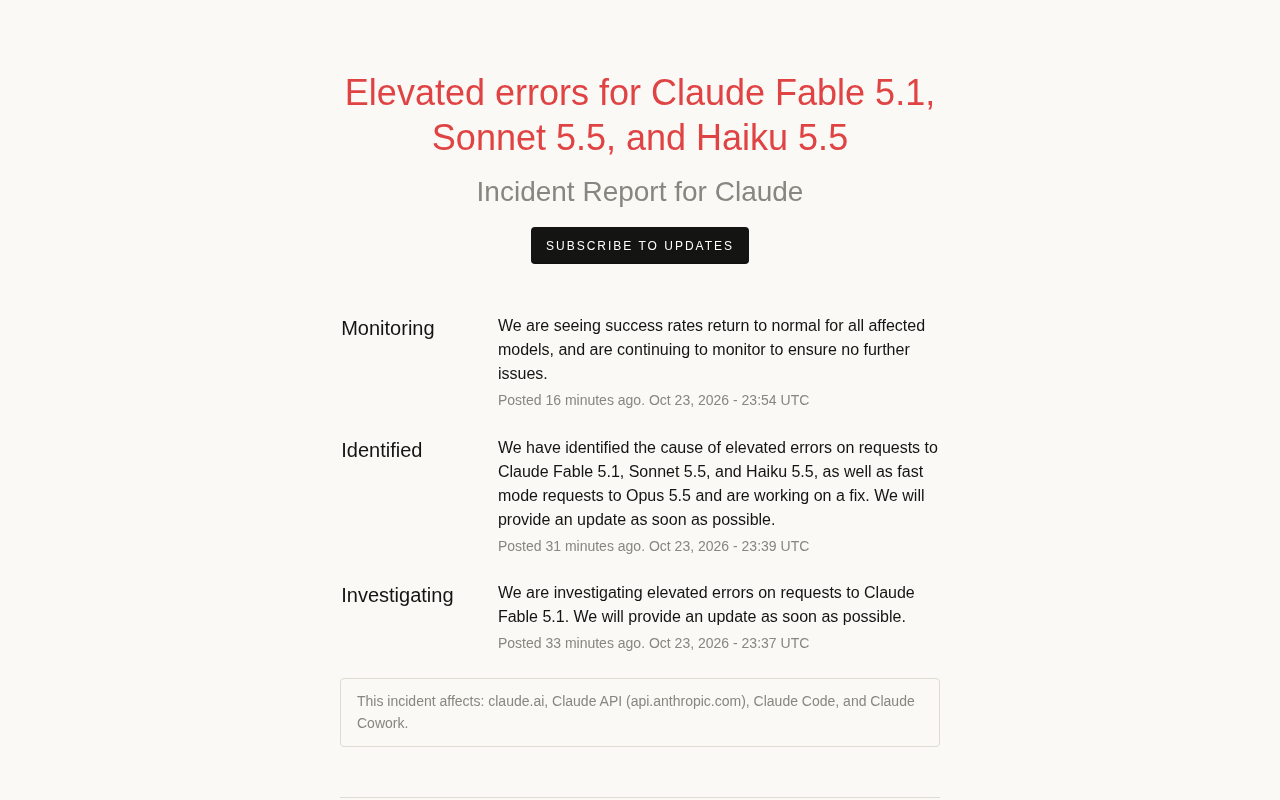
Multiple Claude Models Hit by Errors: A Postmortem of Fable 5.1, Sonnet 5.5, and Haiku 5.5
Claude Fable 5.1, Sonnet 5.5, Haiku 5.5, and Opus 5.5 fast mode saw elevated errors; Anthropic identified and resolved the issue in 17 minutes. This postmortem covers the timeline, the technical reasons for the multi-model cascading failure, and practical lessons for retry and degradation strategies.