Orca: An Open-Source, Free Multi-AI Agent Management Tool

Open-source Orca unifies multiple AI subscriptions and agents in a model- and platform-agnostic way.
The article introduces Orca, an open-source, model-agnostic, platform-agnostic IDE-style AI agent console that solves the switching and subscription-management pain of using Claude, Codex, Hermes, Grok, and Gemini simultaneously. Orca supports chatting with multiple backends in one interface, parallel agent dispatch, multi-agent orchestration, and remote phone control of a home computer, with the author claiming 50+ agents managed at once. It's fully free, iterates frequently on GitHub, and offers 5-minute and 30-minute tutorials. The editor notes it targets a real need but that the video is promotional, so stability and account compliance still need verification.
Why You Need to Unify Multiple AI Agents
When you're using several AI services at once — Claude, Codex, Hermes, Grok, Gemini, and more — switching platforms, managing subscriptions, and coordinating tasks quickly becomes a real hassle. A YouTube creator shared his own situation in a video: he holds multiple Claude subscriptions, several Codex subscriptions, one Hermes, a pricey Grok subscription, plus ongoing Gemini API spend. This "many subscriptions at once" state is a typical pain point now that multi-agent workflows have gone mainstream.
His solution is an open-source tool called Orca — a model-agnostic, platform-agnostic aggregation and management interface. In his words, Orca is "better suited than VS Code, Cursor, and similar tools for managing your Hermes agents and terminal workflows."
Multi-agent workflows refer to combining multiple autonomous AI agents (such as Codex for specialized coding, Claude for conversation, Gemini for long context) so they complete different subtasks separately or collaboratively. As model capabilities diverge, a single model often can't be optimal for every task, so users pick different backends per scenario — making "one project, multiple agents" the norm. This pattern increases flexibility but also brings scattered entry points, overlapping subscriptions, and high context-switching costs — precisely the direct motivation for aggregation management tools.
What Exactly Is Orca
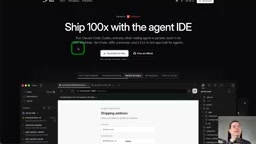
Orca positions itself as an IDE-style agent console. It isn't tied to a specific model — you can talk to different backends like Claude, Hermes, Grok, and Gemini within the same interface. Nor is it tied to a specific platform — it runs on both Windows and Mac. For people used to working in the terminal with "vibe coding," Orca tries to replace the operations previously scattered across multiple tools.
The author emphasizes two core advantages: first, it's open source, hosted on GitHub, so anyone can fork, remix, and customize it as needed, with the community shipping updates almost daily; second, no single company monopolizes support — the ecosystem is community-driven.
Model-agnostic and platform-agnostic are two key dimensions for evaluating the architectural flexibility of AI tools. Model-agnostic means the tool doesn't lock users into one vendor's API or subscription; the backend can be swapped for Claude, GPT, Gemini, and others, reducing the risk of price hikes, rate limits, or service shutdowns from a single provider. Platform-agnostic means the same feature set runs on Windows, macOS, and even mobile, without depending on a specific OS or cloud environment. Together, they keep a tool's lifecycle from depending entirely on one AI company's business strategy.
Multi-Subscription and Multi-Agent Orchestration
The most compelling scenario in the video is "multi-subscription management." The creator listed the multiple Claude and Codex subscriptions and other paid services he holds simultaneously, showing that Orca targets exactly this kind of heavy user. Through a unified interface, users can collaborate with multiple agents in parallel — the typical dialogue he describes in the video is: "I want to work with you several together," then assigning tasks separately to Hermes, Claude, Grok, and Gemini.
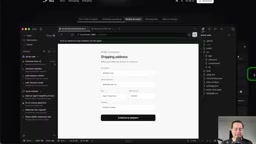
Orca also offers multi-agent orchestration, letting multiple agents collaborate on the same project instead of being manually dispatched one by one. The author says he uses this approach to manage 50+ agents simultaneously across multiple projects.
Multi-agent orchestration refers to a mechanism where a scheduling layer assigns tasks, passes context, and aggregates results, rather than a person manually switching between windows. Common implementations include: defining roles and responsibility boundaries for different agents, routing to the most suitable model by task type, sharing intermediate artifacts among agents, and monitoring each task's execution status. The value of orchestration is turning "the human finds the agent" into "the system dispatches the agent" — but the more parallelism, the higher the demands on state synchronization, error retries, and cost control. This is also a core metric for evaluating such tools' real-world stability.
Mobile and Remote Workflows
The author calls Orca's mobile experience "the best phone app." Its working logic: leave a sufficiently powerful computer running at home, and while out, use the phone app to converse with and assign tasks to each agent remotely. This makes "advancing multi-threaded projects away from your desk" a reality, especially suited to heavy users who need to respond to multiple agent outputs at any time.
Onboarding Barrier and Learning Path
Orca is completely free and supports all devices. The video offers two learning paths: a 5-minute quick start and a 30-minute systematic tutorial — search "learn orca" or "orca ide" to find them. The author believes the 5-minute version is enough to get beginners running, while the 30-minute version gets you "dangerous enough" — that is, mastering most practical features.
The author's positioning of Orca is direct: it aims to replace your existing vibe coding tools and terminal workflow. For users unfamiliar with the terminal, that claim may need a discount; but for those already bouncing between multiple models and subscriptions, the convergence value Orca offers is quite clear.
Vibe coding refers to a programming style driven by natural-language conversation that downplays hand-written code details — developers describe intent while AI generates and iterates on code. This workflow typically relies on conversational agents in the terminal or IDE, thus placing higher demands on the entry tool's responsiveness, multi-session management, and context retention. When users employ multiple models at once, the experience bottleneck in vibe coding is often not the model itself but the switching and scheduling — exactly what aggregation consoles try to solve.
Editorial View
Orca hits a rapidly expanding need: the number of agents is growing faster than management tools mature. The open-source + model-agnostic combination lowers lock-in risk, and frequent community iteration makes up for the limits of a single team maintaining it. Note, however, that the video has clear promotional overtones; the real-world stability of managing 50+ agents in parallel and the compliance of multiple subscription accounts within a unified interface are both worth verifying in practice. If you're already frustrated by the switching costs of multiple AI subscriptions, Orca is worth a 5-minute try.
Related articles

ChatGPT Plus Subscription Pitfall Guide: Go/Plus/Pro Tier Comparison and Quick Activation
A complete ChatGPT Plus subscription guide based on a Bilibili tutorial: from registering an account, comparing Go/Plus/Pro tiers, to the practical steps for quickly completing your subscription.

GPT-6.2 Sol/Astra Released! A Step-by-Step ChatGPT Plus Subscription Guide and Tier Comparison
GPT-6.2 Sol/Astra is out—here's a ChatGPT Plus subscription guide: register an account, compare Go/Plus/Pro tiers, and subscribe in a minute.

Comparing Three Channels for Subscribing to GPT Plus in China: Is Website Top-Up the Easiest?
How to subscribe to GPT Plus in China? This article compares website top-up, credit card, and mobile top-up channels—process, cost, and risk—with steps and tips to help you choose wisely.