Oregon Library Ditches Dewey Decimal System, Rekindling Readers' Passion for Reading
Oregon library ditches Dewey Decimal Classification, using thematic displays to boost reading interest, sparking reflection on knowledge organization and AI design.
An Oregon library abandoned the Dewey Decimal Classification and adopted a thematic, interest-oriented display approach, unexpectedly increasing readers' interest in finding and reading books. The article analyzes the discipline-based logic and outdated concepts of the Dewey Classification that are unfriendly to ordinary readers, and introduces how the alternative lowers the usage threshold and promotes browsing-based discovery. The Hacker News discussion brings together multiple perspectives: support for flexible thematic zoning and insistence on the value of standardized retrieval, reflecting the tension between standardization and user experience in knowledge organization. The article further points out that this case has reference significance for knowledge organization in the AI field (such as RAG systems): information organization needs to align with users' mental models rather than solely pursuing technical standardization. Ultimately, it emphasizes that no matter how elegant the architecture, if detached from human experience, it may become an obstacle; only by abandoning the old order can true connections be facilitated.
Introduction
In most people's minds, library shelves are always strictly divided by the Dewey Decimal Classification, numbered from 000 to 999, like an unquestionable order. However, a library in Oregon did the opposite—abandoning this century-old system—and unexpectedly got readers interested in finding and reading books again. This discussion from Hacker News (105 points, 81 comments) has sparked widespread reflection on how knowledge should be organized.
The Problem with Dewey Decimal Classification: Alienation Behind the Sense of Order
The Dewey Decimal Classification was born in the 19th century, with the logic of dividing all knowledge into ten major categories, then subdividing level by level. This highly structured system may be efficient for professional librarians, but it is far from friendly to ordinary readers. Imagine a reader looking for a book on gardening—they first need to know that gardening falls under the "Agriculture" category (600), then find the specific subclass, where the adjacent books might be on pet care or building maintenance. This arrangement based on academic disciplines rather than interests often leaves people lost in a maze of numbers.
More critically, some outdated concepts implicit in the Dewey Classification (such as categorizing books related to homosexuality under "abnormal psychology") have long been inappropriate. As a public space, a library's classification method directly affects how readers encounter knowledge. When the classification system itself becomes an obstacle, even the neatest shelves cannot generate enthusiasm for reading.
The Dewey Decimal Classification (DDC) was first published by Melvil Dewey in 1876 and is one of the most widely used library classification systems in the world. It divides all knowledge into ten main classes (000 Computer science, information & general works; 100 Philosophy & psychology; 200 Religion; 300 Social sciences; 400 Language; 500 Science; 600 Technology; 700 Arts & recreation; 800 Literature; 900 History & geography), with each main class further subdivided decimally, forming a hierarchical numbering structure. The core advantage of this system lies in its standardization and extensibility: any new book can find a unique position, facilitating shelving and retrieval. However, its discipline-oriented classification logic requires users to first understand the division of knowledge domains, rather than starting from interests or themes. For example, gardening books are classified under the agriculture subclass of the 600 Technology class, adjacent to building maintenance and pet care—this reflects the perspective of the 19th-century disciplinary system but contradicts ordinary readers' intuition. Additionally, certain categories in DDC carry historical biases, such as placing homosexuality-related books under "abnormal psychology" for a long time until gradually corrected in the late 20th century. These characteristics make DDC prone to user experience issues in public libraries, especially in small collections where its complexity may outweigh the benefits.
Oregon Library's Alternative: Reader-Centered
According to the discussion on Hacker News, after abandoning the Dewey Decimal Classification, this Oregon library adopted an approach closer to bookstore display logic—organizing collections by theme, interest, and reader experience. For example, travel guides are no longer scattered across history and geography categories but concentrated in a "Travel" area; cookbooks may be placed next to food culture essays, creating natural reading extensions.
The core of this approach is transforming "finding books" into "browsing books." Readers no longer need to first master a set of classification rules; instead, like in a bookstore, they can discover content of interest through intuition and curiosity. Some commenters pointed out that this change lowers the threshold for using the library, especially being more friendly to children and non-specialist readers—they don't need to understand complex numbering systems to easily find the books they want to read.
Thematic display (or bookstore-style classification) is a book organization method oriented toward user interests and access convenience, commonly found in independent bookstores and some public libraries. It typically breaks traditional disciplinary classification, displaying books on related themes together, supplemented by intuitive signage and guides. For example, travel guides may be placed together with travel literature and atlases to form a "Travel" theme area; cookbooks displayed alongside food culture and nutrition books to promote associative discovery. The advantage of this approach lies in lowering cognitive barriers: readers don't need to master classification rules in advance and can browse through intuition and curiosity. Research shows that thematic display can increase book circulation rates, especially being more friendly to leisure readers and children. However, it also presents challenges: theme division needs to balance breadth and depth, avoiding being too vague or overlapping; meanwhile, the lack of unified standards may affect interlibrary loans and catalog retrieval. Therefore, many libraries adopt a hybrid model, retaining standard classification numbers while adding thematic display areas. The Oregon library's practice is precisely a manifestation of this trend, emphasizing reader experience as the center, transforming "finding books" into "browsing books," thereby stimulating reading interest.
Multi-Source Perspectives: Controversy and Consensus on Classification
This Hacker News discussion brings together multiple perspectives from library practitioners, readers, and technologists. A relatively consistent consensus is that the Dewey Decimal Classification does have experience deficiencies in public library scenarios, especially when the collection size is not particularly large, its advantages are not obvious. Some commenters mentioned that small libraries can completely replace rigid numbering systems with more flexible thematic zoning, which can actually improve book circulation rates.
However, disagreements also exist. Some commenters believe that the Dewey Classification still has irreplaceable value in academic libraries or large collections—it provides a standardized retrieval foundation, facilitating interlibrary loans and resource integration. Abandoning it may mean sacrificing long-term maintainability. The tension between this view and its supporters precisely reflects a core contradiction in the field of knowledge organization: how to choose between standardization and user experience.
There are also single-source insights pointing out that changes in classification are not just technical issues but also a cultural stance—it suggests that the library is willing to set aside its "knowledge authority" posture and welcome readers in a more egalitarian way. This point gained considerable resonance in the discussion but has not yet formed widely verified conclusions.
In the field of library science, controversy over classification systems has long existed. Supporters of standardized classification (such as DDC, Library of Congress Classification) believe that unified coding is the foundation of resource integration and interlibrary collaboration, especially for large academic libraries, standardized retrieval can ensure the systematicity and discoverability of knowledge. User experience advocates, on the other hand, argue that public libraries should prioritize accessibility and approachability, adopting more flexible thematic zoning or reader interest classification. This tension reflects the core contradiction in knowledge organization: on one hand, standardization facilitates management and exchange; on the other hand, user-friendliness relates to willingness to use and satisfaction. In practice, many libraries adopt compromise strategies, such as retaining DDC numbers for catalog retrieval but rearranging shelves by theme. Additionally, the cultural dimension of classification cannot be ignored: it implies the distribution of knowledge power, and changing classification methods may be seen as embracing diverse perspectives. The discussion sparked by the Oregon case is precisely a microcosm of this multidimensional controversy.
Implications for AI and Knowledge Organization
This discussion about library classification also has subtle reference significance for the current AI field. Whether it's search engines, recommendation systems, or knowledge base construction, they all face similar choices: should they adopt a rigorous but user-unfriendly classification system, or organize information in a way closer to human intuition? The Oregon library's practice shows that when information organization aligns with users' mental models, engagement increases significantly.
At the AI application level, this means that when designing knowledge indexes for Retrieval-Augmented Generation (RAG) systems or intelligent assistants, they cannot only consider technical standardization but also how users naturally ask questions and explore. A system that can understand "I want to find a light travel essay" is far more vital than one that requires users to first select "Category: Geography → Travelogue → Modern."
Retrieval-Augmented Generation (RAG) is a technical architecture combining information retrieval with generative AI, widely used in intelligent assistants and knowledge base systems. Its core process includes: converting user queries into vector representations, retrieving relevant document fragments from the knowledge base, and then generating answers based on these fragments. The effectiveness of RAG systems highly depends on the design of knowledge indexes: indexes must be both comprehensive and aligned with the semantic space of user queries. If indexes are organized only by technical classification (such as document type, source) while ignoring users' natural questioning styles, retrieval effectiveness may be greatly reduced. The Oregon library case inspires us that knowledge organization should be close to users' mental models—for example, supporting thematic clustering, semantic search, and associative recommendations, rather than forcing users to adapt to rigid classification rules. In RAG design, this means adopting flexible embedding representations and hybrid retrieval strategies while considering the diversity and ambiguity of user intentions. Additionally, the choice of classification systems also affects the maintainability and extensibility of the system, requiring a balance between standardization and user experience.
Conclusion
This Oregon library's attempt may be just an individual case, but the question it raises is universal: is the way we organize knowledge for the convenience of managers or for the pleasure of users? When the Dewey Decimal Classification is set aside and readers' joy of wandering between shelves and casually pulling out a book is awakened—this may be closer to the essence of a library than any classification system.
For tech professionals, this case reminds us: no matter how elegant the architecture, if it is detached from actual human experience, it may become an obstacle. Sometimes, only by abandoning an old order can true connections occur.
Related articles

Astrophysicist Pokes Fun at Supermoons: The Difference Between a 16-Inch and a 15-Inch Pizza
Astrophysicist Neil deGrasse Tyson criticizes the terms supermoon and micromoon, using a 16-inch vs. 15-inch pizza analogy to show the visual difference is negligible, and calls out exaggerated labels in science communication.
Bypassing the iOS Safari 60fps Limit: Building a Native-Like Web App Experience
A deep dive into bypassing iOS Safari's 60fps limit through compositor animations, frame rate decoupling, and interaction detail optimization to give web apps a near-native feel on iPhone.
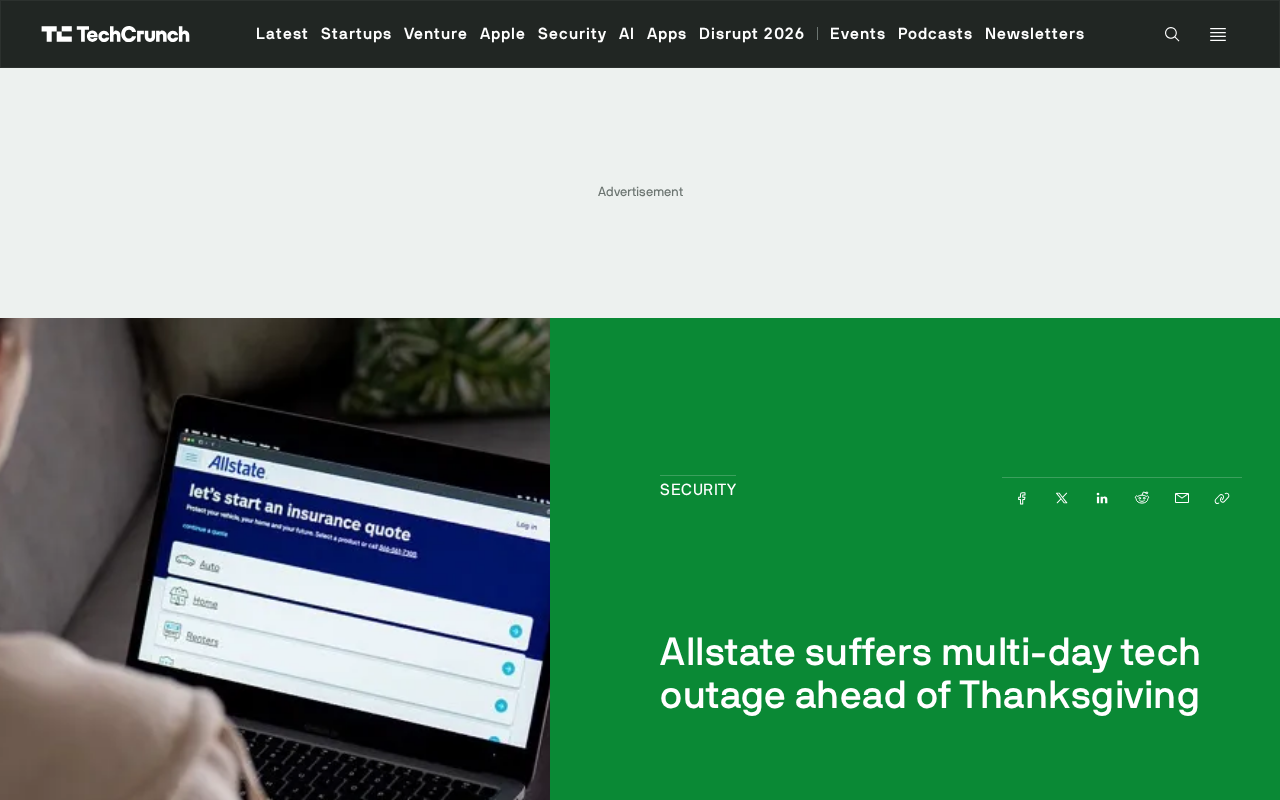
Allstate's Multi-Day Technical Outage Before Thanksgiving
Insurance giant Allstate suffered a multi-day technical outage before the Thanksgiving travel peak. This article analyzes the impact of the timing, implications for insurtech, and the importance of system stability for financial institutions.