Allstate's Multi-Day Technical Outage Before Thanksgiving
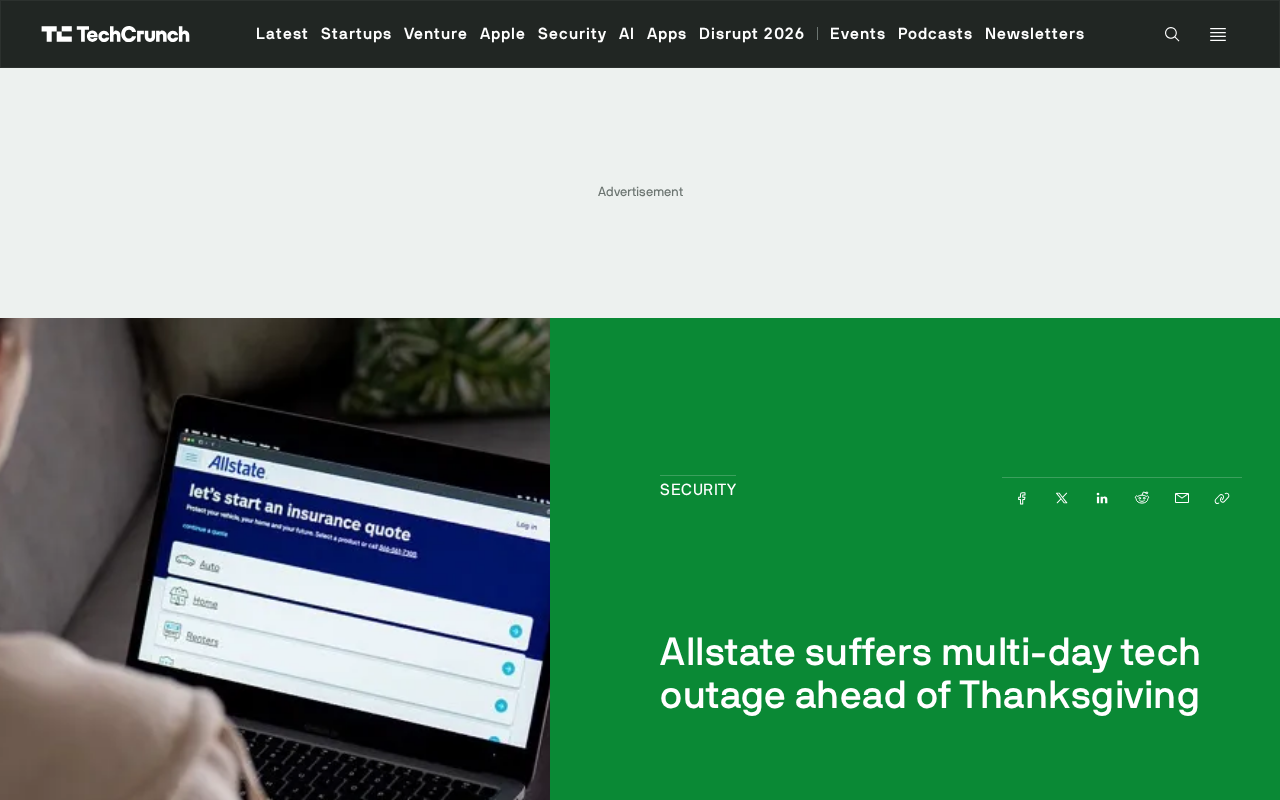
Insurance giant Allstate suffered a multi-day technical outage before the Thanksgiving travel peak, exposing shortcomings in system stability and disaster recovery.
Insurance giant Allstate experienced a multi-day technical outage ahead of the Thanksgiving holiday, coinciding with the busiest travel period in the United States. Millions of customers may have been unable to access key services such as online claims reporting, roadside assistance dispatch, and claims inquiries. The article notes that the more insurance companies rely on online systems, the greater the blast radius of a single point of failure, and technical infrastructure itself should be managed as a risk. The failure to recover over multiple days suggests possible shortcomings in monitoring and alerting, fault localization, or disaster recovery failover. The specific technical cause and scope of impact have not yet been disclosed, but the incident sufficiently demonstrates that in critical time windows, the priority of technical stability is no less important than any business metric, and industry peers should ensure capacity planning and disaster recovery drills are in place before business peaks.
Event Overview
According to RSS sources, insurance giant Allstate experienced a multi-day technical outage ahead of the Thanksgiving holiday. The timing of this disruption was particularly unfortunate—millions of Americans were preparing to travel for the Thanksgiving weekend.

For an insurance company whose core operations center on policy management and claims services, system availability directly affects customer experience and business continuity. A multi-day outage on the eve of peak travel season means customers may be unable to access services normally when they need help most.
Why the Timing Matters So Much
Thanksgiving weekend is one of the busiest travel periods of the entire year in the United States. Large numbers of families drive across state lines to visit relatives or travel, and the risk of accidents such as traffic collisions and vehicle breakdowns rises accordingly. If an insurer's online claims reporting, roadside assistance dispatch, and claims status tracking functions are unavailable at such a time, it directly magnifies users' inconvenience and anxiety.
As an insurance giant with nationwide coverage, Allstate's technology platform supports multiple critical functions ranging from policy inquiries to claims intake. A multi-day outage means the problem was not a short-term fluctuation but a persistent defect requiring systematic investigation.
Thanksgiving in the U.S. typically begins on the fourth Thursday of November, followed by the shopping season known as "Black Friday," with the entire weekend forming one of the longest travel and consumption peaks of the year. According to historical statistics from AAA (American Automobile Association), Thanksgiving travel volume often exceeds 50 million people, the vast majority of whom travel by car. During this period, road traffic surges, and the probability of accidents caused by collisions, breakdowns, and severe weather is significantly higher than on ordinary days, which in turn amplifies the instantaneous pressure on insurers' claims intake and roadside assistance dispatch systems. For insurance companies, service availability during holidays is not merely a technical metric—it is directly tied to brand reputation and regulatory compliance. Most states have explicit requirements for claims response timeframes, and systemic outages may trigger regulatory inquiries.
Implications for Insurtech
This incident once again highlights the core contradiction traditional financial institutions face in digital transformation: the more business depends on online systems, the greater the blast radius of a single point of failure. The essence of insurance products is risk protection, and the technical infrastructure supporting the delivery of that protection must itself be managed as a risk.
From an incident response perspective, a multi-day failure to recover may indicate shortcomings in monitoring and alerting, fault localization, or disaster recovery failover. For industry peers, this is a case worth reviewing—especially before peak business periods such as holidays, whether system capacity and disaster recovery drills are in place often determines the actual impact radius of an outage.
Disaster Recovery Failover refers to the process of automatically or manually switching business traffic to a backup data center or backup environment when the primary system fails. Its core metrics include the Recovery Time Objective (RTO, the tolerable duration of service interruption) and the Recovery Point Objective (RPO, the tolerable amount of data loss). For heavily regulated industries such as insurance, a mature disaster recovery system typically requires multi-site active-active or hot-standby architecture, along with regular failover drills. If an outage persists for multiple days without recovery, it often indicates insufficient capacity in the backup environment, failover processes that rely on manual decision-making, or data synchronization consistency issues—resulting in backup systems that are "prepared but unused" or failovers that "switch but don't fully cut over." This also explains why the industry widely emphasizes that disaster recovery drills must cover real-world business peak scenarios.
Conclusion
Currently, public information is limited, and the specific technical cause and scope of impact of the outage have not been disclosed. But the incident itself is enough to demonstrate that, in critical time windows, the priority of technical stability is no less important than any business metric.
One-line Summary
Insurance giant Allstate suffered a multi-day technical outage before the Thanksgiving travel peak, exposing shortcomings in system stability and disaster recovery.
Paragraph Summary
Insurance giant Allstate experienced a multi-day technical outage ahead of the Thanksgiving holiday, coinciding with the busiest travel period in the United States. Millions of customers may have been unable to access key services such as online claims reporting, roadside assistance dispatch, and claims inquiries. The article notes that the more insurance companies rely on online systems, the greater the blast radius of a single point of failure, and technical infrastructure itself should be managed as a risk. The failure to recover over multiple days suggests possible shortcomings in monitoring and alerting, fault localization, or disaster recovery failover. The specific technical cause and scope of impact have not yet been disclosed, but the incident sufficiently demonstrates that in critical time windows, the priority of technical stability is no less important than any business metric, and industry peers should ensure capacity planning and disaster recovery drills are in place before business peaks.
Related articles

Ternary Bonsai 2.5 27B: 27B Coding Power Packed into 5.9GB, Code Stays Local
Ternary Bonsai 2.5 27B uses ternary quantization to compress 27B parameters into 5.9GB, enabling local coding with code staying on-device. We analyze its approach, vendor benchmarks, and multi-turn progress.

Self-Host Google Photos with Open-Source Immich: Privacy and AI Combined
Learn how to self-host a Google Photos alternative with open-source Immich: automatic backup, local AI search, and remote access—private and smart.

Astrophysicist Pokes Fun at Supermoons: The Difference Between a 16-Inch and a 15-Inch Pizza
Astrophysicist Neil deGrasse Tyson criticizes the terms supermoon and micromoon, using a 16-inch vs. 15-inch pizza analogy to show the visual difference is negligible, and calls out exaggerated labels in science communication.