Overseas Developer Benchmarks DeepSeek: On Par with Opus, Costs Just Pennies
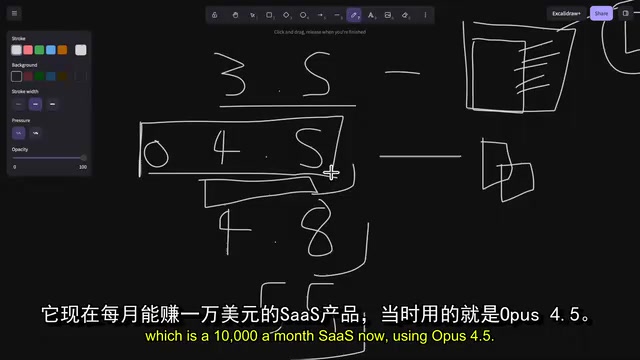
DeepSeek V4 Pro matches Claude Opus 4.8 on coding tasks at a tiny fraction of the cost.
A founder of a $10K/month SaaS product shares hands-on findings: DeepSeek V4 Pro now rivals Anthropic's Opus 4.8 for coding tasks, at a fraction of Claude Code's $200/month price. Using his own product Harbor as a case study, he argues current AI is already capable enough for real commercial products. DeepSeek's open-source, modular nature gives developers full customization control, and integrating BrightData addresses its web scraping gaps. While he still uses Claude Code in production, his verdict is clear: for budget-conscious developers, it's no longer the only option.
A tech blogger, recording a review video in the brief window before heading off to a bachelorette party, shared a surprisingly substantive take: he believes the latest DeepSeek can now go toe-to-toe with Anthropic's Opus 4.8 on coding tasks — at a fraction of the cost. For developers paying $200/month for Claude Code, this signals that a genuinely viable low-cost alternative has finally arrived.
From Sonnet 3.5 to DeepSeek: A Real Product's Evolution
His verdict isn't based on speculation — it's grounded in his own product's development journey. Harbor is a SaaS tool that helps teams generate content for clients at scale, currently pulling in $10,000/month in revenue.
He walked through his entire tech stack evolution: the initial prototype was built with Sonnet 3.5 as a basic internal-only version; a dev team then turned it into a proper SaaS product; during the iteration phase, he used Opus 4.5 to fully rebuild the system on Next.js and Convex, making it easier to maintain and update independently.
His core point: building a mature product like Harbor, Opus 4.5 is already sufficient. In other words, you don't need to wait for the next-generation model to ship a real product — today's AI is more than capable of supporting genuine commercial applications.
This logic is critical: if DeepSeek's capabilities are even close to Opus 4.5 or 4.8, it's worth using. In his hands-on testing, DeepSeek doesn't just come "close" — it genuinely "matches" it.
Convex is a real-time Backend-as-a-Service (BaaS) platform that deeply integrates with frontend frameworks like Next.js. It provides auto-synced databases, serverless functions, and real-time subscriptions — no manual server management or complex API layers required. Its standout feature compared to traditional database solutions is that data changes are pushed directly to the frontend, making it ideal for SaaS apps that require real-time updates or multi-user collaboration. The blogger's choice of a Next.js + Convex stack to rebuild Harbor was driven by this combination's advantages for rapid iteration and independent maintenance — a popular full-stack setup among indie hackers today.
DeepSeek in Practice
The blogger currently runs what he calls a DeepSeek harness in his terminal. His workflow is straightforward: type deepseek in the terminal, the system checks for updates and spins up a local web server, then drops him into his configured interface. The API key is entered through a settings screen on first login, sourced from the official platform.deepseek.com.
He speaks especially highly of DeepSeek V4 Pro, released just two weeks prior — calling its performance something that "might already surpass Opus 4.8." This means developers now have a free, open-source coding environment that rivals top-tier commercial models.
He also honestly flagged one minor drawback: DeepSeek can be verbose, sometimes doing more research work than strictly necessary. But he added that as long as the end results are strong, a more involved process isn't really a problem.
Open Source Brings Modularity and Control
A key reason the blogger keeps coming back to DeepSeek is the control that open source provides. The entire system is fully modular — adding new skills or capabilities is as simple as writing the integration code yourself.
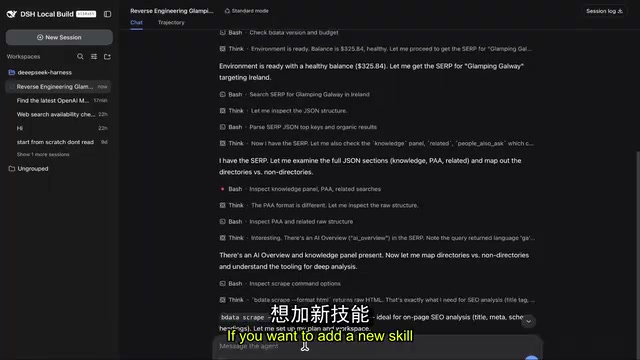
That sense of ownership is something closed commercial products struggle to offer. Compared to Claude Code, where you're at the mercy of the official update schedule, an open-source setup lets developers customize their workflow on their own terms.
The "harness" the blogger refers to, in the context of AI-assisted coding, is a locally-run workflow framework built around a language model API — typically including modules for session management, tool calling, and context injection. Unlike commercial products like Claude Code, an open-source harness lets developers add their own "skills" — essentially pre-defined tool functions or API call wrappers for things like web scraping, code execution, and file I/O. DeepSeek uses an open-weight release model, meaning the model weights can be downloaded and deployed locally, allowing the community to build custom workflows on top of it. This stands in fundamental contrast to Claude Code's closed, subscription-only model.
Giving the Model "Eyes" with BrightData
One notable addition in his setup: the blogger found that DeepSeek had shortcomings in web scraping, so he integrated the BrightData Scraper Studio skill.
His argument is that enabling a model to "properly read the internet" is essential. BrightData's value lies in providing real page content and SERP (Search Engine Results Page) data, rather than "low-quality text scraping." This tool can plug into any harness, so whether you're using Claude Code or DeepSeek, it gives your model "eyes."
He demoed a typical use case live: asking the model to look up search results for "glamping Galway," then reverse-engineering how the top-ranking non-directory sites achieved their rankings. The analysis pointed to factors like trust, EEAT (Experience, Expertise, Authoritativeness, Trustworthiness), Google Business Profiles, real addresses and phone numbers — concluding that "on-page signals aren't the decisive factor; trust is usually more important." This aligns well with conventional SEO wisdom.
On cost, he gave specific numbers: BrightData offers $25 in free credits (enough to scrape tens of thousands of pages), with subsequent usage at roughly $1 per 1,000 pages — very reasonable.
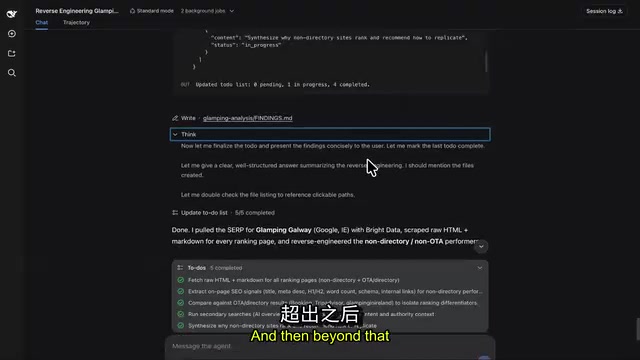
EEAT is Google's core framework for evaluating webpage quality, standing for Experience, Expertise, Authoritativeness, and Trustworthiness. It originally appeared as E-A-T in Google's Search Quality Evaluator Guidelines before the "Experience" dimension was added in 2022, emphasizing whether content creators have firsthand experience with the subject. In SEO practice, EEAT signals go beyond page content itself to include author credentials, brand reputation, backlink authority, Google Business Profiles, and more. This is why the AI's analysis placed "trust" above "on-page signals" — perfectly in line with Google's algorithm updates in recent years, which have continuously reinforced brand and entity signals.
Conclusion: Claude Code Is No Longer the Only Option
The blogger was candid about his own position. For serious production coding, he'll continue using Claude Code — his team has the budget and is happy to pay for the best.
But his core message is clear: paying for Claude Code is no longer a 100% necessity.
He admitted he wouldn't have said this two weeks ago. He'd always believed Claude Code was the best environment and genuinely couldn't find a solid affordable alternative. DeepSeek has changed that: "If I were working on a tight budget, I probably wouldn't pay for Claude Code anymore."
Pairing a model that rivals Opus 4.8 with BrightData's web scraping capabilities — at a cost that's just pennies compared to $200/month — represents crushing value for most budget-conscious developers. He's even confident he could "build a complete SaaS from scratch" with this setup and said he plans to record a dedicated test video to prove it.
For indie developers and small teams, the signal from this real-world test is clear: top-tier AI coding capability is rapidly democratizing. Waiting and high costs are no longer barriers to building great products.
Related articles

Which $10 AI Coding Plan Should You Choose? Go vs. Code Credit Breakdown
After DeepSeek's price hike, should you pick Go or Code for your $10 AI coding plan? We break down credit allocations for Mimo, Qwen, DeepSeek V4, Kimi, and more.
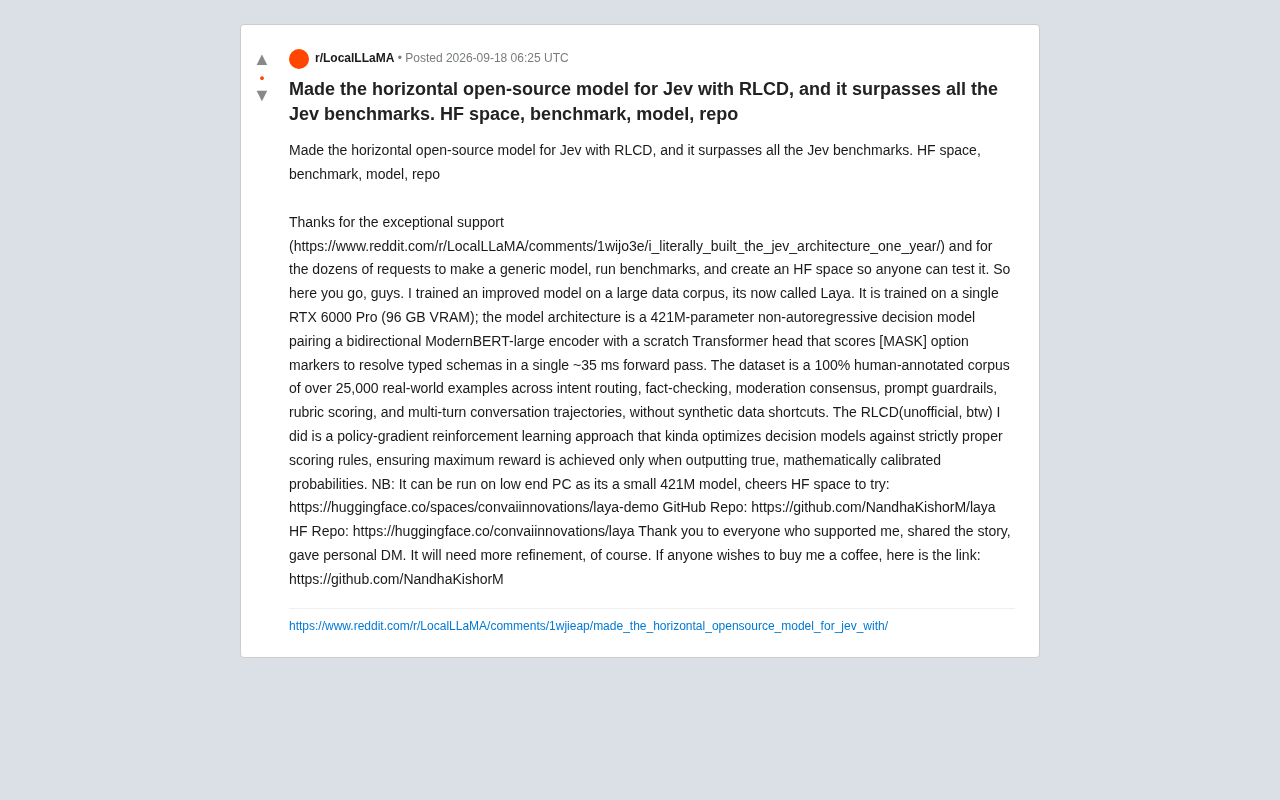
Laya Open-Source Decision Model: How 421M Parameters Beat Jev Benchmarks
Laya is an open-source 421M-parameter non-autoregressive decision model built on the Jev architecture, trained with RLCD on 25,000 human-annotated samples using a single GPU, running in ~35ms on low-end PCs.
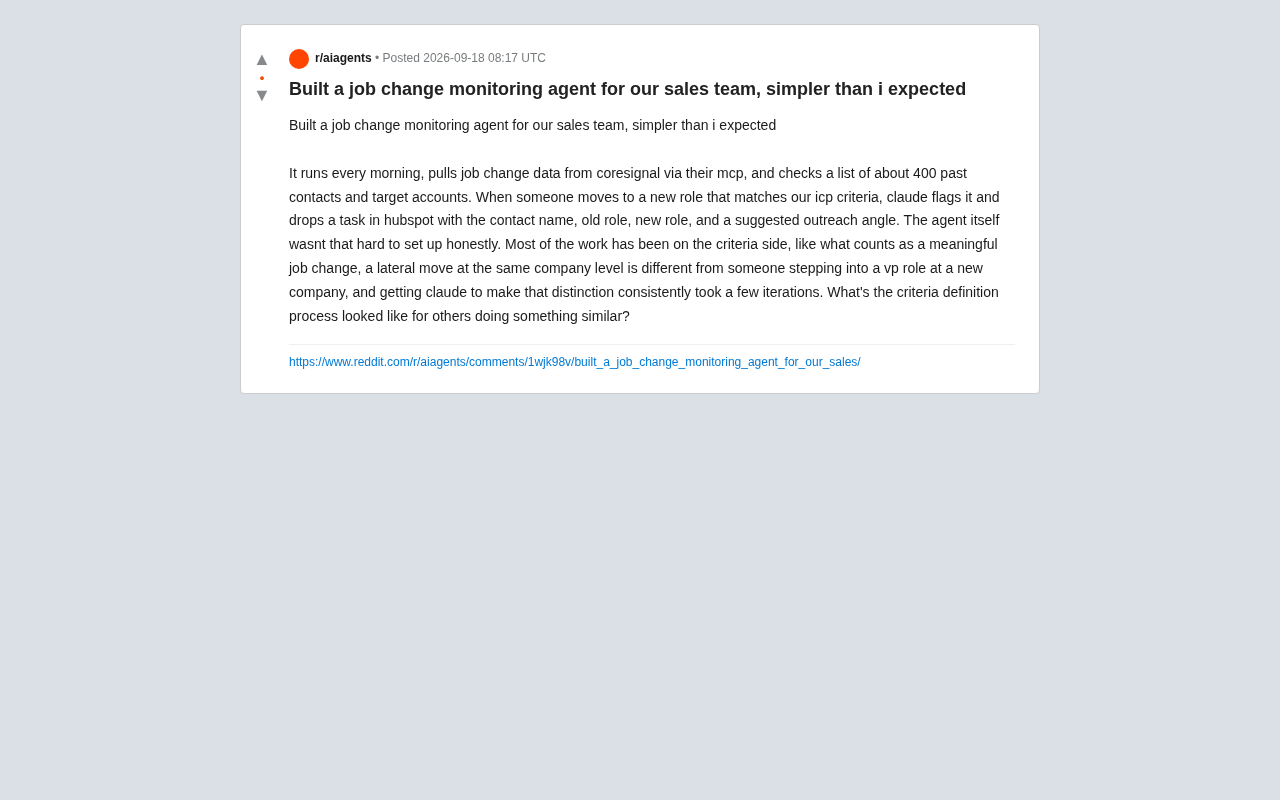
Using an AI Agent to Monitor Customer Job Changes: A Sales Team Automation Case Study
A Reddit user shares how he built a job change monitoring agent using Claude, MCP, and HubSpot to track 400 contacts daily and surface high-value sales signals.