Which $10 AI Coding Plan Should You Choose? Go vs. Code Credit Breakdown

The right $10 AI coding plan depends on your most-used model's credits, not the total headline figure.
Both OpenCode's Go plan and CommonCode's Code plan cost $10/month, but Code's higher headline credit ($70 vs. $60) is misleading. Credits vary significantly by model: Mimo V2.5 and Qwen 3.7 Plus get 2× more credits on Go, while DeepSeek V4 Flash and Kimi K3 fare better on Code, and Mini Max M3 is temporarily free on Code. Estimated request-count differences also stem from differing pricing standards (e.g., cache discount rates) rather than true usage gaps. The right call is to identify your most-used model first, then compare its specific credit allocation across both plans.
Same $10 Price Tag — Why the Plan With Lower Total Credits Might Actually Be the Better Deal
After DeepSeek raised its prices, many developers started taking a second look at their AI coding subscriptions. Two popular options on the market — OpenCode's Go plan and CommonCode's Code plan — both cost $10 per month. On the surface, Code's maximum credit allowance is $70 while Go's is only $60, so your gut tells you Code is the better deal.
But it's not that simple. The maximum credit figures listed for both plans only apply to select models — it's not like that money gets deposited directly into your account. Even within the same plan, the available credits vary by model. What actually determines which plan you should buy isn't the headline number on the plan's marketing page — it's how much credit each plan allocates to the specific model you use most every day.
In other words, the decision logic needs to shift from "which plan has higher total credits" to "which plan gives me more credits for the model I actually use." That's the core premise of this entire comparison.
Where Go Wins: Mimo and Qwen Series
Let's start with the models where Go has the edge. Take Mimo V2.5 as an example: its available credit in Go is $60, while in Code it's only $30 — a full 2× difference. Qwen 3.7 Plus follows a similar pattern, with Go offering $60 and Code only $33.
These two models alone account for nearly half of Go's usage advantage. If your daily workflow relies heavily on Mimo or the Qwen series, then even though Go's total credit ceiling looks lower, you'll actually extract more value from it in practice.
This also explains the question posed at the start: "total credits" is a blunt number. What actually shapes your experience is how credits are allocated at the model level. Pick the wrong plan and the extra money you spent may never reach the models you actually need.
Where Code Wins: DeepSeek and Kimi Series
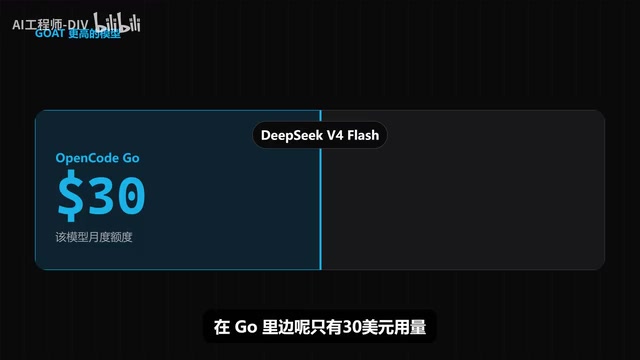
Now let's flip it. If you regularly use DeepSeek V4 Flash (referred to in the video as D6V Drive / Dsic V4 Flash), Go only gives you $30 in usage, while Code gives you $60. For the Kimi K3 model, Go offers $15 and Code offers $20 — Code edges ahead there too.
For users in these two camps, Code is the better value. There's also a time-limited perk worth noting: if you use the Mini Max M3 model, purchasing Code currently comes with a limited-time free offer running through the 5th of next month. For anyone making heavy use of M3, this window is essentially a zero-cost trial.
Request Count Differences: Don't Be Misled by Different Measurement Standards
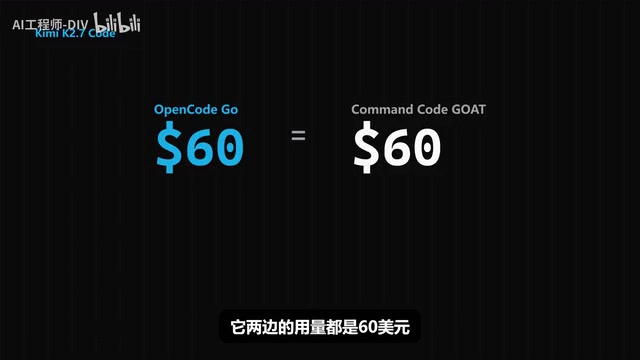
Here's a detail that's easy to get tripped up on. Both plans include the Kimi K2.7 Code model, and both list $60 in usage for it. But the estimated request counts differ: Go estimates roughly 6,750 requests/month, while Code estimates about 5,420 requests/month.
At first glance, Go appears to offer about 25% more requests — seemingly better value. But pause before drawing that conclusion. If the two platforms use different standards for input caching and input token pricing, that numerical difference only reflects inconsistent accounting methods, not proof that Go actually delivers 25% more usable capacity. Back-calculating a fixed request count from a dollar credit figure inherently introduces error — and that's one of the biggest traps to watch out for when choosing a plan.

"Input caching" (Prompt Cache) refers to a mechanism where, when you call the same model repeatedly, if the prefix portion of your request (such as system prompts or context) matches a previous call, the provider caches the already-processed tokens and only bills you for the new additions. Cached tokens are typically priced at 10%–50% of the normal rate. This means that with the same $60 credit, a platform with an aggressive caching strategy can theoretically support far more actual requests — but if the two platforms offer different cache discount rates, using "request counts" as a comparison metric will produce seriously misleading results. When credits are equal, the platform's caching pricing policy is worth more scrutiny than estimated request counts.
Baseline Credits and Time Windows: Which Plan Suits Intensive Development?
Beyond model-level credits, you should also look at how the baseline usage is structured. Go's baseline is $12 per 5-hour window, $30 per week, and a maximum of $60 per month. Code's baseline is $14 per 5-hour window and $35 per week.
If you tend to focus intensively on a single project over a short period, Code's time-window design gives you a bit more breathing room. That said, the same caveat applies: dollar credits can't be directly converted into a fixed number of requests — how far they actually go depends on the pricing model of whichever model you're calling.
"Baseline credits" and "time windows" are two independent dimensions of subscription-based AI coding plans. Baseline credits determine how much you can consume within the shortest billing cycle (such as a 5-hour window), making them relevant for sprint-style development. Monthly caps constrain your total usage over a longer period. Code's 5-hour window is $14 versus Go's $12 — not a huge gap, but if you frequently burn through a heavy session in a single evening to finish a feature module, the generosity of that 5-hour window will directly affect whether you hit rate limits or exhaust your short-term credits prematurely. Users with lower-intensity, long-term usage patterns are less affected by this and can focus primarily on monthly totals and model allocation.
Buying Decision: Match the Plan to Your Most-Used Model
To distill the entire logic into one sentence — going purely by official credits, everything hinges on whichever model you use most often:
- Primarily use Mini Max M3, Mimo, or Qwen series: Go with the Go plan — these models get higher credits there. (Note: M3 currently has a limited-time free offer on Code, so short-term opportunists may want to take advantage.)
- Primarily use DeepSeek V4 Flash or Kimi K3: Go with the Code plan — credits are doubled or meaningfully higher.
If your primary model isn't on either of these lists, the safest approach is to go directly to both providers' websites, compare the credits for your target model one by one, and then decide where your $10 is better spent. Neither plan is objectively superior — it all comes down to whether it fits your workflow.
Related articles
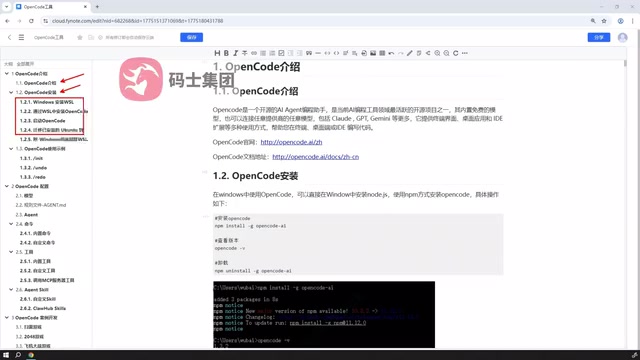
OpenCode Complete Guide: Installation, Configuration & Practical Usage
A complete guide to OpenCode, an open-source AI coding tool: desktop and WSL installation, model and rule configuration, agent types, custom commands, MCP integration, and Agent SQL reuse.
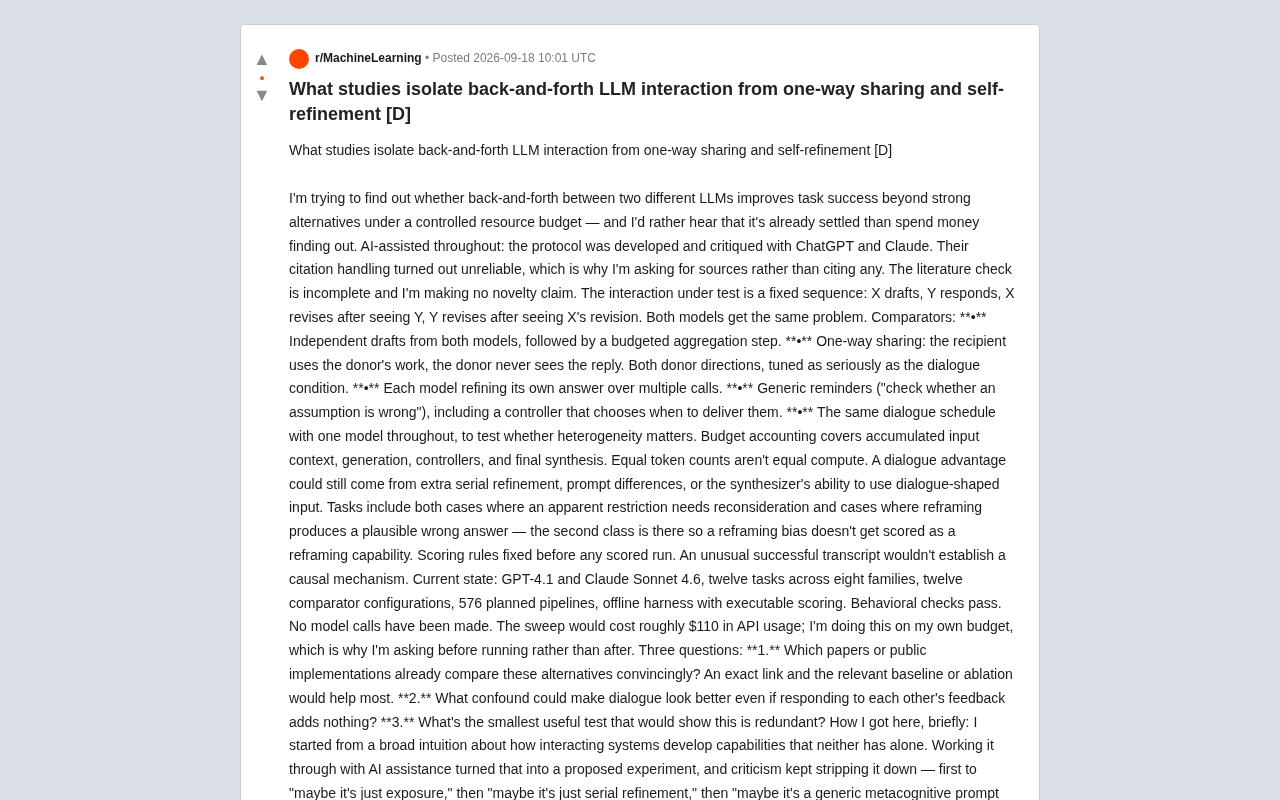
Can Multi-LLM Dialogue Really Improve Task Performance? Lessons from a Rigorous Experimental Design
A researcher designed rigorous controlled experiments to isolate whether multi-LLM back-and-forth dialogue genuinely outperforms simpler baselines like self-refinement and one-way sharing.
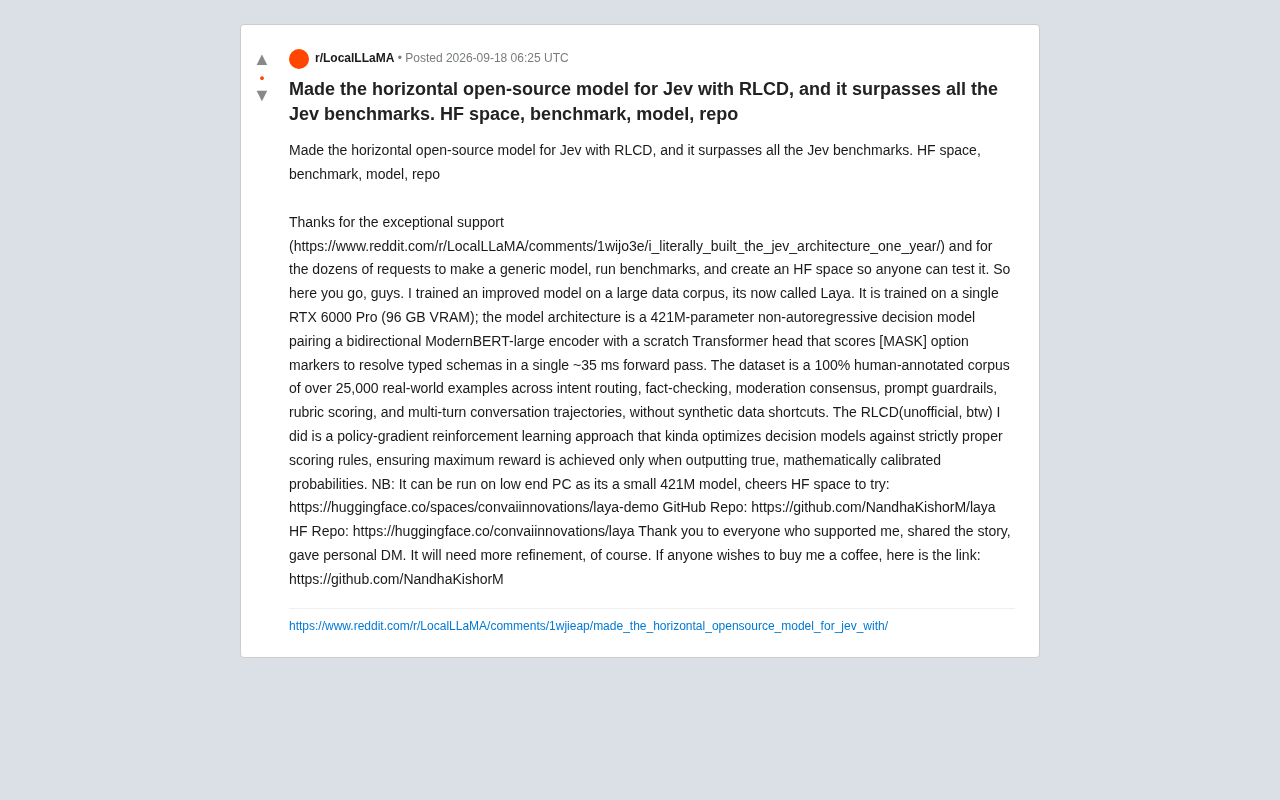
Laya Open-Source Decision Model: How 421M Parameters Beat Jev Benchmarks
Laya is an open-source 421M-parameter non-autoregressive decision model built on the Jev architecture, trained with RLCD on 25,000 human-annotated samples using a single GPU, running in ~35ms on low-end PCs.