Ozempic-Class Drugs Expand Trials: Heart Failure, Addiction, and Aging
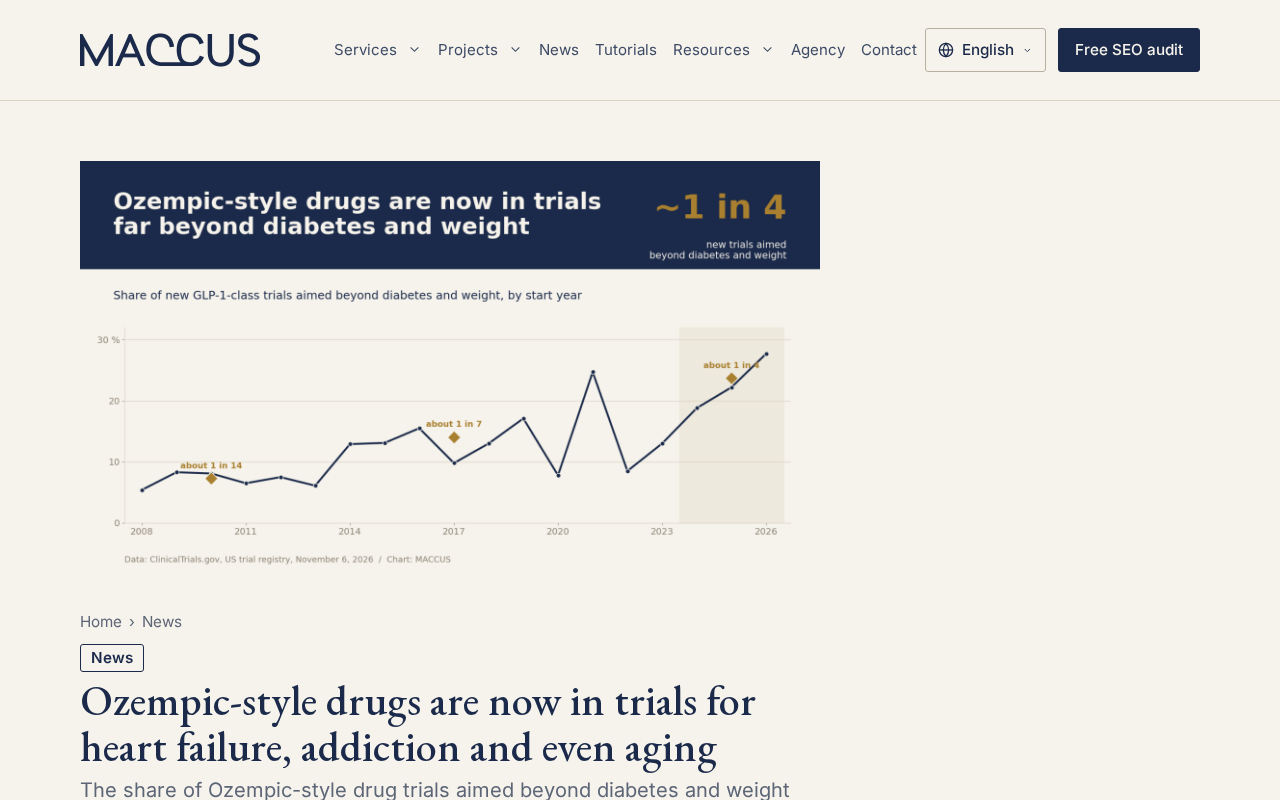
Ozempic-class GLP-1 drugs are expanding into heart failure, addiction, and aging trials—but trials do not equal efficacy.
The article discusses a Hacker News story noting that Ozempic's GLP-1 receptor agonists have moved from diabetes and weight management into clinical trials for heart failure, addiction, and aging metrics. This multi-indication expansion reflects the GLP-1 pathway's systemic effects on metabolism, inflammation, and reward circuits—a common target-extension logic. But evidence varies: heart failure has support from mature cardiovascular outcome studies, while addiction and aging remain early-stage hypotheses and surrogate endpoints. The article stresses distinguishing "entering trials" from "proven effective" and flags new challenges for R&D resource allocation, regulation, and payment systems.
GLP-1 receptor agonists started out as diabetes treatments and are now being pushed into far broader applications. According to a story generating discussion on Hacker News, drugs like Ozempic have entered clinical trials targeting heart failure, addictive behaviors, and even aging-related metrics. This development suggests that the narrative around these drugs—previously centered on blood sugar control and weight management—may be undergoing a rewrite.
From Metabolic Drug to Multi-Indication Exploration
Ozempic (semaglutide) belongs to the GLP-1 drug class, which initially focused on improving blood sugar and later gained widespread attention in weight management. The current trial landscape shows researchers attempting to validate the potential effects of these drugs at the cardiovascular, neurological, and behavioral levels.
This expansion is not an isolated event. It reflects a common drug development pathway: when a target demonstrates systemic effects within metabolic pathways, researchers extend into adjacent areas along biological mechanisms. Heart failure, addiction, and aging may seem far apart, but all may relate to fundamental processes such as metabolic inflammation, reward circuits, or cellular stress.
Heart Failure: An Extension of Cardiovascular Benefits
The inclusion of heart failure in trials indicates that researchers are looking beyond blood sugar metrics. The indirect effects of GLP-1 drugs on weight, blood pressure, and inflammation may produce cascading effects on cardiac function. However, being in the trial stage means conclusions are not yet established—current information only indicates that this direction is being systematically tested.
The rationale for heart failure trials partly comes from existing large cardiovascular outcome studies. For example, the SELECT trial evaluated semaglutide in people with overweight or obesity and established cardiovascular disease but without diabetes, showing a reduction in major adverse cardiovascular event risk; studies such as STEP-HFpEF targeted heart failure with preserved ejection fraction combined with obesity, using symptoms, function, and weight as endpoints. It should be noted that these studies mostly focus on obesity-related heart failure phenotypes, and their benefits may be partly mediated through weight loss and anti-inflammatory effects rather than direct drug action on the myocardium. This is a different proposition from "GLP-1 can directly treat heart failure," and the distinction should be made when interpreting results.
Addiction and Aging: Earlier-Stage Hypotheses
The hypothesis behind addiction-related trials may point to the drug's modulation of the reward system and impulse control; exploration in the aging direction remains more at the level of mechanistic speculation. Compared with heart failure, the clinical evidence base for these two indication categories is thinner, and they are further from practical application. Grouping them together in the same news item makes it easy to overestimate certainty—precisely what warrants caution when interpreting.
GLP-1 (glucagon-like peptide-1) is an incretin secreted by intestinal L cells, released after eating, which promotes insulin secretion by activating GLP-1 receptors, suppresses glucagon release, slows gastric emptying, and acts on the central nervous system to produce satiety. Natural GLP-1 has a half-life of only 1–2 minutes and is rapidly degraded by the DPP-4 enzyme, so drug development requires molecular modification. Semaglutide binds to albumin via a fatty acid side chain and makes amino acid substitutions at key sites, extending the half-life to about one week and enabling once-weekly dosing. Understanding this pharmacological basis helps grasp why the same molecule can generate testable hypotheses for effects in cardiovascular and neurological systems beyond metabolism.
GLP-1 receptors are not only present in the pancreas but also expressed in brain regions involved in reward and motivation, such as the hypothalamus, ventral tegmental area, and nucleus accumbens, providing biological clues for addiction research. Early observational data and animal experiments suggest that users may reduce alcohol and nicotine intake, but randomized controlled trials are still small and conclusions inconsistent. The aging direction often borrows the term "aging-related metrics," which may involve alternative endpoints such as inflammatory markers, kidney function, or neurodegenerative biomarkers, rather than directly measuring lifespan or rate of aging. Improvement in surrogate endpoints does not automatically equal clinical benefit—this is a key limitation in interpreting evidence in this field.
Why This News Matters
Judging by the discussion heat on Hacker News (26 points, 1 comment), community reaction is relatively restrained, but the topic itself is indicative: a class of drugs already in large-scale use is being re-examined for its boundaries of action.
For the industry, multi-indication expansion will bring chain reactions on two fronts. First, reallocation of R&D resources—pharmaceutical companies may increase investment in the GLP-1 pathway; second, new problems for regulatory and payment systems—when the same molecule is used for vastly different disease areas, requirements for indication definition and long-term safety data will change accordingly.
For general readers, it is necessary to distinguish "entering trials" from "proven effective." Trials are the starting point of validation, not the conclusion. Among the three directions of heart failure, addiction, and aging, confirmation of any one would be enough to change clinical practice, but current information only supports the judgment that they are "being explored."
A Rational View of the Multi-Indication Boom
The indication expansion of GLP-1 drugs is the result of both drug development logic and commercial drivers. It demonstrates the extensibility of target research while reminding us that an increase in the number of trials does not equal a simultaneous rise in the probability of success. What is truly worth tracking is the specific endpoint design and results disclosure of each trial, not the length of the indication list.
Before evidence accumulation is complete, viewing Ozempic-class drugs as "panaceas" is a misreading. A more accurate statement is: they are being treated as a multi-purpose research platform, and the value of the platform will ultimately be cashed out by data.
One-line Summary
Ozempic-class GLP-1 drugs are expanding into heart failure, addiction, and aging trials—but trials do not equal efficacy.
Paragraph Summary
The article centers on a Hacker News story, noting that Ozempic's GLP-1 receptor agonists have extended from diabetes and weight management into clinical trials for heart failure, addictive behaviors, and aging-related metrics. The author analyzes that this multi-indication expansion stems from the GLP-1 pathway's systemic effects on metabolism, inflammation, and reward systems, representing a common target-extension development logic. However, the evidence base differs markedly across the three directions: heart failure has support from relatively mature cardiovascular outcome studies, while addiction and aging remain at the level of early hypotheses and surrogate endpoints. The article emphasizes the need to distinguish "entering trials" from "proven effective" and notes that indication expansion will bring new issues in R&D resource reallocation, regulatory definition, and payment systems.
Related articles
 Tech Frontiers
Stylome Bot Slammed as Useless Junk: Why Do AI Detection Tools Keep Failing?
Reddit users test the Stylome AI detection bot: Gemini-rewritten text judged human-written, consistently low confidence. An analysis of AI text detection's technical dilemmas, privacy concerns, and credibility crisis in community governance.
 Tech Frontiers
When AI Becomes a Productivity Divide: Clarity or "AI Psychosis"?
A civil engineer's deep use of agentic AI boosted efficiency but bred contempt for peers who refuse to learn. Is this clarity or AI psychosis? An analysis of the cognitive and psychological challenges behind the AI productivity divide.
 Tech Frontiers
Opus 5.5 Benchmark Scores Climb, Community Says Its "Weights Are Blessed"
Reddit community discusses Opus 5.5's rising scores on the Benchmaxxing Bench, with users describing its performance as "weights are blessed." This article interprets the community reaction and cautions against conflating benchmark scores with real capability.