Pandex: Connecting AI Agents to Official European Law via MCP
Pandex exposes official European law to AI agents via MCP, making compliance citations traceable.
Pandex is a project discussed on Hacker News that exposes official European law as an external resource to AI agents via MCP, rather than embedding legal knowledge into model weights. This approach lets agents retrieve and cite specific provisions when needed, with traceable conclusions. The article analyzes its practical advantages and points out challenges: structuring legal texts, jurisdiction and version distinctions, and liability boundaries.
When AI Agents Need to 'Know the Law': Pandex's MCP Approach
AI Agents are moving from demos into production environments, but a key question remains unresolved: when an agent makes decisions, generates content, or executes transactions, how does it ensure its behavior complies with local laws and regulations? The Pandex project, which sparked discussion on Hacker News, attempts to answer this question in a fairly direct way—exposing official European law to AI agents via MCP (Model Context Protocol).
The project's title itself makes its positioning clear: Official European Law for AI Agents, over MCP. It is not training a "law-savvy model" but rather building a callable channel between agents and legal texts.
Why MCP Is Well-Suited to Carrying Legal Knowledge
MCP is a model context protocol that has been widely discussed in recent years, with the core idea of enabling AI applications to connect to external data sources and tools in a standardized way. Compared to stuffing legal provisions into prompts or fine-tuning them into model weights, the MCP path has several practical advantages.
Legal texts are characterized by large volume, frequent updates, and complex citation relationships. Embedding an entire body of regulations into a model makes it difficult to ensure timeliness and even harder to trace the source of a particular conclusion. By mounting official law as an external resource via MCP, agents can retrieve and cite it when needed, and conclusions can point to specific provisions—this is closer to how legal work itself operates.
Pandex's choice of "official law" as its entry point also means it emphasizes the authority of sources. For scenarios requiring compliance judgments, traceable sources are often more important than a model "answering from memory."
Model Context Protocol (MCP) is a protocol standard proposed and open-sourced by Anthropic in late 2024, aimed at unifying how large language model applications connect to external data sources and tools. It uses a client-server architecture: MCP servers encapsulate a certain type of resource (such as file systems, databases, APIs), and MCP clients (i.e., AI applications) discover and invoke these resources through standardized JSON-RPC interfaces. Compared to traditional Function Calling, MCP's key difference lies in protocol-level standardization and reusability—the same MCP server can be reused by different models and different host applications without the need for separate adaptation for each model. This transforms "connecting a certain type of professional data source to agents" from one-off engineering into distributable infrastructure, which is also the prerequisite for projects like Pandex to exist as independent services.
The Real Compliance Gap for AI Agents
Currently, most AI agents' compliance strategies remain at the level of post-hoc filtering or prompt constraints. Developers write "do not provide legal advice" in system prompts or add a layer of review at the output end. The problem with such approaches is that they constrain expression, not the basis for decision-making.
If an agent needs to handle contract summaries, cross-border data flow judgments, or consumer rights-related processes, what it needs is not "say less about legal topics" but "cite the correct law when law should be cited." The approach Pandex represents is to turn law into a tool that agents can proactively invoke, rather than a forbidden zone to be avoided.
Judging from the discussion activity on Hacker News (the project received 5 points and 1 comment), this direction has attracted attention, but community feedback is still at an early stage. The limited discussion also indicates that infrastructure-type projects like this have yet to form broad consensus.
Retrieval-Augmented Generation (RAG) is another approach often compared with the MCP path. RAG enables models to answer based on external knowledge by retrieving relevant document fragments and injecting them into context before generation. MCP and RAG are not mutually exclusive: MCP provides the protocol layer for "how to connect to data sources," while retrieval strategies, chunking methods, re-ranking, and other aspects are implementation details on top of it. The value of approaches like Pandex lies in standardizing access to the data source of "legal texts," enabling agents to retrieve multiple times on demand and precisely cite provision numbers across multi-turn interactions, rather than having to stuff large blocks of text in before a single generation. This is particularly important for domains like law, where citation relationships are dense and provisions need to be verified one by one.
Several Issues That Warrant a Calm Look
Exposing official law to agents via MCP sounds like a natural progression, but there are several hurdles to overcome in implementation.
First is the degree of structuring of legal texts. Official legal publication formats may not be suitable for direct machine consumption; citations between provisions, amendment relationships, and scope of application all require additional processing. How Pandex handles this layer of structuring work determines its actual usability.
Second is the issue of jurisdiction and versions. The European legal system includes both the EU level and the member state level, and the same topic may have different regulations in different jurisdictions. How agents determine which version and which jurisdiction applies when invoking is a question that product design must answer.
Third is the boundary of liability. When an agent gives advice based on provisions returned by Pandex and consequences result, how liability is divided currently has no ready answer. Such issues cannot be solved by technical solutions alone, but the design of technical solutions will influence the direction of subsequent liability discussions.
Structuring legal texts goes far beyond format conversion. Regulations typically contain hierarchical structures of articles, paragraphs, items, and sub-items, as well as cross-references and exception clauses such as "in accordance with Article X" and "unless otherwise provided in this Law." To enable reliable machine consumption, it is necessary to establish an identifier system at the provision level, parse the citation graph, and handle version drift caused by amendments. Although official EU legal texts are provided in formats such as XML/HTML (e.g., EUR-Lex), cross-language version consistency and the correspondence of member states' transposition legislation still require additional mapping. This workload is often underestimated, yet it directly determines whether retrieval results can be correctly cited by agents.
What Such Projects Mean for Developers
Even if Pandex itself is still in its early stages, the model it represents is worth the attention of AI application developers: connecting authoritative data sources in professional domains to agents via MCP is becoming a reusable architectural choice. Law is just one vertical domain; medical guidelines, industry standards, and internal compliance manuals can all follow the same path.
For teams building AI products for the European market, the emergence of such tools means that the way compliance capabilities are implemented may shift from "maintaining your own legal knowledge base" to "calling external authoritative legal interfaces." This lowers the initial barrier but also transfers dependency to external services.
Whether Pandex can become stable infrastructure remains to be seen, but the question it raises—how AI agents can "know the law" in a traceable way—is unavoidable in this round of agent deployment.
Jurisdiction identification is one of the technical difficulties in cross-border AI product compliance. The EU legal system distinguishes between "Regulations that apply directly" and "Directives that require member states to transpose into domestic law," and the same topic may have different texts coexisting at the EU level and the member state level. When handling specific requests, agents need to determine the applicable law based on factors such as the user's location, the place of business, and the country of the data subject; this judgment itself involves legal reasoning and is difficult to fully automate. Therefore, such tools typically need to treat "the choice of applicable law" as an explicit parameter or independent step handed to the caller, rather than defaulting to a certain version; otherwise, citations that appear authoritative but are inapplicable may result.
One-line Summary
Pandex exposes official European law to AI agents via MCP, making compliance citations traceable.
Paragraph Summary
Pandex is a project that sparked discussion on Hacker News; it exposes official European law as an external resource to AI agents via MCP (Model Context Protocol), rather than embedding legal knowledge into model weights. Compared to prompt constraints or post-hoc filtering, this path allows agents to retrieve and cite specific provisions when needed, with traceable conclusions, closer to the actual way legal work operates. The article analyzes the practical advantages of this approach and also points out implementation challenges: structuring legal texts, distinguishing jurisdiction and versions at the EU and member state levels, and the liability boundary after agents give advice based on provisions. The author believes that even though Pandex is still in its early stages, the "authoritative data source + MCP" model can be reused in vertical domains such as medical guidelines and industry standards, and is an unavoidable direction for agent deployment.
Related articles

OpenAI Releases GPT-6.2 Astra and Sol: Long Context and the Dual-Model Strategy Explained
OpenAI releases GPT-6.2 Astra and Sol, both with a 1.05M token context, and cuts Astra's API price by 20%. Community tests reveal the dual-model positioning, knowledge freshness, and real-world uncertainty expression.
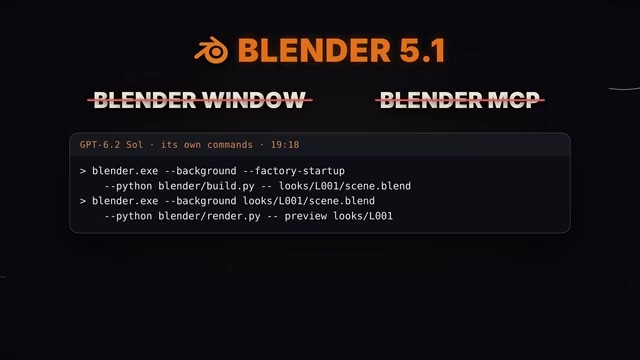
GPT-6.2 Astra vs Sol Hands-On: Blender Clockwork, Neon Cube, and Godot Racing Compared
Bilibili creator tests GPT-6.2 Astra vs Sol on a Blender clock workshop, Neon Cube, and a Godot racing game: Astra executes but costs more, Sol is cheap but lazy, and the racing game drops to two FPS.

Bot-sitting: The New Work Trap of the AI Era?
The bot-sitting phenomenon reveals the verification burden behind AI-generated content: 60% of workers say getting quality results from AI takes as much effort as training a new hire. This article analyzes the AI efficiency illusion, the transformation of work, and response strategies.