Pangram: An AI Content Detection Tool for Text and Images

Pangram is a multimodal AI content detector covering both text and images, though real-world performance needs more validation.
Pangram is an AI-generated content detection tool covering both text and image scenarios. Text detection uses statistical signals like perplexity and burstiness to distinguish human from machine writing, with applications in academic integrity, content platforms, and recruitment. Image detection identifies synthetic outputs from models like Midjourney and Stable Diffusion using pixel artifacts, frequency-domain features, and model fingerprints. The space already includes competitors like GPTZero and Turnitin, and the core challenge remains balancing accuracy against false positives — paraphrasing and new-generation models continue to pressure detection reliability. Pangram's public technical details and third-party benchmarks are still limited; treat it as one tool among many rather than a definitive source of truth.
What Is Pangram
Pangram is an AI content detection tool designed to identify both text and image content generated by AI. As generative AI becomes increasingly mainstream, large volumes of text and images are being produced by large language models and image generation models. Distinguishing between human-created and AI-generated content has become a real pain point in fields like education, publishing, recruitment, and content moderation. Pangram is a detection service built specifically to address this need.
The name "Pangram" — referring to a sentence that contains every letter of the alphabet — hints at the product's focus on linguistic structure and content characteristics. Unlike many tools on the market that only support text detection, Pangram covers image detection as well, aiming to provide a more comprehensive AI content identification solution.
The Core Problems AI Detection Tools Solve
Text Detection
AI text detectors typically work by analyzing statistical features and using classifier models. AI-generated text tends to differ measurably from human writing in terms of vocabulary distribution, sentence structure patterns, perplexity, and burstiness. Detection models are trained to learn the boundary between these two categories of text.
Typical use cases include:
- Academic integrity: Determining whether student assignments or papers were written by tools like ChatGPT
- Content platforms: Identifying low-quality, bulk-generated AI spam content optimized for SEO
- Recruitment screening: Detecting AI-ghostwritten sections in job application materials
Perplexity measures how "surprised" a language model is by a piece of text — the easier it is for the model to predict the next word, the lower the perplexity. AI-generated text tends to favor high-probability word choices, resulting in consistently low perplexity. Human writing, shaped by personal expression and emotional variation, introduces more "unexpected" word choices, leading to higher and more variable perplexity overall. Burstiness describes the variation in sentence length and complexity: human writing typically alternates between long and short sentences with an uneven rhythm, while AI-generated text tends to be more uniform in sentence structure, yielding lower burstiness scores. Detectors are trained on these two signals — along with vocabulary distribution, semantic coherence, and other features — to classify whether a piece of text was more likely written by a human or a machine.
Image Detection
Image detection targets synthetic images produced by models like Midjourney, Stable Diffusion, and DALL·E. Detection methods may involve pixel-level artifact analysis, frequency-domain feature analysis, and model "fingerprint" identification. As the risks of deepfakes and synthetic image proliferation grow, the need to verify image provenance has become equally urgent.
Frequency-domain analysis is one of the key techniques in image detection. Generative models leave distinctive grid-like artifacts in the Fourier frequency spectrum of an image during operations like upsampling and deconvolution. These "frequency fingerprints" are nearly invisible to the naked eye at the pixel level but can be detected through frequency-domain transforms such as FFT. Additionally, GANs and diffusion models each have distinct generation mechanisms that produce specific statistical patterns in areas like facial edges, hair texture, and background blur — patterns that classification models can learn as "model fingerprints." Deepfakes specifically refer to technology that replaces or synthesizes real human faces in videos or images, and their social harms are particularly severe — including disinformation, identity fraud, and non-consensual explicit content. This is a primary driver behind the rapid growth in demand for image provenance verification.
Industry Context Worth Noting
The AI detection space has become fiercely competitive in recent years, with established players like GPTZero, Originality.ai, and Turnitin already in the mix. The central challenge in this field is balancing accuracy against false positives: a detector must identify AI-generated content as effectively as possible while avoiding misclassifying genuine human-written content as machine-generated — a mistake that can have serious consequences in academic and professional contexts.
Most research and real-world experience suggests that no current AI text detection tool is highly reliable, particularly when text has been paraphrased, translated, or manually edited — detection accuracy drops noticeably under these conditions. Image detection faces a similar "arms race" problem driven by the rapid iteration of generative models, as newer generation models often evade detectors trained on their predecessors.
By covering both text and image detection, Pangram's ability to establish a meaningful accuracy advantage will be the key to carving out a position in this crowded market.
What to Keep in Mind When Using These Tools
For users considering adopting AI detection tools, here are a few practical recommendations:
- Don't treat detection results as definitive proof: All detectors produce both false positives and false negatives — results should serve as a reference, not a final verdict
- Pay attention to false positive rates: Especially in high-stakes settings like education, the cost of a false positive far outweighs the cost of a missed detection
- Understand the tool's limitations: Detection reliability is generally lower for heavily paraphrased content, non-English text, and short-form text
Summary
Pangram represents one direction in the evolution of AI detection tools toward multimodal coverage, and its product design — spanning both text and image detection — has practical value. That said, the tool has generated limited discussion on Hacker News so far (7 upvotes, 0 comments), and publicly available technical details and third-party evaluation data remain scarce. Its real-world detection performance still awaits broader user validation. For teams with content verification needs, Pangram is worth adding to the candidate evaluation list — but it's advisable to combine it with multiple approaches and avoid treating any single detection result as conclusive.
Related articles
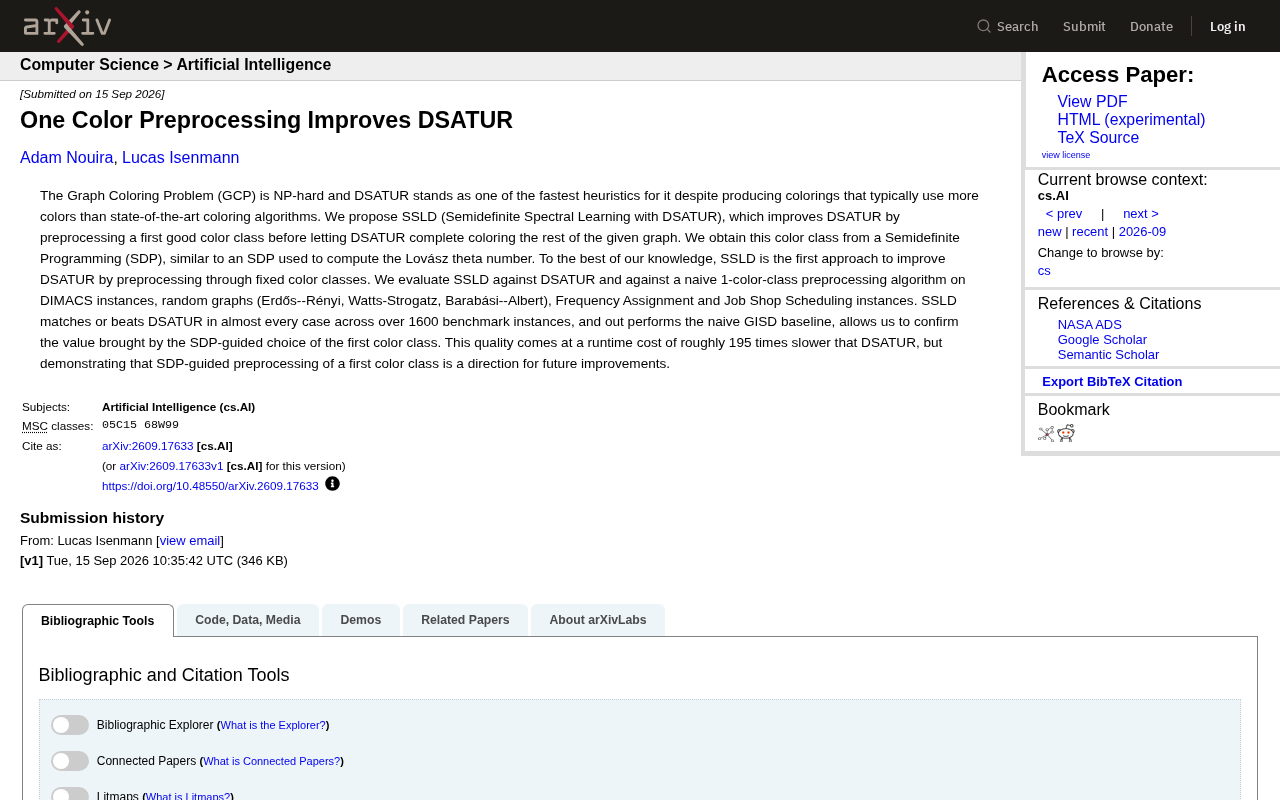
SSLD: Improving the DSATUR Graph Coloring Heuristic via Semidefinite Programming Preprocessing of a Single Color Class
A new arXiv paper proposes SSLD, which improves classic DSATUR graph coloring by preprocessing the first color class via SDP. Tested on 1,600+ benchmarks, SSLD matches or beats DSATUR at ~195× runtime cost.
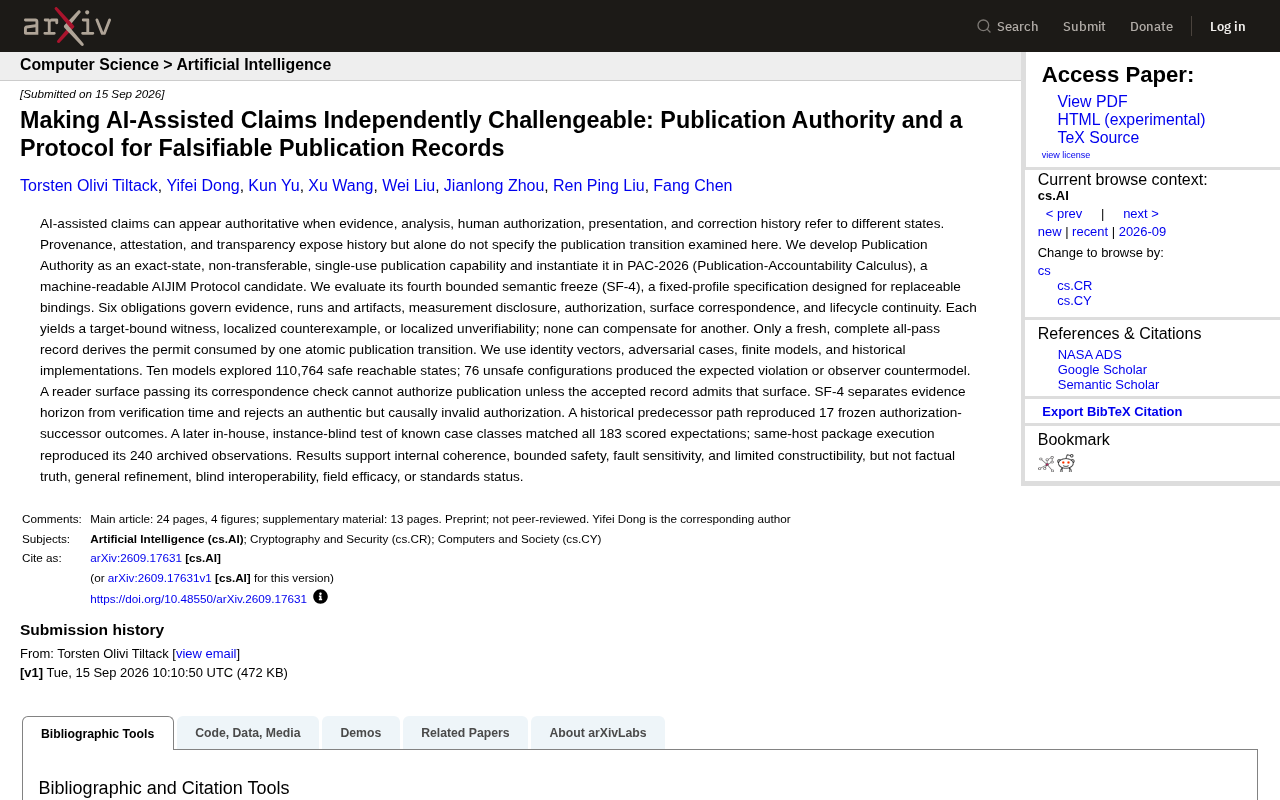
Making AI-Assisted Conclusions Independently Challengeable: An Analysis of the PAC-2026 Falsifiable Publication Protocol
PAC-2026 introduces Publication Authority and six non-compensable obligations to make AI-assisted publication acts falsifiable and independently challengeable, validated across 110,764 states.

vLLM Releases proto-v0.3.0: Another Iteration of the High-Performance Inference Framework
vLLM releases proto-v0.3.0, independently versioning its protocol submodule with SSH signature verification — strengthening distributed inference infrastructure and supply chain security.