Peacock Black Friday Subscription Discounts: The Pricing Strategy Behind Streaming Promotions
Peacock's Black Friday low introductory pricing reflects the streaming pricing battle to win users with ad-supported plans.
The article breaks down Peacock's Black Friday subscription discounts: the ad-supported Select plan normally costs $8.99/month or $89.99/year, with a promo price of $2.99 for the first three months or $29.99 for the first year, and the ad-supported Premium plan has similar discounts. This "low initial price, full price later" approach is a common acquisition tactic in streaming, essentially competing for users as price wars among Netflix, Disney+, and Max become the norm. Peacock concentrates discounts on ad-supported plans, reflecting its dual-revenue "ads + subscription" strategy. But success depends on retention—if users cancel after the promo, the platform may lose out. For consumers, it's a low-cost trial opportunity, but they should note the promo applies only to the initial period and check cancellation terms; for the industry, frequent promotions may erode acceptance of full prices and pressure brand pricing power long term.
Streaming platform Peacock rolled out steep subscription discounts during Black Friday, prompting the industry to re-examine streaming pricing strategies.
What the Discounts Include
According to the promotional information, Peacock offers two discount options. The ad-supported Select plan normally costs $8.99 per month or $89.99 per year, but is available at a promotional price of $2.99 for the first three months or $29.99 for the first year. The ad-supported Premium plan (which includes live sports, movies, and more) also has corresponding discounts.
This "low introductory price + return to full price later" model is a common customer acquisition tactic in the streaming industry. Platforms give up short-term revenue in exchange for user base growth, then recoup through long-term subscriptions.
The Peacock plan structure: Peacock's tiered subscription structure differentiates plans by whether ads are included, content access, and add-on features. The ad-supported Select is the entry tier with a relatively limited content library; the ad-supported Premium adds live sports (such as the Premier League and WWE) and streaming-window content for select theatrical films on top of the library; above that is ad-free Premium Plus, which allows offline downloads and reduces ad interruptions. Understanding this tiering helps explain why promotions concentrate on the ad-supported tiers: the low-priced tiers lower the barrier to trying the service without diluting the price anchor of the higher-value tiers.
The Promotional Logic of the Streaming Industry
Black Friday promotions are essentially a strategy for streaming platforms to compete for users in a fiercely competitive market. With Netflix, Disney+, Max, and other platforms all rolling out discounts, price wars have become the norm.
Peacock's choice to focus on ad-supported plans reflects the strategic emphasis of its "advertising + subscription" dual-revenue model. Ad-supported plans have lower marginal costs, and after attracting users through discounts, the platform can offset subscription concessions with advertising revenue.
The effectiveness of this strategy depends on user retention. If users cancel their subscriptions after the discount period ends, the platform may actually lose money. Therefore, balancing promotional intensity against user quality is key to platform operations.
ARPU and ad fill rate: ARPU (average revenue per user) is the core metric for measuring a streaming service's monetization capability per user, and the ARPU of an ad-supported plan consists of two parts: subscription fees and advertising revenue. Platforms are willing to make concessions on the subscription side on the premise that new users bring sufficient ad impressions—that is, that the ad fill rate (the proportion of ad inventory actually sold) and CPM (cost per thousand impressions) remain at acceptable levels. If users' viewing time is low or ad inventory goes unsold, low-price customer acquisition can actually drag down overall ARPU, which is why promotional intensity needs to match user quality.
User retention and churn: Streaming subscriptions are typically month-to-month cancellable contracts, and churn directly determines whether customer acquisition spending can be recovered. The industry usually measures promotional health by the ratio of LTV (lifetime value) to CAC (customer acquisition cost): the discount period lowers initial revenue, and only when users stay long enough that their cumulative contribution exceeds the subsidy cost plus acquisition spending is the promotion truly worthwhile. This also explains why platforms often tie discounts to annual payment—annual payment locks users in for 12 months at once, significantly reducing the risk of churn right when the discount period ends.
The Real Impact on Consumers
For consumers, Black Friday discounts are a low-cost opportunity to try a new platform. But note: promotional prices usually apply only to the initial period, after which the full price resumes; the deadlines and conditions for canceling a subscription should also be understood in advance.
From an industry perspective, frequent promotions by streaming platforms may erode users' willingness to accept full-price subscriptions, potentially pressuring brand pricing power over the long term.
Related articles
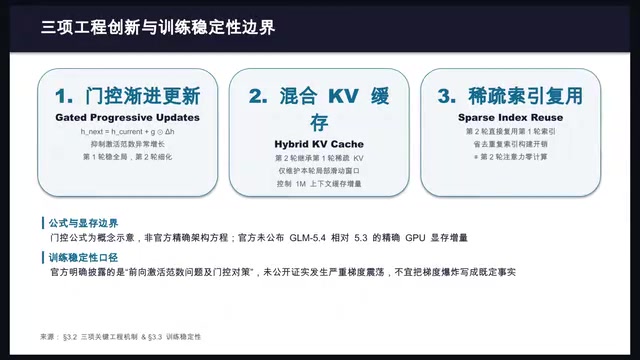
GLM-5.4 Loop Transformer Deep Dive: Architecture and Cost-Effectiveness
An in-depth analysis of GLM-5.4's Loop Transformer architecture: shared-weight looping, 30B ablation data, multi-model API cost simulations, strong-weak collaboration strategies, and the challenges of scaling computational depth.

Zhipu GLM-5.4 Debuts Loop Transformer, Upgrading Coding and Vision
Zhipu releases GLM-5.4, debuting the Loop Transformer architecture, adding vision capabilities and stronger coding, with existing users' quota raised to 1.5x. Also covers MiniMax H3's low-VRAM runtime, the information compression perspective, and subscription ecosystem developments.
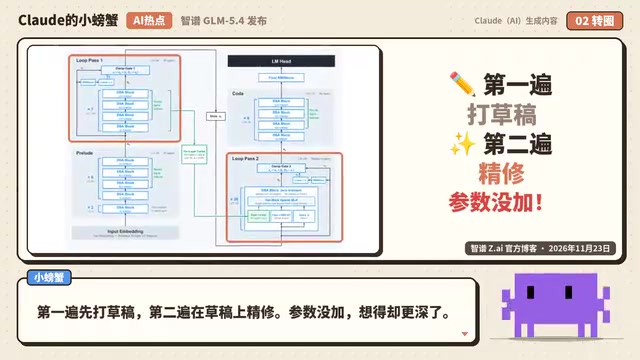
Zhipu GLM-5.4 Released: 750B Model Achieves 2-3 Trillion Parameter-Level Intelligence
Zhipu releases GLM-5.4, a 750B model achieving 2-3 trillion parameter-level intelligence via repeated layers, with a 30B experiment showing major math reasoning gains plus new vision capabilities and generalized programming applications.