Perplexity Mac App Hybrid Mode: Cloud Orchestrator + Local Subagents
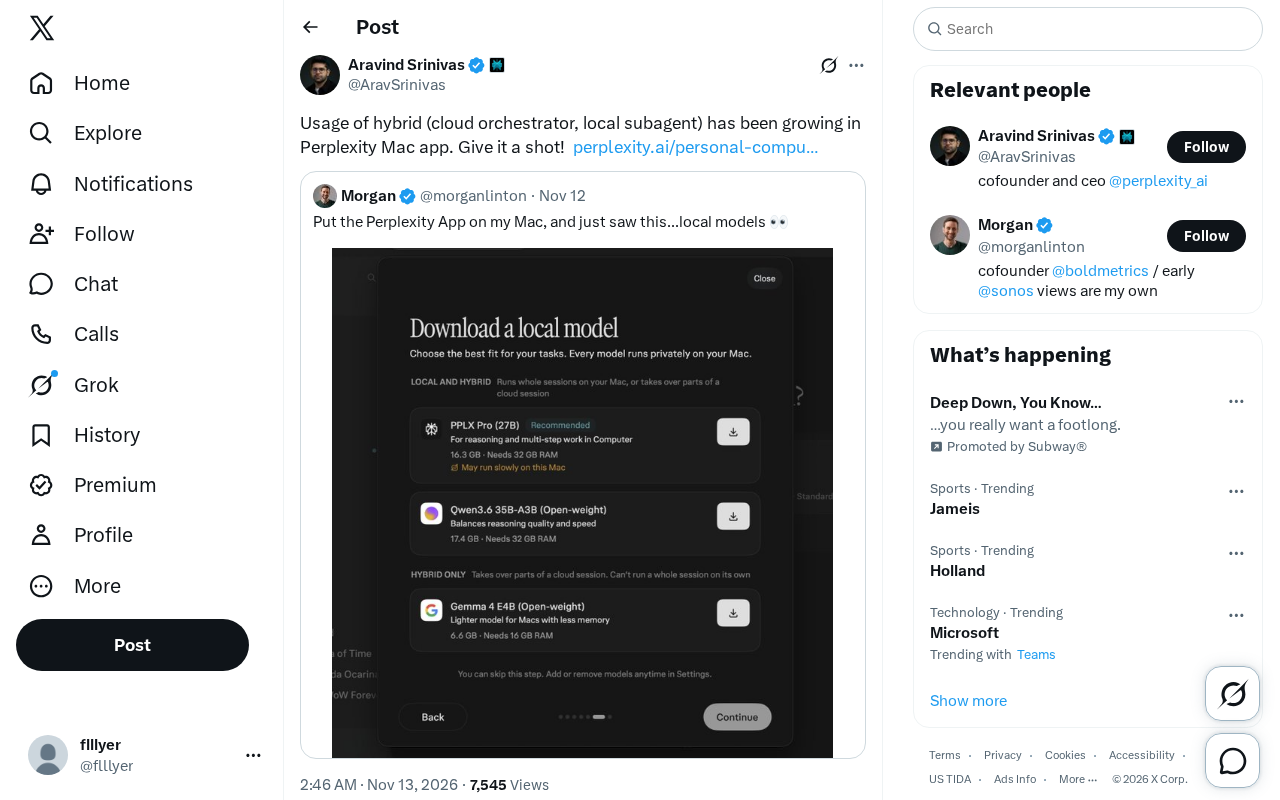
Perplexity's Mac app tests a hybrid mode combining cloud orchestration with local execution, balancing compute and privacy.
Perplexity's Mac app is testing a hybrid mode: a cloud orchestrator handles intent understanding, task decomposition, and scheduling, while local subagents execute operations on the user's device. The official tweet says usage keeps growing and encourages users to try it. This division of labor lets complex tasks use cloud compute for planning while keeping sensitive data and local-environment dependencies on the device, reducing latency and improving privacy. The article notes this reflects AI assistants' pragmatic shift from a single cloud model toward allocating compute by task nature, but the information comes only from a tweet, and the feature toggle location, supported task types, and maturity are unclear—readers should try it themselves to verify.
Perplexity's Mac app is testing a new hybrid working mode: a cloud orchestrator collaborating with local subagents. According to an official tweet, usage of this mode continues to grow, and users are encouraged to try it. This brief message from social media reveals a new direction for AI assistants in local-cloud collaboration—delegating orchestration to the cloud and pushing concrete execution down to the local device, balancing capability and privacy.

What Is Hybrid Mode?
According to the tweet, hybrid mode in the Perplexity Mac app consists of two parts: a cloud orchestrator responsible for understanding intent, decomposing tasks, and scheduling; and local subagents that execute concrete operations on the user's device. This division of labor allows complex tasks to leverage cloud compute for orchestration while keeping sensitive data or parts that require a local environment on the device.
The tweet does not disclose implementation details, but the phrase "hybrid (cloud orchestrator, local subagent)" itself sketches the architecture: the cloud is the brain, the local device is the hands.
Orchestrator is a common role in distributed systems and AI agent architectures, referring to the control-layer component responsible for global planning, task decomposition, subtask dispatch, and result aggregation. In multi-agent systems, the orchestrator typically does not directly execute concrete operations; instead, based on the goal, it decides which tools or subagents to call, in what order to execute, and how to handle failure and retries. Placing the orchestrator in the cloud has the advantage of access to larger-scale models and stronger reasoning resources, as well as centralized maintenance of scheduling logic; the cost is that the planning phase still requires communication with the cloud. In contrast, a subagent is an execution unit invoked by the orchestrator, usually given a narrower scope of responsibility (such as reading and writing files or invoking a local application); when running locally, it can directly access the device environment without uploading raw data.
Why It's Worth Watching
This hybrid architecture reflects a pragmatic shift in AI assistant products: no longer pursuing the goal of stuffing all capabilities into a single cloud model, but instead allocating compute location according to the nature of the task. The cloud orchestrator can call stronger model resources to complete planning, while local subagents can access files, applications, and context on the device, reducing data round trips.
For Mac users, local subagents mean lower latency and a better privacy boundary. The official statement says usage of this mode "keeps growing," indicating that users have already adopted this way of working in real scenarios.
Cloud-edge collaboration has been an important trend in AI application architecture in recent years. Its core idea is to layer by data sensitivity and compute requirements: inference and planning that require large-scale compute stay in the cloud, while processing involving private context such as personal files, the clipboard, and screen content stays on the device side. This model is reflected in products such as Apple Intelligence and Microsoft Copilot+ PC, usually implemented with on-device small models or restricted tool sets. Compared with pure cloud solutions, cloud-edge collaboration can reduce latency caused by network round trips and reduce the surface for sensitive data leakage, but it also introduces engineering complexity such as consistency, version management, and cross-device debugging. Perplexity's adoption of a similar division of labor on Mac is a concrete practice of this trend in a third-party AI assistant product.
How to Try It
The tweet gives direct advice: "Give it a shot!"—try hybrid mode in the Perplexity Mac app. There is currently no further information about where the feature toggle is located or what task types are supported, so interested users will need to explore within the app themselves. Considering that this is a tweet rather than a formal product announcement, feature details may still be iterating.
Editor's Observation
The value of this information lies in the direction rather than the details. Hybrid architectures combining cloud and local collaboration are becoming a consensus direction for AI assistant products, and Perplexity's attempt provides an observable sample. However, it is difficult to judge the maturity of this mode, the actual range of tasks covered, and the specific privacy protection mechanisms from a single tweet alone. For readers following the deployment of AI applications, it is worth keeping an eye on and trying it out to verify.
It should be noted that the information in this article mainly comes from a single source—Perplexity's official tweet—and lacks third-party hands-on testing or official documentation as corroboration. Readers should take this limitation into account when evaluating it.
One-line Summary
Perplexity's Mac app tests a hybrid mode of cloud orchestration plus local execution, balancing compute and privacy.
Paragraph Summary
Perplexity's Mac app is testing a hybrid working mode: a cloud orchestrator handles intent understanding, task decomposition, and scheduling, while local subagents execute concrete operations on the user's device. The official tweet says usage of this mode continues to grow and encourages users to try it. This division of labor lets complex tasks use cloud compute for planning while keeping sensitive data and parts that depend on the local environment on the device, thereby reducing latency and improving the privacy boundary. The article notes that this reflects a pragmatic shift in AI assistants from a single cloud model toward allocating compute location by task nature, but the information comes only from a tweet, and the feature toggle location, supported task types, and maturity are all unclear, so readers need to try it themselves to verify.
Related articles
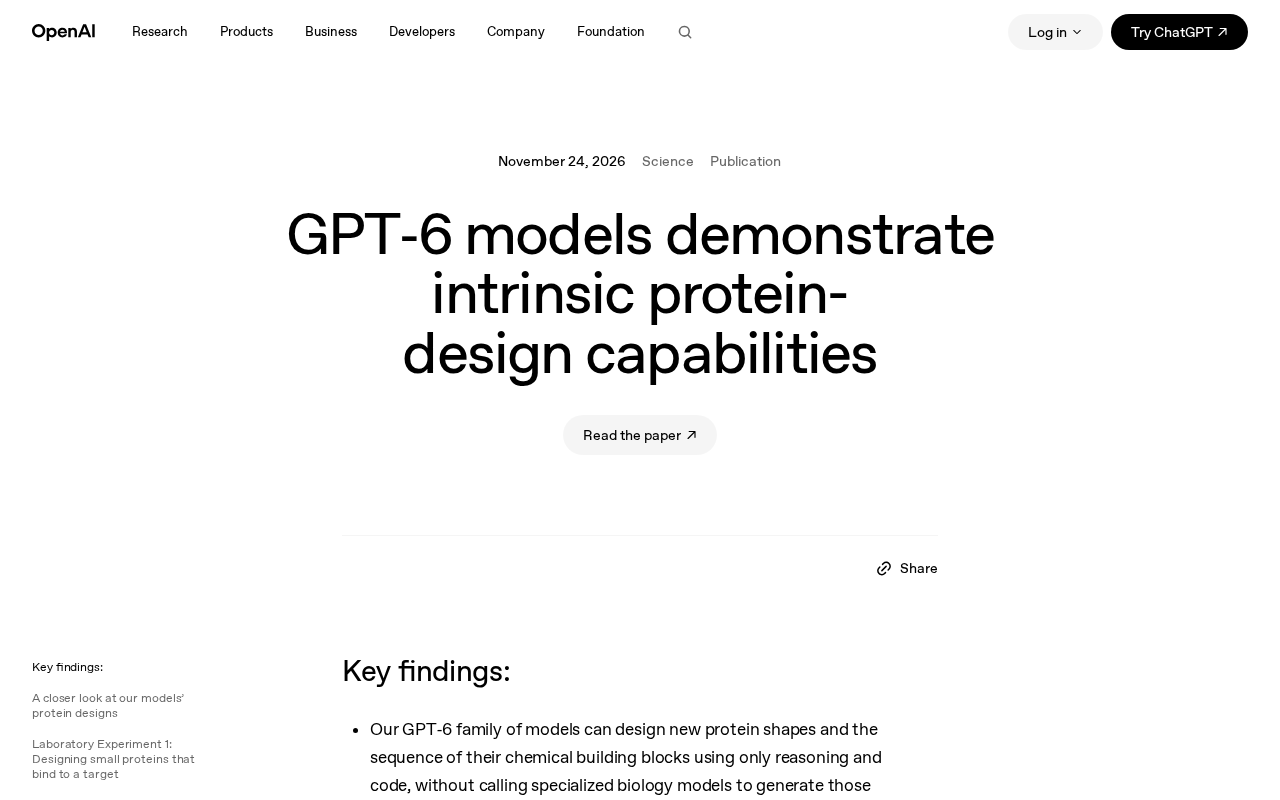
GPT-6 Shows Intrinsic Protein-Design Capabilities: A New Signal for AI for Science
Hacker News discusses GPT-6 models showing intrinsic protein-design capabilities. This article unpacks what "intrinsic" means, the challenges of protein design, the potential impact on the AI for Science toolchain, and reasons for skepticism given the lack of experimental details.

New York's Proposed Five-Year Ban on AI Toys: The Clash Over Children's Privacy and AI Regulation
New York proposes a five-year ban on AI toys, sparking debate over children's privacy and AI hardware regulation. This article examines the ban's targets, supporting and opposing views, and compliance implications for AI hardware developers.
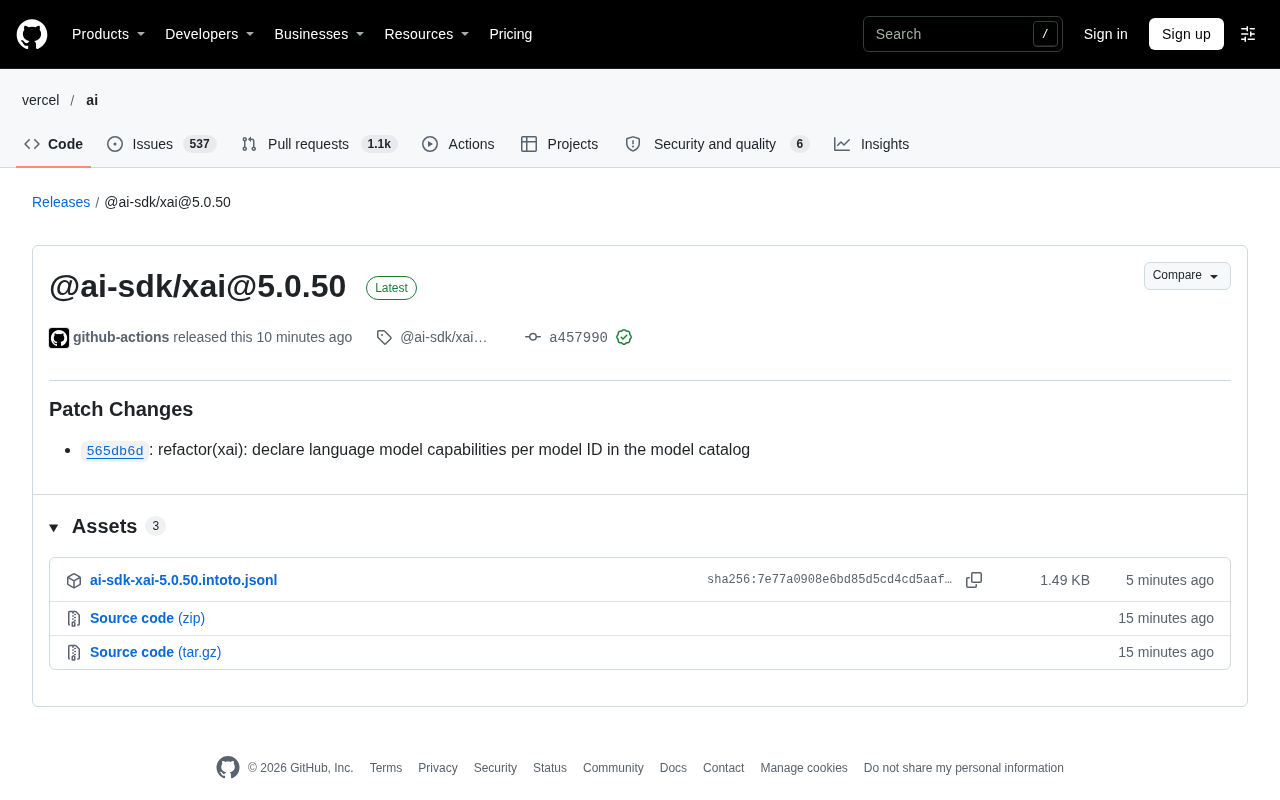
Vercel AI SDK's xAI Package Update: Declaring Capabilities per Model ID
Analysis of the @ai-sdk/xai 5.0.50 patch update: declaring language model capabilities per model ID in the model catalog, and its impact on Vercel AI SDK multi-model adaptation.