Perplexity Pro Tightens Limits, Sparking Outrage: How to Deal with Stealth Downgrades in AI Subscriptions
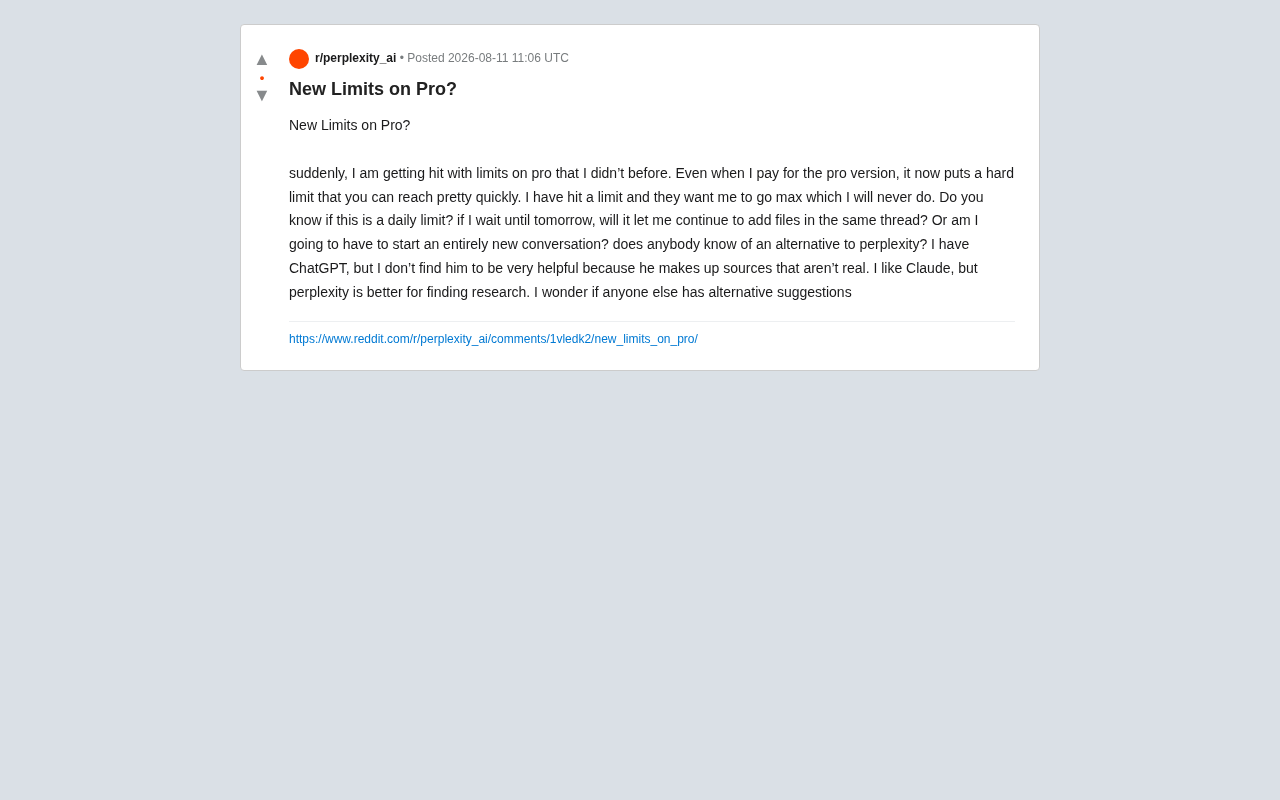
Perplexity Pro's stealth quota cuts expose the fragile trust economy of AI subscriptions.
A Perplexity Pro user's Reddit complaint about sudden usage limits and aggressive Max tier upselling has exposed a growing trend in AI subscriptions: stealth downgrades that reduce value without changing the price. This article analyzes the economics behind quota tightening, compares Perplexity with ChatGPT and Claude, explores alternative tools, and examines why AI user loyalty is more fragile than expected.
A Pro User's Frustration
Recently, a Reddit post struck a nerve with AI paying subscribers everywhere. A Perplexity Pro user complained about suddenly encountering usage limits that never existed before: "Even though I paid for the Pro version, it now has a hard cap, and you hit it very quickly."
What frustrated this user even more was that upon hitting the limit, the platform started nudging them to upgrade to the pricier Max tier — a move they explicitly said they would "never consider." Perplexity currently uses a tiered pricing model with Pro ($20/month) and Max ($200/month), reflecting a broader industry trend of evolving from single subscription tiers to multi-tier structures. This strategy borrows from established SaaS practices, and OpenAI's Plus vs. Pro and Anthropic's Pro vs. Max follow similar tiered logic. However, the differences between tiers primarily come down to model call limits, available model types, and context length. When mid-tier quotas get squeezed to push users upward, users may not upgrade — they may simply leave. This experience of "paying for a subscription yet still being restricted, then getting upsold on a more expensive plan" has become a shared pain point among many subscribers.
The user also raised several very practical questions: Is this a daily limit? If they wait until the next day, can they continue adding files to the same conversation thread? Or must they start an entirely new conversation? The ambiguity around these questions highlights a common shortcoming in how many AI products communicate their quota policies.
The "Stealth Downgrade" Phenomenon in Subscription AI
Behind this individual case lies a concerning trend in the AI subscription landscape — quietly tightening usage quotas for paying users without adjusting the price.
Why Do AI Providers Tighten Quotas?
From an industry perspective, AI service providers face enormous computational cost pressures. Inference costs for large language models are steep, especially for complex tasks involving web search, file processing, and multi-turn conversations, where the cost per request far exceeds what most people assume.
To understand this cost pressure, it helps to know how LLM "inference" works. Unlike model training, which is a one-time massive investment, inference happens with every user interaction — the model must generate output based on input, making it an ongoing operational expense. For a GPT-4-class model, a single complex query can cost anywhere from a few cents to tens of cents in compute, and costs climb further when web search, file parsing, or long context windows are involved. This means a monthly active Pro user's actual compute consumption may approach or even exceed their subscription fee — the core economic tension providers face.
When user growth and compute costs fall out of balance, tightening quotas often becomes the most direct cost-control measure. While commercially understandable, this constitutes a substantive "stealth downgrade" for users: the price stays the same, but the value shrinks. More subtly, quota tightening often coincides with the launch of higher-priced tiers, creating a "paywall escalation" strategy — needs that Pro once covered are now pushed toward Max.
Quota Transparency Is Key
Interestingly, the original poster had no idea how the limits actually worked: whether they reset daily, weekly, or were calculated per conversation thread. This lack of transparency is itself a problem. A healthy subscription relationship should be built on clear expectations — users have the right to know what they're getting before they pay. When the rules become vague and subject to change at any time, trust begins to erode.
Perplexity vs. ChatGPT and Claude
An interesting detail in this discussion was the poster's side-by-side assessment of different AI tools, which reflects the current positioning of major AI products.
The user explicitly stated that Perplexity is the best for research and retrieval. This is precisely Perplexity's core competitive advantage — it deeply integrates large language models with real-time search, delivering answers with cited sources, making it ideal for academic research, fact-checking, and similar scenarios. The technical foundation for this capability is Retrieval-Augmented Generation (RAG) architecture. RAG works by retrieving relevant information from external knowledge sources (such as the internet, databases, or academic literature) before the LLM generates its response, then feeding those retrieval results as context into the model so it can generate answers grounded in real data. This architecture effectively mitigates the tendency of purely generative models to "make things up" while providing traceable citations that allow users to verify accuracy. Perplexity has refined RAG into a polished product-level experience, which is the key reason it stands out in research scenarios.
By contrast, the user was critical of ChatGPT: "I find it not very helpful because it makes up sources that don't exist." This critique targets the classic LLM problem — hallucination. Hallucination remains one of the most challenging technical issues in the LLM field. The root cause is that large language models are fundamentally probabilistic text generation systems — they predict the next most likely token based on statistical patterns in training data, rather than retrieving facts from a structured knowledge base. When models encounter domains with insufficient training data coverage, or are asked to provide specific citations, they tend to generate content that "looks correct" but doesn't actually exist, including fabricated paper titles, DOI numbers, and even author names. Current industry strategies for addressing hallucination include RAG, Chain-of-Thought reasoning, and Reinforcement Learning from Human Feedback (RLHF), but no fundamental solution exists yet. Without reliable retrieval mechanisms to constrain the model, this fabricated-citation problem is especially devastating in research contexts.
As for Claude, the user gave a positive review, calling it "great" but noting it still falls short of Perplexity in dedicated research retrieval capabilities. This assessment paints a clear picture of the product ecosystem: different tools excel at different tasks, and it's hard for any single product to dominate all scenarios.
The User's Dilemma and Perplexity Alternatives
The poster's final plea — "Does anyone know of alternatives to Perplexity?" — captures the real sentiment of many users when they experience service downgrades.
Realistic Alternatives
For users whose core need is research retrieval, several directions are worth considering:
- AI tools with web search capabilities: Such as ChatGPT's search features and Google Gemini's deep research mode. While each has its own focus, all are strengthening their "search with sources" capabilities.
- Specialized academic tools: Vertical products designed for literature reviews and paper verification, such as Semantic Scholar, Elicit, and Consensus, may be more reliable than general-purpose AI in specific scenarios. These tools interface directly with academic databases, with citation accuracy backed by structured data.
- Multi-tool combination strategies: Many power users have already developed workflows like "Perplexity for retrieval, Claude for deep analysis, ChatGPT for specific tasks."
The Fragility of AI User Loyalty
The most profound takeaway from this post is that AI user loyalty is far more fragile than most assume. When the poster explicitly stated they would "never upgrade to Max" and began searching for alternatives, it signaled that a single quota adjustment could trigger paying customer churn.
This fragility is closely tied to the extremely low switching costs of AI conversational tools. In traditional software, switching costs are typically high — data migration, workflow rebuilding, and team training create powerful lock-in effects. But the current AI tool landscape is fundamentally different: users' core assets are their own knowledge and needs, not data accumulated on a specific platform. Most AI tools use conversational interfaces requiring no complex learning curve, and input/output formats are highly standardized across products. The only potential switching barrier is accumulated conversation history and custom instructions (such as ChatGPT's custom GPTs or memory features), but their stickiness in research retrieval scenarios is far weaker than expected.
In today's world of highly homogenized yet rapidly iterating AI tools, a user's preference for a particular product largely depends on whether their core use case (such as research retrieval) can be reliably served. Once that reliability is disrupted — whether through price hikes or stealth downgrades — users won't hesitate to vote with their feet.
Conclusion: The Trust Economy of the AI Subscription Era
What appears to be an ordinary user complaint is actually a textbook case study in the maturing AI subscription economy. As the industry transitions from "land grab" mode to "precision operations," finding the balance between cost control and maintaining user trust will become a challenge every AI service provider must face.
At the heart of this challenge lies AI products' unique cost structure: unlike traditional SaaS products where marginal costs approach zero, every LLM invocation incurs real compute costs. This means promises of "unlimited usage" are economically unsustainable, yet users' psychological expectation that "subscription means unlimited" is deeply ingrained. Finding a reasonable equilibrium between these two realities while maintaining policy transparency and predictability is a question the entire industry needs to explore together.
For users, the rational strategy is: don't over-rely on a single tool, understand each product's capability boundaries, and stay alert to quota policy changes. For companies, transparent and predictable service commitments may well be the most reliable moat for retaining paying customers.
Key Takeaways
Related articles
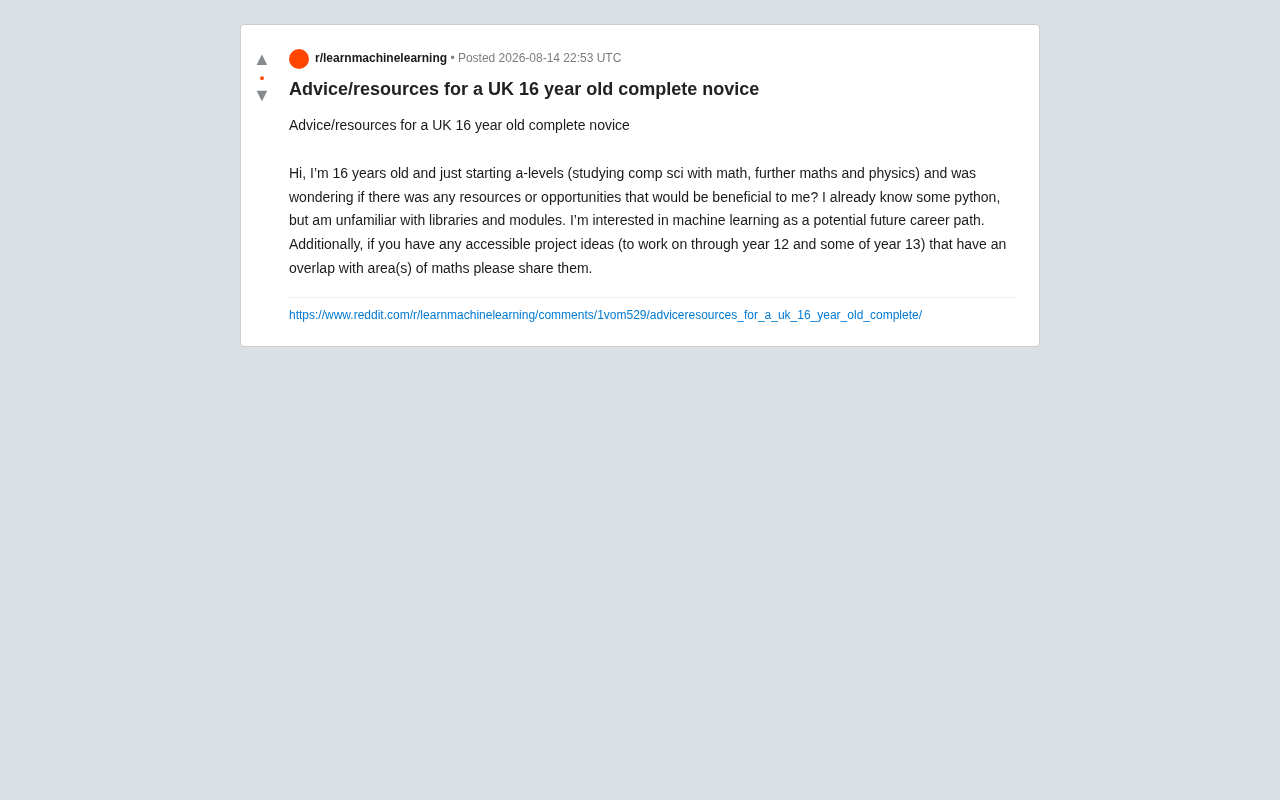
Getting Started with Machine Learning at 16: A Complete Learning Path from Zero to Hands-On Practice
How can a 16-year-old UK A-Level student get started with machine learning from scratch? A clear learning path covering Python basics, math connections, resources, and hands-on project ideas.
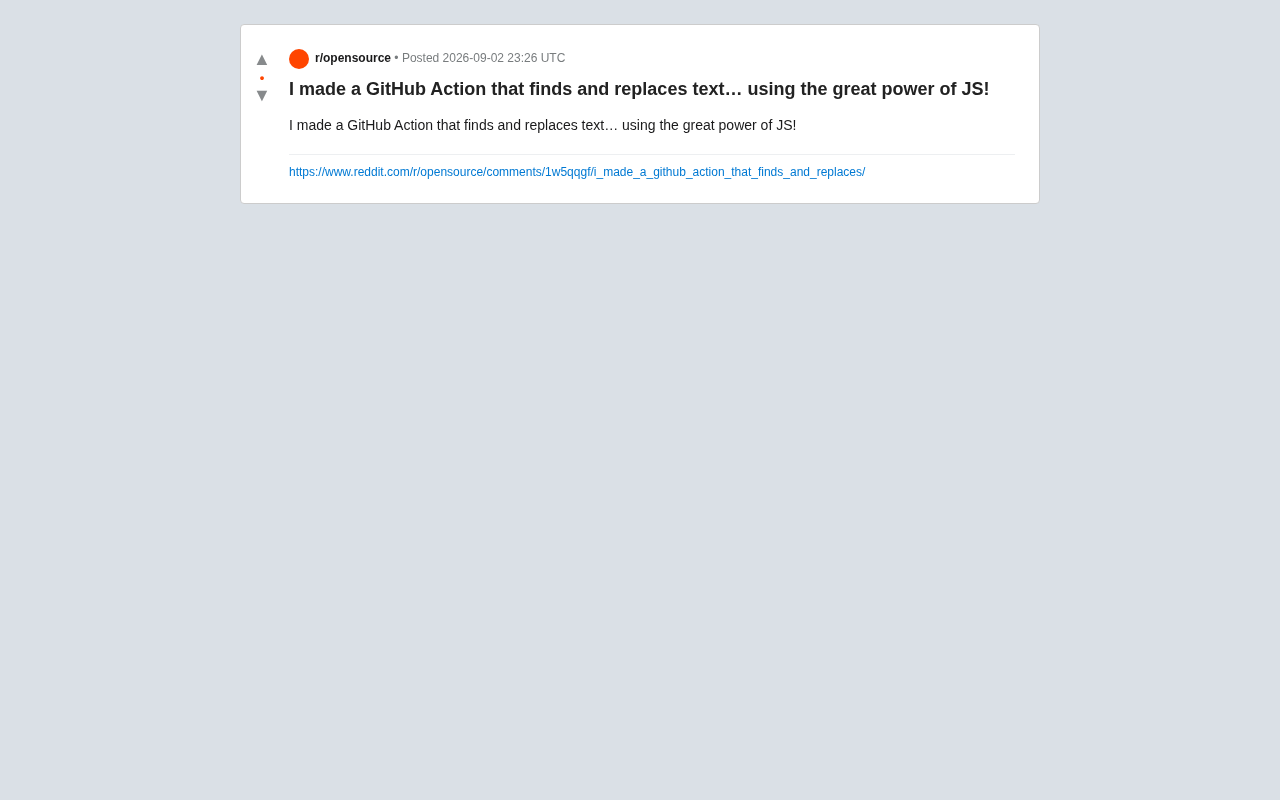
Building a GitHub Action Text Replacement Tool with JavaScript: From Principles to Practice
Learn how to build a GitHub Action for text replacement with JavaScript, covering implementation principles, use cases, and key technical details for CI/CD automation.

Coze Beginner's Guide: A Complete Cognitive Guide to Building AI Agents from Scratch
Learn what ByteDance's Coze platform is, key differences between domestic and international versions, how to use GPT-4 for free, and how to build AI Bots with zero coding experience.