Perplexity Reveals: The Embedding and Ranking Model Serving Infrastructure Behind AI Search

Perplexity publishes research on the embedding and ranking model infrastructure powering its AI search retrieval pipeline.
Perplexity has released a technical study on the serving infrastructure behind its AI search product's embedding and ranking models. The research reveals that every user response begins with these models filtering and reordering massive candidate pools — forming the critical front end of its RAG pipeline. The focus is not algorithmic innovation, but how to run these models at scale with low latency, high throughput, and low cost, spanning batching, GPU optimization, quantization, and request scheduling. The move signals a broader competitive shift: as generative model capabilities converge, the engineering quality of the retrieval pipeline is becoming the new differentiator in AI search.
AI search product Perplexity recently published a technical study uncovering a critical — yet often overlooked — component of its answer system: the serving infrastructure powering its embedding and ranking models. The research focuses on a step that users rarely think about, but one that fundamentally determines answer quality: how the system selects the most relevant results from a massive pool of content before generating a final response.
The First Step Behind Every Answer: Retrieval and Ranking
According to Perplexity, every answer a user receives begins with embedding and ranking models filtering and surfacing relevant results. This statement highlights the essential difference between modern AI search and traditional LLM-based Q&A: answer quality depends not only on the generative model's capabilities, but on whether the context fed into it is accurate and relevant.
Embedding models convert queries and candidate documents into vector representations, enabling semantic similarity measurement in a high-dimensional space. Ranking models then perform fine-grained reordering of the initially retrieved results, pushing the most relevant content to the top. Together, these two stages form the critical front end of the retrieval-augmented generation (RAG) pipeline, directly shaping the factual accuracy and relevance of the final answer.
Why Serving Infrastructure Is the Real Bottleneck
The focus of Perplexity's study is not algorithmic innovation in the models themselves, but rather the serving infrastructure surrounding them — a topic frequently underestimated in academic literature, yet critically important in industry.
For a real-time search product operating at massive scale, embedding and ranking models must handle enormous request volumes with extremely low latency. Every query may involve vectorizing and scoring thousands of candidate documents, and if the serving layer cannot efficiently orchestrate compute resources, users will notice the lag. Perplexity claims to have built state-of-the-art (SoTA) serving infrastructure, suggesting they've found a better equilibrium among throughput, latency, and cost.
This kind of engineering optimization typically spans multiple dimensions: batching strategies, GPU utilization improvements, model quantization, caching mechanisms, and request scheduling. For any team attempting to deploy retrieval models at scale, these are the practical challenges that determine whether a product can operate commercially.
From Algorithms to Engineering: A New Competitive Dimension in AI Search
Perplexity's decision to proactively publish research on serving infrastructure reflects a broader shift in how AI search competition is playing out. As generative model capabilities increasingly converge across providers, retrieval quality and serving efficiency are emerging as the new battleground for differentiated user experience.
A search engine that is accurate but slow will struggle to retain users — as will one that is fast but off-topic. By emphasizing that "every answer begins with embedding and ranking models," Perplexity is sending a clear signal: they are investing resources in engineering the retrieval pipeline, not merely relying on an underlying large language model.
This technical approach carries broader implications for the industry. RAG has become the dominant paradigm, but making embedding and ranking models run stably, efficiently, and economically in production remains a shared challenge for many teams. Perplexity's willingness to share these insights publicly should help advance the field as a whole.
Closing Thoughts
Perplexity's announcement is brief, but it points to a core truth about AI search products: great answers don't materialize out of thin air — they are built on precise retrieval and efficient serving. As the full study becomes available, the industry will have a rare opportunity to examine the underlying engineering details that power large-scale AI search. For developers working on RAG system deployment and model serving optimization, this research is well worth a deep read.
Note: This article is based on Perplexity's research preview published on Twitter. For complete technical details, please refer to their official research report.
Related articles
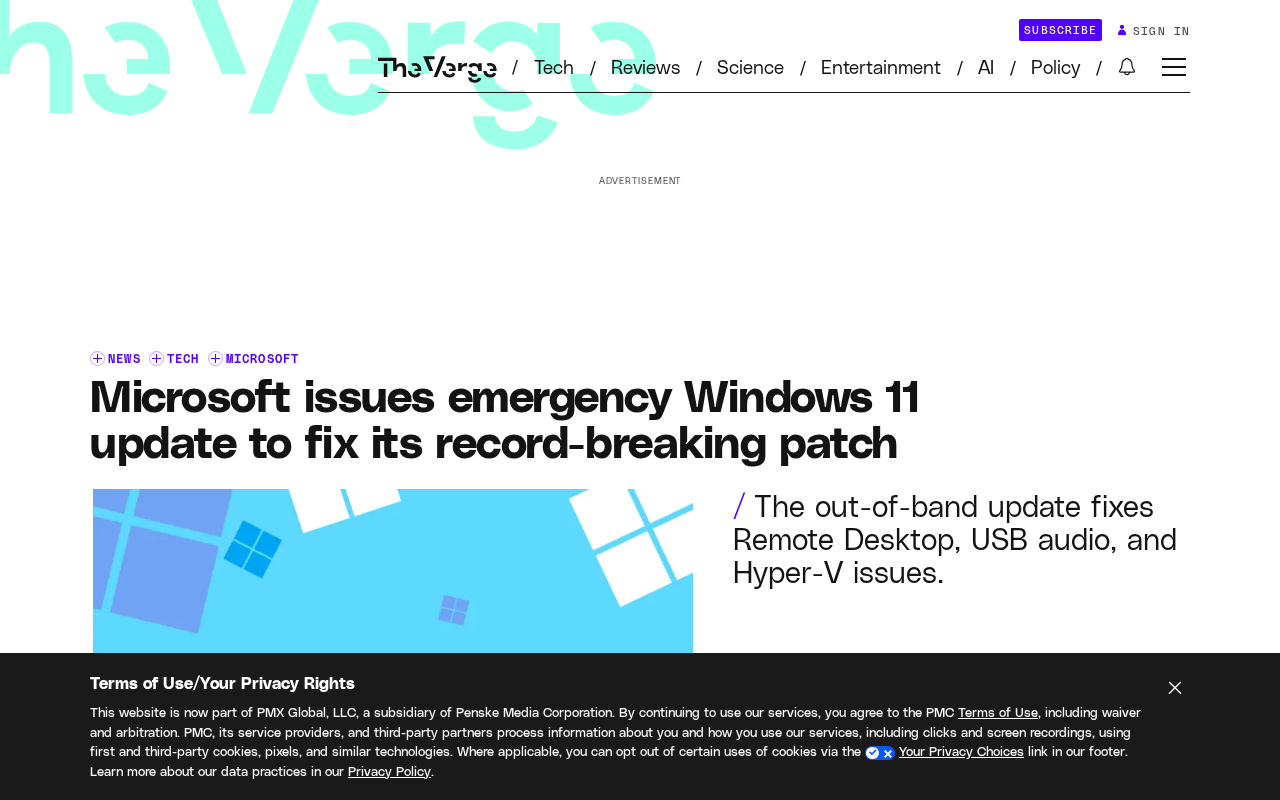
Microsoft Issues Emergency Windows 11 Patch to Fix Bugs Caused by Its Largest-Ever Update
Microsoft pushed an emergency out-of-band Windows 11 update to fix bugs introduced by its largest-ever September Patch Tuesday, which fixed nearly 1,000 vulnerabilities but broke Hyper-V folder sharing.
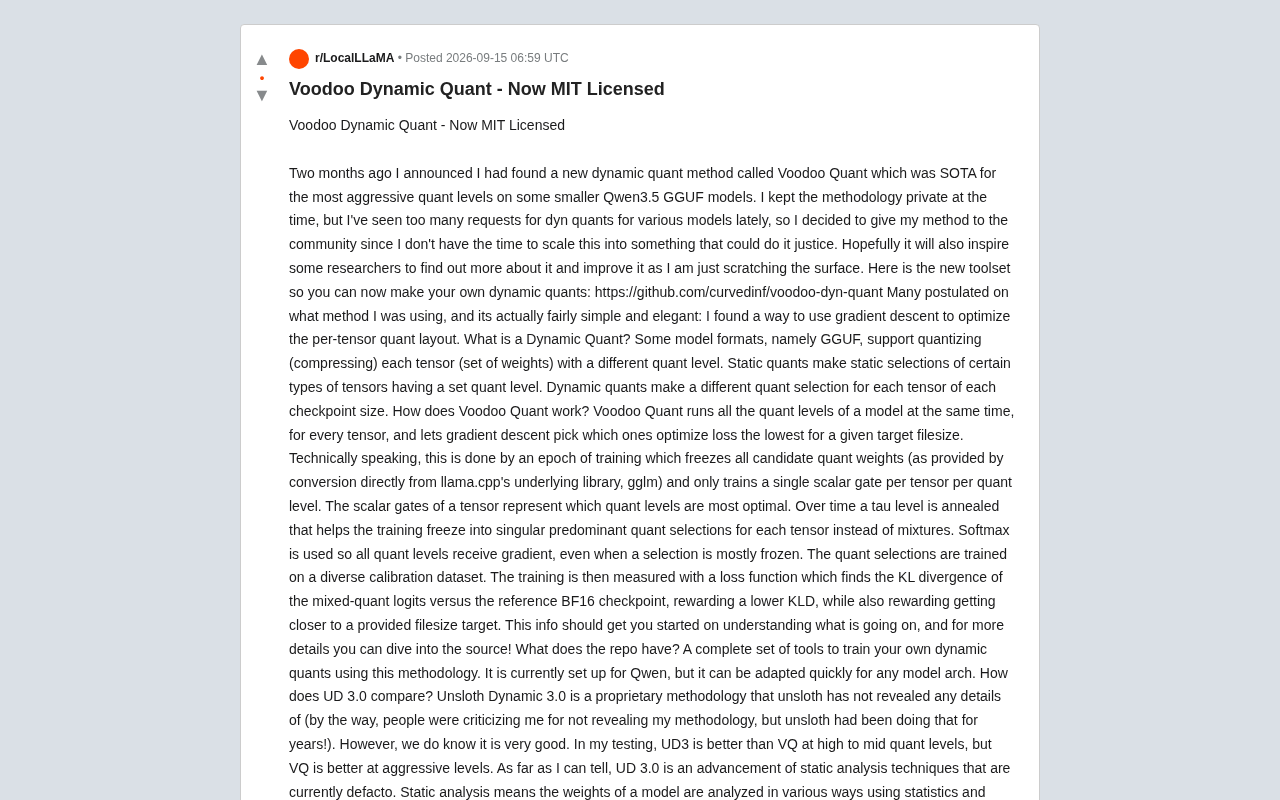
Voodoo Dynamic Quant Goes Open Source: Using Gradient Descent to Optimize Model Quantization
Voodoo Dynamic Quant (VQ) is now MIT-licensed open source. It uses gradient descent to optimize per-tensor GGUF quantization, outperforming Unsloth Dynamic 3.0 at aggressive low-bit levels.

Portable Computer Comes to Windows: Run AI Agents Locally with RTX GPUs
Portable Computer now supports Windows PCs with NVIDIA RTX GPUs, enabling local AI agents, harnesses, and models to run on-device without cloud uploads, with optional frontier cloud model access.