Pitchfire for Startups: Using AI to Match Startups with the Right Investors
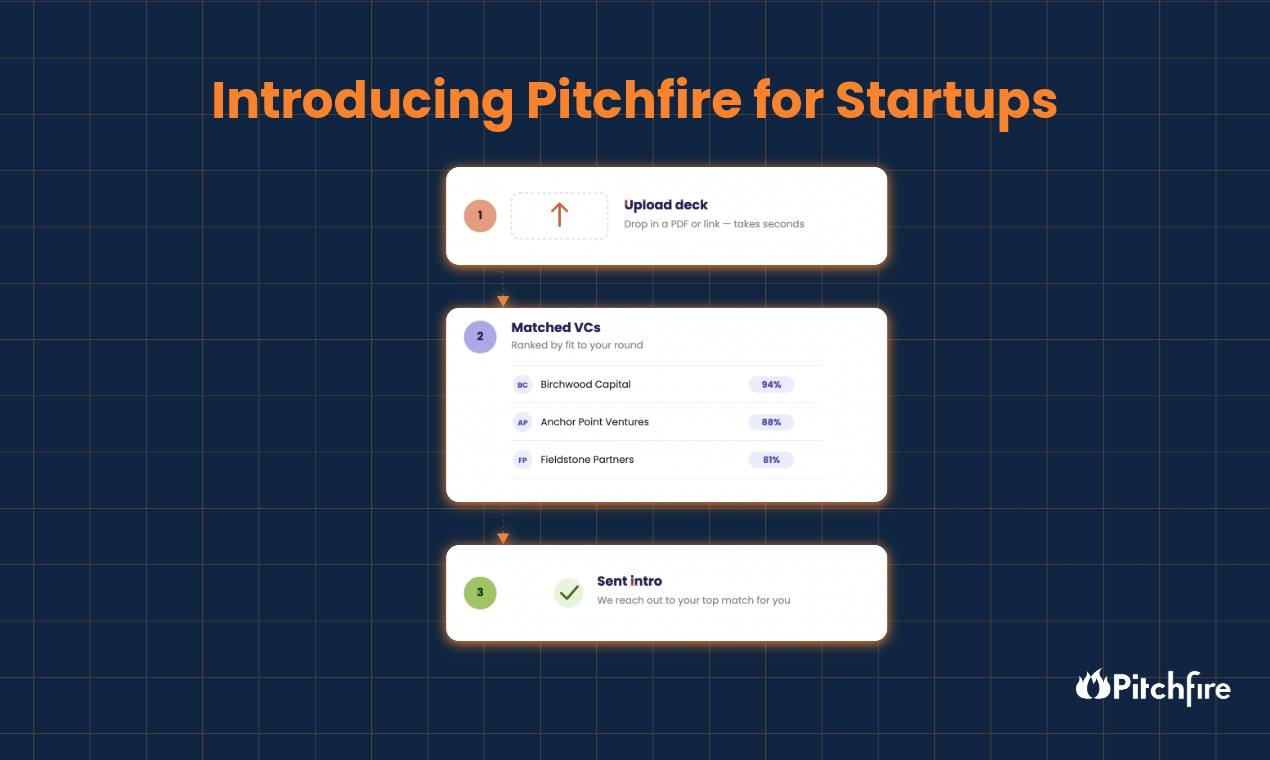
Pitchfire flips its VC-side AI screening tech to help startups get matched with and introduced to investors.
Pitchfire for Startups is an AI-powered fundraising matchmaking tool. Founders upload a pitch deck, the platform matches them to investors based on granular preference profiles, and sends official introduction emails on their behalf — up to three investors per day. The technology was built by first serving VC firms with AI associates, then flipping that capability to serve founders. The core value is productizing warm introductions for founders who lack established networks, though matching quality, investor reply rates, and platform reputation remain key unverified variables.
The hardest part of fundraising is rarely the product itself — it's finding investors who are willing to hear your story and actually aligned with your direction. Pitchfire for Startups is trying to solve this age-old problem with AI: upload your pitch deck, let the algorithm match you with suitable VCs, and have the platform send a formal introduction email on your behalf. The product currently has 79 upvotes on Product Hunt, ranking 11th on the day's leaderboard.
A Technical Reversal: From Serving VCs to Serving Founders
Pitchfire's trajectory is quite interesting. According to the team, they spent the past year building "AI associates" for VC firms — helping funds screen and evaluate the constant stream of incoming deals. Now they've "flipped" that same technology to serve the other side of the equation: startups.
This "bilateral alignment" approach is the product's core value proposition. When a single platform holds both investor preference profiles and startup deal data, the matching precision is theoretically higher than traditional cold email blasts or ad-hoc warm introductions. In other words, Pitchfire isn't trying to be just another investor database — it's positioning itself as an intermediary engine that understands the needs of both sides.
The concept of the "AI associate" has been gradually moving from theory to practice in the VC industry over the past couple of years. Traditionally, junior associates handle the high volume of inbound deal emails — doing initial screening, sector categorization, and founder background checks before surfacing worthy opportunities to partners. This process is enormously time-consuming and heavily dependent on the associate's personal judgment and domain expertise. AI associates essentially use large language models to structurally parse pitch decks and deal information, then auto-score and filter based on preset criteria like the fund's investment stage, sector focus, and geographic constraints. The core asset Pitchfire has accumulated on the VC side is precisely these granular "preference profiles" for each firm — far more detailed than any publicly available portfolio data, and the likely source of its matching precision when serving founders on the flip side.
How the Product Works
Based on the official description, the workflow is straightforward:
- Upload your pitch deck: Founders submit their fundraising materials.
- AI matches you with VCs: The algorithm matches your deal to suitable investment firms based on project characteristics.
- Platform sends introductions: Pitchfire "hypes" you to investors by proactively sending introduction emails on your behalf.
The product promises that once registered, founders can be matched and introduced to three investors per day. There's also a noteworthy feature: if a founder already has their own target investor list, they can upload it to the platform — as long as Pitchfire has those contacts in its database, it will facilitate the outreach.
This "upload your own list" design actually compensates for a pure algorithmic matching approach. Many founders already know exactly which investors they're targeting; what they're missing is a credible introduction channel. Cold outreach on its own tends to go nowhere.
The Real Pain Point It's Addressing
The core tension in early-stage fundraising is trust transfer. Investors receive enormous deal flow daily, and cold emails have extremely low open and reply rates. Meanwhile, founders lack legitimate channels to get on investors' radars. The traditional solution is to go through an FA (financial advisor) or warm introductions — but that's both expensive and opaque.
Pitchfire wedges into this gap with "platform credibility + AI matching." Having the platform make the introduction carries more weight than a founder reaching out cold — this is essentially the productization of "social capital." For founders who lack Silicon Valley networks, the barrier-lowering value here shouldn't be underestimated.
The role of FAs (Financial Advisors) in early-stage fundraising is worth explaining separately. FAs typically charge a success fee of 2–5% of the total raise, often with upfront retainer fees as well — quite costly for seed or angel-stage startups. More importantly, quality FAs rely heavily on personal networks and tend to specialize in specific sectors or geographies, which limits their coverage. "Platform credibility" as an alternative to the FA model is essentially decentralizing the FA's trust-intermediary function: by accumulating bilateral data at scale, the platform substitutes institutional reputation for individual reputation. This logic has precedent in recruiting (LinkedIn), legal services (Atrium's early model), and other sectors — but in the strongly relationship-driven world of VC fundraising, how far technology can actually replace personal networks remains the most critical open question.
A Few Things to Keep in Mind
As a product that just launched on Product Hunt, Pitchfire still has plenty left to prove:
- Matching quality is unverified: The precision of AI matching and the actual reply rates from investors on platform-sent introduction emails are the make-or-break metrics — and neither has been publicly shared yet.
- Investor-side willingness: If VCs get flooded with platform-referred deals, the "hype" emails could become just another form of noise, repeating the cold email problem all over again.
- Three per day — quantity vs. quality: Whether that daily cadence translates to meaningful opportunities is something founders will only know after actually using the product.
One of the founders is Jeremy Hitchcock, whose industry background lends the product some credibility. Overall, Pitchfire for Startups is a pragmatic attempt to apply AI to the fundraising context. It avoids overblown disruption narratives and instead focuses on a specific, high-frequency pain point. For early-stage founders actively searching for investors, treating it as a supplementary channel to test out carries low cost and potentially real upside.
The structural reasons why cold email underperforms in fundraising are worth noting. Top-tier VC partners often receive hundreds of deal emails per week, with industry-reported reply rates typically below 1%. Even warm introductions from YC alumni don't guarantee entry into a formal due diligence process. Pitchfire's "platform sends the email" strategy faces a classic cold-start paradox: early on, before the platform has built its reputation, its introduction emails are no different from stranger emails from a VC's perspective — yet building that reputation requires accumulating a large number of successful introductions first. This means the product's near-term value is highly dependent on investors proactively trusting the platform, and on whether the platform has already established working relationships with VCs on the supply side — which is precisely where their prior work building AI associates for VC firms may serve as a genuine moat.
Related articles
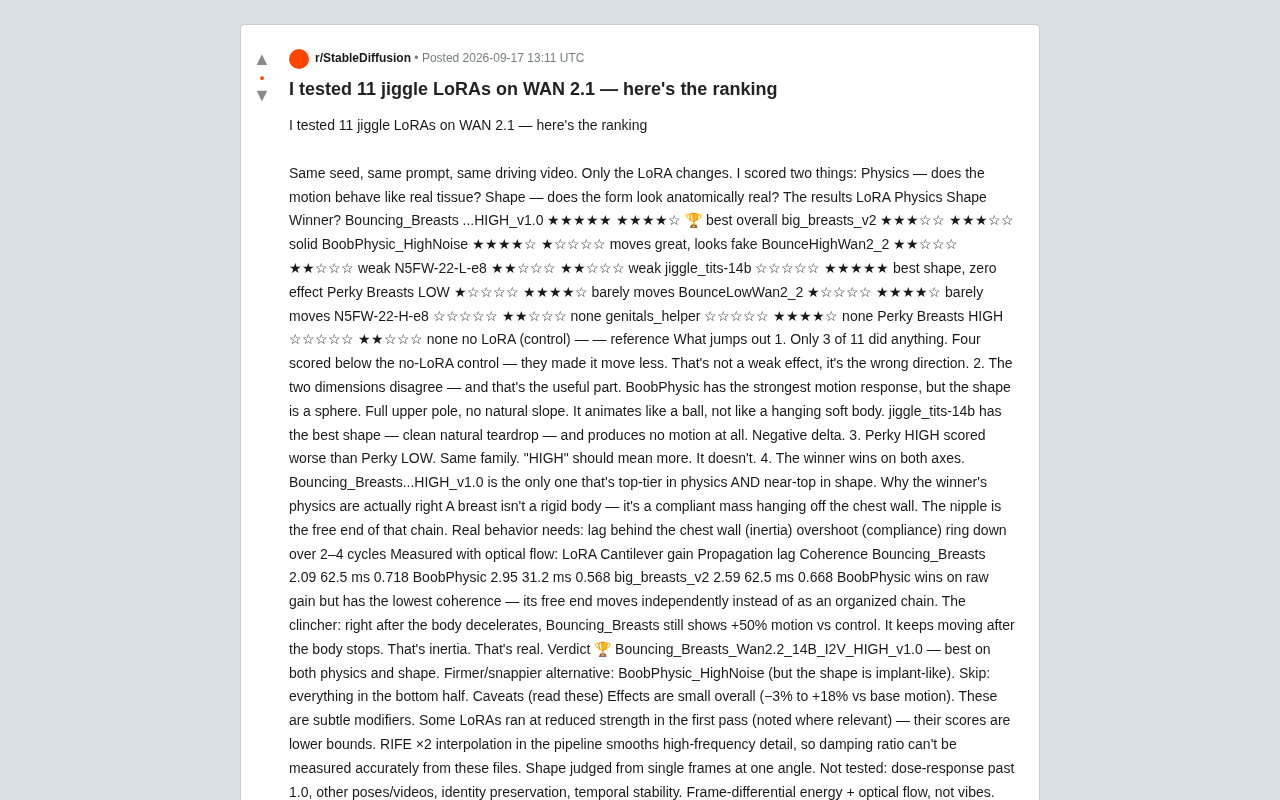
WAN 2.1 Physics Motion LoRA Benchmark: Rankings and Methodology for 11 Models Tested
A Reddit user benchmarked 11 physics-motion LoRAs on WAN 2.1 using optical flow analysis. Only 3 worked meaningfully; 4 scored below the no-LoRA baseline. Full rankings and methodology inside.

Lucid Partners with Bolt to Target European Robotaxi Market
Lucid Motors has signed a letter of intent with European mobility platform Bolt to explore Robotaxi services in Europe, though no vehicle orders have been placed yet.

AI Assistants Enter the "Phone Call" Era: Instinct and Meta Muse Add Voice Task Execution
AI assistants Instinct and Meta Muse now make phone calls on your behalf — booking restaurants, canceling subscriptions — marking a leap from chat tools to real-world agents.