Plow Latch: Giving AI Agents Safe Control Over Your Mac
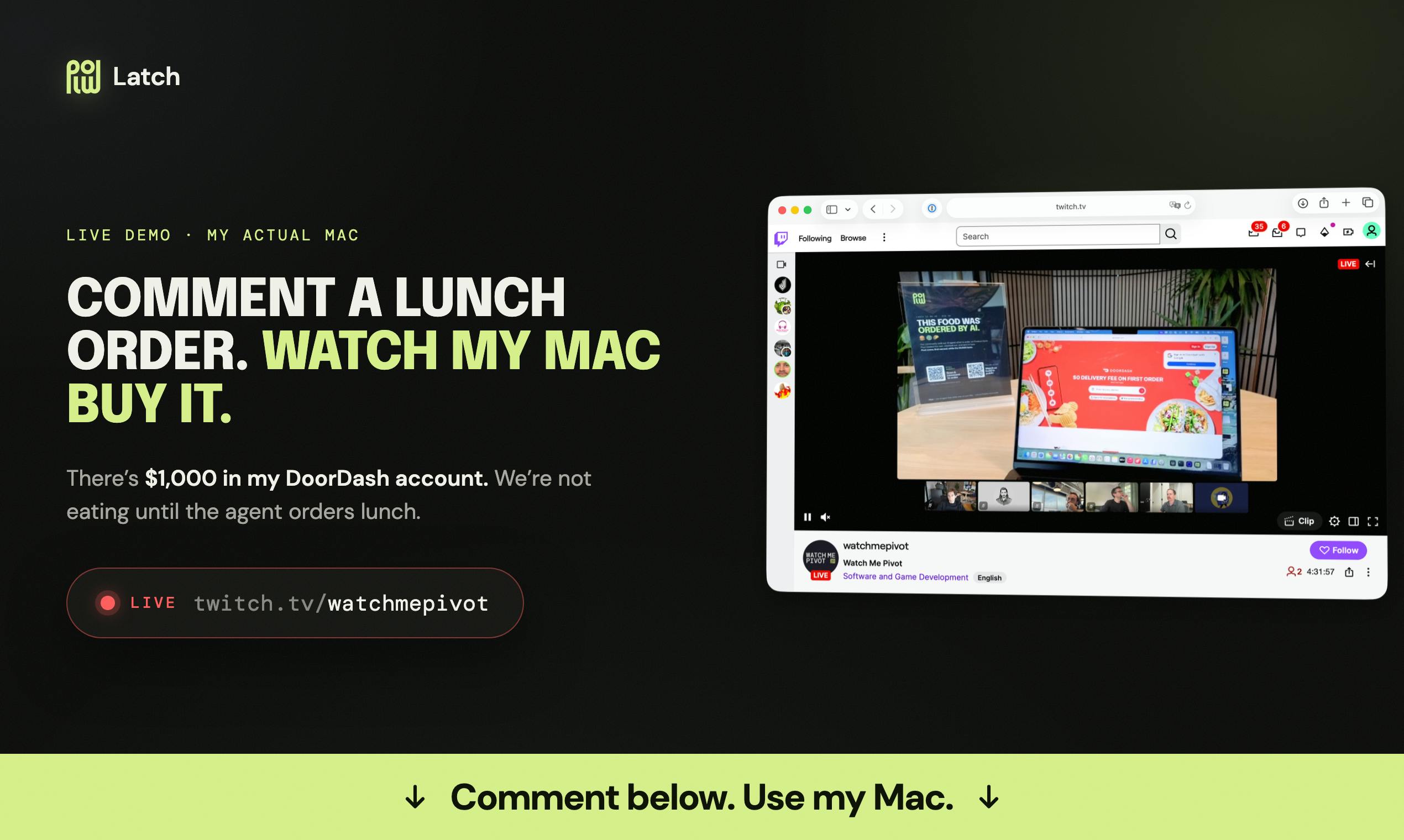
Plow Latch lets AI agents safely control your Mac with scoped permissions and local-only data.
Plow Latch is a new Mac-native tool that gives AI agents real operating system-level control while keeping all data on the local device. Its core innovation is "scoped access" — a permission isolation model that constrains what AI can do, balancing capability with security. Targeting privacy-conscious professionals and enterprises, it addresses the fundamental tension between empowering AI agents and protecting sensitive data in an era of tightening global regulations.
When AI Agents Need Real Operating Permissions
As AI agents evolve from simple conversational assistants into automation tools capable of executing complex tasks, a core tension is becoming increasingly apparent: to let AI truly help you get work done, you must grant it actual control over your device — but granting that control means a dramatic rise in data security and privacy risks.
Plow Latch, which recently debuted on Product Hunt, takes direct aim at this pain point. Its positioning is clear and bold — "Run AI agents on your Mac with scoped access." After launch, it quickly garnered 98 upvotes and 24 comments, landing at #7 on the day's leaderboard and categorized under Productivity, Artificial Intelligence, and Fundraising.
Core Philosophy: Local Control + Permission Isolation
Plow Latch's official description is concise and powerful: "Safely give your agents real control over your Mac while keeping your data on your local machine. With Plow Latch, almost anything you can do on your Mac, your AI can do."
This statement contains two key promises worth unpacking.
True Operational Capability
"Almost anything you can do on your Mac, your AI can do" — this means Plow Latch isn't content with keeping AI at the level of text generation or API calls. Instead, it aims to grant AI operating system-level control. This is similar to the widely discussed "Computer-Use Agent" concept, where AI can click, type, and operate various applications just like a human.
This concept gained widespread attention in the second half of 2024 when Anthropic released Claude's "computer use" API. Traditional AI assistants can only interact with software through predefined API interfaces, while Computer-Use Agents directly manipulate graphical user interfaces (GUIs) through screenshot recognition, mouse movements, and keyboard inputs, simulating human behavior. This means AI no longer needs every application to provide dedicated plugins or interfaces — it can open any software, fill out forms, and drag files just like a person. Google's Project Mariner, Microsoft's UFO framework, and open-source projects like Open Interpreter are exploring similar directions. However, the core challenge with these agents is that GUI operations are far less reliable than API calls, and misoperations can lead to irreversible consequences, such as accidentally deleting files or sending the wrong email.
For everyday users, this means AI can help organize files, batch-process data, and execute cross-application workflows, no longer constrained by a closed sandbox or a single software's plugin ecosystem.
Data Localization and Scoped Access
The real differentiator lies in the "scoped access" design philosophy. Unlike approaches that upload data to the cloud for processing, Plow Latch emphasizes keeping data on the local machine and constraining AI agent behavior through permission scoping.
The design philosophy of scoped access originates from the Principle of Least Privilege (PoLP), a long-standing practice in information security first systematically proposed by Jerome Saltzer in 1975. In software engineering, the OAuth 2.0 protocol is the most typical implementation of scoped access — when you log into a third-party app with your Google account, the app can only access the specific data you've authorized (such as your email address), not control of your entire Google account. Migrating this approach to the AI agent domain means defining precise permission boundaries for every AI operation: which directories it can read, whether it can perform delete operations, whether network access is allowed, and so on. Technically, this involves operating system-level sandboxing mechanisms (such as macOS's App Sandbox and TCC permission framework), permission isolation in inter-process communication, and runtime behavior monitoring with audit logs.
This design directly addresses the biggest concern about deploying AI agents today: when you put an AI that can read emails, access files, and control browsers onto your computer, who ensures it won't exceed its authority or leak sensitive information? By granularly "scoping" access permissions, Plow Latch attempts to find a balance between "capability" and "security."
Why This Direction Deserves Attention
Privacy-First Is Becoming a Competitive Moat
While vendors like OpenAI and Anthropic are rolling out cloud-based agent capabilities, Plow Latch has chosen a differentiated path: local-first. For enterprise users, developers, and professionals handling sensitive data, "data never leaves the machine" is an inherently compelling selling point.
The demand for data localization is being driven by increasingly strict regulatory frameworks worldwide. The EU's General Data Protection Regulation (GDPR) imposes strict limitations on cross-border data transfers. China's Data Security Law and Personal Information Protection Law mandate local storage requirements for sensitive data. Various U.S. states have also enacted privacy protection legislation (such as California's CCPA/CPRA). In AI agent scenarios, this issue is even more pronounced: when AI needs to read users' emails, documents, and chat logs to perform tasks, uploading that data to cloud-based inference servers — even briefly — could pose compliance risks. Apple's introduction of the "Private Cloud Compute" architecture with Apple Intelligence at WWDC 2024 similarly reflects the industry's emphasis on local-first processing. For professionals in healthcare, legal, and financial industries, keeping data on-device isn't just a preference — it's a hard compliance requirement.
As data compliance regulations tighten globally, local processing is not just a privacy preference but may become a regulatory necessity. This also explains why Plow Latch was categorized under "Fundraising" — investors clearly see the commercial potential of this space.
Permission Management Is the Infrastructure of the Agent Era
If the explosion of large models ushered in a new AI era, we are now entering the deployment phase of AI agents. And in the process of deploying agents, "permission governance" is an infrastructure challenge that cannot be bypassed.
2024 to 2025 is widely regarded by the industry as the inaugural year for AI agent commercialization. OpenAI launched Operator in early 2025 — an agent product capable of autonomously completing tasks within a browser. Anthropic's Claude has built a standardized framework for agent-tool interaction through the MCP (Model Context Protocol). Google DeepMind's Gemini has deeply integrated agent capabilities within the Android ecosystem. Meanwhile, open-source community frameworks like AutoGPT, CrewAI, and LangGraph are also iterating rapidly. In this landscape, competitive differentiation among agents has shifted from "model capability" to "security and controllability of the execution environment." While the local agent space that Plow Latch occupies is relatively small, it directly addresses the core needs of enterprise users — auditable, controllable, and revocable AI operations — something that purely cloud-based solutions struggle to fully deliver.
By making scoped access its core selling point, Plow Latch is essentially building a "trust middleware layer" between AI and the operating system. This approach is entirely consistent with the Principle of Least Privilege in software engineering — granting AI only the minimum permissions necessary to complete its task, thereby keeping potential risks within acceptable bounds.
Potential Challenges and Considerations
Despite its forward-thinking philosophy, Plow Latch still faces some real-world tests:
- Balancing Permission Granularity with Usability: Overly strict permission restrictions will undermine AI's usefulness, while overly permissive settings negate the security purpose. Designing a permission model that is both user-friendly and secure is the make-or-break factor for the product.
- Local Compute Constraints: Data localization typically means model inference also needs to happen locally or in a controlled environment, which places demands on Mac hardware performance and may limit the scale of usable models. Current mainstream large language models range from billions to hundreds of billions of parameters — GPT-4-class models require hundreds of gigabytes of VRAM, far exceeding consumer device capabilities. However, model quantization techniques (such as 4-bit quantization in GGUF format) and small models designed specifically for on-device use (such as Apple's OpenELM, Microsoft's Phi series, and Meta's lightweight Llama 3.2 variants) are closing this gap. Apple's M-series chips with their Unified Memory architecture offer a unique advantage for local large model inference — the M4 Max with 128GB of unified memory can theoretically run 70-billion-parameter quantized models. Additionally, hybrid inference architectures (processing some tasks locally while offloading complex reasoning to the cloud) offer a compromise, but this reintroduces the trust boundary question of when data leaves the local machine.
- Building Trust: Getting users to feel comfortable handing over computer control to AI requires long-term reputation building and transparent security audit mechanisms.
Conclusion
Plow Latch represents an important direction in AI agent development: no longer just a "smart brain" in the cloud, but a "trusted assistant" that can act safely on local devices. Its emphasis on scoped access and data localization addresses users' deepest concerns about AI agents.
As AI agents gradually permeate daily workflows, whoever can first resolve the fundamental tension between "capability" and "security" has the opportunity to become a key gateway in the agent era. Plow Latch's debut is well worth keeping an eye on.
Related articles

A World First in Australia: Delivery Riders to Receive Minimum Wage Guarantee
Australia introduces the world's first minimum wage guarantee for delivery riders, balancing gig flexibility with income protection. Explore the agreement's details, platform impacts, and global regulatory trends.
DeepSeek Open-Sources Its First Vision Model, Dramatically Lowering the Bar for Multimodal Agents
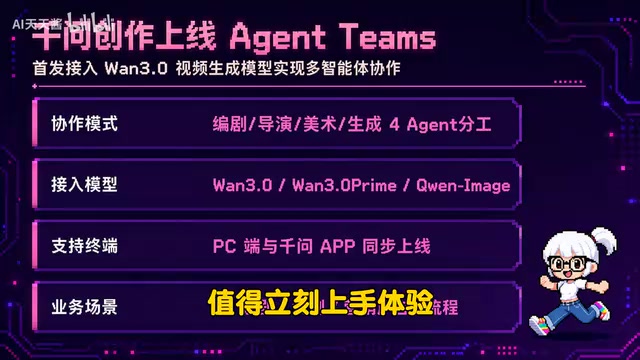
DeepSeek open-sources V-Flash-Vision-XP, its first vision model rivaling top closed-source models; Alibaba launches multi-agent video creation; sub-$400 bipedal robot goes open-source.
ReactOS 0.4.16 Released: Graphical Installer, 3D Hardware Acceleration, and Broader Hardware Support
ReactOS 0.4.16 ships with a new graphical installer, real hardware GPU 3D acceleration, and broader hardware compatibility for this Windows NT-compatible open-source OS.