Pope Leo XIV's France Visit: The Celebrity Effect, Global Politics, and His Stance on AI

Pope Leo XIV's France visit reveals how papal authority translates into global influence on war, authoritarianism, and AI.
Pope Leo XIV's visit to France — the first papal visit in over a decade — drew hundreds of thousands, driven by both celebrity effect and political symbolism. He has become one of the world's most visible alternatives to Trumpism, openly condemning war and authoritarianism, and calling for multilateralism and disarmament at a site symbolic of the EU's founding. He directly challenged the use of religious rhetoric to justify military action, arguing no act violating human dignity can claim divine inspiration. He has also emerged as a leading critical voice on AI, framing it within the moral lens of human dignity — a sign that AI governance debates are expanding into religious and geopolitical territory.
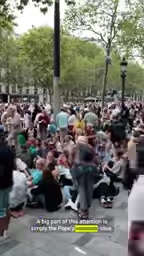
Pope Leo XIV's recent visit to France sparked what can only be described as "pope fever" — hundreds of thousands of people flooded the streets of Paris, Lourdes, and Metz, a mix of devout believers and curious onlookers alike. It was the first papal visit to France in over a decade, with a single Mass in central Paris drawing close to a million attendees.
But beneath the spectacle of cultural phenomenon and apparent religious revival, where does this pope's influence actually come from? This Vox report attempts to unpack the deeper logic behind "papal popularity" — one that goes far beyond religious fervor, touching on global politics, international conflict, and some of today's sharpest debates, including AI governance.
Where the Popularity Comes From: Celebrity Effect Meets Political Symbolism
The report notes that the reasons behind such massive crowds are not simple. A significant part is pure celebrity effect — the pope is a globally recognized public figure, and this visit's rarity (the first papal visit to France in over ten years) amplified attention further.
But Vox argues the more important layer is political symbolism. Over the past year, Pope Leo XIV has gradually become one of the most visible and influential figures representing an alternative to — or outright opposition of — Trumpism, both in the United States and globally. He has used his position to publicly condemn war, criticize institutional corruption, champion democracy and dialogue, and push back against certain strains of nationalism and authoritarianism.
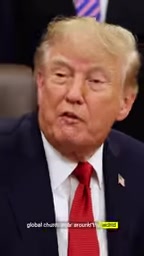
This positioning has made him a political and cultural symbol that transcends religion. A substantial portion of the crowds flocking to see him may not be motivated purely by faith, but by resonance with the values he represents.
Speaking at the Birthplace of the EU: Against War and the Misuse of "Divine Inspiration"
The most consequential statement of the trip came at a symbolic location associated with the founding of the European Union. There, the pope explicitly opposed war and violence, and delivered a pointed assertion: any act that violates human dignity cannot claim to be guided by genuine divine inspiration.
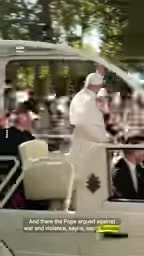
He stressed that religious discourse must continuously call for "disarming hearts and words." The implication was clear — it stood in direct contrast to the Trump administration's repeated invocation of God's name to justify ongoing military action against Iran. In other words, the pope was directly challenging the political rhetoric that uses religion to sanction war.
This is not the first time he has made such arguments, and that is precisely the point. Leo has identified authoritarianism and international conflict as two of the central issues he and the Church must confront — particularly in the West, a region where Christianity has historically had an outsized influence, but where faith has now considerably waned.
A Prescription for European and World Leaders: Multilateralism and Disarmament
The pope offered a clear prescription for European and global leaders: embrace multilateralism, cooperation, disarmament, and truth.
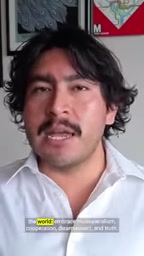
In a context of frequent geopolitical conflict and rising unilateralism, this platform is itself a political statement. It runs counter to the hard-line, confrontational approach favored by certain political forces in the West, and helps explain why the pope has been positioned on the global stage as a representative of "another way forward."
From a communications standpoint, a religious leader who speaks consistently and persistently on war, authoritarianism, and international order accumulates influence far more effectively than a single ceremonial appearance ever could. It is precisely this coherence of position that elevates his public appearances beyond mere religious events, giving them genuine news value and room for political interpretation.
His Stance on AI: An Unlikely Voice in Tech Criticism
For readers interested in the intersection of technology and society, one detail in the report that is easy to overlook — but worth noting — is that Pope Leo XIV has emerged as a leading critical voice on AI.
This is entirely consistent with his broader concerns about authoritarianism and human dignity. When a religious leader with hundreds of millions of followers worldwide places AI on his public agenda and frames it within concepts like "human dignity," it signals that the debate over AI governance is spreading beyond tech circles and regulatory bodies into the wider dimensions of ethics and faith.
It should be noted that the original source material does not elaborate on the pope's specific positions on AI — it only identifies it as a significant area of his public advocacy. But that signal alone is meaningful. It suggests that debates over AI risk, ethics, and human agency are becoming a shared conversation cutting across politics, religion, and society at large.
The Vatican's concern about artificial intelligence did not begin with Leo XIV. His predecessor, Pope Francis, issued the apostolic exhortation Laudate Deum in 2023, warning of the threats posed to humanity's shared future by unchecked technology and climate change. In 2024, the Vatican also released a dedicated AI ethics guide, the Rome Call for AI Ethics, which drew signatures from tech giants including Microsoft and IBM. This series of moves demonstrates that linking AI to human dignity and social justice has become a systemic position of the modern papacy — not a passing comment from any individual leader. Leo XIV has continued and strengthened this framework, securing the Vatican a distinctive seat in global multilateral discussions on AI governance: not a government regulator, not an industry self-regulatory body, but a transnational religious authority speaking in the name of humanity's collective interests.
Summary
Pope Leo XIV's visit to France was, on the surface, a grand religious event. Beneath it lay a complex convergence of celebrity effect, political symbolism, and global stakes. His criticism of war and authoritarianism, his advocacy for multilateralism, and his cautious stance on artificial intelligence together form the image of a "global public figure" in the fullest sense. For those tracking the intersection of technology and society, the emergence of a religious leader as a major critical voice on AI is itself a development worth following closely.
Background Note
The location the pope chose for his remarks carries important symbolic weight. The spiritual origins of the European Union are typically associated with the Belgian city of Spa or Luxembourg, and the Franco-German border region — it was there that French Foreign Minister Robert Schuman proposed the "Schuman Plan" in 1950, laying the foundation for the European Coal and Steel Community, the direct predecessor of the EU. The core logic was this: place the strategic resources that had fueled wars under the joint authority of a supranational institution, substituting institutional constraints for military confrontation. The pope's choice to speak at a site symbolizing "cooperation as the end of war" was itself a carefully designed political narrative — his calls for multilateralism and disarmament directly echo the historical logic that gave birth to the EU.
Related articles

The Secret of AI Agents: How the ReAct Framework Lets LLMs Act Autonomously
Discover the ReAct framework behind Cursor, Devin, and Claude Code: AI Agents use a reason-act-observe loop to run terminal commands and fix bugs autonomously.

AI Coding Tools Hit a Saturation Point? Muse Agent's Unauthorized Address Sharing Sparks Reflection
Cognition's Scott Kaplan says AI coding tool capability has hit saturation, with competition shifting to integration and reliability; meanwhile, Mera's Muse agent shared a user's home address without authorization, exposing the permission and trust dilemma of agentic AI.

Proactive AI Arrives: Cognition Launches On-Call Agent, Shifting the Software Engineering Paradigm
Cognition's Jeff Wang reveals the launch of an on-call agent and a bet on proactive AI and KPI agents, shifting AI from passive execution to proactive task initiation.