PostgreSQL 19 Released: WAIT FOR LSN Solves Read-Write Consistency Pain Points

PostgreSQL 19 adds WAIT FOR LSN to solve read-after-write consistency in read-write splitting, and the release was delayed by a wave of AI vulnerability reports.
PostgreSQL 19 has been officially released, about two months later than the usual cadence, mainly because the team needed to process a large number of vulnerability reports discovered with AI assistance. The most closely watched new feature is the `WAIT FOR LSN` command, which allows a replica session to wait until WAL is replayed to a specified LSN before executing a query, natively solving the "read-after-write" consistency problem under read-write splitting architectures. This pattern had long been manually implemented in MediaWiki; PostgreSQL standardizes it as an SQL command, so applications no longer need to depend on middleware or driver extensions. The command supports an optional TIMEOUT, allowing applications to downgrade when a replica has not caught up in time. The article suggests storing the LSN in session state such as a signed cookie to connect primary writes with replica reads. The release delay reflects that AI tools are changing the pace and scale of vulnerability discovery, and the PostgreSQL team chose security over punctuality.
PostgreSQL 19 has been officially released, about two months later than the usual September cadence. The main reason for the delay was the team's need to focus on processing a large number of vulnerabilities discovered with AI assistance—this wave of vulnerability reports has been jokingly called the "AI vulnerability apocalypse" by the community. However, the development team believes the wait was worthwhile. The most closely watched feature in the new version is the WAIT FOR LSN command, which directly addresses the long-standing "read-after-write" consistency problem in read-write splitting architectures.
WAIT FOR LSN: Let Replicas Read Newly Written Data
In a typical read-write splitting deployment, the application sends write requests to the primary and read requests to replicas. Because streaming replication has latency, a write just committed on the primary may not yet have been synchronized to the replica, so when a user immediately issues a read request, they may not see their own recent modification. The WAIT FOR LSN command introduced in PostgreSQL 19 provides a native solution to this problem.
The specific approach is: after a write operation completes, the application calls pg_current_wal_insert_lsn() to obtain the current WAL insert position (for example, 0/0306EE20) and saves this value (the source article suggests it can be stored in a signed cookie). Before executing a query on a replica in a subsequent request, the application first runs WAIT FOR LSN '0/0306EE20' WITH (TIMEOUT '0.1s'), waits for the replica to replay WAL up to the specified LSN, and then performs the read operation.
The sequence of operations in the example is as follows:
UPDATE movie SET genre = 'Dramatic' WHERE genre = 'Drama';
SELECT pg_current_wal_insert_lsn();
After it returns 0/0306EE20, execute the following in a subsequent request:
WAIT FOR LSN '0/0306EE20' WITH (TIMEOUT '0.1s');
SELECT * FROM movie WHERE genre = 'Drama';
The TIMEOUT clause is optional. If set, when the replica fails to catch up to that LSN within the specified time, the command returns an error, and the application can use that to decide whether to downgrade the request to the primary or prompt for a retry.
WAL (Write-Ahead Logging) is the core mechanism PostgreSQL uses to guarantee transaction durability and replication consistency. All data modifications must be written sequentially to the WAL log before being written to disk. Each WAL record has a unique LSN (Log Sequence Number), which is essentially a continuously increasing byte offset in a format such as 0/0306EE20. Replicas continuously receive and replay WAL from the primary through streaming replication, thereby staying synchronized with the primary. pg_current_wal_insert_lsn() returns the position of the most recent WAL insert in the current session, and this value represents the latest durable data point on the primary. The WAIT FOR LSN command makes the replica block and wait until its replay progress (queryable via pg_last_wal_replay_lsn()) reaches or exceeds the specified LSN, thereby ensuring that all changes committed on the primary before that LSN are visible on the replica. Understanding the role of LSN as a replication progress marker is key to understanding how this command works.
Not a New Concept, but Entering the Core for the First Time
This "read-after-write" consistency pattern has long been practiced in large systems. The author of the source article mentions that he first saw a similar implementation in Wikipedia's MediaWiki. MediaWiki stores the binlog position on the primary in the session and, at the start of each request, waits for replicas to catch up to that position before executing read operations. Its code currently uses MySQL's WAIT_FOR_EXECUTED_GTID_SET() function, with a fallback to MASTER_POS_WAIT().
PostgreSQL 19 standardizes this pattern as an SQL command, meaning the application layer no longer needs to rely on database driver extensions or write its own waiting logic. For business scenarios that have already adopted a read-write splitting architecture and cannot tolerate read latency (such as user profile pages and order status displays), WAIT FOR LSN provides a consistency guarantee while preserving the ability to scale reads through replicas.
The equivalent mechanisms in MySQL to WAIT FOR LSN are WAIT_FOR_EXECUTED_GTID_SET() and MASTER_POS_WAIT(). GTID (Global Transaction Identifier) is a unique identifier MySQL assigns to each transaction. WAIT_FOR_EXECUTED_GTID_SET() blocks until the replica has executed all transactions in the specified GTID set; MASTER_POS_WAIT() waits based on the traditional binlog file name and position (an offset similar to LSN). MediaWiki uses these functions to save the primary's binlog position in the session and wait at the start of each read request for replicas to catch up. Although PostgreSQL does not have GTID, the WAL LSN provides an equivalent monotonically advancing position identifier, so WAIT FOR LSN is highly similar in semantics to MySQL's MASTER_POS_WAIT(), except that its syntax and naming are closer to PostgreSQL's WAL system.
The AI Security Background Behind the Release Delay
According to a blog post by PostgreSQL core team member Robert Haas (cited by the source article), the main reason for this release delay was that the team's time was consumed by a large number of vulnerability reports that needed to be processed, and a considerable portion of these reports came from AI-assisted security research. The source article calls this phenomenon the "AI-reported vulnerability apocalypse".
This reflects an industry trend: AI tools are changing the pace and scale of vulnerability discovery. For projects such as open source databases that carry critical infrastructure, teams need to invest extra effort to verify, classify, and fix these reports, and the release cadence is inevitably affected. The PostgreSQL team chose to prioritize security over punctuality, a trade-off that is reasonable in the infrastructure software field.
AI-assisted vulnerability discovery generally refers to using large language models or specialized fuzzing tools (such as LLM-based code auditing and intelligent fuzzers) to automatically analyze codebases and generate potential vulnerability reports. Such tools can quickly scan a large number of code paths and discover patterns that human audits may miss, but they also produce many false positives or low-quality reports. For a critical infrastructure project like PostgreSQL, the core team must verify, classify, and fix these reports one by one, which is a huge workload. The "AI-reported vulnerability apocalypse" mentioned by Robert Haas in his blog refers to this phenomenon of a surge in report volume and a sharp increase in processing pressure. This is not unique to PostgreSQL; many mainstream open source projects are adjusting their security response processes to cope with the new normal of AI-driven vulnerability discovery.
Practical Impact on Developers
The introduction of WAIT FOR LSN turns consistency issues under read-write splitting architectures from "assembled by the application layer itself" into "declarable at the database layer". Teams that already rely on replica read scaling can evaluate whether this command can replace the waiting logic in existing middleware and reduce maintenance costs.
It should be noted that this command depends on WAL replay progress, and obtaining and saving the LSN requires cooperation on the application side. For scenarios where session state cannot be maintained (such as stateless HTTP requests), storing the LSN in a cookie is a feasible solution given in the source article, but security and expiration policies need to be considered.
For teams that have not yet adopted read-write splitting, this feature provides a low-cost scaling option: when needed, route read-only queries to replicas and maintain session consistency through WAIT FOR LSN, instead of putting all reads on the primary.
Release Cadence and Security First
The delayed release of PostgreSQL 19 itself sends a signal: when the volume of security reports increases significantly, mainstream open source database projects are willing to adjust a release cadence they have followed for years. For production systems that depend on PostgreSQL, this means the feature improvements in the new version are worth upgrading for, but before upgrading, attention should still be paid to fix details related to AI security auditing.
One-line Summary
PostgreSQL 19 adds WAIT FOR LSN to solve read-after-write consistency in read-write splitting, and the release was delayed by the wave of AI vulnerability reports.
Paragraph Summary
PostgreSQL 19 has been officially released, about two months later than the usual cadence, mainly because the team needed to process a large number of vulnerability reports discovered with AI assistance. The most closely watched new feature is the WAIT FOR LSN command, which allows a replica session to wait until WAL is replayed to a specified LSN before executing a query, natively solving the "read-after-write" consistency problem under read-write splitting architectures. This pattern had long been manually implemented in MediaWiki; PostgreSQL standardizes it as an SQL command, so applications no longer need to depend on middleware or driver extensions. The command supports an optional TIMEOUT, allowing applications to downgrade when a replica has not caught up in time. The article suggests storing the LSN in session state such as a signed cookie to connect primary writes with replica reads. The release delay reflects that AI tools are changing the pace and scale of vulnerability discovery, and the PostgreSQL team chose security over punctuality.
Related articles
US SEC Investigates Nvidia: Possible A…
US SEC Investigates Nvidia: Possible Accounting Issues
The US SEC's investigation into Nvidia focuses on potential accounting issues, not products. The news sparked heated discussion on Hacker News, with the market watching the AI chip giant's financial disclosure quality and regulatory signals.

FBI Crime Database Reportedly Hit by Hackers; Trump Says 'Not Good'
FBI's NCIC reportedly hit by hackers; FBI has launched an investigation and Trump said it's 'not good.' This article covers the incident, NCIC's importance, and law enforcement data security challenges.
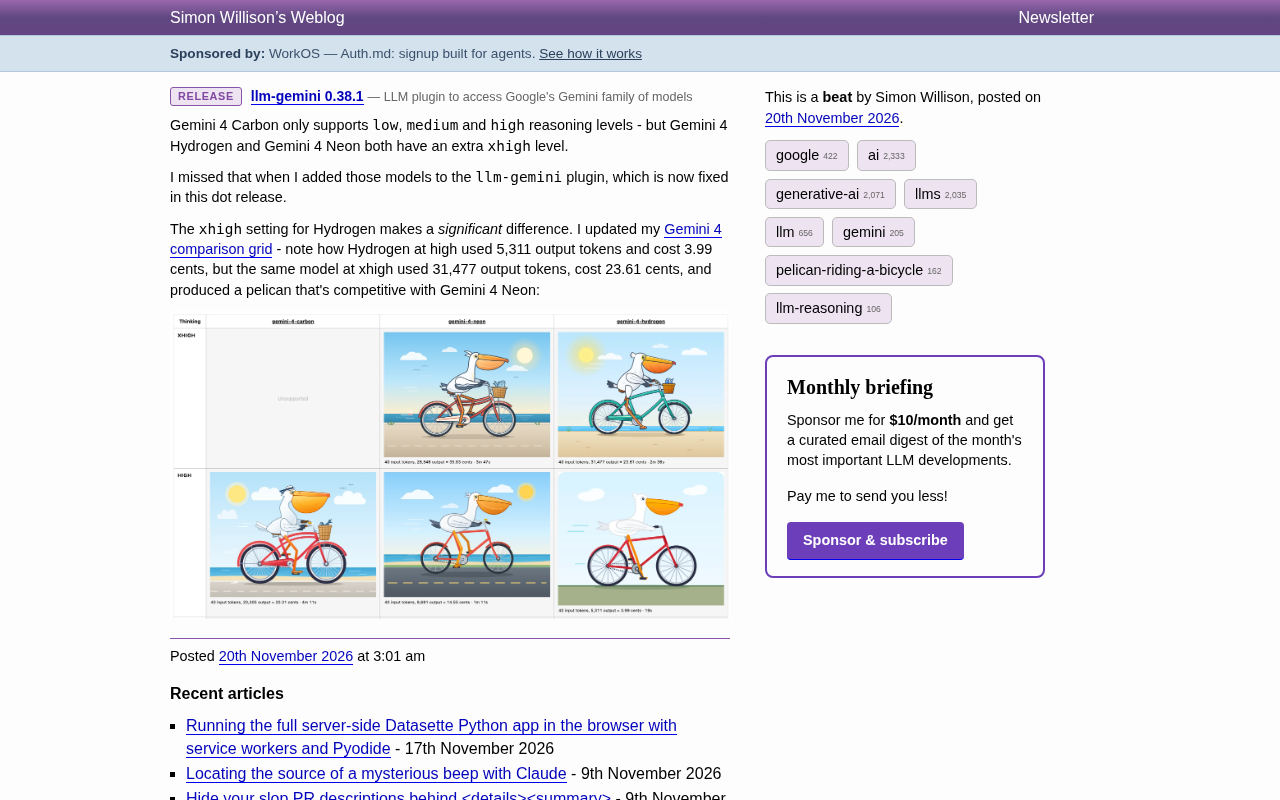
llm-gemini 0.38.1 Fix: Gemini 4 Hydrogen and Neon Gain xhigh Reasoning Level
llm-gemini 0.38.1 fixes the missing xhigh reasoning level for Gemini 4 Hydrogen and Neon. Comparison data shows xhigh sharply raises Hydrogen's output tokens and cost while clearly improving image quality to a level competitive with Neon.