PR Agent: The Open-Source PR Review Tool with Over 10K Stars
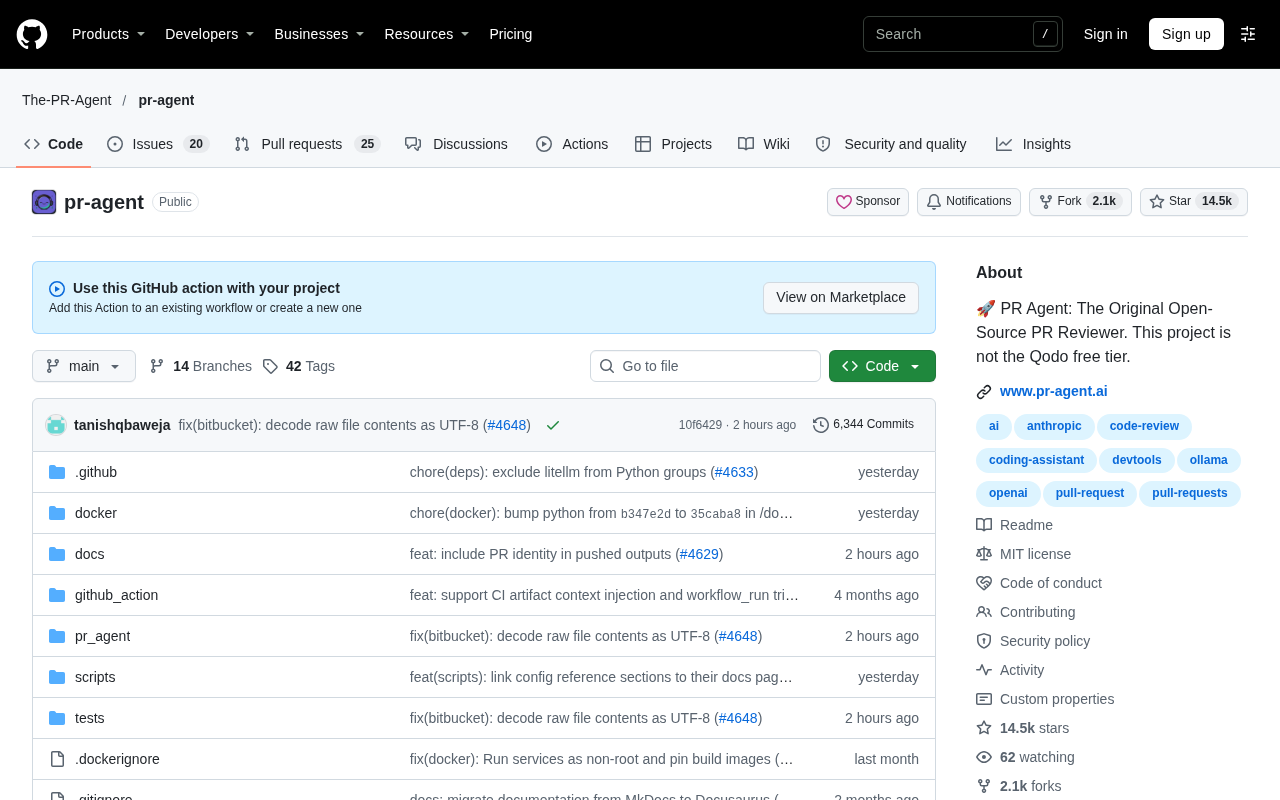
PR Agent is an open-source AI PR review tool with over 14.5K stars that automatically analyzes code changes and generates review comments.
PR Agent is an open-source PR review tool written in Python, with over 14,500 GitHub stars and more than 2,000 forks. It integrates with code hosting platforms to automatically analyze code changes and generate review comments on pull requests, covering code quality checks, potential defect identification, and improvement suggestions. The project explicitly states it is not the Qodo free tier and follows an independent open-source path, making it suitable as a first automated line of defense in code review, though business logic and architectural decisions still require human judgment.
Project Overview
PR Agent is an open-source PR review tool written in Python that has now earned over 14,500 stars and more than 2,000 forks on GitHub. The project positions itself as "the original" open-source PR reviewer and explicitly states that it is not the free tier of Qodo.
This project offers development teams an automated code review assistant. It can be integrated into code hosting platforms to automatically analyze and comment when developers submit a Pull Request, helping teams catch potential issues before manual review.
Core Features and How It Works
Automated PR Review Workflow
The core value of PR Agent lies in automating part of the code review process. When a developer creates a PR, the tool steps in automatically, analyzes the code changes, and generates review comments. This automated workflow can significantly reduce repetitive manual review work, allowing teams to focus on more complex architectural and logic issues.
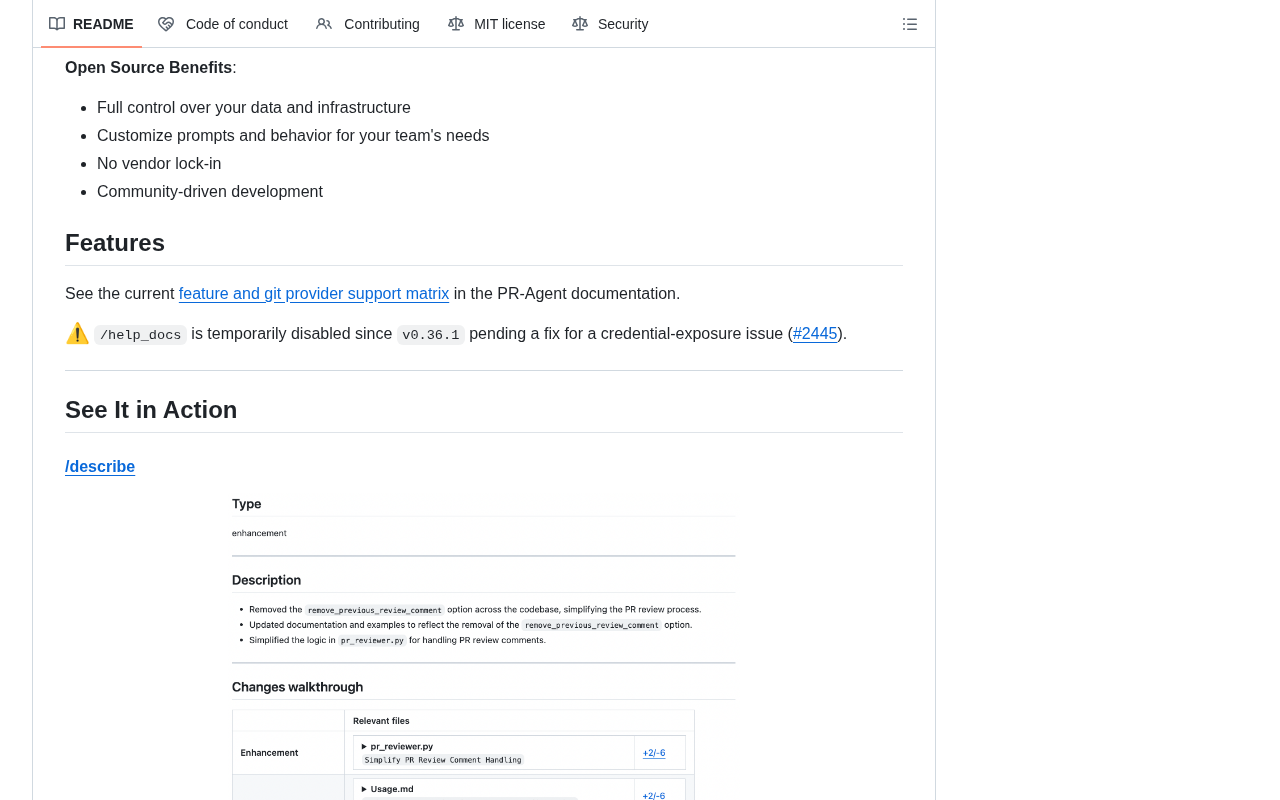
Pull Request (PR) is the core collaboration mechanism on code hosting platforms such as GitHub and GitLab: after a developer pushes code changes to a separate branch, they open a PR to request merging the changes into the main branch, and team members can comment line by line, discuss, and ultimately approve or reject. PR Agent hooks directly into this workflow—it is typically integrated as a GitHub App or CI task, triggered when a PR is created or updated, reads the diff, and writes comments back, so developers don't need to change their existing collaboration habits.
Static analysis refers to finding defects by parsing the syntax tree, control flow, and data flow of source code without running it; typical tools include pylint, bandit, and SonarQube. Its advantages are strong determinism and explainable false positives, but it struggles to understand cross-file business semantics. PR Agent layers AI capabilities on top of this, so it is not limited to rule matching and can provide natural-language review comments with context, making the two approaches complementary.
Multi-Dimensional Analysis Capabilities
Based on the project's positioning, PR Agent covers several key dimensions of PR review: code quality checks, potential defect identification, and generation of improvement suggestions. It is not just a simple static analysis tool; it combines AI capabilities to understand code context and provide more targeted feedback.
The typical implementation of large language model (LLM) code review is to send the PR's code diff, relevant file context, and a carefully designed prompt to the model, which then outputs structured review comments. Compared with traditional rule engines, this approach can identify semantic issues such as poor naming, missing edge cases, and absent exception handling; but the cost is token consumption, latency, and the possibility of "hallucinations"—suggestions that look plausible but are actually wrong. Therefore, mature tools usually apply confidence filtering to the output or require human confirmation before adoption.
Open-Source Positioning and Ecosystem
Clarifying the Relationship with Qodo
One point specifically emphasized in the project description is: "This project is not the Qodo free tier." This statement is noteworthy because it shows that PR Agent has an independent open-source development path rather than being a lead-generation tool for a commercial product. For teams that value code autonomy and controllability, this point has practical significance.
Qodo (formerly CodiumAI) is a commercial company providing AI code integrity tools, and its product line includes a free PR review feature. Discussions have appeared in the open-source community mistakenly identifying certain projects as the free tier of that commercial product. PR Agent's statement is precisely intended to draw a clear line: it is independently maintained by the community, its feature evolution and roadmap are not constrained by a commercial company's strategy, and there is no mechanism that forces payment after a "free quota" is exhausted. For teams that need to deploy in private environments or want to further develop the review logic, this independence directly affects technology selection decisions.
Active Community Growth
The project's GitHub metrics are impressive: 14,504 stars, 2,066 forks, and 279 new stars in a single day. This growth rate shows that demand in the open-source community for AI-assisted code review is real, and it also reflects recognition of the project's practical value.
Use Cases and Reflections
For small and medium-sized development teams, adopting PR Agent can improve code review coverage without increasing labor costs. For open-source project maintainers, automated review can filter out some low-quality contributions and reduce the maintenance burden.
However, AI review tools are ultimately assistants. Business logic judgments, architectural decisions, and team standards involved in code review still require human participation. Treating PR Agent as a "first line of defense" rather than the "final judge" is a more reasonable approach.
The project's Python tech stack also means it is friendlier to teams in the Python ecosystem, with relatively controllable integration and secondary development costs.
One-line Summary
PR Agent is an open-source AI PR review tool with over 14.5K stars that automatically analyzes code changes and generates review comments.
Paragraph Summary
PR Agent is an open-source PR review tool written in Python, with over 14,500 GitHub stars, more than 2,000 forks, and 279 new stars in a single day. After integration with code hosting platforms, it automatically analyzes code changes and generates review comments when developers submit a Pull Request, covering dimensions such as code quality checks, potential defect identification, and improvement suggestions. The project explicitly states that it is "not the Qodo free tier" and follows an independent open-source path, which has practical significance for teams that value autonomy and controllability. The article argues that it is suitable as a first automated line of defense in code review, reducing repetitive work for small and medium-sized teams and open-source maintainers, but business logic, architectural decisions, and team standards still require human judgment.
Related articles
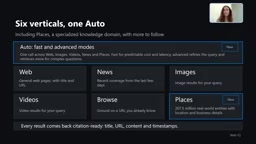
Microsoft WebIQ: Verifiable Real-Time Web Grounding for AI Agents
Microsoft WebIQ gives AI Agents real-time, citable web grounding across web, news, images, videos, and Places—164ms P95 latency, 50% fewer tokens, Scopes source control, and MCP integration.
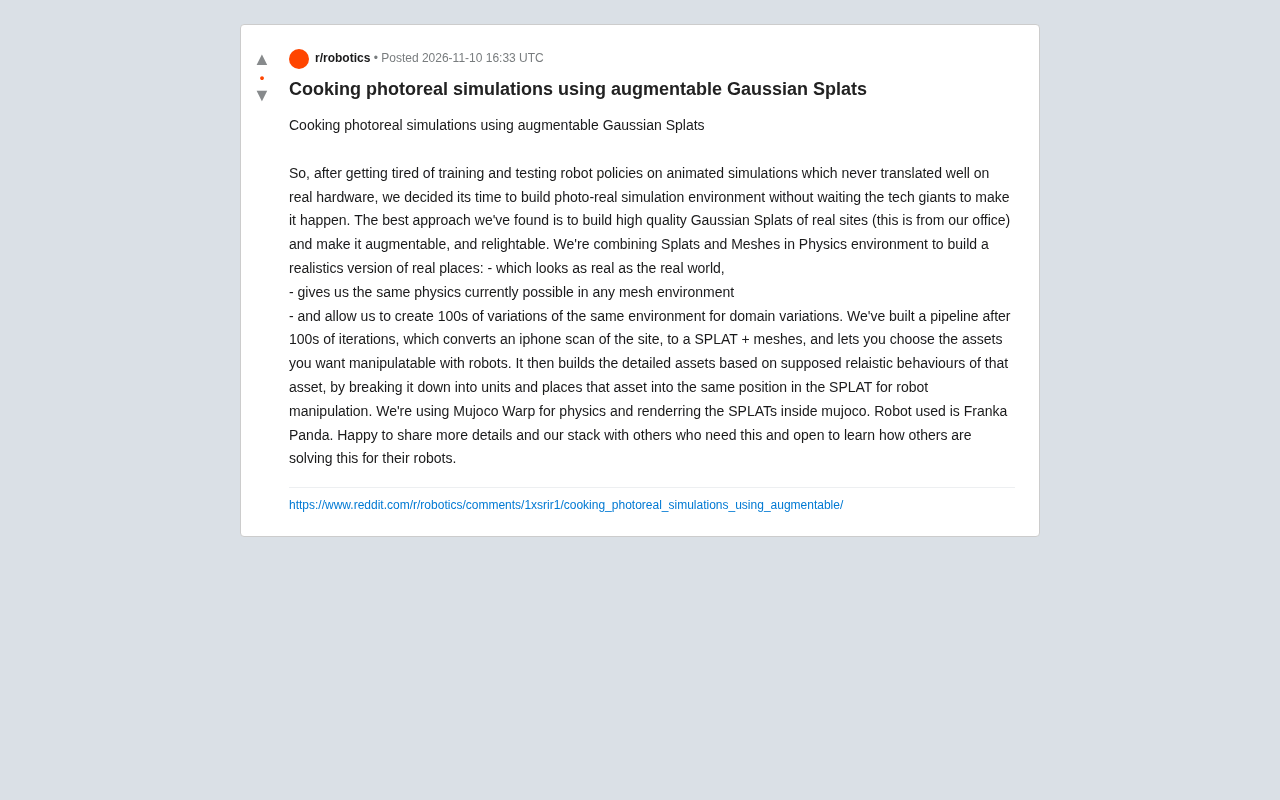
Augmentable Gaussian Splatting: Building Photorealistic Simulation Environments for Robot Training
Team combines Gaussian Splatting with meshes to build photorealistic robot simulation environments, integrating MuJoCo Warp physics and Franka Panda for augmentable, relightable real-site simulation.
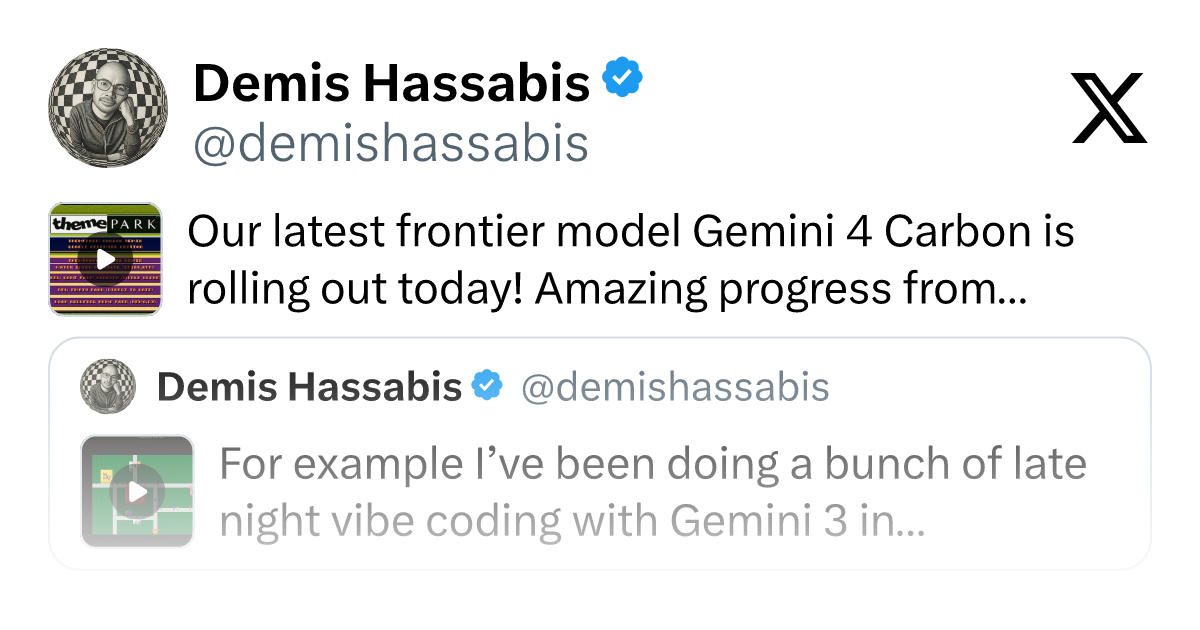
Gemini 4 Carbon Released: The Leap from Gemini 3 to Gemini 4 in Under a Year
Google releases Gemini 4 Carbon, less than a year after Gemini 3. In the official demo, Carbon reverse-engineered the Theme Park binary, added a new DeepMind-themed ride, and ported it to the web in one shot.