Prediction Markets: From Robin Hanson's Utopia to Timothy May's Dark Web Gambling Machine

Prediction markets have morphed from collective intelligence tools into trust-destroying gambling machines, far more destructive than the cypherpunk BlackNet vision.
Finn Brunton argues in Harper's that prediction markets' original goal — aggregating collective wisdom for reliable probability forecasts — has been completely distorted in practice. Current platforms cater mainly to sports bettors and operate more like a 'glorified gambling den' than Robin Hanson's 'collective intelligence dashboard.' More disturbingly, they dismantle social trust more efficiently than Timothy May's BlackNet: an Israeli journalist received death threats for accurately reporting a missile attack, as bettors tried to coerce him into rewriting the news to reverse their losses. Brunton advocates banning anonymous betting to curb insider trading, but remains pessimistic about the utopian potential of prediction markets.
The Two Faces of Prediction Markets
Prediction markets are a concept that sounds thoroughly academic — by letting participants bet on future events, they aggregate collective wisdom to produce probability estimates for uncertain outcomes. According to the stated design goals of platforms like Polymarket and Kalshi, this is exactly what they set out to achieve.
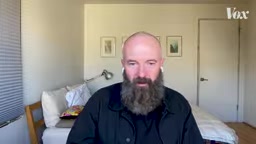
Yet Finn Brunton, a professor at UC Davis, reveals a very different reality in a recent article published in Harper's magazine. Speaking on The Gray Area podcast, he points out that prediction markets as currently operated look more like a "glorified gambling den," and the social problems they create far outweigh their informational value.
Brunton's core argument: the trajectory of prediction markets ultimately resembles the "trust-destroying machine" envisioned by cypherpunk Timothy May far more than the "collective intelligence dashboard" imagined by economist Robin Hanson.
Robin Hanson's Utopian Vision
Robin Hanson was one of the first economists to systematically theorize prediction markets. He began promoting the concept in the 1990s, and his core idea is elegantly simple: let people with specialized insight bet on future events, and use real money on the line to produce reliable probability forecasts.
Hanson's early experiments were remarkably forward-looking. He helped several tech companies build internal prediction markets, most notably at Xanadu — a company dedicated to building the hypertext system that would eventually evolve into the World Wide Web. Employees could bet on technological directions and social trends in an internal market, and the company used those odds to guide decision-making.
The essence of Hanson's theory is breaking down expert barriers. Brunton explains: "In your professional life, you might have to pretend you don't think a certain breakthrough is feasible because that's the academic consensus. But if there's big money on the table, you can place a bet, and the truth will surface through the odds."
This approach was briefly attempted by the U.S. government after 9/11 to forecast Middle East policy developments, but was quickly shut down after the media dubbed it a "terrorism futures market."

Robin Hanson's Academic Background
Robin Hanson is an associate professor of economics at George Mason University and one of the most influential theorists in the field of prediction markets. After earning his PhD at Caltech in the 1990s, he devoted himself to applying economic tools to future forecasting. His concept of "futarchy" — using prediction markets to guide policymaking — argues that governments should evaluate the expected effects of different policies through prediction markets rather than relying on traditional debate or expert committees. Though this theory has never been implemented in any country, it profoundly influenced later prediction market designers. Hanson is also known for thought experiments like the "Great Filter hypothesis," and his blog "Overcoming Bias" is an important intellectual hub for the rationalist community. It is precisely this belief in market mechanisms as "truth-discovery tools" that creates the central tension the article depicts between him and Timothy May's destructive vision.
Timothy May and the "BlackNet" Concept
In stark contrast to Hanson's idealism stands Timothy May. This Intel engineer, who retired early, dedicated the rest of his life to a vision of destroying the existing social order through cryptography.
May proposed the concept of "crypto-anarchy." Brunton notes in the interview that May was an avowed racist who "reveled in how the people he despised would suffer from the collapse of the state." But May's real "gift" was this: he could always foresee the worst possible applications of any technology.
May designed "BlackNet" as an anonymous information black market. Government employees with security clearances could sell classified information in complete anonymity in exchange for untraceable cryptocurrency. May's goal was not simple information trading, but to make everyone within institutions fear for their own security — when anyone could be a leaker, the trust system collapses from within.
Brunton emphasizes that BlackNet's ultimate purpose was to create paranoia and paralysis within institutions, not direct economic gain.
The Historical Context of Crypto-Anarchy
Timothy May founded the "crypto-anarchist" mailing list in 1988, one of the key intellectual origins of the cypherpunk movement. In his 1992 "Crypto Anarchist Manifesto," he predicted that cryptography would dismantle the governance capacity of modern nation-states just as the printing press dismantled the authority of the church. May's core logic: once anonymous communication and untraceable electronic currency become widespread, governments will be unable to tax, unable to regulate information flows, and unable to maintain a legal monopoly. This thinking directly influenced the birth of Bitcoin — the Times headline Satoshi Nakamoto embedded in the genesis block was a satirical jab at bank bailouts, continuing May's hostility toward centralized institutions. However, the anonymity May envisioned also spawned criminal ecosystems like ransomware and dark web markets, which is precisely the evidence Brunton cites for May "foreseeing technology's worst applications." Understanding this lineage is essential to seeing why prediction markets are viewed as a "more efficient upgrade" of BlackNet.
How Prediction Markets Became a More Efficient "BlackNet"
The most unsettling insight in Brunton's article is this: the actual operation of today's prediction markets achieves the goal of dismantling trust more efficiently than May's BlackNet concept ever could.
The most extreme case comes from Israel. A journalist accurately reported on Iran's missile attack on Israel, then received a flood of skeptical emails insisting he had seen interceptor fragments rather than the missiles themselves. When the journalist refused to amend his report, the threats escalated to death threats against him and his family. An investigation revealed that massive prediction market bets were behind it — someone had bet that Iran would not launch a missile attack, and those who lost money tried to reverse the bet by coercing the journalist into rewriting the news.
Brunton comments: "This is far more serious than bribing players to throw a game in sports betting. This is hiring someone to kill a journalist who reported truthfully, in order to win a multi-million-dollar bet."
Other cases include: someone using a hair dryer to manipulate temperature sensors at Charles de Gaulle Airport to win a bet on that day's temperature.
Insider Trading and the Anonymity Problem
Hanson is still active in academia and believes insider trading is beneficial to markets. His logic: when people with inside information participate in trading, market prices become more accurate. For example, if employees of the U.S. Bureau of Labor Statistics participated in employment data prediction markets, the market's forecasts for employment data would be more precise.
Brunton partially agrees — it would indeed improve informational accuracy — but he argues the cost is too high. "The cost is that everyone knows the game is rigged. If you don't have inside information, you're the sucker getting fleeced."
Brunton proposes a compromise: ban anonymous betting. If bettors must use their real names, then when Google employees bet on their company's AI product launches, they must disclose their identities, and the market can judge the credibility of their predictions accordingly. More importantly, it would expose those who consistently predict incorrectly, revealing the flaws in their models.
The Insider Trading Controversy in Prediction Markets
Insider trading is strictly prohibited in traditional securities markets, but in the context of prediction markets, there is significant academic disagreement. Economists like Hanson argue that the core function of prediction markets is information aggregation, and the participation of insider traders precisely injects private information into prices, improving forecast accuracy. This logic aligns with the "efficient market hypothesis" — prices already reflect all available information. However, Brunton's rebuttal points to the fairness dimension: if market participants know that some people have a systematic information advantage, the rational choice is to exit the market, leading to a liquidity drain. More importantly, prediction markets often involve public events (such as elections, pandemics, military actions), and insider trading may involve national security or trade secrets, whose legality far exceeds what academic debate can cover. The U.S. Commodity Futures Trading Commission's (CFTC) regulatory framework for platforms like Kalshi is precisely an attempt to draw boundaries between information efficiency and market integrity, but no clear consensus has yet emerged.
A Potentially Better Future
At the end of the program, Brunton paints a picture of what prediction markets could look like if they could be "saved." He envisions a "dashboard of the future" — one that covers not just sports and finance, but also shows shifting odds on Nobel Prize winners, timeline predictions for quantum computing breakthroughs, and probability distributions for key climate change milestones.
He even looks forward to such a tool helping young students understand where future opportunities lie, rather than being quietly lured into addiction by gambling platforms.
But when asked how much he would bet on this utopian vision, Brunton gives an honest answer: "Currently, I'm betting it won't happen." His reasoning: American industry has entered an era where "harvesting users is an acceptable business model."
Still, he leaves room for doubt: "Maybe in a few years, I'll change my bet. That's the future I hope to see."
<p style="text-align:center;color:#8b8b8b;font-size:14px">Source: Vox's *The Gray Area* podcast interview with Finn Brunton</p>Related articles

Amphibious Transforming Drone: Beyond 100x Power Savings, What Are the Real Needs?
Is the amphibious transforming drone just a gimmick? Starting from the 100x power difference of the M4 Morphobot, explore real application scenarios and thesis topic ideas, analyzing boundary conditions where pure drones and pure ground robots both fail.

Warhound Raises $200 Million: Genetically Engineered "War Dogs" Paired with Anduril Gear
Warhound raises $200M, backed by Ben Lamm and Palmer Luckey, to genetically engineer dogs for military and law enforcement use and equip them with Anduril gear. This article analyzes its technology direction, funding logic, and ethical controversy.

Claude API Comes to Google Cloud: IAM Integration and SDK Access Guide
Anthropic hosts the full Claude API on Google Cloud with IAM-controlled permissions and unified billing. This guide covers the Vertex AI and Anthropic-hosted entry points, IAM role configuration, and SDK access.