Previous-Token Prediction Enables LLM Inversion: A New Prompt Reconstruction Method
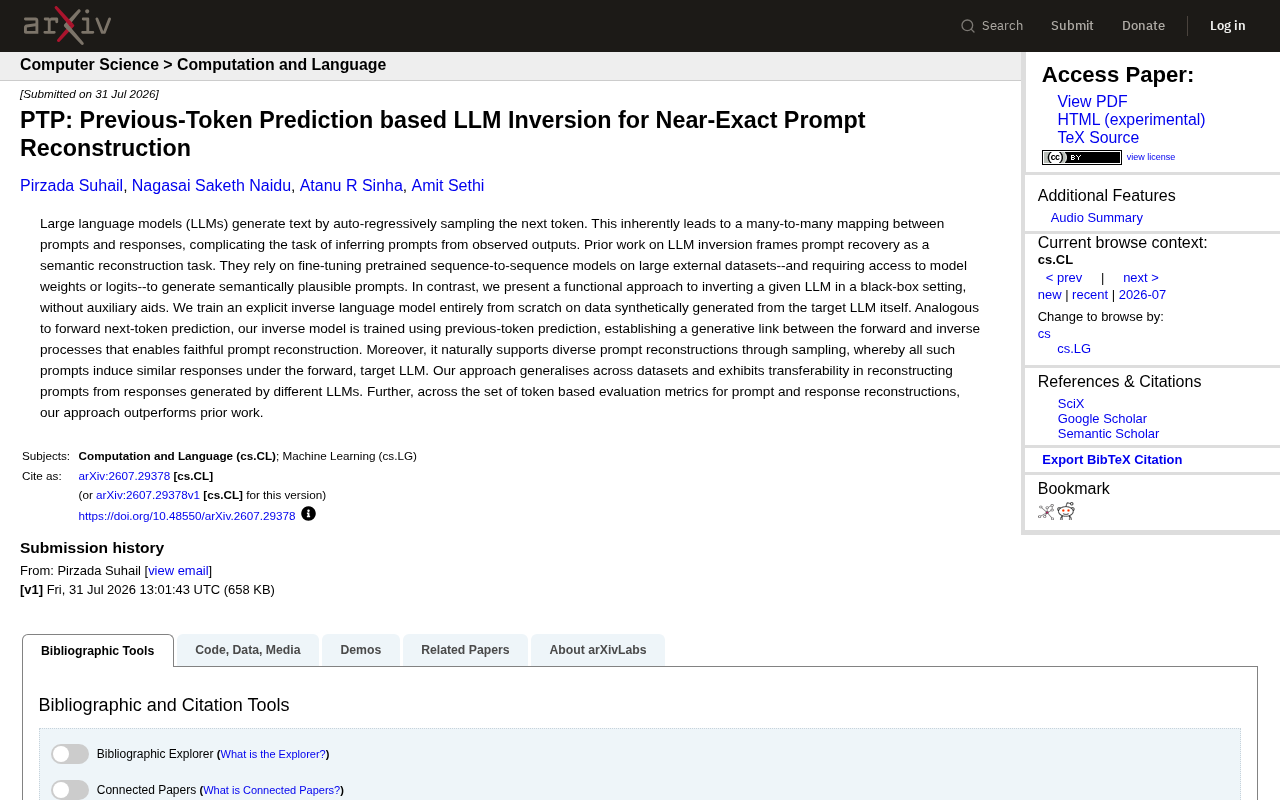
Researchers propose a previous-token prediction-based LLM inversion technique to reconstruct original prompts from model outputs.
The article introduces a Hacker News-discussed study proposing a previous-token prediction-based LLM inversion method that reverse-engineers the original prompt from model output text. It explains the core idea of reframing inversion as a previous-token prediction task, contrasts it with gradient-based methods, and notes the discussion's low activity and lack of experimental details, with security implications for prompt protection.
Large language model (LLM) prompts often contain sensitive information or trade secrets, but can the original prompt be reverse-engineered from model outputs? A study discussed on Hacker News proposes an LLM inversion technique based on Previous-Token Prediction that attempts to reconstruct prompts from model outputs.
Background: The Hidden Risk of Prompt Leakage
When using LLMs, user prompts are processed internally by the model to generate outputs. The conventional view holds that as long as model weights and internal states are not exposed, prompts are safe. However, research on inversion attacks suggests that attackers may be able to infer input content solely from model outputs.
This study focuses on the prompt reconstruction task: given the output text of an LLM, attempt to recover the original prompt that triggered that output. If feasible, it means sensitive prompt information such as corporate secrets and personal privacy has a leakage pathway.
Inversion attacks are not a new concept in machine learning security; they target the model's memorization and leakage of training data or input information. Classic work such as model inversion against generative models typically assumes the attacker can access the model and observe its confidence scores, thereby reconstructing sample features from the training set. In the LLM setting, the attack surface changes: if the attacker can only see the final output text (black-box setting), inversion difficulty increases significantly; if the attacker can obtain the model's token probabilities or gradient information, the inversion success rate rises substantially. Understanding this distinction is a prerequisite for assessing the actual threat level of the method described in this article—the access privileges available to the attacker determine the real-world likelihood of prompt leakage.
Core Method: Using Previous-Token Prediction for Inversion
The key idea of this research is to transform the inversion problem into a prediction task. Standard next-token prediction is the fundamental mechanism by which LLMs generate text, but here the approach reverses it—using previous-token prediction to infer the input sequence.
Specifically, the method leverages the model's ability to model conditional probabilities over token sequences to work backward from the output side and derive possible prompt sequences. The study's title directly states this technical approach: Previous-Token Prediction Based LLM Inversion. This idea contrasts with traditional gradient-based inversion methods, attempting to find a breakthrough in the model's own prediction mechanism.
Previous-token prediction refers to the task of predicting the preceding token based on the current and subsequent tokens, which can be viewed as the time-reversal of standard next-token prediction. In the Transformer architecture, causal attention masks naturally allow the model to see only left-side context; to implement previous-token prediction, one typically needs to adjust the attention direction (e.g., using bidirectional or reverse attention) or reverse the sequence before training. This mechanism can be used for inversion attacks because the model's conditional dependencies between tokens encode local structural information of the input sequence, and attackers can leverage these reverse prediction signals to progressively reconstruct possible prompts. Compared with gradient-based inversion methods, previous-token prediction is closer to the model's native prediction interface and is more operable when only output access is available, but its reconstruction accuracy depends heavily on how strongly the model models the input sequence.
Discussion Activity and Points Yet to Be Verified
According to information on Hacker News, the post received 6 points and 2 comments, so the discussion scale is still small. This means the method is currently at an early stage with limited community feedback.
Note that the original material only provides the title and discussion data, lacking key details such as the paper's specific experimental setup, datasets, and success rates. Therefore, the method's inversion effectiveness in real-world scenarios, its applicability to different models, and the feasibility of defenses cannot currently be confirmed from the available information.
Security Implications
From a security perspective, this line of research reminds us that LLM outputs are not completely isolated from inputs. As inversion techniques develop, prompt protection may require new approaches, such as adding perturbations at the output layer, limiting the amount of information in outputs, or preprocessing sensitive prompts. For application scenarios that rely on prompt confidentiality, this direction deserves ongoing attention.
One-line Summary
Researchers propose an LLM inversion technique based on previous-token prediction that attempts to reconstruct original prompts from model outputs.
Paragraph Summary
The article introduces a study discussed on Hacker News that proposes an LLM inversion method based on previous-token prediction, aimed at reverse-engineering the original prompt that triggered an output from the model's output text. The article first notes that prompts may contain sensitive information or trade secrets, and that the existence of inversion attacks means prompts are not absolutely safe; it then explains the core idea of the method—transforming the inversion problem into a previous-token prediction task, using the model's conditional probability modeling over token sequences to work backward to the input, in contrast with traditional gradient-based inversion methods. The article also notes that the discussion thread has low activity and limited community feedback, and that the original material lacks key details such as experimental setup, datasets, and success rates, so the method's effectiveness remains to be verified. Finally, from a security perspective, it suggests defense ideas such as output-layer perturbation and limiting output information.
Related articles
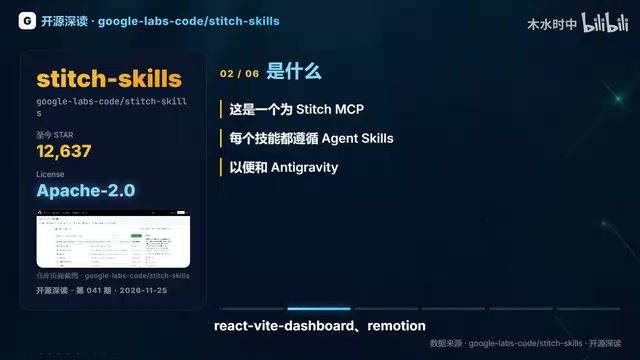
Google Stitch Skills: Connecting Coding Agents to the Design Workflow
Google Stitch Skills is an Agent Skills library following the open standard, adding a design-to-code workflow to the Stitch MCP Server. This article breaks down its three skill groups, SKILL.md directory structure, installation paths, and dependency pitfalls.

40.5-Inch Color E-Paper Art Frame: An Art Display You Charge Once a Year
The Ink Poster Tella 40.5-inch color e-paper art frame uses the E Ink Spectra 6 full-color solution: A1 format, no backlight, no noise, about one charge a year, 2,000+ licensed artworks built in, and automatic adaptation of phone photos.

Jingle Jam Memories: RT's Awkward First Encounter with Lewis
RT shares his awkward first Jingle Jam experience: unexpectedly pushed into the studio, meeting Lewis and Yogg's cast, and Toddy appearing in armor.