Professional Designers Test AI-Cloned CAD: How Far Are Fusion/SolidWorks Alternatives Really?

AI-cloned CAD has realistic interfaces but obvious interaction flaws; professional designers say it is far from replacing existing tools.
The LTT team invited product designers and manufacturing engineers who use Fusion and SolidWorks daily to test two vibe-coded CAD clones, SolidCraft and PuraMetric. SolidCraft almost replicates Fusion's interface and even has a smoother viewport, but sketch constraints snap in only one direction and deleting lines changes the shape. PuraMetric imitates SolidWorks but lacks core shortcuts such as S, Space, and right-click scroll wheel, as well as contour selection, and was rated by the engineer as "absolutely not" a replacement for existing tools. Both list Claude as a main contributor; SolidCraft has more than 120 GitHub contributors, and PuraMetric took only about a month to develop. The developer aggressively predicts software developers will disappear like blacksmiths, but testing shows these clones still have a clear gap to production-grade tools and are unlikely to shake giants such as Autodesk and Dassault in the short term.
AI programming tools are cloning expensive professional software, from Photoshop to CAD, and with subscription fees running hundreds of dollars a month, these clones look especially tempting. But how do they actually hold up for professional designers? The LTT (Linus Tech Tips) video team invited several product designers and manufacturing engineers who use Fusion and SolidWorks every day to try out two vibe-coded CAD clones, and the results were mixed.
The State of AI-Cloned CAD: Somewhere Between Fun and Usable
The two programs tested in the video are SolidCraft and PuraMetric. SolidCraft clearly imitates Fusion in its interface and interaction logic; its GitHub page lists Burbruck and Anthropix Claude as the main contributors, with more than 120 other developers involved. PuraMetric is closer to SolidWorks; according to its developer MaleficentRelease61 on Reddit, it is written in Rust and JavaScript, took only about a month to develop, and used Claude Opus 5.5 to assist development.
A designer with eight years of Fusion experience said SolidCraft's interface is almost identical to Fusion, with icons that are even cooler, but many functional areas are empty.
Vibe coding is a term coined by former Tesla AI director Andrej Karpathy in early 2025. It refers to a development approach in which developers mainly describe their intent in natural language, let large language models generate code, and act more as "vibe guides" than line-by-line writers. Its typical characteristics are extremely fast iteration and a large volume of code, but architectural consistency and edge-case handling often depend on later patching. In complex desktop software such as CAD clones, vibe coding can quickly build out the interface skeleton and basic commands, but it struggles to automatically guarantee consistency in deep interaction logic such as constraint solving, feature history, and keyboard shortcut systems. This is precisely the technical root of the designers' feeling in the article that "everything is there but something is off."
Interface Imitation Is Easy; Detail Experience Is Hard to Replicate
Professional designers are far more sensitive to operational smoothness than ordinary users. In SolidCraft, one designer found that sketch constraints can only snap in one direction, whereas Fusion can snap in both horizontal and vertical directions simultaneously and display midpoints; this missing detail directly affects design efficiency. Even more surprisingly, when deleting a line, SolidCraft changes the entire shape, whereas Fusion keeps the shape unchanged.
"It's like walking into a house that someone has redecorated to match yours. Everything is in its original place, but something always feels off," one of the designers participating in the test described it.
In terms of performance, SolidCraft's viewport is actually smoother than Fusion's, but the designer pointed out that this may be because it has fewer features and a lighter load.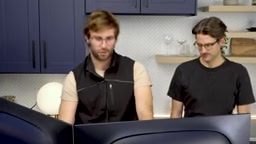
Sketch constraints are the core mechanism of parametric CAD: after users draw lines, geometric constraints such as horizontal, vertical, tangent, coincident, and midpoint, along with dimensional constraints, let the solver automatically determine the degrees of freedom of the shape. Mature software (such as Fusion and SolidWorks) provides real-time previews of snapping candidates in multiple directions while dragging or drawing, and allows horizontal and vertical constraints to be applied simultaneously. If a clone implements only one-directional snapping, users must manually add constraints or repeatedly adjust, which directly slows down design iteration. The robustness of the constraint solver is also difficult: when a line is deleted, the solver must redistribute the remaining degrees of freedom to preserve the shape; poor handling causes the entire profile to deform. The case in the article where deleting a line in SolidCraft changes the shape is exactly this type of problem.
The SolidWorks Clone: An Even More Inconsistent Experience
PuraMetric's experience is noticeably rougher. An engineer who uses SolidWorks about six hours a day found that the software lacks keyboard letter labels, forcing users to guess at keys, and that common SolidWorks shortcuts such as S, Space, and right-click scroll wheel are completely nonfunctional. "As a product designer, this is garbage design," he said bluntly.
Basic operations such as dimensioning and sketch trimming also have obvious flaws. Although error prompts can explain the problem (for example, "the sphere cannot pass through the edge"), the overall interaction is extremely unstable, and each command behaves inconsistently. More critically, PuraMetric lacks SolidWorks' ability to flexibly select contour regions for extrusion or cutting; users can only go back to the sketch and delete lines.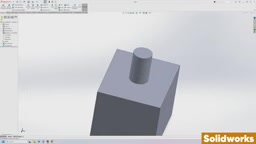
When asked whether he would be willing to give up his SolidWorks license, the engineer's answer was "absolutely not." But he also admitted that the software's name, Parametric, is quite interesting, and that it is already a decent starting point.
Contour selection is a common feature in SolidWorks feature commands such as extrusion and cut: when a sketch contains multiple closed regions or nested contours, users can directly click the desired region inside the feature command without returning to the sketch to delete extra lines. This interaction depends on the software's real-time parsing of sketch region topology and keeps it associated with feature history. If a clone lacks this feature, users must exit the feature, edit the sketch, and re-enter every time they adjust the contour, interrupting the workflow. This is one specific manifestation of why the engineer considered its "behavior inconsistent for every command." The same applies to the shortcut system: the S key shortcut bar, the Space key view menu, and right-click drag gestures are muscle memory formed by SolidWorks users over many years; when they fail, the learning cost resets to zero.
What Role Do Models Like Claude Play in CAD Clones?
Both programs explicitly list Claude as a main contributor, reflecting the typical path of current AI programming tools when replicating complex desktop software: an experienced developer plus a large language model generating large amounts of code, followed by patching from the GitHub community. SolidCraft already has more than 120 contributors, while PuraMetric took shape in only a month; the development speed is indeed astonishing.
But speed does not equal quality. The designers in the video repeatedly mentioned "vibe coding," meaning code is generated by feel, and whether features are complete or interactions are consistent is not a priority. One designer who uses Linux said that Fusion has no Linux version, so this type of browser-based CAD clone is attractive to him, and AI is accelerating the exodus of Windows users.
The Gap Between Developers' Bold Claims and Reality
PuraMetric's developer declared on Reddit that in one to two years, job opportunities for software developers will be as scarce as those for blacksmiths, and the entire industry will be doomed. Such a prediction is clearly too aggressive. Based on actual testing, these clones still have obvious gaps compared with mature commercial software in basic sketching, constraints, and feature operations, and they are still far from replacing everyday production tools.
The ArtCraft series also includes more clones such as CADCraft (only a few weeks old at the time of recording) and OpenCAD Studio (about six months old). The LTT team did not have designers test these two because they are more familiar with SolidWorks and Fusion. But it is foreseeable that as model capabilities improve and community contributions increase, such software will continue to iterate.
Potential Impact on the Design Tool Market
In the short term, AI-cloned CAD poses limited threat to giants such as Autodesk and Dassault Systèmes. Professional users rely on operating habits accumulated over years, shortcut systems, manufacturing modules, and collaboration ecosystems, and these cannot be replaced by interface imitation alone. Fusion's personal edition is free, and SolidWorks is paid for by companies; price is not the only decision factor.
But in the long term, if AI programming tools can continue to lower the barrier to software development, there will be more and more browser-based, cross-platform, lightweight CAD alternatives. For users who only do simple design and are not involved in complex manufacturing workflows, these tools may already be sufficient. Whether the developer's aggressive prediction comes true is still unknown, but the competitive landscape of the CAD market over the next few years is worth watching.
One-line Summary
AI-cloned CAD has realistic interfaces but obvious flaws in detailed interaction; professional designers say it is far from replacing existing tools.
Paragraph Summary
The LTT team invited product designers and manufacturing engineers who use Fusion and SolidWorks every day to test two vibe-coded CAD clones, SolidCraft and PuraMetric. SolidCraft's interface almost replicates Fusion, and its viewport is even smoother, but sketch constraints snap in only one direction and deleting lines changes the shape; PuraMetric imitates SolidWorks but lacks core shortcuts such as S, Space, and right-click scroll wheel, as well as contour selection, and was rated by the engineer as "absolutely not" a replacement for existing tools. Both programs list Claude as a main contributor; SolidCraft has more than 120 GitHub contributors, and PuraMetric took only about a month to develop. The developer aggressively predicts that software developers will disappear like blacksmiths, but actual testing shows these clones still have an obvious gap to production-grade tools and are unlikely to shake giants such as Autodesk and Dassault in the short term.
Related articles

Conference Badge Turned Game Boy Color: A Gemini-Assisted Hardware Hack
The GitHub Universe conference badge was hacked into a device that runs Game Boy Color emulators. Steve Francia used Gemini to port NES and Game Boy emulators; this article analyzes AI's real role in hardware hacking and the evolution of conference badges.

Musk Says Ukraine's Military Violated Starlink Terms of Service, Sparking Controversy
Musk claims Ukraine's military violated Starlink's terms of service by using it for offensive drone strikes; Ukraine denies it. The dispute highlights the role of commercial satellite technology in conflict.

Ghostty 1.4.0 Released: Performance and Experience Upgrades for the Terminal Emulator
Ghostty 1.4.0 is released, focusing on terminal performance, rendering accuracy, and usability improvements. This article covers the release positioning, technical approach, community feedback, and upgrade advice.