PS5 Linux Maintainer Quits: Are LLMs Eroding the Foundation of Open Source Collaboration?

PS5 Linux maintainer resigns over LLM-generated "AI slop," exposing open source's AI-era trust crisis.
The core maintainer of the PS5 Linux port resigned, citing a flood of contributions from newcomers using LLMs without understanding the code. The real issue isn't the tools themselves but the disconnect between AI-generated output and contributors' actual competence. This "AI slop" burdens maintainers with costly reviews and erodes the trust contract that open source runs on — raising urgent questions about how communities can rebuild quality and accountability in the AI era.
A Resignation That Sparked Debate
The core maintainer of the PS5 Linux port has stepped down, citing a new phenomenon sweeping through open source communities: a growing wave of contributors who are "noobs using LLMs without understanding what they're doing." That pointed remark earned 68 upvotes and dozens of comments on Hacker News, touching a nerve around an increasingly sensitive topic in the open source ecosystem — the tension between AI-assisted programming and the quality of collaboration.
For developers who have dedicated themselves to the demanding, low-level work of hardware porting, the PS5 Linux project is anything but ordinary. It involves reverse engineering, hardware abstraction, kernel adaptation, and other areas that require deep, hard-won expertise. When a maintainer reaches for the phrase "noobs using LLMs" to describe the incoming wave of contributors, it reflects more than personal frustration — it signals a structural concern.
Why "Not Understanding the Code" Is the Core Problem
The controversy isn't really about LLMs themselves — it's about submitting things you don't understand. In open source collaboration, maintainers must review every contribution. When contributors use AI to generate code that looks plausible but is subtly wrong or low quality, and can't explain the reasoning behind it, the review burden multiplies.
This kind of code has earned a name in the community: "AI slop" — it compiles, it runs, but it hides landmines in edge cases, memory management, and hardware timing. For a kernel-level project, those landmines can be fatal. The time maintainers spend sorting through and correcting low-quality PRs far exceeds the time it would take to write the code themselves. That "reverse drain" is often what finally breaks a maintainer.
Notably, two camps emerged in the Hacker News discussion. One side agreed with the maintainer's assessment — LLMs lower the barrier to participation without raising participants' actual competence. The other side cautioned that tools are neutral; the real questions are whether users have the judgment to use them well, and whether communities have built effective gatekeeping mechanisms.
The term "AI slop" has spread quickly through developer communities. It refers to AI-generated code that passes surface-level inspection but lacks internal coherence. Typical traits include excessive boilerplate, ignored edge cases, mechanical stitching of patterns from mismatched contexts, and the use of deprecated or platform-inappropriate APIs. In kernel or driver-level projects, these issues are especially dangerous — a misplaced memory barrier, incorrect interrupt handling order, or hardware register timing issue often won't surface in standard testing, only manifesting as hard-to-reproduce crashes under specific loads or edge conditions. Hardware porting projects like PS5 Linux are saturated with exactly these concerns. Maintainers can't simply rely on automated testing to filter such risks; they must review line by line. That's the structural reason maintenance costs have spiked.
The Trust Cost of Open Source Collaboration Has Been Repriced
Open source has always rested on an implicit social contract: the code you submit reflects your genuine understanding and capability, and maintainers extend trust — and eventually commit access — on that basis. The rise of LLMs is destabilizing that contract.
When anyone can generate a "professionally looking" patch in minutes, the link between code quality and the author's actual ability frays. Maintainers are forced to spend far more energy verifying whether contributors truly understand what they've submitted. That's a fundamental increase in trust costs. For projects driven by volunteer enthusiasm, rising costs typically mean losing core contributors.
This helps explain why this kind of resignation resonates so broadly. It's not an isolated incident — it's a symptom of friction the entire open source ecosystem is experiencing in the AI era: how to hold the line on collaboration quality while embracing new tools.
The traditional "committer/maintainer ladder" in open source projects relies on contribution history to build trust: someone who consistently submits high-quality patches demonstrates genuine understanding of the codebase, and gradually earns review rights, merge rights, and eventually architectural authority. The underlying assumption is that contribution behavior reflects real capability. When AI can mass-generate code that clears surface-level review, that signal degrades. Maintainers face not just increased per-review burden, but a long-term personnel evaluation problem: who is a contributor who can genuinely take independent responsibility, and who has merely used a tool to simulate competence? Some projects have begun experimenting with responses — requiring new contributors to participate in async discussions before submitting, explain design trade-offs, or accompany a first contribution with a written testing rationale, in order to restore reliable signals of capability.
What This Means for AI-Assisted Programming
Reducing this episode to "AI is harmful" would be a misreading. The more accurate interpretation is that AI-assisted programming amplifies both ends of the skill spectrum. For experienced developers, LLMs are force multipliers — they accelerate prototyping, fill in boilerplate, and assist with debugging. For beginners lacking foundational knowledge, LLMs can manufacture an "illusion of competence" — producing code that exceeds the author's actual understanding, with no ability to own the consequences.
In high-barrier, systems-level projects, the cost of that illusion is especially steep. This suggests that open source governance may need new norms going forward — requiring contributors to articulate their design intent, raising automated testing thresholds, or flagging AI-generated content as such.
The lesson for individual developers is equally clear: LLMs can accelerate both learning and output, but they cannot substitute for understanding first principles. The more powerful the tool, the scarcer — and more valuable — sound judgment becomes.
The "illusion of competence" overlaps with the Dunning-Kruger effect psychologically, but the LLM-powered version is more insidious: users aren't overestimating knowledge they already have — they're mistaking the tool's output for their own understanding. Experienced developers using LLMs treat generated output as a draft, cross-checking it against their domain knowledge and revising accordingly. Those lacking foundations often can't assess the output's reliability — because the reason they turned to the tool in the first place is that they don't know. This asymmetry means LLMs won't automatically close the skills gap; they may actually mask it at the community surface level — the volume of low-quality contributions rises while the variance in quality distribution simultaneously widens. For those governing high-barrier projects, recognizing this structural shift is more practically meaningful than debating whether AI should be used at all.
Closing Thoughts
The PS5 Linux maintainer's departure is a signal worth heeding across the entire tech community. It doesn't raise the question of whether AI belongs in open source — it's already everywhere. The real question is how communities can rebuild the boundaries of quality and trust now that it is. The contest between tools and understanding has only just begun.
Related articles
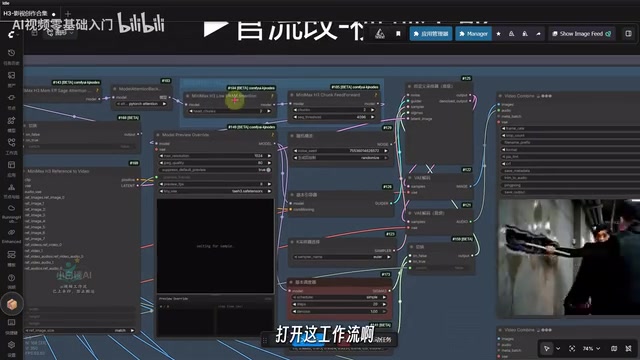
Running 27B Models on 16GB VRAM: Local Video Generation with Qwen3 and MiniMax H3 Tested
Run 27B open-source models on 16GB VRAM: a ComfyUI workflow collection combining Qwen3 and MiniMax H3 for text-to-image, image editing, and local video generation.
Training a Mario AI with NEAT Neuroevolution: An Evolutionary Experiment from Three Failures to Completion
A developer used NEAT neuroevolution to train a Mario AI controller that cleared a tricky ROM Hack level. Learn how NEAT works, its real challenges, and its limits.

MiniMax Open-Source Video Model Local Deployment: Runs on 8GB VRAM with Impressive Speed
MiniMax's open-source AI video model runs locally on 8GB VRAM via ComfyUI. Full deployment guide: model paths, 5 workflow options, text-to-video & image-to-video results.