Python + AI Learning Roadmap for Beginners: A Complete Guide from Basics to Practice

A structured beginner roadmap covering Linux, MySQL, and Python with clear goals and project benchmarks.
This guide deconstructs a Python + AI beginner curriculum into three foundational modules — Linux, MySQL, and Python — each with explicit learning goals and assessment standards. It explains how these modules connect to career-track coursework and shares practical study techniques like mind mapping for better retention.
For beginners looking to enter the world of Python and AI from scratch, the biggest challenge is rarely what to learn — it's what order to learn it in, and how deep to go. This guide breaks down a structured beginner curriculum into a clear, step-by-step learning path, from environment setup to hands-on projects, so you can avoid common pitfalls right from the start.
The Three Core Modules of the Foundational Stage
Solid programming fundamentals don't start with Python or AI frameworks — they start by laying the groundwork in systems and data. According to this curriculum's design, the foundational stage is divided into three modules that are independent of each other yet build progressively:
- Linux Basics: Understanding the OS and the von Neumann architecture, setting up your environment (e.g., connecting to a VMware virtual machine via FinalShell), and learning essential commands.
- MySQL Basics: From creating databases, tables, and records, to mastering DDL, DML, DCL, and DQL syntax, and eventually working with multi-table queries.
- Python Basics: Covering variables, data types, type conversion, loops, conditionals, functions, file I/O, and more.
Background: The Von Neumann Architecture The von Neumann architecture is the theoretical foundation of modern computers, proposed by mathematician John von Neumann in 1945. Its central idea is "stored-program" computing — both program instructions and data are stored in memory and executed sequentially by the CPU. The architecture divides a computer into five components: the arithmetic logic unit, control unit, memory, input devices, and output devices. Understanding this model helps beginners grasp why programs work the way they do — why variables occupy memory, why the CPU is a performance bottleneck, and why disk I/O is slower than RAM. These foundational intuitions carry over into operating systems, databases, and even AI model deployment.
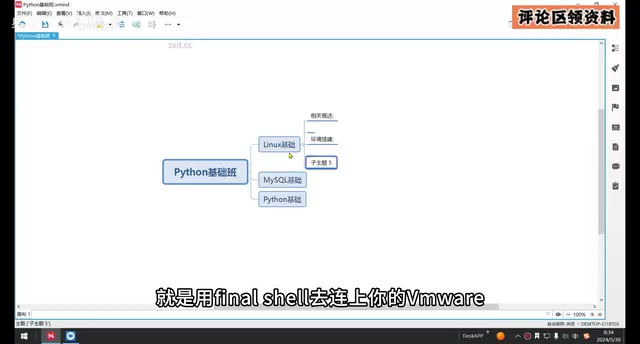
One important detail worth noting: the curriculum explicitly emphasizes that these three modules are independent of each other at the foundational stage. If you struggle with Linux, you can still start MySQL from scratch. If MySQL feels shaky, Python is still a fresh start. This design lowers the psychological barrier for beginners — one weak area won't derail everything else.
Why Learn All Three at Once?
Beginners often ask: if these three modules aren't tightly connected, why bother learning all of them? The answer lies in real-world project work. Actual projects never rely on just one technology. They require combining a Linux runtime environment, a database layer, and Python business logic to deliver a working solution. The modular approach in the foundational stage is essentially collecting the building blocks you'll need when it's time to put everything together.
Learning Goals and Benchmarks for Each Module
Having clear goals is key to staying motivated. This curriculum defines concrete benchmarks for each stage:
Linux: Memory-Oriented
There are over 200 common Linux commands, but this curriculum narrows it down to the ~20 most useful ones. This section is relatively fragmented and does require some memorization. For those interested in operations/DevOps, Shell scripting is worth exploring further — but it's not required for general beginners.
MySQL: Analysis-Oriented
The core of SQL isn't memorizing syntax — it's the ability to analyze a business requirement and construct the right query. The curriculum includes 34 practice problems (covering 40+ scenarios) designed around 7 tables, including multi-table joins and combinations. The benchmark is straightforward: finish all 34 problems and you've reached SQL entry level — not mastery, but a solid foundation.
Background: The Four SQL Categories DDL, DML, DCL, and DQL are the four functional categories of SQL. DDL (Data Definition Language) handles creating, modifying, and deleting database structures — e.g.,
CREATE TABLE,DROP TABLE. DML (Data Manipulation Language) covers inserting, updating, and deleting data — i.e.,INSERT,UPDATE,DELETE. DCL (Data Control Language) manages user permissions and access — e.g.,GRANT,REVOKE. DQL (Data Query Language) refers specifically toSELECTstatements, which you'll use most often in day-to-day development. Understanding these four categories helps beginners build a clear mental model of SQL, rather than treating all syntax as one undifferentiated blob.
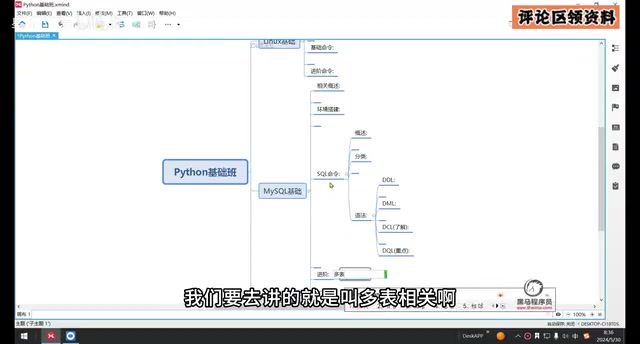
This exercise-driven approach to assessment is far more effective than passively watching lectures — and it's one of the most efficient ways to actually learn SQL.
Python: Practice-Oriented
The final goal of the Python stage is to build a complete Student Management System as a capstone project. What makes this especially interesting is the built-in project defense: after completing all the material, students regroup, rebuild the project, and present it to the class. Peers vote via survey to select the top three.
Background: Why a Student Management System Is the Ideal Beginner Project The Student Management System is a classic beginner project in programming education, and for good reason — it naturally covers the core building blocks of the language: you use variables and data types to store student records, loops and conditionals to drive a menu interface, functions to encapsulate CRUD logic, and file I/O for data persistence. The complexity is perfectly calibrated — challenging enough to be meaningful, but not so overwhelming that beginners give up. Completing it marks the transition from "understanding syntax" to "being able to code" — a critical milestone.
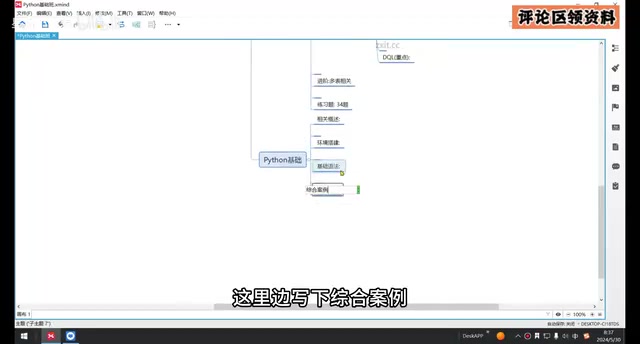
This learn → practice → build → present cycle ensures knowledge isn't just absorbed passively — it's internalized into something you can independently produce. The defense format also forces you to truly understand your project, not just copy code.
How the Foundational and Career-Track Stages Connect
Many training programs treat beginner and advanced content as separate silos, causing a noticeable gap when students try to bridge the two. This curriculum handles the transition thoughtfully:
- When entering the career-track stage, Linux and MySQL are quickly reviewed, because all subsequent work happens inside virtual machine environments — these two are hard dependencies that, if shaky, will directly block progress.
- Python basics are NOT revisited in the career-track stage. Instead, the program jumps straight into advanced Python (higher-level applications and mainstream frameworks) — the assumption is that Python fundamentals are already solid.
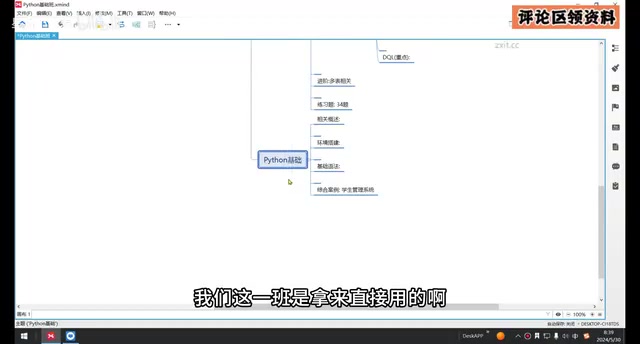
This means the foundational stage isn't something you can coast through. For Linux and MySQL, you get a second chance to review them at the career-track stage if needed. But Python basics must be firmly mastered during the foundational stage — if they're not, the advanced content will be a brutal uphill battle.
A Learning Method Worth Adopting: Mind Map Reviews
Beyond the curriculum content itself, the course also shares a practical study technique: using a mind mapping tool like XMind to outline each stage's key topics, then exporting the map as an image to keep on your phone.
Each night before bed, open it up and mentally walk through it — "What was covered in the Linux overview? How do you set up the environment? What are the essential commands?" — like a quick mental brainstorm. The value here is spaced repetition: frequent, low-effort reviews move knowledge from short-term to long-term memory, combating the all-too-common experience of "I learned it and then forgot it."
Background: Mind Maps and Active Recall XMind is one of the most widely used mind mapping tools today — cross-platform and available with a free tier. In programming education, mind maps offer far more than just note organization. Their tree structure naturally mirrors the hierarchical nature of programming knowledge: Python data types branch into numbers, strings, lists, dictionaries, and each branch extends into specific methods. Cognitive science research shows that structured, visual memory aids outperform linear notes for long-term retention and retrieval. For developers, the act of building a mind map is itself an exercise in active recall — significantly more effective than passively re-reading notes, and a practical implementation of spaced repetition learning.
For self-learners, building a structured mind map for each learning stage is itself a process of organizing knowledge and surfacing weak spots — far more effective than passive consumption.
Takeaways: Action Steps for Zero-Baseline Learners
The real value of this Python + AI beginner roadmap isn't the number of topics it lists — it's the clear, executable, benchmark-driven framework it provides:
From Linux and MySQL as the foundation, to Python syntax and a hands-on project, to integrated technical application in the career-track stage — every step has a defined goal and a logical connection to the next. For beginners, rather than anxiously wondering "what should I learn," the better move is to establish this kind of main thread first, then use practice problems and real projects to verify your progress at each stage.
There are no shortcuts in programming. But a good roadmap will absolutely help you take fewer wrong turns.
Related articles
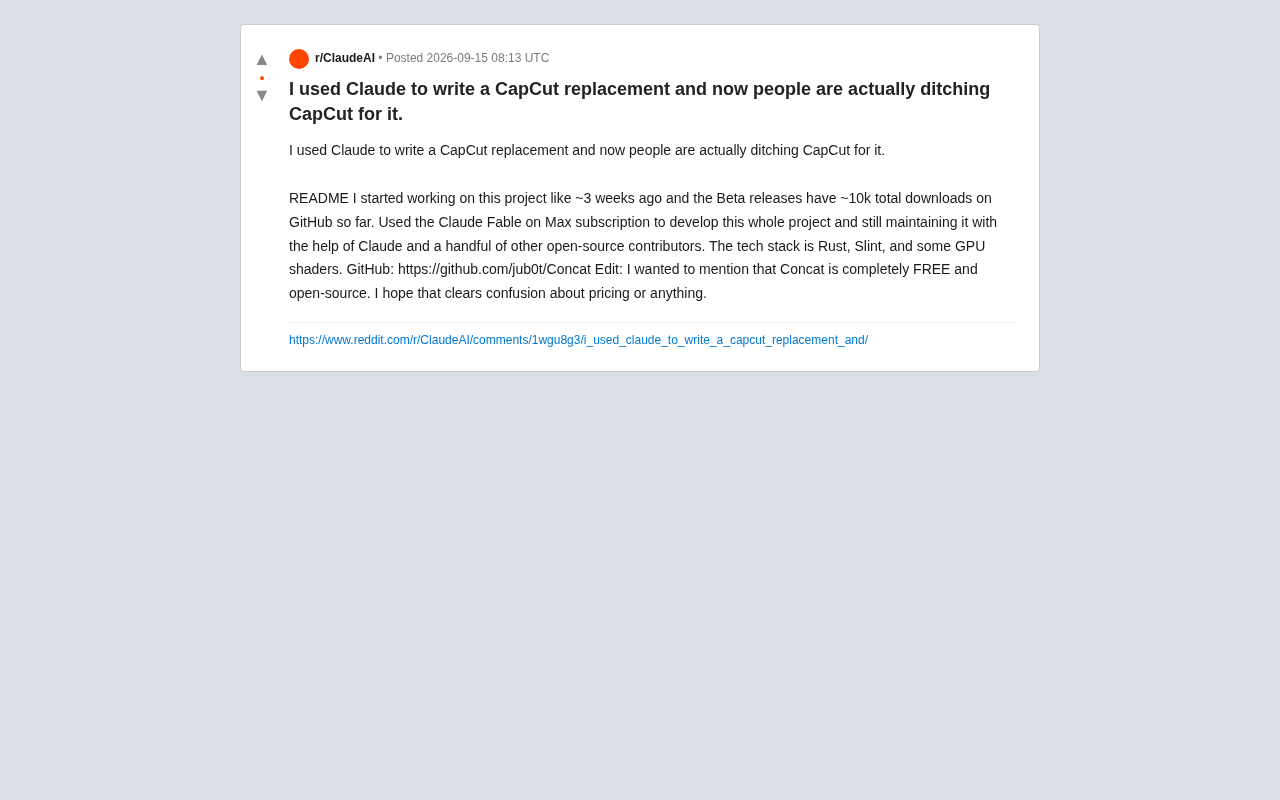
Building Open-Source Video Editor Concat with Claude: A Free Alternative to CapCut
A developer used Claude to build Concat, an open-source CapCut alternative, in just three weeks. With nearly 10K downloads, it's a striking example of AI-assisted solo development.
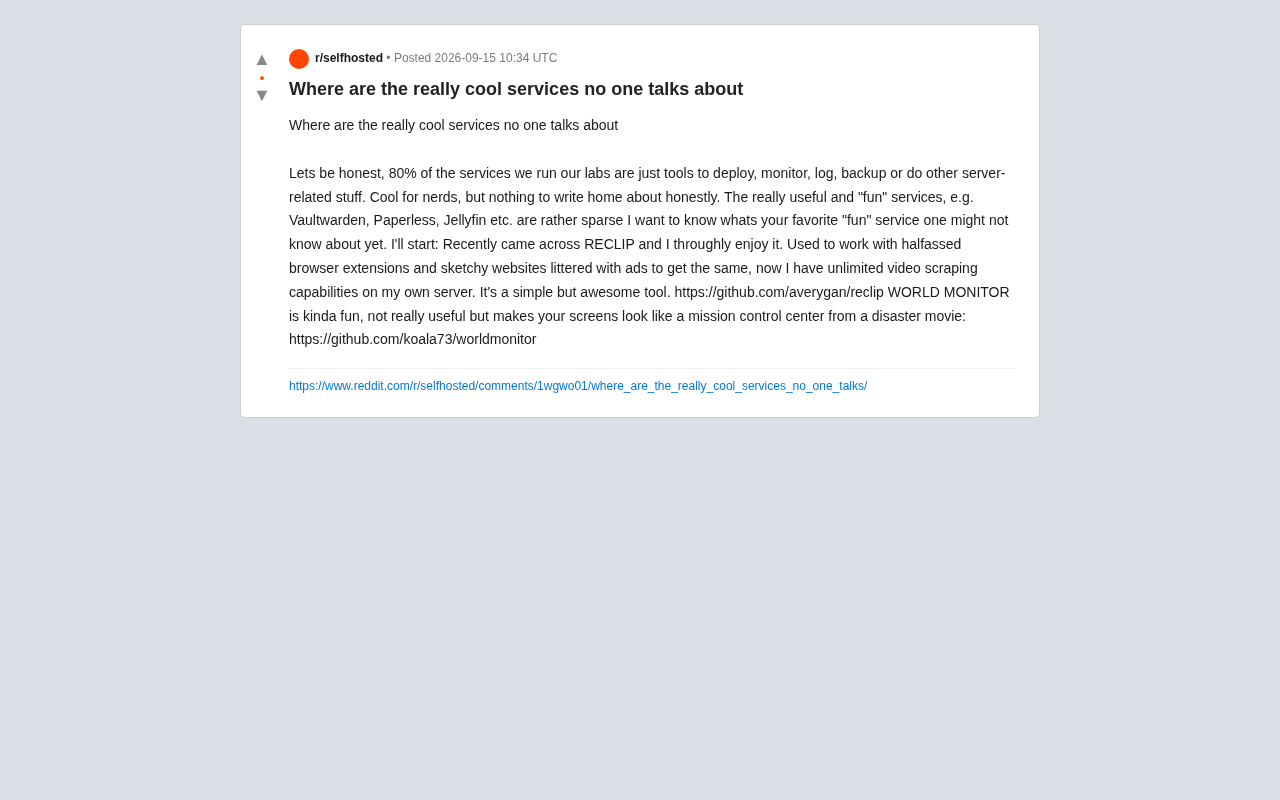
The Overlooked Gems of Self-Hosting: Fun and Useful Services Nobody Talks About
From a Reddit thread, we explore overlooked self-hosted services — including video scraper RECLIP and data viz project WORLD MONITOR — and why fun services are so rare.
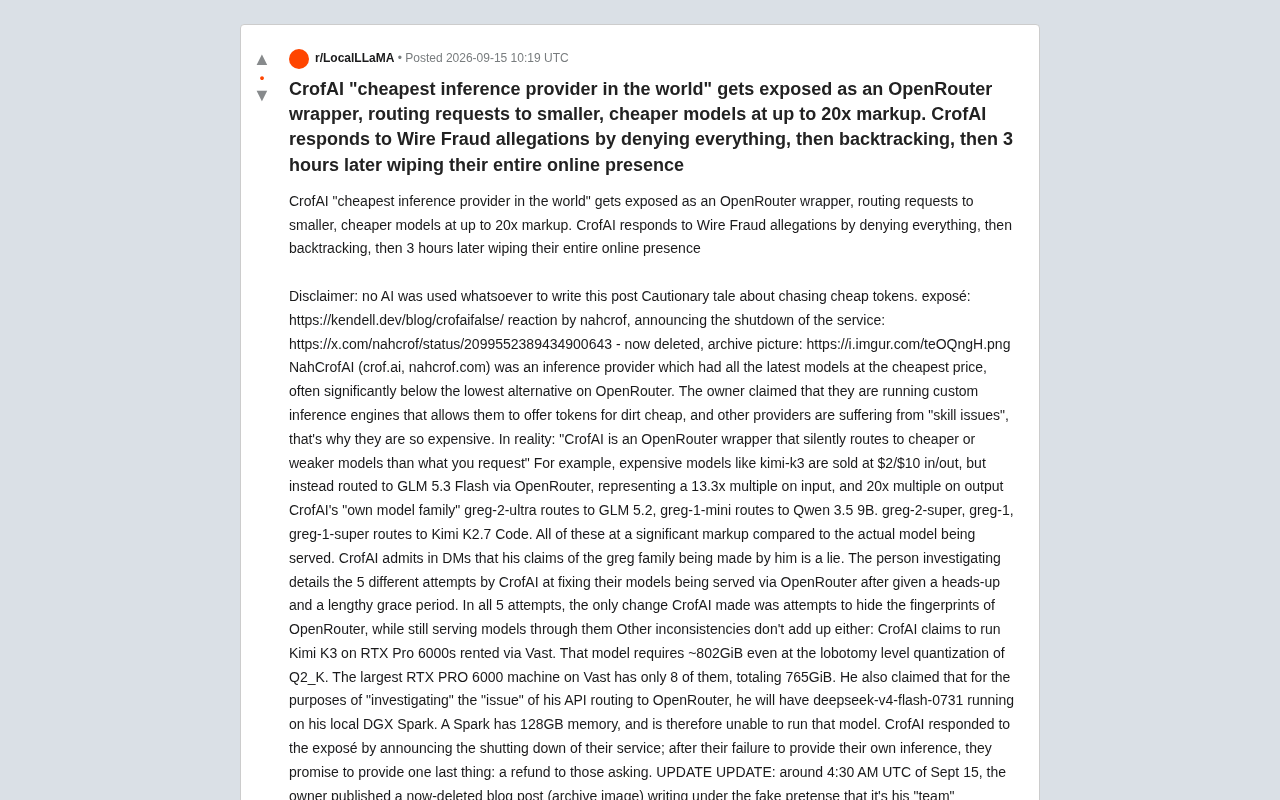
CrofAI Fraud Exposed: 'World's Cheapest AI Inference' Turns Out to Be an OpenRouter Wrapper Scam
CrofAI claimed to offer the world's cheapest AI inference, but was exposed as an OpenRouter wrapper silently rerouting requests to cheap models at up to 20x markups.